Putting solar panels in desert regions creates special problems. They also go into other dusty environments. This action brings unique issues. One issue is dust buildup. Another issue is tough weather conditions. Extreme temperatures happen as well. The IEC 60068-2-68 method deals with these issues. It gives a clear framework. This framework tests how long solar panels last. It also tests how well they perform under such conditions. The LIB IP Dust Test Chamber plays a very important role. It helps manufacturers check their products. They make sure the products meet this strict standard. This article looks at why these tests are needed for solar panels. It also shows how the LIB IP Dust Test Chamber helps them meet the IEC 60068-2-68 requirements. This ensures reliable performance in desert deployments.
This section explains the standard and why it matters for solar panels.
IEC 60068-2-68 is part of the IEC 60068 series on environmental testing for electronic devices. This standard focuses on sand and dust testing in high-dust environments. For solar panels, it simulates desert conditions to ensure they withstand sand, dust, wind, and abrasion. The test helps manufacturers identify potential issues that could affect performance or shorten lifespan.
The standard sets parameters for evaluating electronic devices, especially solar panels, against dust, sandstorms, and abrasive conditions.
Dust Concentration and Composition
Controlled dust replicates desert conditions.
Particle size typically 0.1–1 mm; concentration is adjustable to simulate varying dust exposure.
Airflow and Wind Speed
Wind speeds 2–5 m/s mimic sandstorm forces.
Uniform airflow ensures even dust exposure across all surfaces.
Exposure Time
Panels are exposed for 8 hours or more, simulating prolonged desert dust exposure.
Long exposure assesses long-term durability.
Surface Abrasion and Dust Penetration
Evaluates scratches or coating wear.
Checks if dust enters internal components, affecting electrical performance.
Electrical Performance Testing
Panels are monitored for electrical failures caused by dust or abrasion.
Ensures optimal performance under harsh conditions.
Testing Cycles and Long-term Durability
Multiple cycles simulate environmental variations over time.
Ensures panels remain reliable for years, crucial for utility-scale solar projects.
Desert and dust-prone regions expose solar panels to efficiency loss and premature wear. IEC 60068-2-68 ensures panels withstand these extremes, maintaining energy generation and protecting long-term investment. Sand and dust testing guarantees reliable performance in harsh environments, such as the Middle East or desert-based solar farms.
Solar panels must pass dust tests to perform reliably in desert environments.
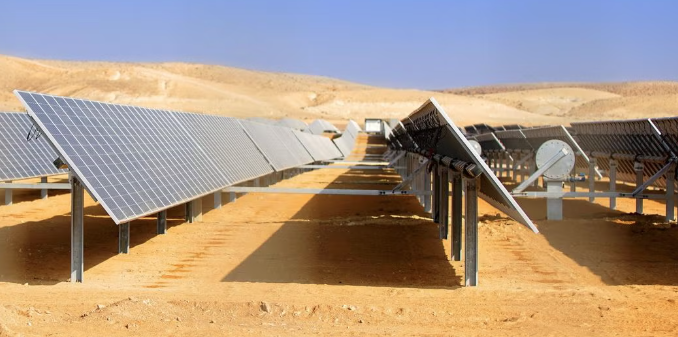
Fine dust and sand accumulate on panel surfaces, blocking sunlight and reducing energy generation. Over time, this can lead to significant efficiency loss. Desert conditions cause daily variations in power output, which manufacturers carefully monitor during testing.
Dust acts as an insulator, potentially causing overheating and gradual performance degradation. Abrasive particles can scratch panel surfaces, reducing light absorption and efficiency. While cleaning helps, panels must be designed to resist dust from the start to prevent long-term damage and extra maintenance work.
Panels that pass tests such as IEC 60068-2-68 are more durable in desert conditions. They maintain efficiency, resist environmental wear, reduce maintenance costs, and provide a longer service life. This makes them a cost-effective solution for utility-scale solar farms in dust-prone regions, ensuring reliable energy output over years of operation.
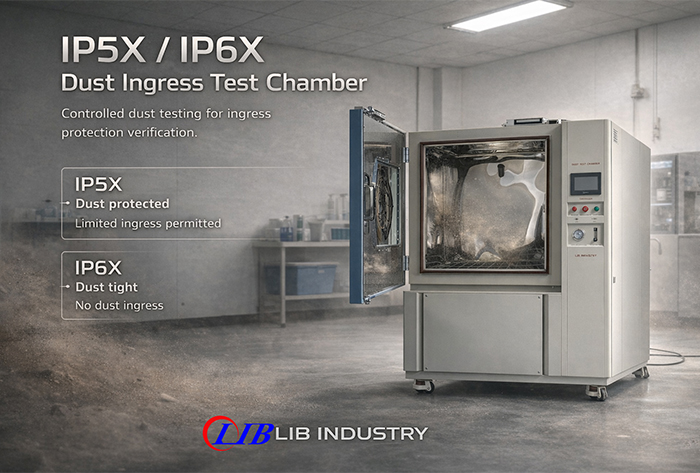
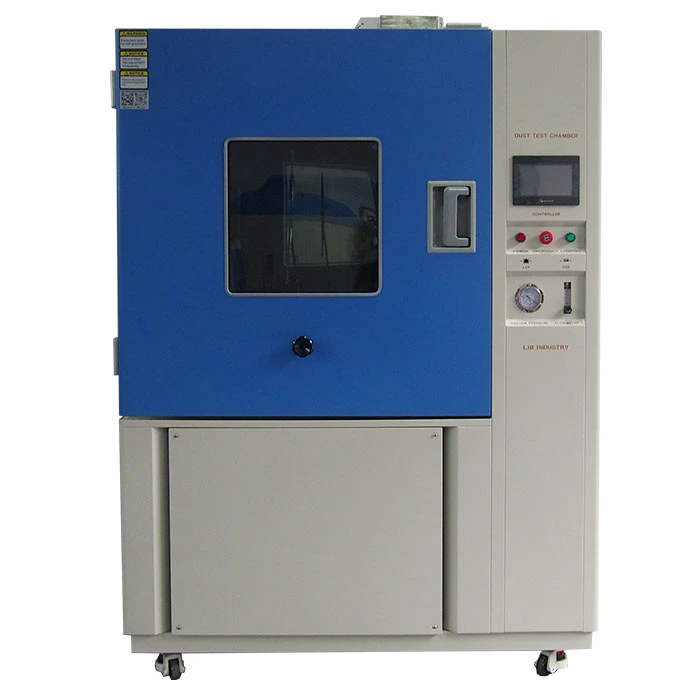
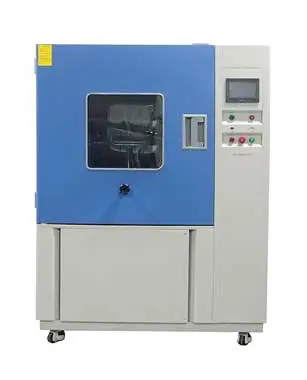
The LIB IP Dust Test Chamber is engineered to replicate real desert conditions for solar panels. It simulates dust, wind, temperature, and humidity accurately, allowing manufacturers to verify that panels can withstand harsh environments before deployment in dust-prone regions.
|
|
 SUS 304 Workroom |  Mesh Sieve and Heating Tube |
Adjustable dust concentration: Generates dust levels from 0.5 g/m³ to 3 g/m³, covering light to severe desert conditions.
Controlled temperature and humidity: Maintains 20°C–60°C and 20%–80% RH to mimic arid desert climates and hot sandstorm scenarios.
Precise airflow regulation: Air velocity can be set between 2–5 m/s, distributing dust evenly and reproducing wind-driven sand effects.
Uniform exposure: Multi-point dust injection and internal baffles ensure consistent exposure for large panels, reducing test variability.
Flexible test duration: Panels can undergo continuous or cyclic exposure for 8–72 hours, simulating both short-term storms and prolonged desert conditions.
These features work in unison to deliver reliable, repeatable results for testing dust resistance and panel durability.
Panels are mounted inside the chamber and exposed to a dust-laden environment. During testing:
Dust penetration and surface abrasion are assessed to ensure the panels’ protective layers and frames resist damage.
Electrical performance is monitored in real-time to detect any short circuits, voltage drops, or failures caused by dust ingress.
Test parameters such as dust concentration, airflow, temperature, humidity, and duration are fully adjustable to match specific regional conditions and panel sizes.
This structured testing process ensures accurate, trustworthy results without unnecessary repetition of steps, giving manufacturers confidence in their panels’ readiness.
The LIB IP Dust Test Chamber is fully compliant with IEC 60068-2-68, the standard for sand and dust testing:
Simulates wind-driven sandstorms and fine dust abrasion to evaluate long-term durability.
Supports cyclic testing for repeated exposure, ensuring panels maintain performance over years.
Confirms solar panels are ready for deployment in harsh regions, including the Middle East, North Africa, and other desert environments.
By passing these rigorous tests, solar panels are proven to be durable, efficient, and low-maintenance, offering long-term reliability and maximum energy output for utility-scale projects.
img.Interior of the IP Dust Test Chamber.webp
Solar farms in deserts face challenges such as sandstorms, extreme temperatures, and constant dust buildup. Panels that are not properly tested risk efficiency loss and increased maintenance. LIB’s chamber ensures panels maintain performance and durability over time, preparing them for real-world conditions.
Large-scale solar farms spread across vast areas are particularly vulnerable to dust accumulation. Rigorous testing guarantees panels operate reliably with minimal maintenance, reducing downtime and repair costs over their lifecycle.
By simulating harsh desert conditions, the chamber ensures panels continue to operate efficiently under dust, heat, and wind. Tested panels deliver consistent energy output in real environments.
Panels that pass dust testing are more durable, requiring less frequent cleaning and maintenance. This lowers overall ownership costs and improves long-term ROI for utility-scale solar projects.
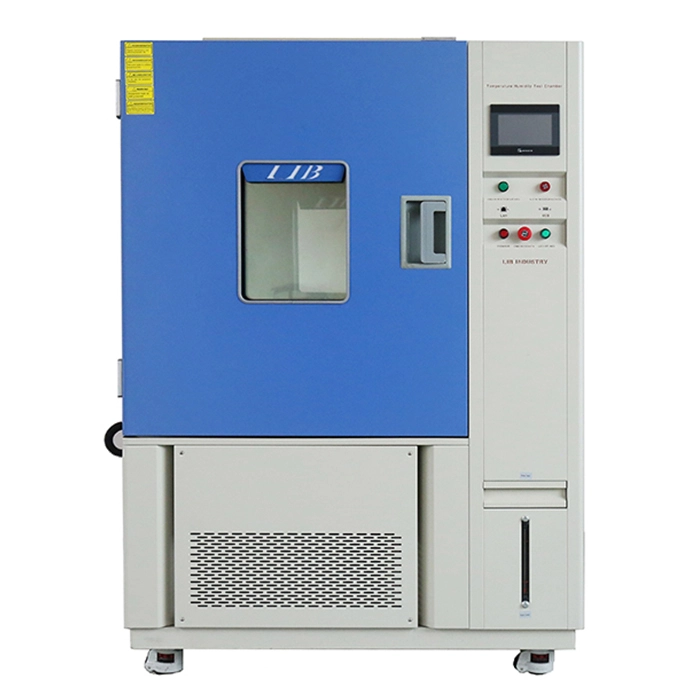
Xi’an LIB Environmental Simulation Industry provides reliable environmental testing solutions for industries such as solar energy, electronics, and automotive. Its product range includes temperature and humidity chambers, dust test chambers, and customized systems, designed to meet standards like IEC 60068-2-68.
With solid engineering experience, LIB delivers precise and repeatable test environments, helping manufacturers validate product performance under real-world conditions. Customized solutions are available to match specific testing requirements.
LIB focuses on both equipment reliability and after-sales support, including:
3-Year Warranty
Lifetime technical support
Remote troubleshooting and guidance
Installation and commissioning support
This ensures stable operation and long-term usability for all testing systems.
In desert environments, dust and sandstorms can significantly impact solar panel performance and lifespan. The IEC 60068-2-68 standard ensures panels can withstand these conditions.
The LIB IP Dust Test Chamber helps manufacturers verify durability through accurate simulation, delivering reliable performance and reduced maintenance for solar projects in harsh regions.Contact LIB today to get a customized dust testing solution for your solar panels.
The IEC 60068-2-68 dust test is very important. It makes sure that solar panels can endure the tough conditions of desert environments. It prevents dust buildup. This buildup could reduce efficiency. It could also affect lifespan.
The test stops problems before they start. Panels stay effective longer. This is key for desert use.
In desert regions dust buildup can block sunlight. It reduces energy generation. It can cause overheating. It damages the surface of solar panels. This results in lower efficiency. It also leads to higher maintenance costs.
Dust builds up fast in dry air. It cuts power output. Cleaning helps but testing is better from the start.
LIB's dust test chamber offers precise control over dust concentration. It controls temperature too. It manages airflow as well. This provides accurate simulations of desert conditions. It helps manufacturers make sure that their solar panels meet the IEC 60068-2-68 standard.
 English
 русский
 français
 العربية
 Deutsch
 Español
 한국어
한국어 italiano
 tiếng việt
 ไทย
ไทย Indonesia

_20260803163531.webp "IEC 61215 MQT10 UV Preconditioning Test Chamber")