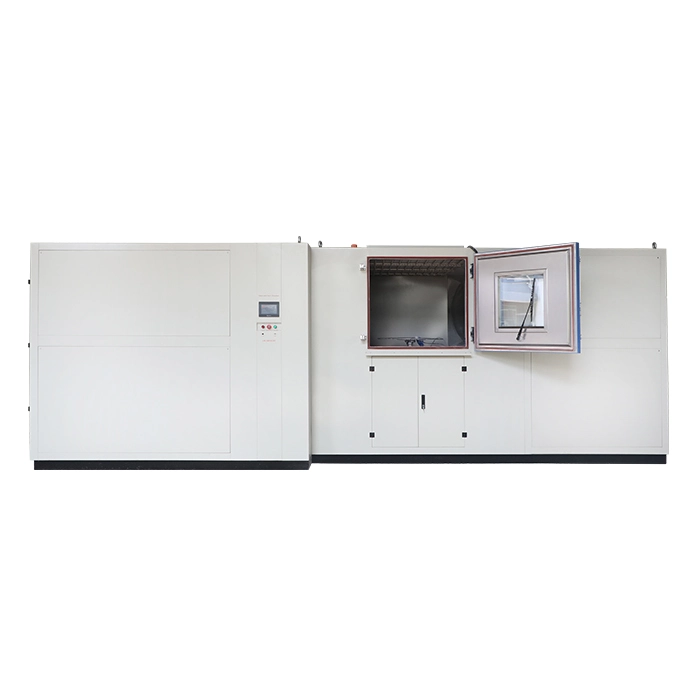
 Energy storage systems are increasingly deployed in desert solar installations, roadside battery packs, industrial facilities, and other outdoor environments where fine dust and sand are unavoidable. Dust entering through seals, vents, cable glands, cooling paths, or enclosure openings can affect airflow, insulation, electrical connections, sensors, and overall equipment reliability.
So, how can a blowing dust test chamber help energy storage manufacturers evaluate these risks before deployment?
A controlled blowing dust and sand test reproduces wind-driven particle exposure under repeatable conditions, letting engineers evaluate battery packs, BESS cabinets, BMS hardware, connectors, filters, seals, and cooling systems against defined environmental requirements.
This article covers the main dust testing standards, how testing is performed, key equipment selection factors, and how LIB industry supports dust and sand testing for energy storage equipment.
Energy storage equipment combines high-current electrical components, thermal management systems, control electronics, connectors, and sealed or partially sealed enclosures — and dust can affect each of these differently.
For battery packs, dust may enter through cable glands, joints, vents, covers, or cooling interfaces, contaminating electrical surfaces, reducing cooling efficiency, or exposing weaknesses in enclosure sealing. For BESS containers and cabinets, the risk is often greater due to HVAC ducts, filters, ventilation openings, doors, cable feedthroughs, and battery racks. For BMS hardware, dust around sensors, connectors, relays, and communication interfaces may contribute to unstable signals, alarms, or other functional problems.
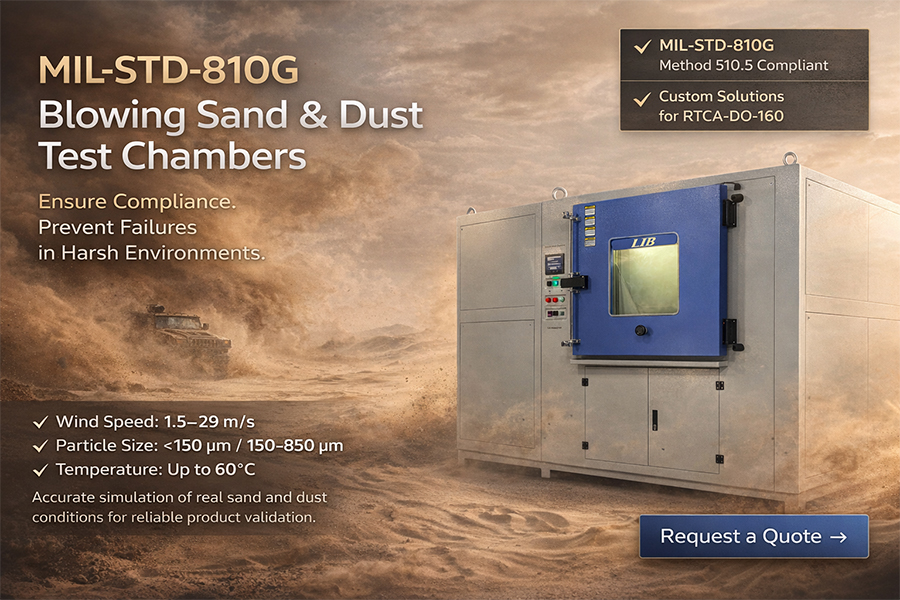
A blowing dust test chamber provides a controlled environment for reproducing these conditions and evaluating whether the equipment maintains its required performance after exposure. Typical reliability indicators include:
Dust accumulation around seals, joints, connectors, and internal surfaces
Increased pressure drop across filters, reduced cooling airflow, increased fan load
Abnormal temperature rise during operation
Changes in insulation resistance or leakage current
Communication errors, sensor drift, alarms, or contactor faults
Surface abrasion following blowing sand exposure
The goal isn't just to see whether dust is visible afterward — engineers compare pre-test and post-test performance to determine whether particle exposure creates a meaningful reliability risk. This is particularly important for equipment intended for desert, coastal, or arid industrial sites, where wind-driven particles are a recurring rather than occasional condition, and where field failures are costly to diagnose and repair after deployment.
The appropriate test depends on the product claim, expected service environment, and required acceptance criteria. Two approaches are commonly used: IEC 60529 enclosure protection testing and MIL-STD-810H Method 510.7 blowing dust and sand testing.
Standard / Method | Main Purpose | Typical Application |
IEC 60529 IP5X | Dust-protected enclosure | Electrical and electronic enclosures |
IEC 60529 IP6X | Dust-tight enclosure | Equipment requiring a higher level of dust protection |
MIL-STD-810H Method 510.7 | Blowing dust and sand exposure | Equipment exposed to wind-driven dust and sand |
IEC 60529 uses the first IP digit to describe protection against solid objects. IP5X permits limited dust ingress as long as it doesn't impair operation, while IP6X is dust-tight, permitting no ingress at all. Both use controlled dry talcum powder exposure, with vacuum conditions applied depending on the procedure.
MIL-STD-810H Method 510.7 addresses dynamic blowing dust (Procedure I, particles below 150 μm) and blowing sand (Procedure II, particles from roughly 150–850 μm):
Parameter | Blowing Dust | Blowing Sand |
Air Velocity | 1.5–8.9 m/s | 18–29 m/s |
Particle Size | <150 μm | 150–850 μm |
Concentration | About 10.6 ± 7 g/m³ | Multiple specified levels |
Exposure | According to tailored test plan | At least 90 min per vulnerable face when selected |
These methods aren't interchangeable: IEC 60529 focuses on enclosure/IP classification, while MIL-STD-810H evaluates dynamic wind-driven exposure. Passing IP6X doesn't automatically mean a product has passed MIL-STD-810H, so the method should be selected based on the actual product requirement and exposure scenario.
A reliable program starts by defining the test requirement — standard, particle range, air velocity, concentration, exposure duration, specimen operating condition, temperature, and acceptance criteria — for the relevant specimen (battery pack, BMS enclosure, battery cabinet, or BESS container).
Next, engineers identify vulnerable areas: seals and joints, cable glands, air intakes, filters, cooling channels, ventilation systems, connectors, control sections, doors/access panels, and pressure vents. Large BESS cabinets need enough airflow clearance around the specimen to reproduce realistic exposure.
During the test, the chamber circulates controlled particles around the specimen. Fine dust mainly challenges sealing, openings, and filters, while larger sand particles can add abrasion and impact on exposed mechanical interfaces. Where powered operation is permitted, engineers can monitor temperature, cooling performance, fan behavior, electrical output, BMS status, communication, and alarms throughout.
Finally, results are compared against baseline values recorded before exposure — insulation resistance, cooling airflow, operating temperature, electrical output, and enclosure condition — covering seals, filters, cable glands, connectors, busbars, control boards, and cooling channels. This distinguishes cosmetic dust accumulation from a genuine functional or reliability problem.
Selecting a suitable chamber requires more than checking maximum air velocity — it should match the specimen, standard, and intended operating condition.
Selection Factor | Why It Matters |
Test Standard | Determines required dust/sand conditions |
Specimen Size | Determines chamber working space |
Air Velocity | Must cover the required exposure range |
Particle Size | Must match the selected test method |
Dust Concentration | Important for repeatable exposure |
Temperature | Required for combined environmental conditions |
Power Connections | Needed for powered testing |
Cable Routing | Prevents interference with enclosure sealing |
Airflow Clearance | Ensures representative particle exposure |
Fixture Design | Keeps large or irregular specimens correctly positioned |
Different products need different configurations — a battery pack typically needs only a compact chamber with basic fixtures and cable interfaces, while a BMS or control unit adds powered-operation and connector access needs. A battery cabinet requires a larger working area with airflow clearance and cable routing, and a full BESS container may need a large or walk-in chamber with ventilation and access requirements. For large cabinets or unusual configurations, a customized chamber is often more practical than a standard laboratory unit.
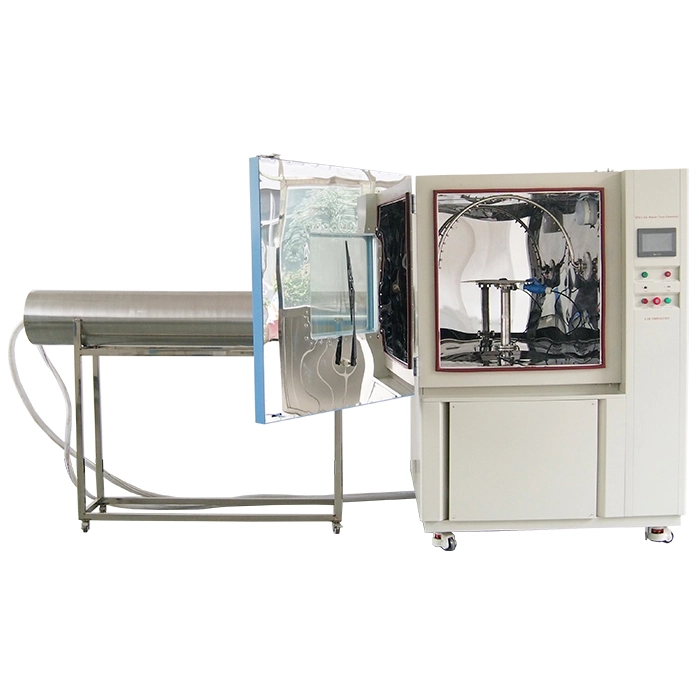
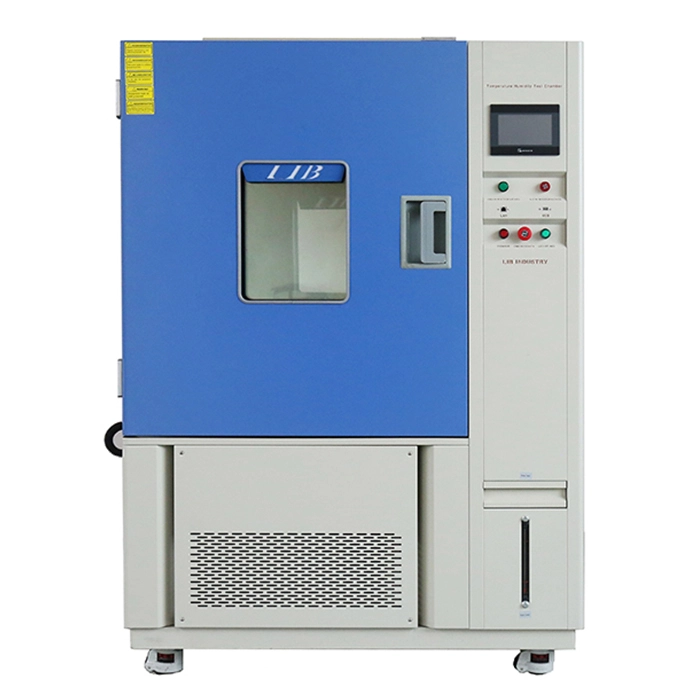
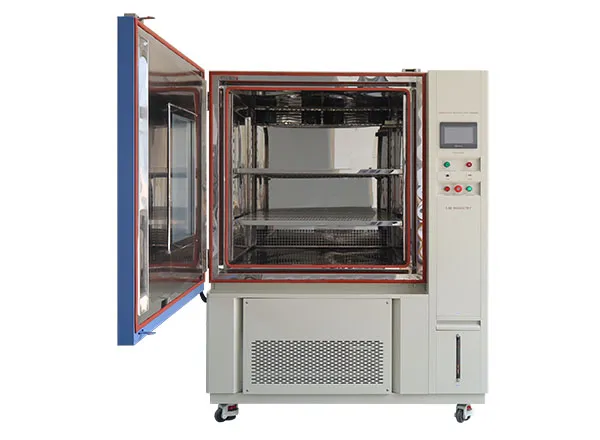
LIB industry provides blowing dust and sand test equipment for controlled environmental exposure of electrical, electronic, and mechanical products, configurable around specimen size, airflow, test standard, cable interfaces, and operating conditions.
Parameter | LIB Typical Specification |
Blowing Dust Air Velocity | 1.5–8.9 m/s |
Dust Concentration | 10.7 ± 7 g/m³ |
Dust Particle Size | <150 μm |
Blowing Sand Air Velocity | 18–29 m/s |
Sand Concentration | 0.18 +0.2/−0; 1.1 ± 0.3; 2.2 ± 0.5 g/m³ |
Sand Particle Range | About 149–850 μm |
Interior | SUS304 stainless steel |
Control System | Programmable color LCD touchscreen with Ethernet |
 |  |
| Workroom | Large Centrifugal Fan |
| |
The workroom and air duct use SUS304 stainless steel, with double-layer sealing to contain particles during extended testing, and a programmable control system for repeatable exposure conditions. For energy storage applications, LIB can also account for battery pack dimensions, BESS cabinet size, fixtures, cable routing, power connections, and customized test space — covering battery pack, BMS enclosure, battery cabinet, and BESS equipment testing, as well as IP5X/IP6X-related and customized large-specimen testing
LIB backs every chamber with a one-stop after-sales solution built around four service pillars:
3-Year Warranty — covering the chamber structure, control system, and core components
Lifetime Service — ongoing technical support for the full service life of the chamber
One-Stop Solution — installation, commissioning, training, and maintenance through a single point of contact
Global Network of 29 Distributors — supporting local response and servicing across regions
Dust can enter through joints, vents, filters, connectors, and cable entry points, potentially reducing airflow, affecting electrical connections, increasing thermal stress, or interfering with sensors and communication.
IP5X/IP6X focus on enclosure protection under IEC 60529, while MIL-STD-810H Method 510.7 evaluates dynamic exposure to wind-driven dust and sand. Passing one doesn't automatically demonstrate compliance with the other.
Yes. Large cabinets and BESS equipment typically require larger working spaces, airflow clearance, fixtures, cable routing, and power interfaces, so the chamber should be selected to match the specimen dimensions.
Start with the required standard, specimen dimensions, particle range, air velocity, concentration, temperature, exposure duration, and whether the specimen must operate during testing.
A 3-year warranty, lifetime technical service, and a one-stop solution covering installation, training, and maintenance, backed by a global network of 29 distributors for local support.
Need a blowing dust test chamber for battery packs, BESS cabinets, or energy storage equipment?
Contact LIB industry with your specimen dimensions, testing standard, and dust/sand requirements to get a suitable testing solution.
 English
 русский
 français
 العربية
 Deutsch
 Español
 한국어
한국어 italiano
 tiếng việt
 ไทย
ไทย Indonesia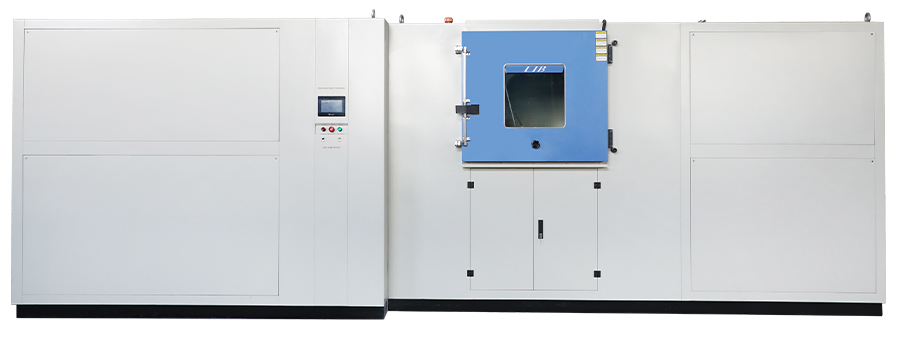
.webp "BS EN 50289-4-17 / UL 1581 Xenon Arc Weathering Cable Test Chamber")