For IPX3 and IPX4 testing, choose an oscillating tube when repeatability, automated coverage and routine laboratory testing are the priorities. A spray nozzle is more flexible for irregularly shaped products, localized areas and situations where an oscillating tube cannot adequately wet all surfaces. Both methods are recognized under IEC 60529, but their operating procedures differ. IPX3 evaluates protection against water spraying up to 60° from the vertical, while IPX4 covers splashing from all practicable directions. The most important selection factors are product geometry, required spray coverage, water flow control, test duration, sample size and whether the equipment must support both IPX3 and IPX4 in a repeatable production or certification environment.
IPX3 and IPX4 testing evaluates whether an enclosure can prevent water from entering in quantities that could cause harmful effects.
The tests are relevant to products that may encounter rain, splashing or water exposure during normal use. Typical applications include:
Outdoor electrical enclosures
Lighting fixtures
Automotive lamps and components
Communication equipment
Consumer electronics
Industrial control equipment
Sensors and electrical connectors
The difference between the two ratings is mainly the direction and coverage of water exposure.
IPX3 is intended for protection against spraying water up to 60° from the vertical. With the oscillating-tube method, the tube moves through an arc of 120° and the test is conducted for 5 minutes, followed by a further 5 minutes after the enclosure is turned through 90°. With the spray-nozzle method, water is applied from practicable directions at the specified flow rate.
IPX4 increases the coverage requirement. An oscillating tube sprays through almost 360° around the enclosure, while the spray-nozzle method applies water from all practicable directions. The standard specifies a 10-minute oscillating-tube test, while the nozzle method uses the IPX3 spray rate and exposure time per unit area.
This is why choosing between an oscillating tube vs spray nozzle should be based on the geometry and test procedure rather than assuming one method is universally better.
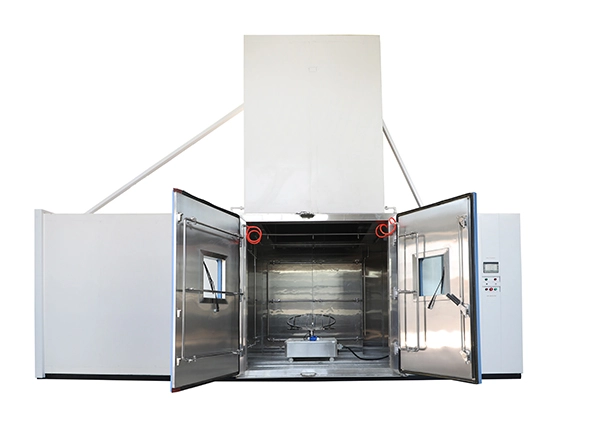
IEC 60529 permits two test devices for IPX3 and IPX4: an oscillating tube and a spray nozzle. The relevant product standard may determine which device is required.
Test | Test device | Water flow | Spray direction | Duration | Main purpose |
IPX3 | Oscillating tube | 0.07 L/min per hole | ±60° from vertical | 5 min + 5 min after 90° rotation | Protection against spraying water |
IPX3 | Spray nozzle | 10 L/min ±5% | ±60° from vertical | 1 min/m², minimum 5 min | Flexible directional spraying |
IPX4 | Oscillating tube | 0.07 L/min per hole | Almost 360° | 10 min | Protection against splashing water |
IPX4 | Spray nozzle | 10 L/min ±5% | All practicable directions | 1 min/m², minimum 5 min | Multi-directional splash protection |
For the oscillating tube, the total flow depends on the tube radius and number of open holes. IEC 60529 Table 9 gives examples ranging from 0.56 L/min for a 200 mm radius tube to 7.0 L/min for a 1,600 mm radius tube for IPX4.
For the spray-nozzle method, the water pressure is adjusted to achieve the specified delivery rate and is generally maintained between 50 and 150 kPa.
LIB's IPX3/X4 equipment is designed around IEC 60529 and also lists standards including ISO 20653, UL 50E, UL 1598, UL 153 and UL 1573. Its configurations include adjustable oscillating-tube radii and detachable spray-nozzle options.
Selection Factor | Oscillating Tube System | Spray Nozzle System |
Temperature range | Normally ambient test conditions | Normally ambient test conditions |
Humidity range | Not the primary parameter | Not the primary parameter |
Chamber volume | Small to large rain chambers | Small to large systems |
Ramp rate | Usually not applicable | Usually not applicable |
Airflow | Not normally a controlling parameter | Not normally a controlling parameter |
Sample heat load | Generally low importance | Generally low importance |
Safety configuration | Water protection, electrical leakage and emergency stop | Water protection, nozzle control and electrical safety |
Spray coverage | Highly repeatable and programmed | Operator-controlled and flexible |
Sample geometry | Best for regular enclosure shapes | Useful for irregular or difficult-to-reach surfaces |
Applicable standards | IEC 60529, ISO 20653 and product-specific standards | IEC 60529, ISO 20653 and product-specific standards |
The biggest practical difference is coverage control.
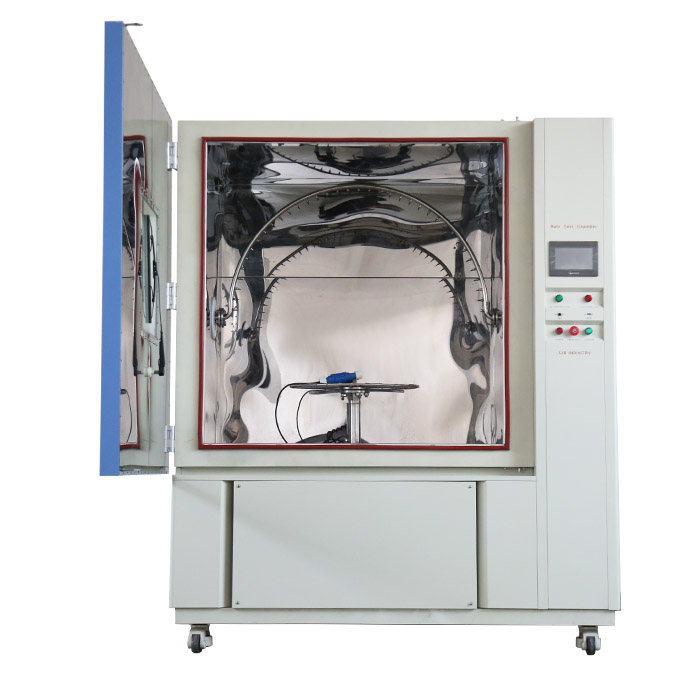
An oscillating tube creates a predictable spray pattern through fixed nozzles and programmed movement. LIB's IPX3/X4 chamber uses stainless-steel oscillating tubes, with optional spray-nozzle configurations and adjustable swing ranges including ±45°, ±60°, ±90° and ±180°.
A spray nozzle provides greater manual flexibility. This can be valuable when the enclosure has recessed surfaces, unusual geometry or areas that cannot be adequately wetted by a fixed tube.
For laboratory automation and repeatability, however, an oscillating tube generally offers a more standardized operating sequence.
IPX4 requires water exposure from all practicable directions, making its coverage requirement broader than IPX3. The equipment must therefore be configured for the correct test mode.
IEC 60529 allows both test-device approaches, but the relevant product standard may specify the preferred or required method. Always confirm the complete test specification before purchasing equipment.
Tube radius affects the number of holes and total water flow. It should be selected according to the sample dimensions and required spray coverage, not simply by choosing the largest available system.
A large enclosure with deep recesses, underside surfaces or complex mounting features may not receive representative water exposure from a fixed oscillating tube. A handheld spray nozzle may be more appropriate for certain configurations.
Flow rate is important, but distribution, spray angle, oscillation, nozzle condition and sample orientation also affect the test.
Water impurities can change flow and spray distribution. LIB uses a water circulation and filtration system capable of filtering particles down to 0.03 mm to help maintain stable spraying.
If the product must operate during testing, the chamber should provide suitable waterproof power connections and electrical safety protection. LIB's IPX3/X4 chamber includes a waterproof power interface for test specimens.
Water flow, spray distribution and control-system performance should be checked periodically. LIB notes that rain-chamber calibration can involve traceable flow meters or rain gauges, together with verification of flow rate and distribution.
The best equipment depends on the product size, required IP rating and test method.
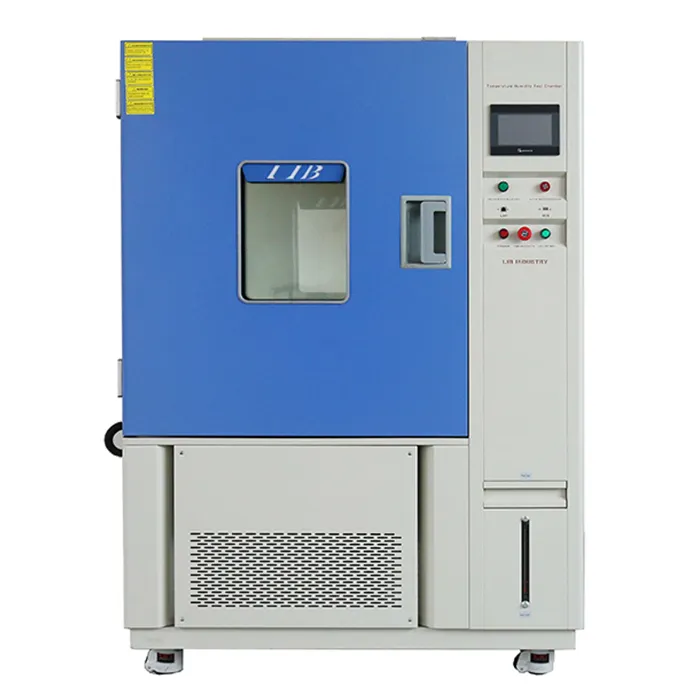
Benchtop: Suitable for small connectors, sensors, compact enclosures and laboratory development work where the specimen is small and water exposure requirements are limited.
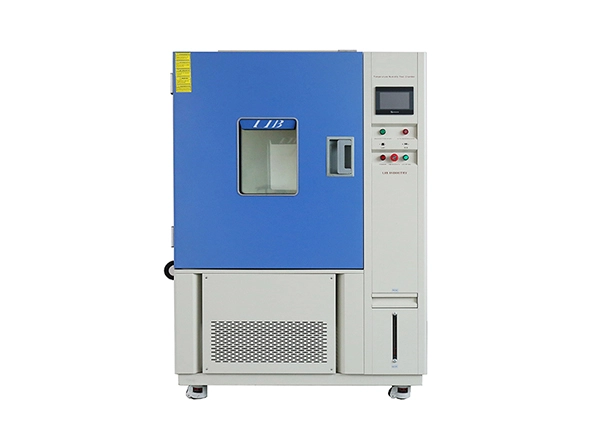
Reach-In: A practical choice for medium-sized electronic or automotive components requiring repeatable IPX3/IPX4 testing.
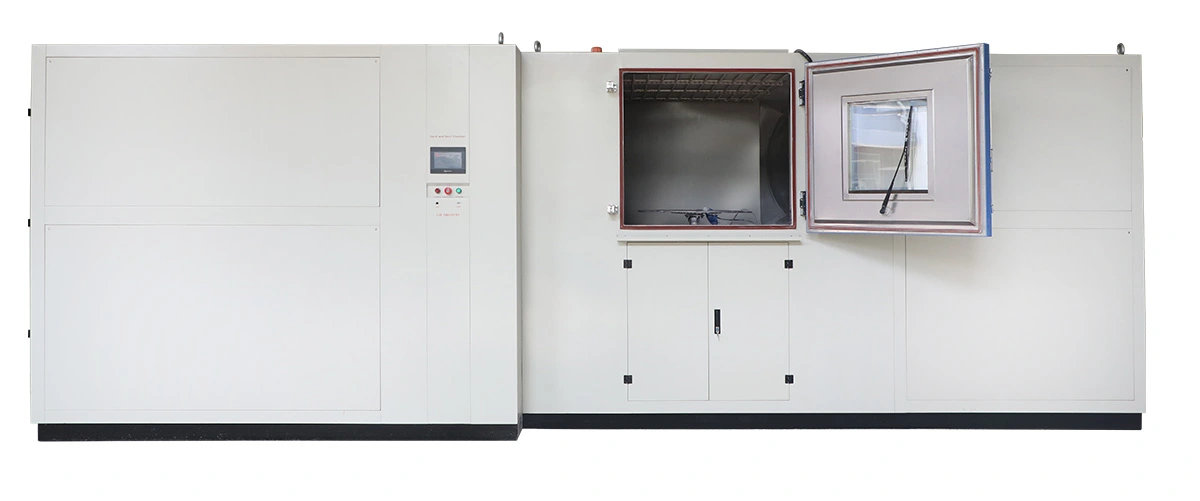
Walk-In: Recommended for large assemblies, vehicle components or multiple specimens. LIB offers walk-in rain-test configurations covering a broad range of IP water tests.
Thermal Shock: Not a substitute for IPX3/IPX4 equipment. Use it when rapid temperature transitions are the primary test requirement.
Salt Spray: Appropriate for corrosion evaluation rather than enclosure water-ingress testing.
IP: The preferred equipment category when the requirement is specifically IEC 60529 ingress protection. LIB's IP Test Equipment portfolio includes IPX1 through IPX9K equipment, including oscillating spray systems, water jets and immersion equipment.
Special Custom Chamber: Consider this configuration for oversized products, unusual mounting arrangements, integrated electrical operation, automated handling or combined test requirements.
For standard IPX3/IPX4 laboratory testing, LIB's Rain Test Chamber category is the most direct starting point. It covers oscillating spray, water spray, immersion and other rain-test configurations.
For a more specific configuration, the IPX3 X4 Test Chamber uses an oscillating tube system and can be configured with detachable spray nozzles. Models include R-800C and R-1200C.
For the industry link, LIB's Electronics Environmental Testing page is relevant because electronic products and components commonly require rain and waterproof testing to verify enclosure sealing and reliability.
A useful next-step resource is LIB's From IPX3 to IPX4: Oscillating Tube Rain Test Equipment Selection Guide & Standards Explained, which provides additional technical guidance on IPX3/IPX4 equipment selection and the differences between the two protection levels.
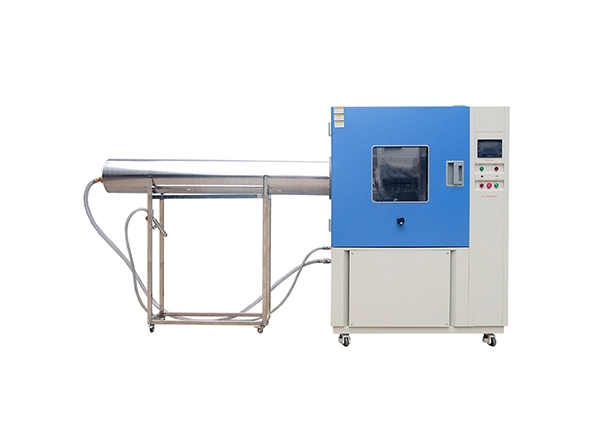
An IPX3 rain-test system using an oscillating tube or the applicable spray-nozzle device can be used, provided the equipment reproduces the conditions required by IEC 60529 and the relevant product standard.
An oscillating tube produces a programmed, repeatable spray pattern over a defined arc. A spray nozzle provides more flexible manual control and can be useful for irregular shapes or areas that are difficult to reach with a fixed tube.
IPX4 requires water exposure from all practicable directions, whereas IPX3 limits the spray to angles up to 60° from the vertical. Therefore, IPX4 generally requires broader enclosure coverage.
For the oscillating-tube method, IEC 60529 specifies 10 minutes total for IPX4 and 10 minutes total for IPX3 when the two five-minute exposure positions are combined. The spray-nozzle method uses 1 minute per square metre with a minimum of five minutes.
Start with the specimen's maximum dimensions, mounting position and required spray coverage. Allow enough clearance for the oscillating tube, turntable movement and water circulation. For large automotive or industrial assemblies, a walk-in rain chamber may be more suitable.
Yes. LIB's IPX3/X4 chambers are specifically configured to perform both tests. Its oscillating tube can be adjusted for different spray angles, while the system can also accommodate a detachable spray nozzle.
A spray nozzle is worth considering when the specimen has complex geometry, recessed surfaces or areas that cannot be adequately exposed by the oscillating tube. For standardized, repeatable laboratory testing of regular enclosures, an oscillating tube is often the more efficient choice.
Specify the required IP rating, IEC or product standard, specimen dimensions and weight, test method, spray direction, flow rate, test duration, sample rotation requirements, whether the specimen operates during testing, waterproof power requirements and available laboratory space.
 English
 русский
 français
 العربية
 Deutsch
 Español
 한국어
한국어 italiano
 tiếng việt
 ไทย
ไทย Indonesia