For lithium-ion cells, modules, EV battery packs, and energy storage systems, a dedicated battery test chamber safety configuration is preferable to a conventional environmental chamber when testing involves charging, discharging, abuse, overheating, or possible thermal runaway. An explosion-proof battery chamber focuses on containing pressure and controlling ignition hazards, while a standard thermal chamber is primarily designed for temperature and humidity simulation. Relevant requirements may include IEC 62619, IEC 62133, UL 1642, UL 2580, UN 38.3, and, for BESS fire-propagation evaluation, UL 9540A. The most important selection factors are the expected failure energy, gas generation, pressure rise, sample heat load, detection response, fire suppression, exhaust design, and emergency shutdown strategy.
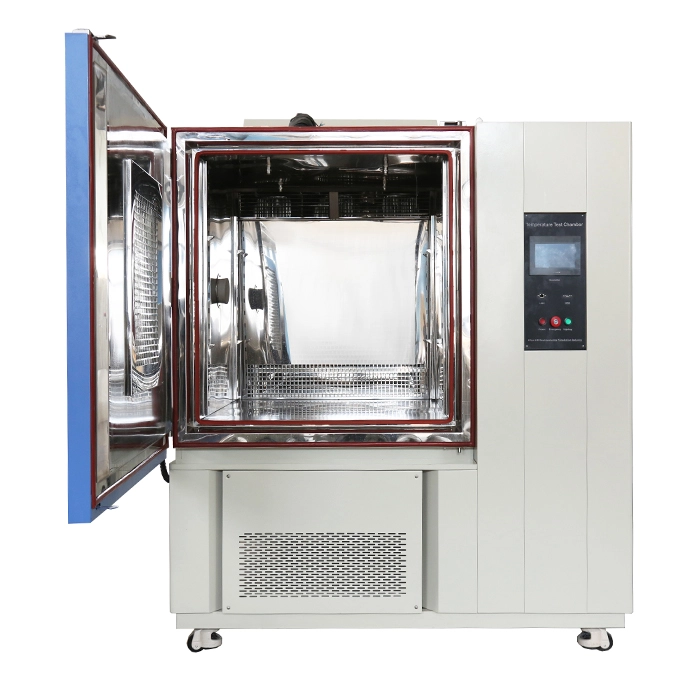
Battery testing is moving from simple environmental conditioning toward failure-aware safety testing.
A conventional thermal chamber can expose a battery to high or low temperatures, humidity, or programmed cycles. However, a battery under electrical or abuse testing can become an active energy source. If an internal failure occurs, the test may involve rapid temperature rise, electrolyte vapor release, smoke, flame, pressure increase, or thermal runaway.
This changes the engineering requirements of the chamber.
Typical specimens include:
Lithium-ion cells
Cylindrical, pouch, and prismatic batteries
EV battery modules and packs
Battery management systems
ESS battery cabinets and modules
Power-storage components
Battery materials and prototypes
The objective may be performance verification, environmental reliability, abuse testing, safety qualification, or investigation of thermal runaway behavior.
IEC 62619:2022 specifies safety requirements and tests for secondary lithium cells and batteries used in industrial applications, including stationary energy-storage applications.
For BESS applications, UL 9540A is increasingly important because it evaluates thermal-runaway fire propagation and related fire and explosion hazards at different test levels. The 2026 sixth edition was published in March 2026 and expands installation-level large-scale fire testing.
This means that next-generation chambers must be designed not only to control temperature, but also to detect abnormal conditions early and manage the consequences safely.
Battery safety standards do not all define the same test conditions. Some address cell or battery safety, while others evaluate thermal runaway propagation, fire behavior, or installation-level hazards.
Standard / Method | Main application | Temperature / Environment | Humidity | Cycle / Exposure | Safety-related focus |
IEC 62619:2022 | Industrial lithium batteries / ESS | Product-specific | Product-specific | Defined by applicable test | Safe operation and abnormal conditions |
IEC 62133-2 | Portable lithium secondary cells/batteries | Test-specific | Test-specific | Defined by test method | Cell and battery safety |
UL 1642 | Lithium batteries | Test-specific | Test-specific | Abuse and safety tests | Fire, leakage and abnormal behavior |
UL 2580 | EV batteries | Test-specific | Test-specific | Product-specific | Electric vehicle battery safety |
UN 38.3 | Lithium batteries for transport | Test-specific | Test-specific | Altitude, thermal, vibration, shock and other tests | Transport safety |
UL 9540A:2026 | BESS thermal runaway/fire propagation | Cell to installation level | Test-specific | Defined by test level | Thermal runaway, fire, gas and explosion hazards |
NFPA 855 | Stationary ESS installation | Installation-dependent | — | Installation-level requirements | Fire and explosion protection |
UL 9540A evaluates battery behavior at multiple levels. Cell-level testing examines thermal runaway characteristics and gas composition; module testing evaluates propagation, heat and gas release; higher-level testing evaluates fire spread, heat release, gas release, deflagration and re-ignition hazards.
For BESS installations, UL 9540A is explicitly referenced by NFPA 855 for large-scale fire testing.
The practical implication is important: the chamber should be specified from the actual hazard scenario, not simply from the temperature range required by the battery test.
Parameter | Conventional Thermal Chamber | Explosion-Proof Battery Chamber | Thermal Runaway Test Chamber | Large-Scale / Special Battery Chamber |
Temperature range | Typically -70°C to +150°C | Application-dependent | Application-dependent | Customized |
Humidity range | Optional | Optional | Usually secondary during runaway testing | Customized |
Chamber volume | 50 L to 2000 L+ | Customizable | Customizable | Large/custom |
Ramp rate | Standard or rapid | Standard/rapid depending on design | Test-profile dependent | Application-dependent |
Airflow | Temperature uniformity | Controlled circulation + exhaust | Designed around hazard containment | Engineered for large sample conditions |
Sample heat load | Important | Critical | Extremely critical | Extremely critical |
Safety configuration | Standard over-temperature protection | Pressure relief, smoke/gas detection, emergency exhaust, suppression | Enhanced containment, detection and suppression | Engineered fire, pressure and gas management |
Applicable standards | IEC/ASTM/MIL/product standards | Battery safety and environmental standards | UL 9540A and applicable battery standards | UL 9540A, NFPA requirements and customized protocols |
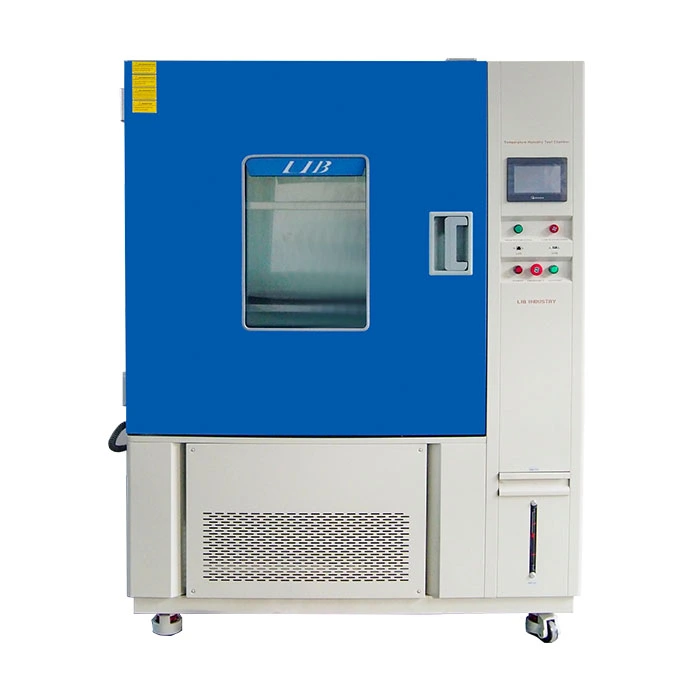
LIB's current Battery Test Chamber is designed for lithium-ion batteries, EV battery modules, battery packs and energy-storage systems. Its listed TR10-1000C configuration has a 1000 L working volume, a temperature range of -70°C to +170°C, and average heating/cooling rates of 10°C/min.
More importantly for safety, LIB describes reinforced chamber construction, pressure monitoring, smoke detection, spray suppression, emergency exhaust, automatic power interruption and remote monitoring as part of its battery-chamber configuration.
A conventional chamber is designed primarily for environmental simulation. It may not have the structural reinforcement, pressure relief, fire suppression or gas-management functions required for battery failure testing.
Smoke and combustible or toxic gases are not the same hazard. Battery failure can release gases and vapors before visible smoke or flame appears. UL 9540A testing specifically considers gas composition and flammability at relevant test levels.
Thermal runaway can create a rapid pressure increase. A chamber should have an engineered pressure-relief path rather than relying only on a strong enclosure.
A battery undergoing charge, discharge, or failure can release substantial heat. Chamber sizing should account for the maximum expected heat load, not just the environmental temperature requirement.
Gas, smoke, pressure and temperature sensors should be positioned according to the hazard scenario and chamber airflow. A sensor placed in a low-risk location may delay detection.
An explosion-proof battery chamber is a system. Structural containment, pressure relief, detection, exhaust, suppression, electrical interlocks and emergency shutdown should work together.
Battery failure may produce smoke, flammable gases or toxic compounds. Exhaust routing, ventilation, emergency access, electrical supply, drainage and laboratory separation should be considered before installation.
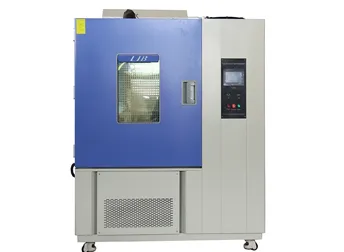
Different battery programs require different levels of environmental and safety engineering.
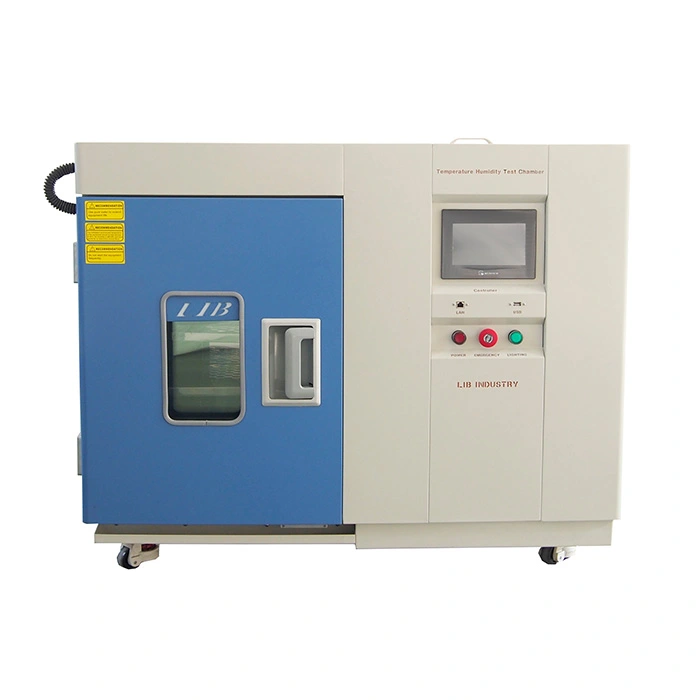
Benchtop: Suitable for small cells and preliminary environmental testing when the test does not involve significant abuse or high-energy failure scenarios. A dedicated safety assessment is still required for lithium-ion testing.
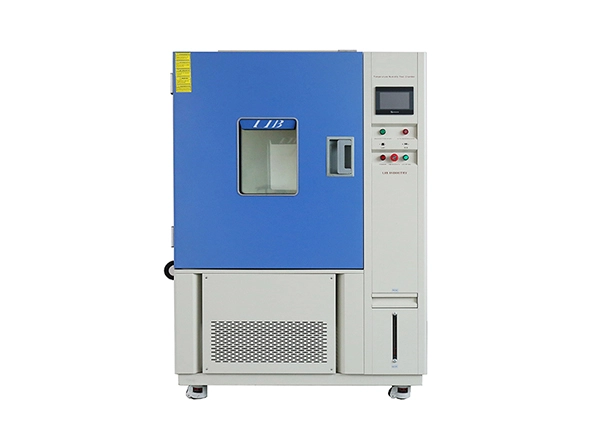
Reach-In: Appropriate for cells, modules and medium-sized battery assemblies requiring controlled temperature exposure, charge/discharge testing or environmental cycling.
Walk-In: Better suited to large battery packs, ESS assemblies, vehicle-scale components or tests requiring substantial fixture and instrumentation space.
Thermal Shock: Select when the primary requirement is rapid transition between extreme temperatures. It should not automatically be considered a substitute for a battery safety chamber when thermal runaway is possible.
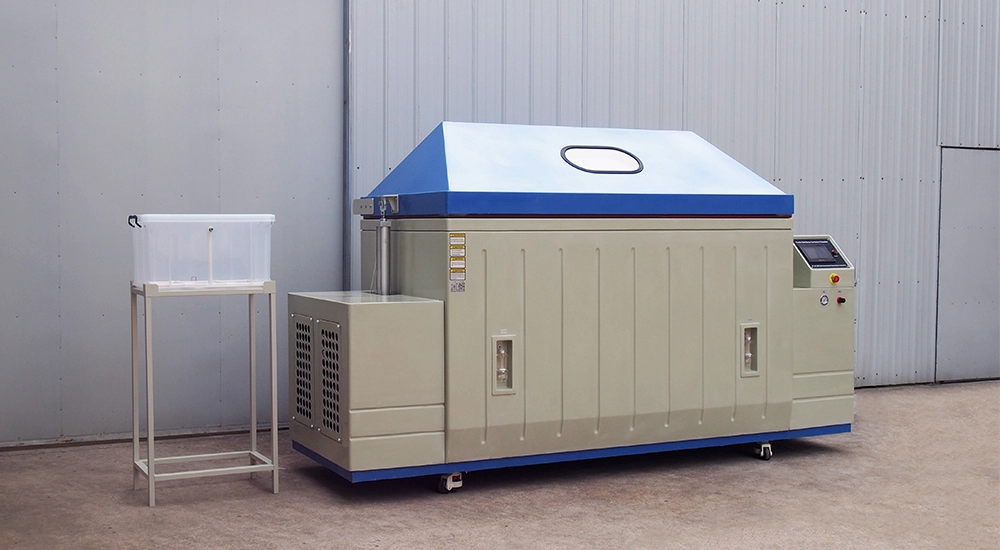
Salt Spray: Appropriate for corrosion testing of battery enclosures, connectors and materials, but it does not replace dedicated battery abuse or runaway safety equipment.
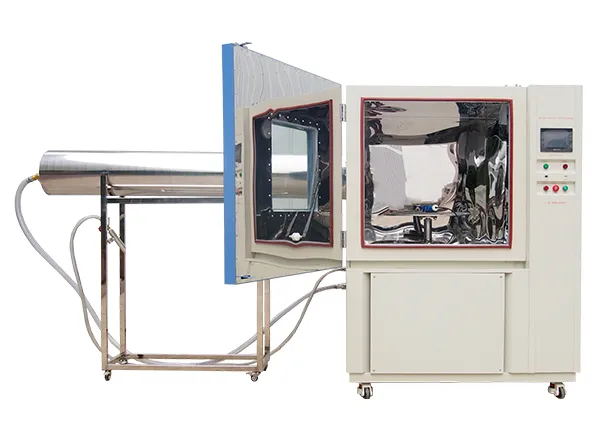
IP: Useful for evaluating water and dust ingress of battery enclosures and related components.
Special Custom Chamber: Recommended when testing involves high-energy ESS systems, large battery packs, thermal runaway, combustible gas accumulation, pressure events, custom exhaust, fire suppression or unusual electrical configurations.
For battery-specific testing, the most relevant starting point is LIB's Battery Test Chamber, which is designed around battery environmental and safety requirements rather than simply adapting a general-purpose chamber.
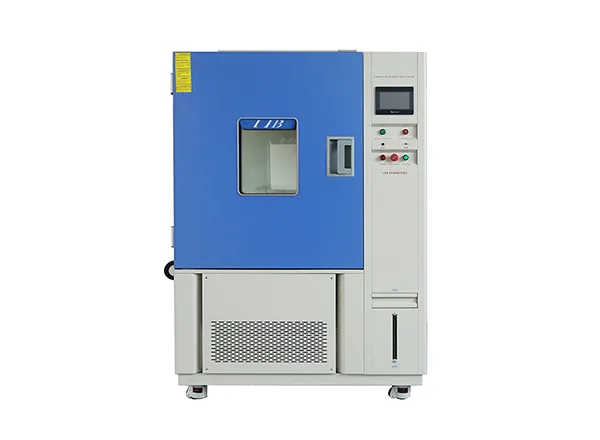
For conventional environmental conditioning before or alongside battery safety testing, LIB's Thermal Chambers provide temperature-control configurations from compact laboratory units to larger systems.
For applications involving EV cells, modules and packs, the Battery Technology section provides an industry-level path for connecting environmental testing with battery development and reliability requirements.
A useful related resource is LIB's Battery Test Chamber for Thermal Runaway Experiments of Lithium-Ion Batteries, which explains why thermal runaway testing requires structural containment, pressure relief, fire suppression and exhaust management rather than a conventional climatic chamber.
A dedicated thermal runaway or explosion-protected battery test chamber should be considered when the test can produce fire, rapid pressure rise, smoke or hazardous gas. A conventional temperature chamber is generally intended for environmental conditioning rather than uncontrolled battery failure events.
A normal thermal chamber primarily controls environmental conditions such as temperature and humidity. An explosion-proof battery chamber adds hazard-management functions such as reinforced construction, pressure relief, smoke or gas detection, emergency exhaust, suppression and safety interlocks.
Gas detection can provide an early indication of abnormal battery behavior before a major fire or pressure event occurs. The detection system can be linked to alarms, power interruption, ventilation, emergency shutdown or other predefined safety actions.
There is no universal duration. It depends on the battery type, test level, initiation method, observation period and applicable standard. UL 9540A, for example, uses different evaluation levels from cell and module testing through larger system-level evaluations.
Start with the complete battery dimensions and add space for electrical connections, instrumentation, fixtures, airflow, safety clearance and potential expansion. For large packs, the heat release and potential failure energy can be more important than the nominal chamber volume.
It can, if the chamber is specifically engineered for both functions. Temperature capability alone is not enough. The design must also address pressure, gas, fire, electrical isolation, exhaust, detection and emergency response.
An RFQ should identify battery chemistry, cell/module/pack dimensions, maximum voltage and current, charging and discharging conditions, expected heat generation, temperature range, ramp rate, humidity requirement, test standard, potential failure mode, gas detection requirements, pressure-relief strategy, suppression method, exhaust conditions and available laboratory utilities.
No. IEC 62619 establishes safety requirements and tests for industrial secondary lithium cells and batteries, including stationary applications. UL 9540A is a test method focused on evaluating thermal runaway fire propagation and associated hazards in battery energy storage systems.
 English
 русский
 français
 العربية
 Deutsch
 Español
 한국어
한국어 italiano
 tiếng việt
 ไทย
ไทย Indonesia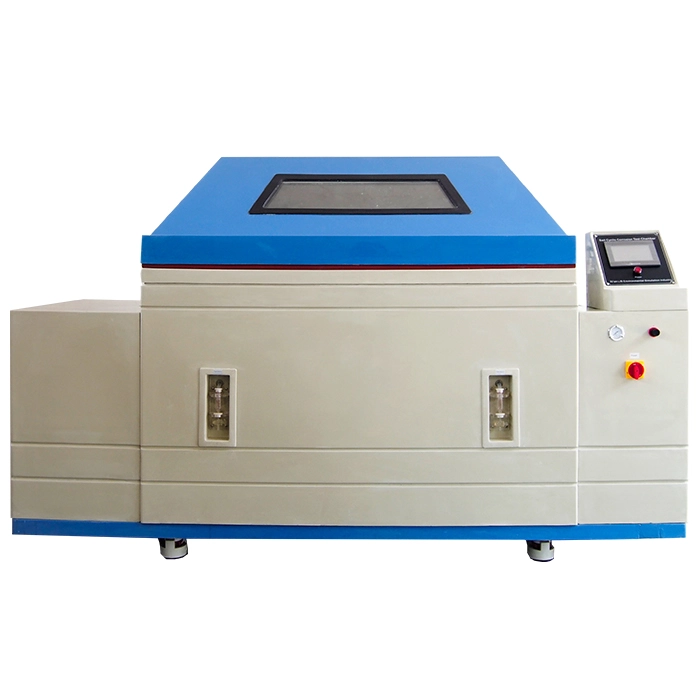
.webp "Mini Environmental Test Laboratory Kit")