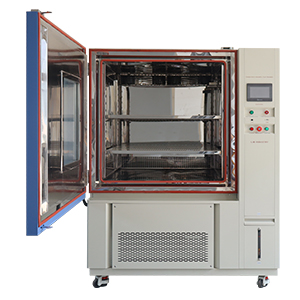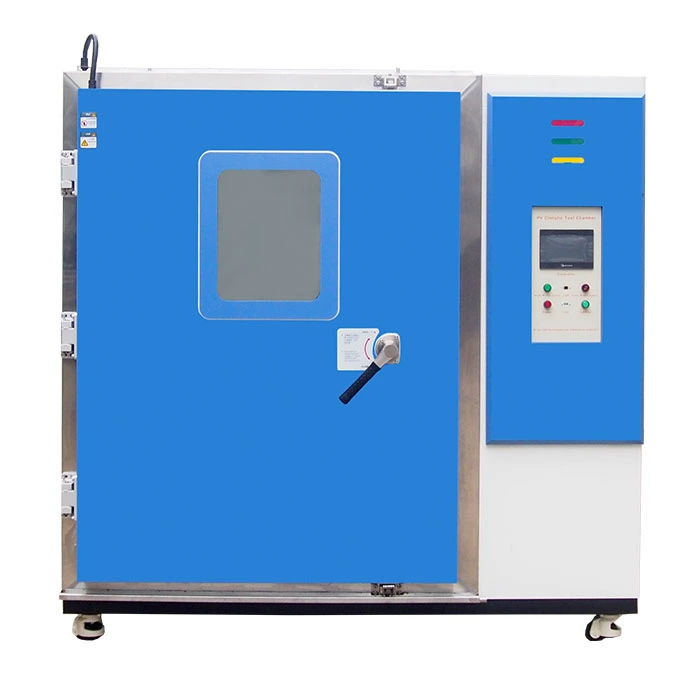
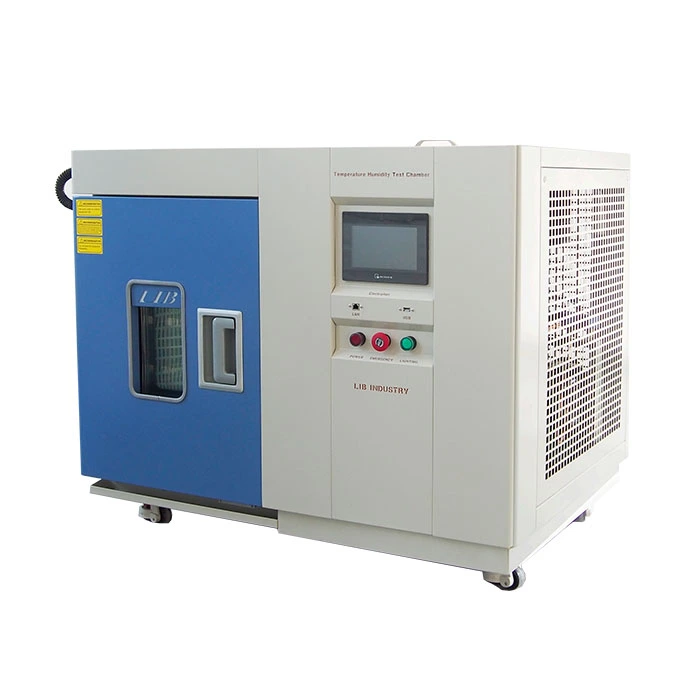
 A benchtop stability chamber is often selected when laboratory floor space is limited, but small size should not be the only purchasing criterion. Temperature and humidity range, stability, uniformity, recovery, usable workspace, safety protection, controller functions, and long-term service can all affect test reliability.
For pharmaceutical stability studies, Li-ion battery testing, electronics reliability, material conditioning, and laboratory research, the right chamber should be selected according to the actual test conditions rather than cabinet size alone. This guide explains the 10 key specifications to check before buying a benchtop stability chamber, followed by a real customized battery-testing case from LIB.
Start with the lowest and highest temperatures required by the test program and leave reasonable operating margin at both ends. Operating continuously near the chamber's limits can affect recovery performance, particularly when samples have significant thermal mass.
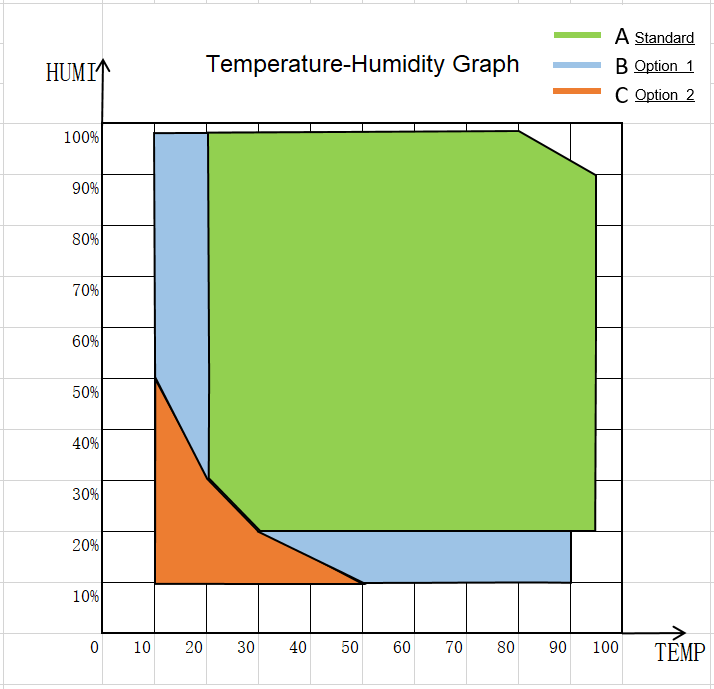 A wide operating range gives one platform more room to grow. LIB's benchtop line, for example, can be built with a low-temperature limit of -20°C, -40°C, or -70°C and a maximum of +150°C — enough to cover ambient conditioning, sub-zero component evaluation, and elevated-temperature aging without switching equipment.
Sensor accuracy concerns the measuring device itself. Temperature fluctuation describes short-term changes at a measurement point, while temperature deviation indicates differences between locations inside the working space.
When comparing manufacturers, ask how these values were measured — sensor count, chamber load, and set points all affect the result. LIB's published figures, ±0.5°C fluctuation and ±2.0°C deviation, are based on multi-point measurement across the working space.
Humidity control is important when moisture affects product chemistry, corrosion, insulation, packaging integrity, dimensions, or mechanical properties. Do not evaluate humidity capability from one RH number alone — the achievable range can vary with temperature, so check the actual temperature-humidity operating envelope.
For pharmaceutical stability studies, commonly used ICH Q1A(R2) conditions include long-term, intermediate, and accelerated storage such as 25°C/60% RH, 30°C/65% RH, and 40°C/75% RH, depending on the protocol.
A rated humidity ceiling only matters if it holds through the temperature range you actually run. LIB's benchtop units are rated for 20% to 98% RH with ±2.5% RH deviation across their standard operating window.
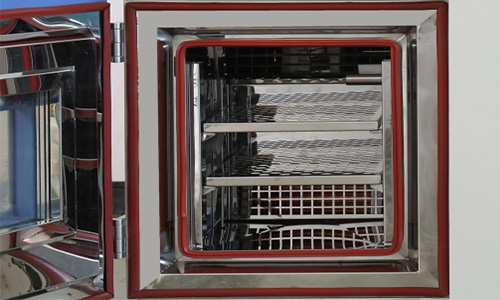 Nominal chamber volume does not tell the whole story. Internal dimensions, shelf spacing, cable-port locations, airflow clearance, and specimen geometry determine the usable working space. Samples packed too closely can restrict circulation and create temperature or humidity differences.
Two chambers rated at "50 L" can hold very different sample counts depending on shelf layout and port placement. LIB's benchtop models are available in 50 L and 80 L configurations, sized for labs that need controlled testing without a full floor-standing unit's footprint.
For long-duration testing, recovery after door opening can be more important than maximum heating or cooling speed. Opening the door introduces ambient air and can temporarily change temperature and humidity. Ask how quickly the chamber returns to spec after sample loading — a number measured on an empty chamber with a brief door crack won't predict real-world recovery during routine sample checks.
Temperature transition rate affects both test duration and thermal stress applied to specimens. Confirm whether the published rate is an average or linear rate, and which temperature interval was used.
Standard LIB benchtop units ramp at roughly 3°C/min heating and 1°C/min cooling, with faster options available on request. For stability storage, however, rapid ramping is not necessarily the most important spec — stable control, low overshoot, uniformity, and recovery often matter more.
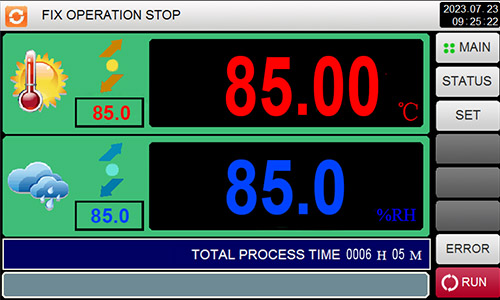 A programmable controller simplifies repeated testing: multi-step programs, adjustable dwell periods, alarms, real-time trend display, program storage, data logging, remote monitoring, and computer communication are the functions worth checking.
LIB's controller is a color LCD touchscreen with Ethernet connectivity, and a side cable port lets sensors, power leads, or monitoring cables pass into the chamber when specimens need to stay powered or observed during a run. For regulated applications, confirm data retention, access control, audit trail, calibration, and validation requirements separately.
Good control at one sensor does not mean every sample experiences the same environment. Forced-air circulation distributes conditioned air through the workspace and reduces hot and cold zones, but sample density, shelf position, and blocked air outlets can still affect uniformity.
Even with forced-air circulation as standard, placement still matters — samples against a vent or packed too tightly can create a pocket that never fully matches setpoint. Chamber mapping during commissioning is the most reliable way to confirm uniformity for a given load.
The chamber interior is exposed to humidity, condensation, elevated temperatures, cooling cycles, and cleaning procedures. SUS304 stainless steel is commonly used because it resists corrosion and is easy to clean. Also check shelf supports, door seals, cable ports, drainage, and insulation.
Interior material is hard to upgrade later, so it's worth checking closely at purchase time. LIB uses SUS304 stainless steel throughout the interior, with polyurethane foam and insulation cotton reducing heat transfer through the cabinet wall.
Purchase price is only part of total ownership cost — also weigh electricity and water consumption, maintenance, calibration, replacement parts, and technical support.
Baseline protection on most quality chambers includes over-temperature, over-current, earth-leakage, refrigeration high-pressure, low-water, and humidifier dry-heating protection. Some applications need more than this baseline: battery testing is a common example, where additional safeguards (smoke detection, exhaust, fire suppression) may be necessary depending on chemistry, test temperature, and sample configuration. This should be scoped with the manufacturer during equipment selection, not added after the fact — the case study below shows what that looks like in practice.
Benchtop chambers suit relatively small sample loads that need repeatable environmental exposure:
· Pharmaceutical stability testing — formulation trials, packaging comparisons, and smaller development batches under controlled temperature and humidity.
· Li-ion battery testing — elevated-temperature and humidity exposure for small cells or units, with application-specific safety systems (see case study below).
· Electronics reliability testing — PCBs, sensors, connectors, and small modules exposed to temperature/humidity before electrical inspection, with cable ports for powered testing.
· Material aging testing — polymers, adhesives, coatings, and packaging conditioned to evaluate dimensional change, moisture uptake, and adhesion loss.
A real LIB project shows why application-specific customization can matter more than picking a standard chamber off a catalog.
Customer requirement: In March 2023, LIB received an inquiry for several temperature and humidity chambers for Li-ion battery unit testing, specifying a 10–98% RH humidity range, +30°C to +150°C temperature range, 50/60 L capacity, and multiple units. Because the batteries would be exposed to high temperatures, the customer also required additional safety protection.
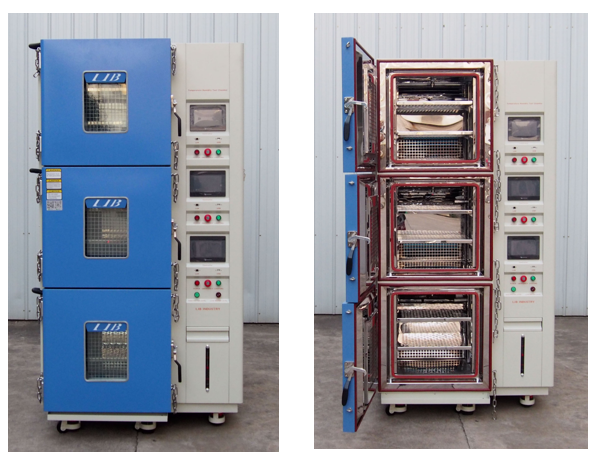
LIB's customization: Each chamber was built with an enhanced safety workspace, safety door with observation window, and safety locking system, plus a smoke alarm, exhaust system, and fire suppression system. Three 50 mm sealed test ports were added, one per internal chamber, and each chamber got its own controller — letting the customer run different temperature and humidity conditions per chamber in a single compact footprint.
Outcome: After several rounds of technical discussion, the customer approved LIB's proposal and purchased three customized TH-50B3 chambers in August 2023, receiving and commissioning the equipment for battery testing by December 2023.
Note: Battery testing conditions and safety requirements vary by chemistry, capacity, test procedure, and applicable regulations. The final safety configuration should be determined together with the manufacturer based on an actual test risk assessment.
| 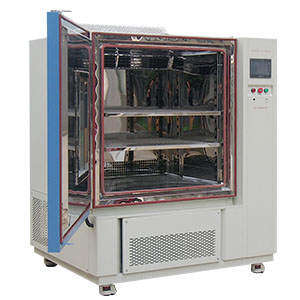 | 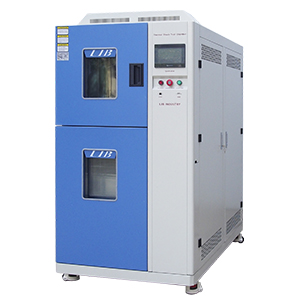 |
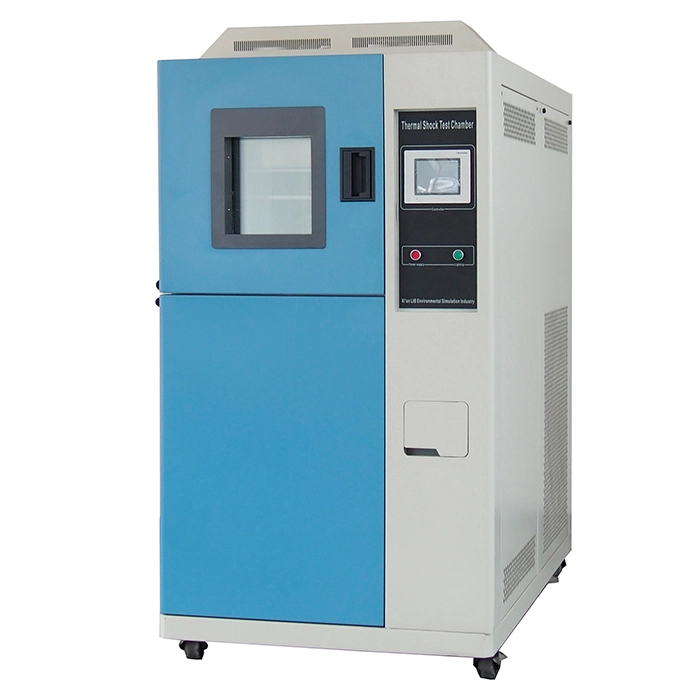
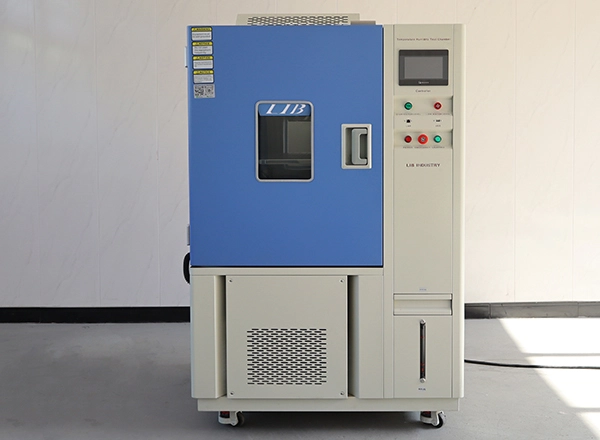
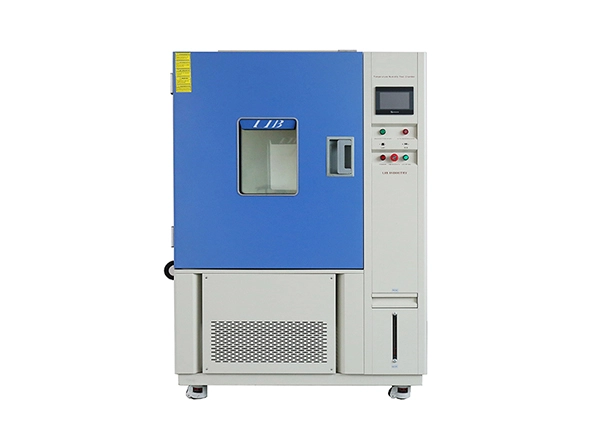
Temperature & Humidity Chamber General climatic and environmental testing | Thermal Cycling Chamber Repeated temperature-change testing | Thermal Shock Chamber Rapid transfer between extreme temperature zones |
These can complement a benchtop stability chamber when a lab needs both long-term environmental conditioning and accelerated temperature testing.
Xi'an LIB Environmental Simulation Industry manufactures environmental test equipment for temperature, humidity, corrosion, weathering, dust, and water-ingress simulation, supporting labs in more than 60 countries. For benchtop chamber projects, LIB offers standard and customized configurations, pre-shipment commissioning, installation guidance, a 3-year warranty, and lifetime service.
The best benchtop stability chamber is not necessarily the chamber with the widest specifications or largest capacity. It is the chamber that matches your actual temperature, humidity, sample size, test duration, monitoring, safety, and laboratory-space requirements.
If you are planning a new chamber purchase, provide LIB with your temperature range, humidity range, sample dimensions, quantity, test duration, and special safety requirements. LIB can recommend a standard configuration or develop a customized benchtop stability chamber,benchtop temperature humidity chamber,humidity calibration chamber,mini temperature chamber or walk in environmental chamber for your application.
Need a customized solution? Contact LIB for a technical recommendation and quotation.
What's the difference between a benchtop stability chamber and a regular temperature chamber?
A stability chamber controls both temperature and humidity in a compact space; a plain "temperature chamber" usually controls temperature only.
Can a benchtop climatic chamber handle very low temperatures and high humidity in the same test?
Not always to the same degree — humidity systems generally have a narrower effective window than the full temperature range. Confirm the combined operating envelope with the manufacturer rather than assuming both rated ranges apply simultaneously.
How do I know if 50 L is enough, or if I need 80 L or larger?
Base this on your sample footprint, not the liter rating. Lay out your trays or coupons with realistic airflow spacing, then check that against the manufacturer's internal dimensions and shelf count.
Can a benchtop stability chamber be customized?
Yes — temperature/humidity ranges, dimensions, shelves, test ports, controllers, and application-specific safety systems can all be customized, as shown in the Li-ion battery case above.
What should I consider besides purchase price?
Energy and water use, calibration, maintenance, spare parts, technical support, warranty, and service life all affect long-term operating cost.
 English
 русский
 français
 العربية
 Deutsch
 Español
 한국어
한국어 italiano
 tiếng việt
 ไทย
ไทย Indonesia