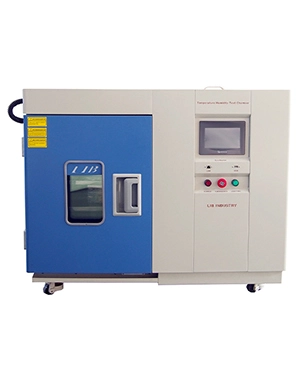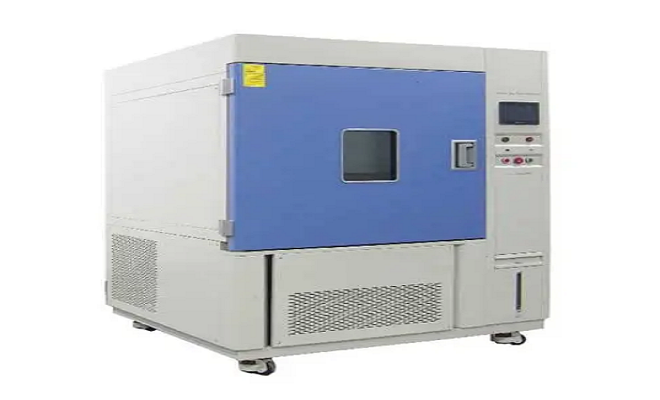
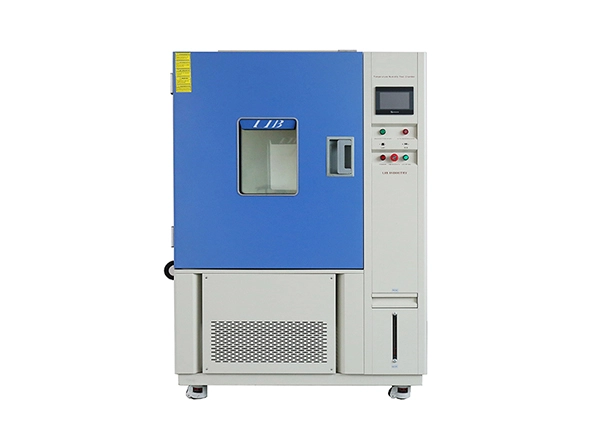
Cable insulation has a tough job: block current, resist heat, survive sunlight, and remain mechanically stable under rain, humidity, and temperature swings. In outdoor power distribution, PV arrays, telecom cabinets, and industrial systems, the weak link is often the polymer around the conductor. When it fades, cracks, chalks, or becomes brittle, leakage risk and maintenance costs rise. ASTM G155 addresses this by using filtered xenon arc light with controlled moisture and temperature to reproduce real-world weathering.
Xenon Light Fastness Test Chamber xenon light fastness aging test device ASTM G151 G155 Xenon Light Radiation Exposure Test Machine You might also be interested in: |
Even if a cable passes initial electrical tests, its insulation may fail early in service. PVC can lose plasticizers, XLPE may degrade under prolonged light and heat, and rubber can stiffen or crack from combined UV, moisture, and heat exposure. On a solar farm, this may appear as jacket embrittlement near combiner boxes; in a wastewater plant, the sheath may look intact but no longer flex safely.
For engineers and buyers, the key question is: what changes after exposure, and how fast? Tensile strength and elongation retention after xenon arc testing are commonly used metrics. For instance, some specifications require ≥80% retention after 1,000 hours of accelerated weathering.
ASTM G155 is a widely used standard for accelerated weathering of non-metallic materials. It uses xenon arc lamps to simulate sunlight, heat, moisture, and rain, testing plastics, coatings, rubber, textiles, and automotive parts.
Key parameters include:
Irradiance: Typically 340 nm or 420 nm, e.g., 0.35–0.55 W/m²/nm.
Temperature: Black panel temperature around 63°C ± 3°C.
Humidity: Usually ~50% RH.
A typical cycle combines 102 minutes of light with 18 minutes of light plus water spray, simulating rain and surface wetting. Purified water ensures consistency.
In short, ASTM G155 provides a controlled, repeatable method to evaluate material durability, compare formulations, and predict long-term outdoor performance.
The most useful way to read ASTM G155 is to look at the variables that push cable insulation aging up or down. For wire and cable work, five of them deserve close attention.
Typical factors in ASTM G155 and their effect on cable insulation aging are summarized below.
Test factor | Why it matters for cable materials |
Xenon arc light source | Reproduces full-spectrum sunlight, not just narrow UV |
Optical filters | Match outdoor sunlight, behind-glass exposure, or harsher UV cases |
Irradiance control | Keeps exposure intensity stable across long test periods |
Black panel temperature | Tracks specimen surface heating under light |
Humidity and spray | Adds dew/rain effects that can change failure mode |
ASTM G155 cycles may control light at 340 nm, 420 nm, or broadband 300–400 nm depending on the cycle. For cable insulation aging, that matters because different materials react differently to narrowband and broader spectral exposure. If irradiance drifts during a long test, comparison data becomes weak. Stable irradiance is not a nice extra. It is the backbone of useful trend data.
The standard uses black panel temperature in all exposure cycles and, in some cycles, chamber air temperature as well. Moisture may come from spray, controlled relative humidity, or both. A cable jacket can survive light alone but fail when heat and wetness are added. In practical testing, this is where surface cracking, stickiness, or loss of flexibility often begins to separate one formulation from another.
Hours alone do not tell the story. Two 1,000-hour tests can give very different results if the filters, irradiance, spray timing, or temperature control are different. Repeatability matters more than chasing a dramatic hour number. For material screening, a consistent cycle is far more useful than a harsh but poorly controlled one.
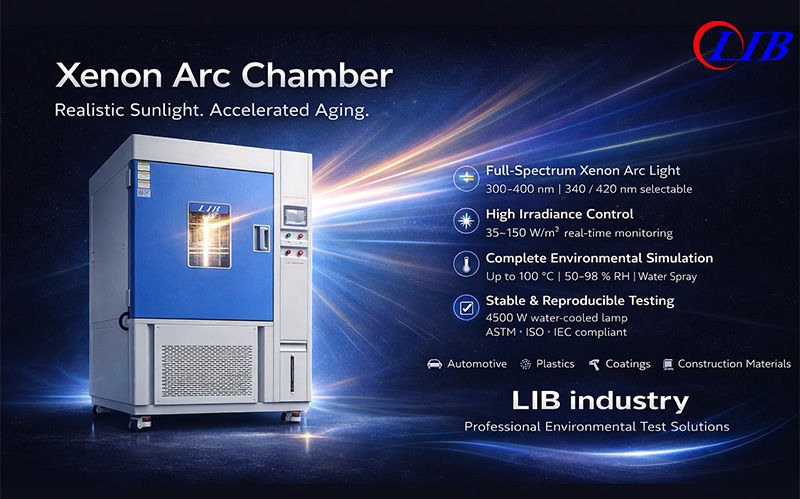
For this kind of work, the equipment must do more than switch on a lamp. The LIB Xenon Arc Chamber is built around the same factors cable engineers watch in an ASTM G155 program: full-spectrum light, irradiance control, black panel monitoring, humidity regulation, and adjustable spray. According to the product page, it reproduces UV, visible, and infrared light, with a 300–400 nm spectral range, optional 340 nm or 420 nm monitoring, light intensity from 35 to 150 W/m², humidity from 50% to 98% RH, and adjustable water spray cycles.
Those numbers matter in real lab work. A rotating sample holder helps keep exposure more uniform across multiple specimens. Real-time UV monitoring helps hold a stable irradiance target. Black panel sensing helps track the heat the specimen surface actually sees. Water spray nozzles make it easier to move from dry light exposure to a more realistic cable weathering test with moisture cycles included. For a cable manufacturer comparing two PVC or XLPE formulations, that means tighter side-by-side data and fewer arguments about whether the chamber itself changed the result.

A useful cable insulation aging program does not need to be complicated, but it does need discipline. The basic workflow is straightforward.
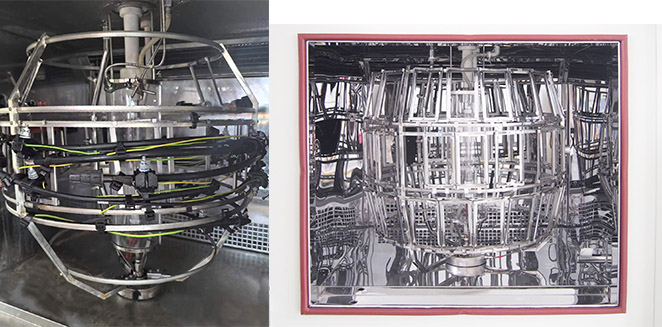
Specimens should be cut and conditioned in a consistent way. If the goal is jacket comparison, surface condition and thickness should be recorded before exposure. If the goal is insulation durability, the lab should note the compound type, color, construction, and any relevant preconditioning.
A practical setup often includes:
· selected filter type based on the service environment
· irradiance control point, such as 340 nm or 420 nm
· black panel temperature target
· humidity setting
· spray cycle timing
· total exposure duration and pull-out intervals for intermediate checks
These settings should match the material question being asked, not just a generic cycle copied from another project.
During exposure, the lab should record any visible changes at planned checkpoints. The common ones are color shift, gloss loss, powdering, chalkiness, surface microcracks, and stiffness change. A cable that still looks acceptable at 250 hours may show a very different bend response at 750 or 1,000 hours. That is why interval data is often more useful than a single final snapshot.
Post-exposure testing is where ASTM G155 turns into material selection data. Visual change matters, but cable engineers usually need more than photographs.
The table below shows the checks most often linked to cable weathering decisions.
Property after exposure | What it reveals |
Color change / fading | Early UV sensitivity or pigment instability |
Cracking / chalking | Surface degradation and loss of weather resistance |
Tensile strength retention | Loss of load-bearing integrity in the polymer |
Elongation retention | Drop in flexibility and bend tolerance |
Cold bend or flex response | Real-use handling risk after aging |
A cable jacket can fade but still function. It can also keep its color and quietly lose flexibility. That is why tensile strength and elongation retention remain two of the most useful readings after xenon arc exposure. In many cable applications, those numbers tell the story better than color alone. If one compound keeps a cleaner surface but loses too much elongation, it may still be the weaker choice for field service.
ASTM G155 data becomes especially valuable when it is used comparatively. The strongest use case is not “this material survived X hours.” It is “this formulation held higher retention, less cracking, and better bend behavior than the other options under the same cycle.” That is the kind of result R&D teams, cable producers, and procurement groups can act on.
Xi’an LIB Environmental Simulation Industry has been delivering turnkey environmental test chambers since 2009, serving 56+ countries. Customers benefit from custom chamber designs, global technical support, calibration assistance, training, and a three-year warranty with lifetime service, ensuring the chamber is ready to deliver accurate, repeatable results.
Using a well-configured xenon arc chamber under ASTM G155, engineers can reproduce sunlight, heat, humidity, and water spray cycles to observe exactly how cable insulation behaves. Key observations include:
Color fading and chalking
Cracking and embrittlement
Tensile strength and elongation loss
Reduced flexibility under cold bend or flex tests
With the LIB Xenon Arc Chamber, labs gain a stable, repeatable platform that provides practical, comparative data. This supports material selection, quality verification, and confidence before cables reach the field, helping engineers make decisions backed by reliable evidence rather than guesswork.
ASTM G155 evaluates how non-metallic materials such as cable insulation and cable jackets respond to filtered xenon arc light, elevated temperature, humidity, and water exposure under controlled lab conditions. It is used to reproduce the weathering effects seen outdoors or behind glass.
The LIB Xenon Arc Chamber combines full-spectrum sunlight simulation with 340 nm or 420 nm monitoring, 35–150 W/m² irradiance control, 50%–98% RH humidity control, black panel temperature monitoring, and adjustable spray cycles. That makes it suitable for ASTM G155-based cable insulation aging work.
Common checks include fading, chalking, cracking, embrittlement, tensile strength retention, elongation retention, and bend or flexibility changes. These readings help show whether the cable compound still has enough weather resistance for outdoor service.
Yes. That is one of the most useful applications. Running the same ASTM G155 cycle on different insulation or jacket compounds lets a lab compare retention values, surface damage, and early degradation trends under the same exposure conditions.
 English
 русский
 français
 العربية
 Deutsch
 Español
 한국어
한국어 italiano
 tiếng việt
 ไทย
ไทย Indonesia
.webp "BS EN 50289-4-17 / UL 1581 Xenon Arc Weathering Cable Test Chamber")