Corrosion testing is essential for evaluating the durability of coatings, metals, and industrial components exposed to harsh environments. For decades, the salt spray chamber has been widely used to assess corrosion resistance. However, as industries such as automotive, aerospace, and industrial coatings demand more realistic testing conditions, traditional salt spray testing often falls short.
To better replicate real-world environments, modern testing standards have introduced more advanced methods. ISO 11997-1, a widely recognized standard for cyclic corrosion testing, requires alternating environmental factors such as salt spray, humidity, and drying phases. This raises an important question: Should you use a cyclic corrosion test chamber or a traditional salt spray chamber for ISO 11997-1 testing? This article explains the differences and why cyclic corrosion testing is the preferred solution.
A salt spray chamber exposes samples to a continuous mist of salt solution under controlled temperature conditions, accelerating corrosion to evaluate the protective performance of coatings and materials. Typical tests follow standards such as ISO 9227 or ASTM B117. Samples, including painted metal panels, electroplated components, and fasteners, are continuously exposed to a saline atmosphere.

Advantages of salt spray testing include:
Simple and standardized procedures
Rapid detection of coating defects or weaknesses
Widespread use in quality control
However, salt spray testing has limitations. Its environment remains constant throughout the test, failing to simulate real-world conditions where coatings experience wet-dry cycles, humidity changes, and temperature fluctuations. This is where cyclic corrosion testing excels.
A cyclic corrosion test chamber replicates realistic environmental conditions by alternating multiple phases within a programmed test cycle. Instead of continuous salt exposure, it simulates sequences of:
Salt spray
High humidity or condensation
Drying phases
Temperature cycling

These cycles accelerate corrosion in a way that closely resembles outdoor conditions. Cyclic corrosion testing allows engineers to evaluate coating durability, detect failures early, and predict long-term performance more accurately.
Importantly, ISO 11997-1 specifically requires cyclic corrosion conditions, making a cyclic corrosion test chamber essential for laboratories performing this type of testing.
To give context to cyclic corrosion testing, it’s useful to understand ISO 11997-1 and other commonly referenced standards:
Purpose: Evaluate coating durability under alternating corrosion environments
Cycle Components:
Salt spray: 2–8 h
High humidity/condensation: 95–100% RH, 40–50°C
Drying phase: 40–60°C, 15–24 h
Salt Deposition: 1–2 mL/80 cm²·h
Salt Solution: 5±1% NaCl, pH 6.5–7.2
Cycle Repetition: 10–30 cycles, customizable
Key Advantage: Closely simulates outdoor corrosion conditions
Purpose: Basic corrosion screening of coatings and metals
Environment: Continuous salt fog, 35±2°C
Salt Solution: 5% NaCl, pH 6.5–7.2
Limitations: No wet–dry or temperature cycles, less realistic for field conditions
Purpose: Accelerated corrosion tests with additives like acetic acid or copper chloride
Environment: Continuous or cyclic salt exposure with solution additives
Applications: Automotive components, industrial coatings
Comparison: More aggressive than NSS, still limited for full ISO 11997-1 cycles
Purpose: Standardized salt spray test for coatings
Environment: Continuous salt fog at 35±2°C
Key Point: Widely accepted for quality control, but not sufficient for cyclic corrosion
Although both systems evaluate corrosion resistance, they differ significantly:
Salt spray chamber: continuous saline fog
Cyclic corrosion chamber: multiple alternating phases (salt spray, humidity, drying, condensation)
Salt spray: limited to accelerated, uniform corrosion
Cyclic corrosion: mimics real environmental conditions, providing results closer to field performance
Salt spray: ASTM B117, ISO 9227
Cyclic corrosion: ISO 11997-1, ASTM G85
Salt spray: basic corrosion screening
Cyclic corrosion: comprehensive evaluation of coating durability, detecting early failures
ISO 11997-1 defines precise cyclic conditions to replicate real-world corrosion:
Salt spray phase: 2–8 hours
Humidity/condensation phase: RH 95–100%, 40–50°C
Drying phase: 40–60°C, 15–24 hours
Salt deposition: 1–2 mL/80 cm²·h using 5±1% NaCl solution, pH 6.5–7.2
Cycles: Typically 10–30, customizable for material and application
These alternating conditions ensure that coatings and metals are rigorously tested for outdoor performance. LIB industry’s chambers maintain ±0.5°C temperature and ±2% RH humidity, guaranteeing reproducible, ISO-compliant results.
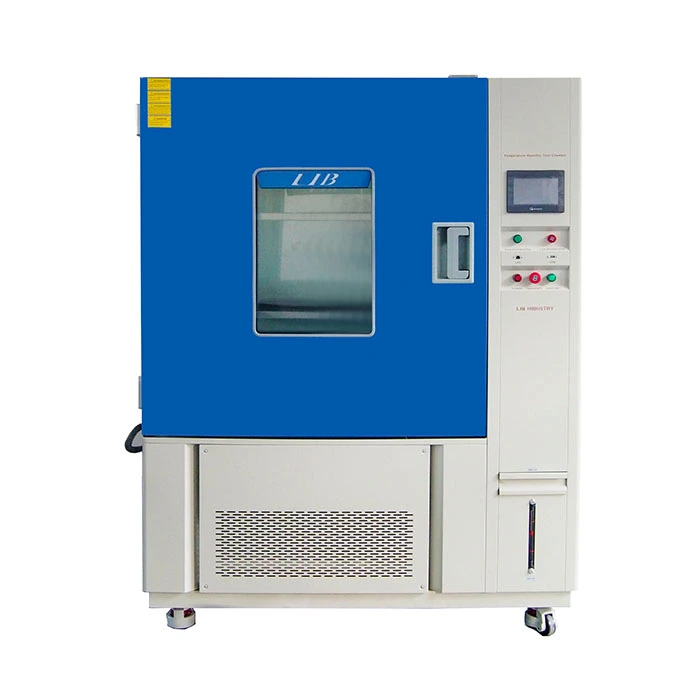
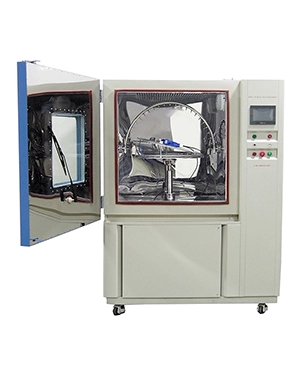
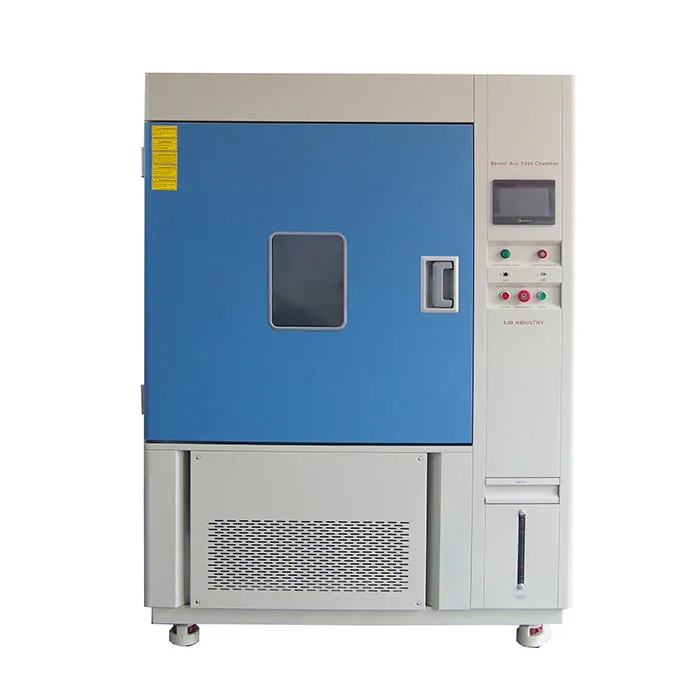
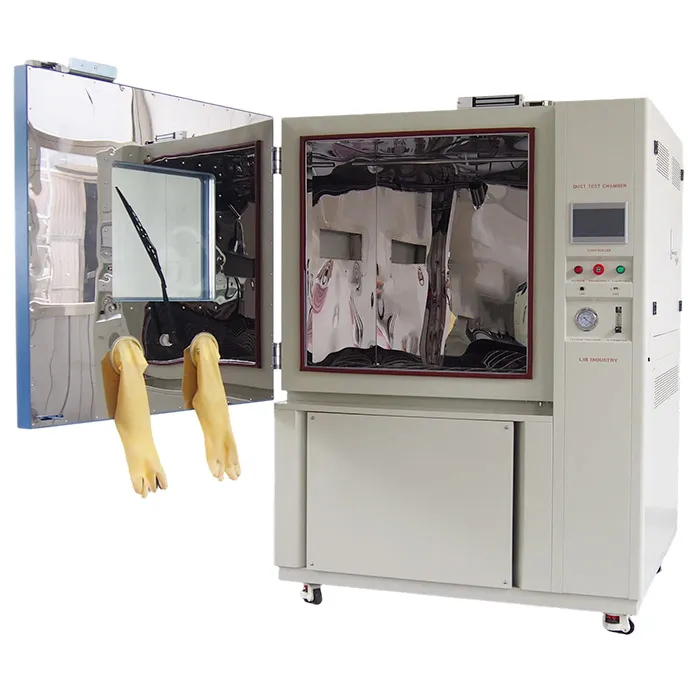
Selecting the right corrosion testing equipment is essential for accurate and repeatable results. LIB industry offers a full range of corrosion test chambers, including ISO 11997-1 cyclic corrosion test chambers, traditional salt spray chambers, and Salt Fog & SO₂ corrosion chambers, providing flexible solutions for automotive, industrial, and coating applications.
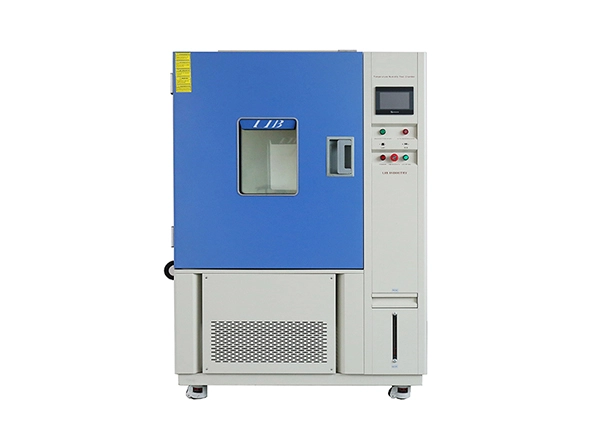
The LIB ISO 11997-1 cyclic corrosion test chamber replicates real-world corrosion environments through multi-phase testing cycles, integrating salt fog, high humidity, temperature cycling, and drying phases in a single automated system. This ensures more accurate evaluation of coatings, metals, plastics, and electronic components compared to single-mode tests.
Model | SC-010 | SC-016 | SC-020 |
Interior Volume (L) | 780 | 1280 | 1800 |
Temperature Range | +10 ℃ ~ +90 ℃ | ||
Humidity Range | 30% ~ 98% RH | ||
Salt Fog Deposition | 1~2ml / 80cm2 · h | ||
Cooling system | Mechanical compression refrigeration system | ||
Water supply system | Water purification system | ||
Air Preheating | Saturated air barrel (31Liter) | ||
Spraying System | Atomizer tower and Spray nozzles | ||
Salt Fog Collected | Fog collector and fog measure cylinder | ||
Controller | Programmable color LCD touch screen controller, Ethernet connection | ||
Safety Device | Humidifier Dry-combustion Protection; Over-temperature Protection; Over-current Protection; Water Shortage Protection; Earth leakage Protection | ||
Material | Glass fiber reinforced plastics | ||
| Standard Configuration | 8 round bars | ||
 |  | ||
Precise environmental control: PT100 Class A sensors and advanced PID control maintain temperature within ±0.5 °C, humidity within ±2 % RH, and salt deposition at 1–2 mL/80 cm²·h, ensuring reproducible, reliable results.
Flexible and customizable test programming: The touchscreen controller supports up to 120 program profiles with 100 steps each, allowing custom cycles for different materials, standards, and real-world conditions.
Durable, corrosion-resistant construction: Glass fiber reinforced plastics workroom and A3 steel exterior with electrostatic coating minimize maintenance and ensure long-term stability.
Optimized salt spray system: Quartz nozzles, spray towers, and salt collectors ensure even, controlled deposition to meet international standards.
Customizable sample holders: Flexible fixtures accommodate different sample shapes, sizes, and quantities.
Safe, efficient, and eco-friendly operation: Pneumatic lids, interlocks, and closed-loop water recovery save up to 80% condensate and reduce operational costs.
In addition, LIB’s salt spray and Salt Fog & SO₂ chambers deliver reliable testing for standard corrosion evaluation under ASTM B117, ISO 9227, and ASTM G85, ensuring stable, repeatable results.
Traditional salt spray chambers cannot meet ISO 11997-1 testing requirements. LIB industry's cyclic corrosion test chambers provide realistic, multi-phase corrosion simulation, helping manufacturers evaluate coatings, detect early failures, and ensure product quality.
Why choose LIB industry:
Customizable solutions for materials, sizes, and cycles
Reliable, precise performance with durable construction
Flexible programming for standard and custom procedures
Comprehensive support: engineer consultation, fast delivery, 3-year warranty, and lifetime technical assistance
Contact LIB industry today to find the right ISO 11997-1 cyclic corrosion chamber for your lab or production line.
 English
 русский
 français
 العربية
 Deutsch
 Español
 한국어
한국어 italiano
 tiếng việt
 ไทย
ไทย Indonesia