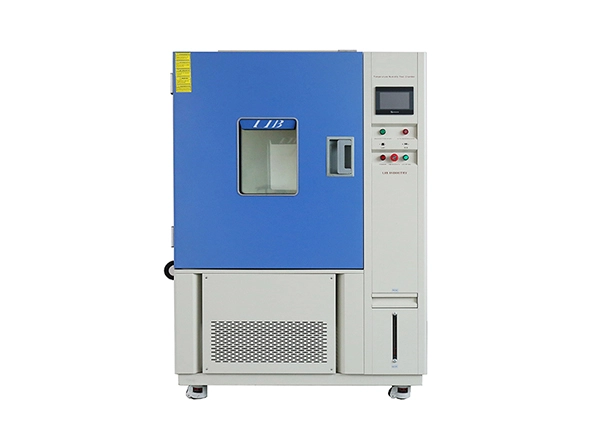
Accelerating Reliability Validation for Next-Generation Electronics and Industrial Materials
In advanced industries such as automotive electronics, 5G communication infrastructure, aerospace systems, and smart consumer devices, product reliability is no longer a competitive advantage—it is a survival requirement.
Yet many engineering teams still underestimate one critical threat: atmospheric corrosion caused by noxious gases.
Unlike visible mechanical damage, gas-induced corrosion is silent. It progresses slowly, accumulates invisibly, and eventually leads to catastrophic field failures after years of operation.
Typical failure scenarios include:
Connector sulfuration in automotive electronics
PCB creep corrosion in humid industrial environments
Sensor drift in sealed electronic modules
Metal degradation in outdoor communication systems
The real challenge is not that these failures happen—but that they happen too late to be detected by conventional testing methods.
Standard salt spray or single-factor testing only simulates a narrow portion of real-world environments. In reality, industrial atmospheres contain complex combinations of reactive gases.
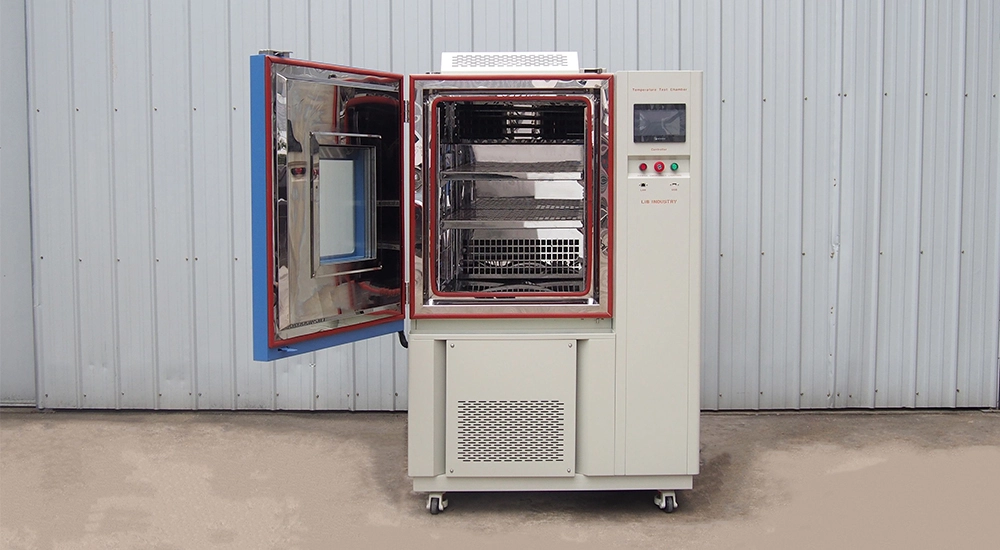
This is why modern reliability engineering increasingly depends on a Noxious Gas Test Chamber—a controlled system designed to simulate long-term atmospheric corrosion in a compressed timeframe.
A Noxious Gas Test Chamber is an advanced environmental simulation system designed to reproduce industrial atmospheric corrosion conditions under controlled laboratory settings.
It accelerates material degradation by exposing test samples to precisely controlled mixtures of corrosive gases, typically including:
Hydrogen sulfide (H₂S)
Sulfur dioxide (SO₂)
Nitrogen dioxide (NO₂)
Chlorine (Cl₂)
These gases simulate real-world industrial environments such as:
Urban pollution zones
Chemical processing plants
Coastal industrial regions
Automotive exhaust exposure conditions
Unlike traditional single-gas systems, a noxious gas chamber enables multi-gas interaction, which is essential for reproducing real corrosion mechanisms.
In modern reliability testing, this system is no longer optional—it is a core validation tool for high-value electronic and industrial components.
Salt spray testing has long been used as a basic method to evaluate corrosion resistance. However, modern products—especially in automotive electronics, 5G infrastructure, and PCB systems—are exposed to complex environments containing reactive gases such as H₂S, SO₂, NO₂, and Cl₂. These gases create multi-factor corrosion mechanisms that salt spray simply cannot replicate. As a result, products that pass salt spray tests may still fail in real-world conditions. To achieve accurate and reliable predictions, manufacturers are increasingly turning to multi-gas simulation using a Noxious Gas Test Chamber.
| Aspect | Salt Spray Testing | Noxious Gas Testing |
|---|---|---|
| Environment simulation | Single factor (salt) | Multi-gas realistic environment |
| Corrosion mechanism | Limited | Complex & synergistic |
| Accuracy | Moderate | High |
| Application relevance | Basic coatings | Advanced electronics & components |
| Reliability prediction | Weak | Strong |
|
|
The core principle behind accelerated life testing is simple:
If environmental stress is precisely controlled, time can be compressed.
Inside a Noxious Gas Test Chamber, corrosion reactions are accelerated by combining:
Controlled temperature elevation
Regulated gas concentration
Humidity control
Multi-gas chemical interaction
This process follows well-established chemical kinetics principles, where reaction rates increase exponentially with temperature:
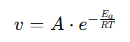
Where corrosion rate increases as temperature rises and activation energy barriers are overcome more rapidly.
However, the real breakthrough is not temperature alone—it is synergistic gas interaction.
When H₂S, SO₂, NO₂, and Cl₂ coexist, they do not act independently. Instead, they create coupled chemical pathways that significantly accelerate oxidation and material breakdown.
This allows engineers to simulate:
Long-term field corrosion equivalent to 10 years of exposure within 21–30 days of testing.
Such acceleration transforms product validation cycles and dramatically reduces time-to-market.
Accelerated testing is only valuable if the results are accurate and repeatable.
One of the most critical challenges in gas corrosion simulation is concentration stability. Even minor fluctuations can distort test outcomes and lead to incorrect reliability predictions.
For example:
A 5% deviation in SO₂ concentration may significantly alter corrosion morphology
Uneven gas distribution can cause inconsistent sample exposure
Poor humidity control can change reaction pathways entirely
This means the difference between a reliable prediction and a misleading result often comes down to system precision.
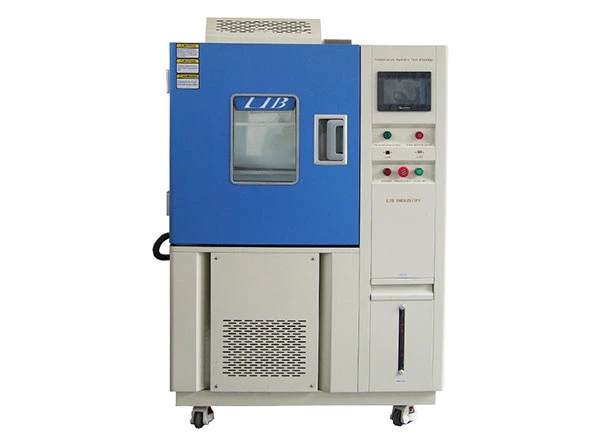
A high-performance Noxious Gas Test Chamber is designed to eliminate these uncertainties through:
ppb-level gas concentration control
Real-time feedback monitoring systems
Dynamic airflow balancing technology
Uniform chamber-wide gas distribution
Automated calibration mechanisms
With these capabilities, test results reflect true material behavior rather than experimental noise.
In reliability engineering, precision is not just a technical feature—it is the foundation of trust in the data.
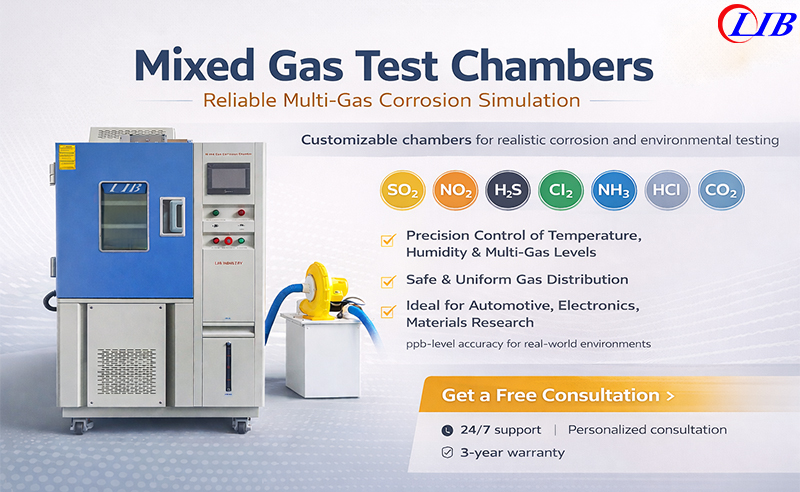
A modern Noxious Gas Test Chamber must deliver more than basic environmental simulation. It must ensure stability, repeatability, and industrial-grade accuracy under long-term operation.
Key capabilities include:
Independent control of H₂S, SO₂, NO₂, and Cl₂ enables flexible test configuration for different industrial standards.
Advanced sensing systems ensure ppb-level accuracy and long-term stability.
Ensures uniform gas distribution across all test samples, eliminating localized deviation.
Supports multi-stage corrosion profiles for complex real-world simulation cycles.
Designed for continuous testing cycles without performance drift.
Adaptable configurations for research laboratories, validation centers, and production environments.

These features make the system suitable for both R&D development and industrial qualification testing.
The value of a Noxious Gas Test Chamber becomes most evident in industries where failure is not an option.
ECU corrosion testing
Connector sulfuration validation
Sensor reliability under exhaust exposure
Base station outdoor component durability
Signal module corrosion resistance
Enclosure sealing performance
Micro-circuit corrosion testing
Conductive path degradation analysis
Packaging material validation
High-altitude atmospheric corrosion simulation
Critical connector reliability testing
Anti-corrosion coating validation
Metal surface treatment evaluation
In each of these fields, accelerated corrosion testing directly impacts product safety, performance, and market acceptance.
| Feature | Low-End Systems | High-Precision Systems |
|---|---|---|
| Gas concentration control | Unstable | ppb-level accuracy |
| Gas distribution | Non-uniform | Dynamic airflow balance |
| Test repeatability | Low | High |
| Data reliability | Inconsistent | Scientifically valid |
| Multi-gas capability | Limited | Fully programmable |
The difference is not incremental—it is fundamental.
Low-end systems may produce data, but high-end systems produce decisions.
In today’s high-performance industries, uncertainty in corrosion testing is no longer acceptable. A Noxious Gas Test Chamber gives you the ability to simulate real-world environments, predict long-term material behavior, and make confident engineering decisions—before failures happen in the field.
Request a customized Noxious Gas Test Chamber solution tailored to your application
Get expert support for test standard selection and solution design
Receive fast response with global installation and commissioning services
3-year warranty with lifetime technical support
Remote guidance and on-site installation services worldwide
Fast spare parts supply and responsive after-sales service
One-on-one engineering support from consultation to operation
 English
 русский
 français
 العربية
 Deutsch
 Español
 한국어
한국어 italiano
 tiếng việt
 ไทย
ไทย Indonesia