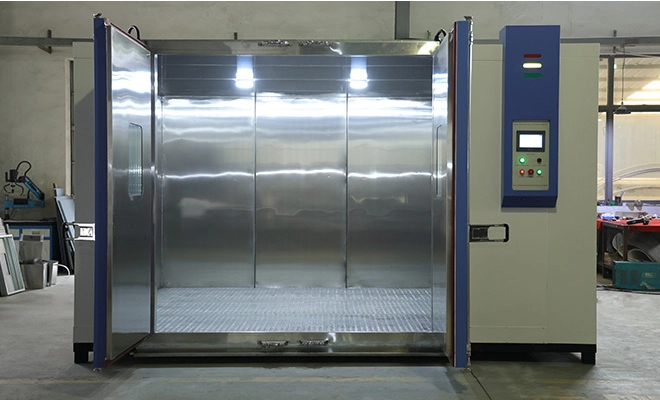
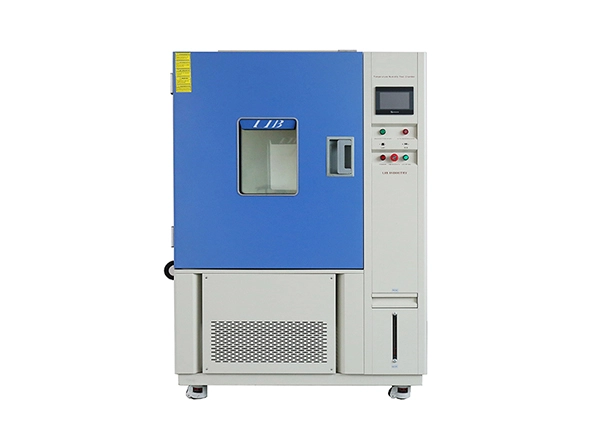
Selecting an industrial freezing chamber is not simply choosing a piece of low-temperature equipment. It directly determines test accuracy, data repeatability, and compliance credibility in laboratories and production environments.
In real industrial validation, many test failures are not caused by the product itself, but by unstable or inappropriate low-temperature test conditions.
For electronics, batteries, automotive components, materials, pharmaceuticals, and packaging systems, a freezing chamber must deliver more than low temperature—it must ensure controlled, repeatable, and traceable environmental conditions.
This guide focuses on three critical selection factors:
Temperature range
Chamber volume
Cooling rate
These three parameters determine whether your test system is truly suitable for long-term industrial validation.
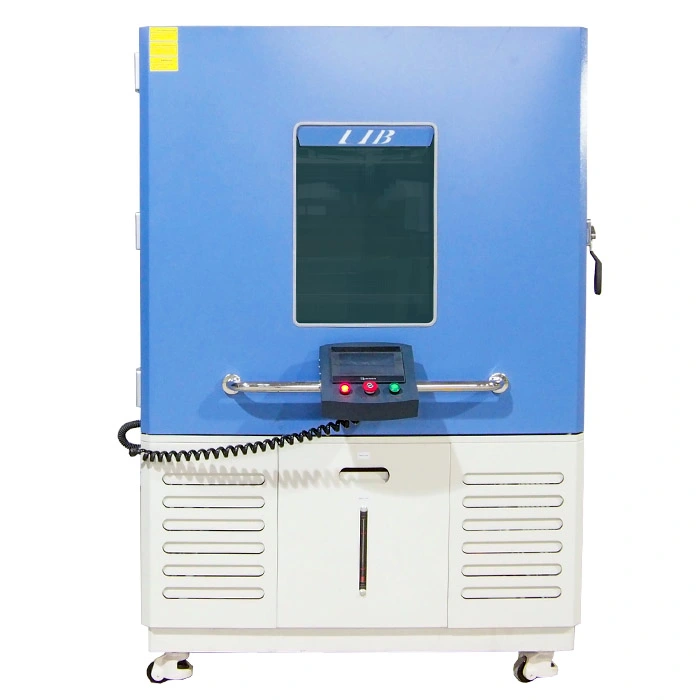
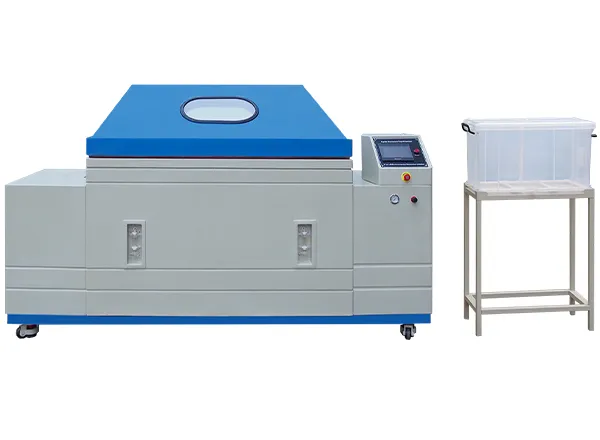
.webp) | 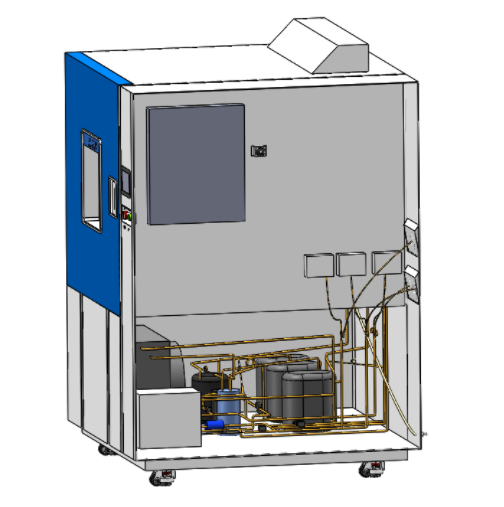 |
An industrial freezing chamber is a precision-controlled low-temperature test system used to simulate freezing or deep cold environments under programmable conditions.
Unlike storage freezers, it is designed for:
Controlled temperature ramping
Stable long-duration exposure
Multi-point temperature uniformity
Data logging and traceability
Repeatable test cycles
Typical applications include:
PCB cold start testing
Battery low-temperature discharge evaluation
Material brittleness and contraction testing
Pharmaceutical and cold-chain validation
Packaging simulation under frozen transport conditions
A true testing chamber must ensure performance consistency, not just cold storage capability.
A low temperature test chamber is a general category, while an industrial freezing chamber represents a higher-performance configuration focused on deep cold stability and industrial load conditions.
In practical terms:
Low temperature chamber → general environmental simulation
Industrial freezing chamber → high-load, deep cold, production-grade validation system
The difference is not only temperature capability, but also:
Cooling stability under load
Airflow uniformity
Data traceability
Recovery performance after disturbance
Temperature range is often the first parameter buyers focus on—but selecting the lowest possible temperature is not always the best strategy.
The real question is:
What is the actual lowest temperature your product must survive or operate in?
Common industrial test levels include:
-20°C / -40°C → electronics and general validation
-55°C / -65°C → automotive and outdoor systems
-70°C to -80°C → aerospace, batteries, advanced materials
Over-specifying temperature range can lead to:
Higher capital cost
Increased energy consumption
Reduced efficiency in daily use
Unnecessary system complexity
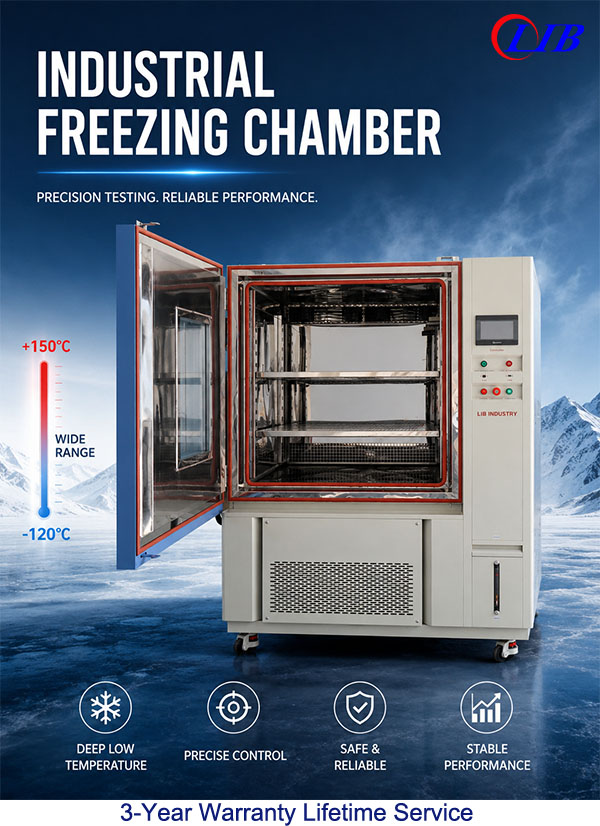
LIB industry industrial freezing chamber supports a wide temperature range from -120°C to +150°C, enabling:
Deep cold testing
Thermal recovery cycles
Multi-condition test programs in a single system
This wide range supports laboratories that require multi-standard compliance testing on one platform.
Chamber volume determines not only how many samples fit, but also:
Airflow stability
Temperature uniformity
Cooling efficiency
Test repeatability
A chamber that is too small or overloaded will create:
Uneven temperature distribution
Slower cooling performance
Inconsistent test results
| Volume | Application | Typical Use |
|---|---|---|
| 100L | R&D samples | Small components, material coupons |
| 225L | Standard lab testing | PCB, sensors, instruments |
| 500L | QC and batch testing | Medium assemblies |
| 800L | Industrial components | Multi-sample trays |
| 1000L | Large assemblies | High-volume validation |
 | ||
Actual usable space is always less than nominal volume because airflow clearance is required for accurate testing.
Cooling rate determines how fast the chamber reaches target temperature and directly impacts test efficiency and lab throughput.
A typical cooling rate is expressed in °C/min.
A faster cooling rate means:
Shorter test cycle time
Higher daily test capacity
Better production efficiency
However, cooling rate must be evaluated under real conditions, not empty chamber performance.
LIB industry freezing chamber provides:
Standard cooling rate: 1°C/min
Optional performance: up to 3°C/min (customized)
Cascade refrigeration system for stable deep cooling
Cooling performance varies depending on:
Sample mass
Material type
Heat load
Target temperature
Even if a chamber reaches the target temperature, unstable conditions can invalidate results.
Key performance indicators include:
Temperature fluctuation
Temperature uniformity
Control accuracy
Electronics → signal drift and functional instability
Batteries → voltage drop inconsistency
Materials → misleading brittleness results
LIB industry systems provide:
Temperature fluctuation: ±0.5°C
Temperature deviation: ±2.0°C
Multi-point airflow circulation system
This ensures consistent exposure across all test samples.
Deep low-temperature performance depends heavily on system architecture.
Cascade refrigeration system
Dual-compressor configuration
PID intelligent temperature control
SUS304 stainless steel interior
Polyurethane insulation layer
Corrosion-resistant external coating
Over-temperature protection
Over-current protection
Refrigerant pressure protection
Leakage protection system
These systems ensure continuous operation under industrial test conditions.
Different industries require different test conditions:
-20°C to -40°C
Cold start, signal stability, PCB performance
-40°C to -80°C
Discharge capacity, voltage stability
-55°C to -100°C
Structural integrity and material performance
-5°C to -40°C
Transport simulation and product protection
Industrial freezing chambers are often used in regulated environments.
Key standards include:
IEC 60068-2-1 (Cold testing procedures)
MIL-STD-810H (Military environmental testing)
ASTM D4169 (Packaging distribution simulation)
A qualified system must support:
Programmable test profiles
Data logging and export
Repeatable test conditions
Modern laboratories require full test traceability.
A proper freezing chamber should include:
USB data export
RS485 communication
Ethernet integration
Multi-segment programming
Graphical temperature recording
This ensures compliance in audits and quality systems.
Before purchasing, confirm:
Required temperature range
Sample size and heat load
Chamber volume and airflow clearance
Cooling rate under real load
Temperature stability and uniformity
Test standard requirements
Data logging format
Safety system configuration
Installation and power requirements
After-sales support and calibration service
LIB industry specializes in environmental simulation equipment including:
Temperature and climate test chambers
Corrosion test systems
Dust and water ingress chambers
Weathering and environmental simulation systems
Key advantages:
Wide temperature range (-120°C to +150°C)
Stable cascade refrigeration system
Industrial-grade PID control
Full data traceability system
Global installation and training support
36-month warranty and lifecycle service
Every unit is tested and commissioned before delivery to ensure real-world operational reliability.
Choosing an industrial freezing chamber is not about selecting the lowest temperature specification.
It is about ensuring:
Correct temperature range for real test conditions
Proper chamber volume for airflow and sample load
Accurate cooling rate for test efficiency
Stable and uniform temperature control
Reliable data traceability for compliance
The best system is not the most powerful one on paper—it is the one that matches your actual testing scenario and future expansion needs.
If you are planning to upgrade or purchase an industrial freezing chamber, define your test conditions first—then match equipment to your real validation needs.
For customized configurations, application-based selection, and technical consultation, LIB industry can support full project evaluation from requirement analysis to final installation.
Contact LIB industry for tailored low-temperature test chamber solutions and RFQ support.
3-Year Warranty
Lifetime Technical Support
Global Service Support
Fast Technical Response
Customized Design Solutions
 English
 русский
 français
 العربية
 Deutsch
 Español
 한국어
한국어 italiano
 tiếng việt
 ไทย
ไทย Indonesia

.webp "Wet Bulb Gauze for Temperature Humidity Chambers")
.webp "Combined Ozone and Xenon Weathering Test Chamber for Material Durability Testing")