Rubber looks tough, flexible, and stable from the outside. In real service, however, a small amount of ozone in the air can slowly attack the surface of many rubber products. The result is often easy to recognize: fine cracks, broken edges, loss of elasticity, and finally leakage, poor sealing, or complete part failure.
This problem is common in automotive seals, tires, hoses, cable jackets, conveyor belts, gaskets, and outdoor rubber parts. Some products may pass a simple tensile test, compression test, or visual inspection, yet still fail after months of outdoor exposure. The reason is that ozone aging is not only a mechanical problem. It is a chemical reaction that becomes more serious when rubber is stretched, bent, or exposed to heat and humidity.
An Ozone Exposure Chamber offers labs a way to mimic this harm in less time. Engineers set ozone levels, heat, moisture, test length, and sample pull. Thus, they spot how rubber splits in ozone before items go into big production or long field work.
Rubber ozone cracking seldom comes from one thing only. Often, a few factors join: ozone amount, time in contact, pull level, heat, dampness, and rubber mix.
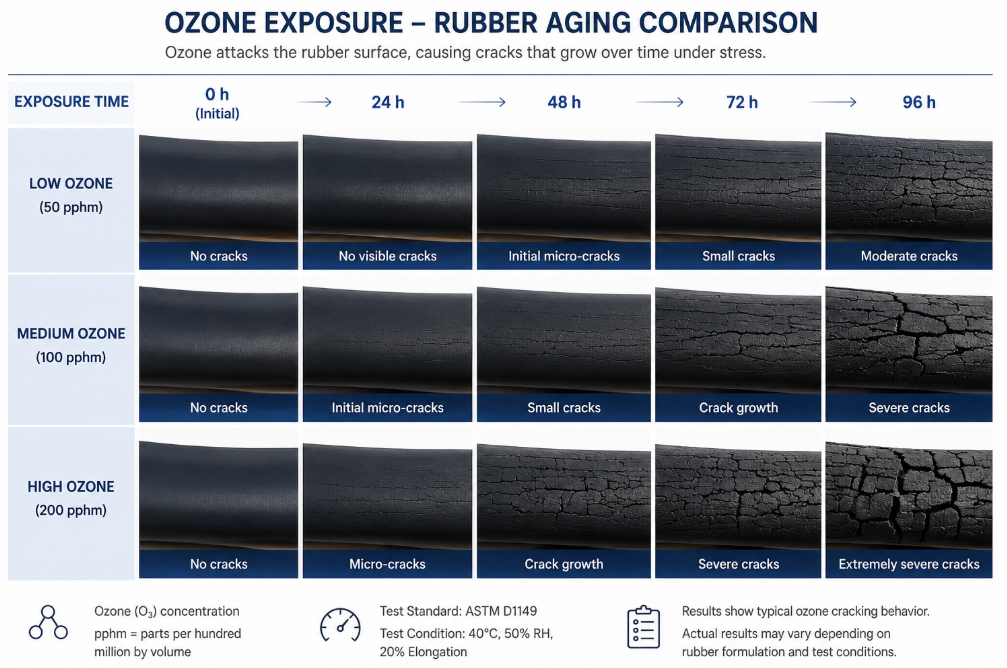
Greater ozone amount speeds up outer splitting. In normal air, ozone levels stay low. But long contact can still hurt rubber. This happens a lot in outside spots, near roads, in factories, or around electric gear.
In laboratory testing, ozone concentration is raised to speed up the aging process. This does not mean the test is simply “more aggressive.” A useful ozone aging test must follow a defined method, with stable concentration and enough exposure time to compare different materials fairly.
Stress is one of the biggest triggers of ozone cracking rubber. A seal compressed into a tight groove, a hose expanded by internal pressure, or a tire sidewall flexing under load all contain stressed zones.
Dynamic strain makes the test more realistic for moving parts. For example, a rubber belt that runs around rollers does not fail in the same way as a flat rubber sheet sitting on a shelf. The material bends thousands of times while exposed to air, heat, and ozone. Static testing can screen basic resistance, while dynamic testing gives deeper insight into real working conditions.
Temperature affects reaction speed and rubber flexibility. A warmer environment can make ozone attack faster, while very dry or very humid conditions may change the surface response of the material. Humidity also matters in many laboratory standards because unstable moisture conditions can make test results harder to compare.
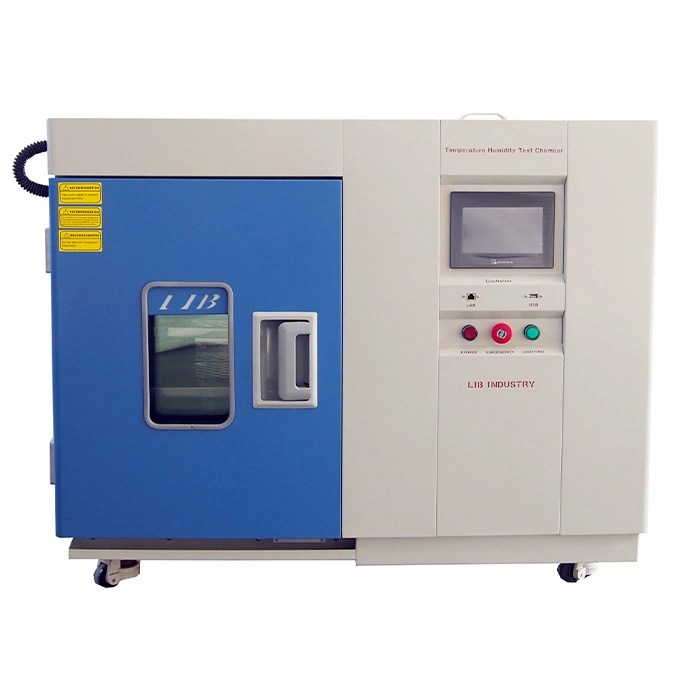
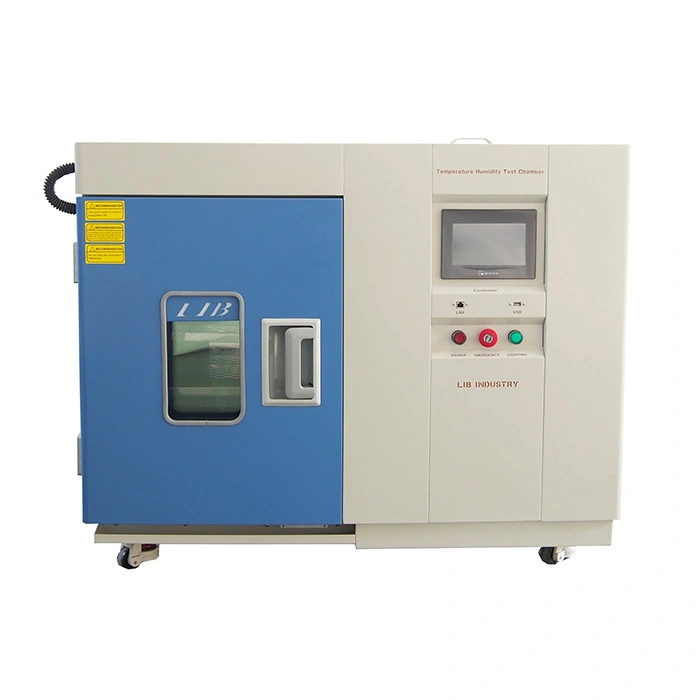
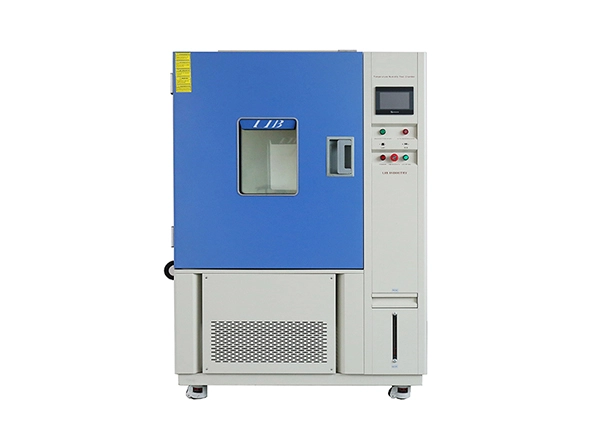
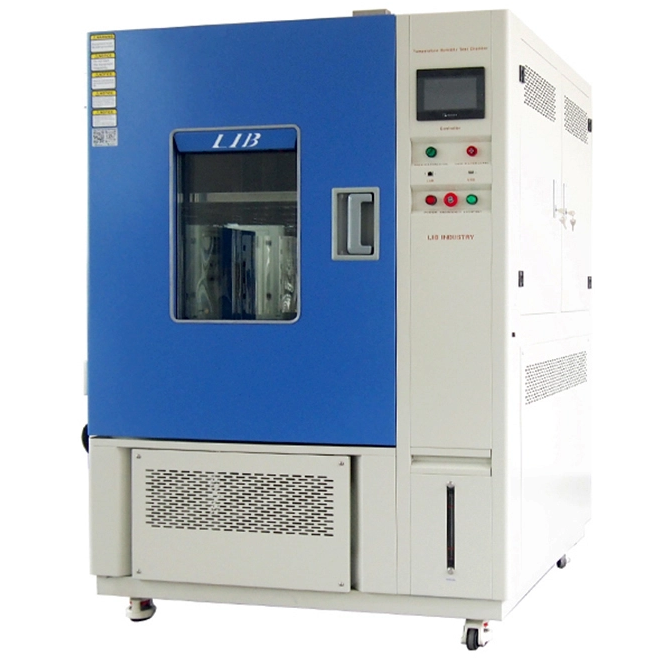
A controlled ozone test chamber reduces this uncertainty. LIB Ozone Test Chamber combines ozone gas exposure with temperature and humidity control, helping laboratories test rubber and rubber products under repeatable environmental conditions.
Two rubber parts with the same shape may behave very differently in ozone. The reason is formulation. Base polymer type, filler, plasticizer, curing system, wax, and anti-ozonant all affect resistance.
Anti-ozonants can slow down cracking by reacting with ozone or forming a protective layer on the surface. Wax can migrate to the rubber surface and create a physical barrier. But protection can be reduced by cleaning, abrasion, bending, or high surface strain. That is why formulation testing should be done on finished rubber compounds, not only on raw materials.
Ozone aging begins at the surface, but its effect is not only cosmetic. Once the outer layer starts to crack, the product becomes more vulnerable to air, moisture, flexing, and mechanical stress.
Micro-cracks may not be visible at the beginning. Under magnification, early damage can appear as fine lines on the surface. As the rubber remains under strain, the cracks open. Ozone continues reacting at newly exposed surfaces, so the crack can grow deeper.
This is why a short ozone exposure test can reveal differences between compounds. One sample may remain smooth after many hours, while another sample develops cracks quickly at the same strain and ozone level.
Ozone cracking affects many rubber products used in transportation, construction, energy, electronics, and daily equipment.
Automotive rubber parts are exposed to outdoor air, heat, vibration, oil mist, road pollution, and repeated movement. Door seals are compressed and stretched every day. Engine hoses see heat and pressure. Tire sidewalls bend continuously. Gaskets must hold sealing force for years.
Even small surface cracks can reduce sealing performance or shorten service life. That is why automotive suppliers often include ozone resistance testing in material approval and batch quality checks.
Cable jackets protect conductors from mechanical damage and environmental exposure. In outdoor power systems, rail transit, mining, and industrial equipment, cable materials may face ozone, heat, moisture, bending, and abrasion at the same time.
Industrial belts and rubber tubes also work under repeated movement. Their failure often starts at areas of flexing, clamp pressure, or surface tension. Ozone aging tests help compare compounds before large-volume production.
Outdoor rubber products may be used near motors, generators, high-voltage equipment, traffic, sunlight, or industrial air. Ozone levels can be higher around electrical discharge and polluted air.
Typical products include vibration pads, expansion joints, roof seals, rubber mats, protective covers, and construction sealing strips. For these products, ozone resistance is not a laboratory detail. It is part of service reliability.
Ozone cracking can be minimized through material selection, formulation design, part geometry, and pre-production validation.
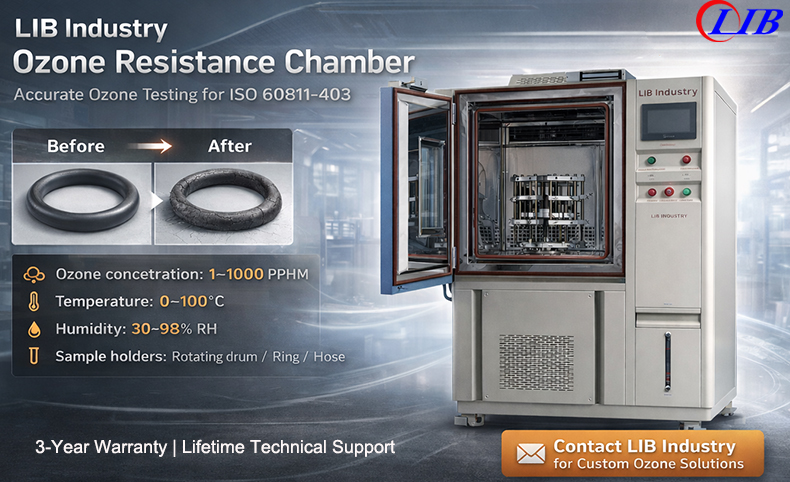
Rubber resistance to ozone depends on polymer structure, hardness, and service environment. Materials should be evaluated under the same ozone aging conditions rather than relying only on datasheets.
Anti-ozonants, waxes, and stabilizers improve resistance, but may affect mechanical or low-temperature performance. Ozone aging tests help balance these trade-offs during compound development.
Sharp corners, high installation strain, and stretched regions increase crack risk. Geometry optimization can significantly reduce local stress concentration and delay failure.
Ozone testing is applied in material selection, product development, supplier approval, batch inspection, and failure analysis to identify weak points before production.
Natural aging can show how rubber behaves outdoors, but it is slow and difficult to control. Weather, sunlight, air pollution, humidity, and temperature changes often overlap, making it hard to confirm whether ozone is the main reason for cracking. An Ozone Exposure Chamber creates a stable test environment where ozone concentration, temperature, humidity, exposure time, and sample strain can be controlled and repeated.
This matters because ozone cracking rubber usually becomes worse when the material is stretched, bent, heated, or exposed to moisture. A controlled ozone aging test helps laboratories compare rubber compounds, check anti-ozonant performance, evaluate supplier materials, and find weak formulations before mass production.
By reproducing ozone cracking under consistent conditions, it helps engineers connect crack patterns with material behavior, product design, and real service risks. For manufacturers, this means faster screening, clearer test data, and lower risk of premature field failure.
| Model | OC-250 | ||
Interior Volume (L) | 250 | |||
Temperature Range | 0℃ ~ +100 ℃ | |||
Temperature Fluctuation | ± 0.5 ℃ | |||
Temperature Deviation | ± 2.0 ℃ | |||
Humidity Range | 30% ~ 98% RH | |||
Humidity Deviation | ± 2.5% RH | |||
Cooling Rate | Ambient ~ 0℃ within 20 min | |||
Ozone Concentration | 1~1000PPHM | |||
Sample Holder Rotate Speed | 0~10 r/min | |||
Airflow Rate | 0 ~ 60L/min | |||
Clamps Tensile Stretch | 5%~35% | |||
Controller | Programmable color LCD touchscreen controller, Ethernet connection, PC Link | |||
Standard | ISO1431;ASTM 1149;IEC 60903 | |||
|  |
| Workroom | |
For rubber manufacturers and testing laboratories, the chamber must do more than generate ozone. It should hold stable conditions, support correct sample mounting, protect operators, and produce repeatable data.
LIB Ozone Test Chamber provides adjustable ozone concentration for evaluating rubber anti-ozone aging performance. A wide range is useful because not every product follows the same severity. A small seal, a tire compound, and a cable jacket may require different exposure conditions.
Rubber products rarely work in one simple environment. Heat, moisture, and ozone often appear together. Temperature and humidity control helps simulate these combined conditions, giving engineers more useful information than room-temperature exposure alone.
Different sample fixtures are available for rubber products such as cables, and both static and dynamic strain testing are important in ozone resistance evaluation. LIB’s ozone chamber solutions also emphasize dynamic strain systems for tests that need cyclic movement, programmable strain frequency, and airflow recovery during motion.
Ozone is useful for testing but harmful if released into the laboratory. A suitable chamber needs safe exhaust handling, alarms, and reliable sealing. LIB’s ozone chamber information highlights safety and environmental protection, including exhaust treatment for residual ozone in its ASTM D1149 chamber solution.
Key chamber features that matter in daily testing include:
· Stable ozone generation and concentration feedback
· Uniform airflow around mounted specimens
· Temperature and humidity control
· Static and dynamic sample holders
· Data records for test duration and environmental curves
· Exhaust and alarm protection for safer operation
Xi’an LIB Environmental Simulation Industry manufactures and sells environmental test chambers for global customers. The company has worked in environmental test chambers since 2009 and provides design, manufacturing, sales, service, installation, commissioning, delivery, and training support. Its product range covers temperature and climate chambers, corrosion chambers, dust and water IP chambers, weathering chambers, and special test chambers.
For buyers of ozone aging equipment, supplier support matters because the chamber becomes part of daily quality control. LIB provides installation guidance, maintenance support, training, warranty service, and lifelong follow-up service through after-sales and local service channels. This helps laboratories get the chamber running correctly, maintain test stability, and reduce downtime during long-term use.
LIB Ozone Test Chamber supports controlled ozone concentration, temperature, humidity, sample fixtures, and safety protection, giving teams a clearer way to evaluate rubber ozone aging before products reach real service.
Ozone breaks rubber molecular bonds, especially under tension or bending.
Cracks appear faster than in normal thermal aging.
Ozone testing is needed beyond standard mechanical tests.
Thermal aging = heat damage (hardening, brittleness)
Ozone aging = chemical cracking under stress
They are not interchangeable tests.
LIB thermal chamber is often used for thermal aging evaluation, while ozone testing focuses on surface cracking behavior.
Seals, hoses, tires, gaskets, cable jackets, and outdoor rubber parts.
Any rubber under stress and air exposure is at risk.
Natural aging is slow and inconsistent.
Chamber testing is fast, controlled, and repeatable.
Key for R&D and quality control.
ASTM/ISO compliant testing capability
Stable ozone concentration control
Static and dynamic strain testing
Safe exhaust and protection system
Designed for reliable laboratory and production testing.
 English
 русский
 français
 العربية
 Deutsch
 Español
 한국어
한국어 italiano
 tiếng việt
 ไทย
ไทย Indonesia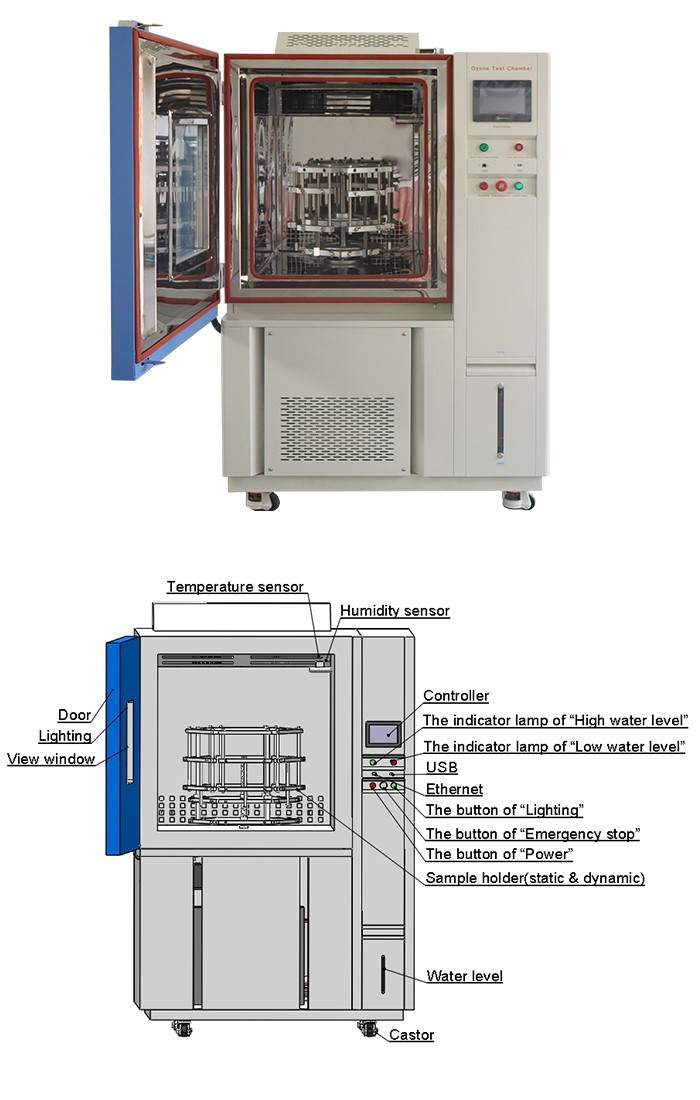

.webp "Portable Temperature Humidity Calibration Chamber for Thermometers and Hygrometers")