What Does a Cyclic Corrosion Test Cycle Look Like?
Different standards define different corrosion cycles. The following example shows how an automotive cyclic corrosion procedure can alternate environmental conditions instead of maintaining continuous salt spray.
SAE J2334 Automotive Cyclic Corrosion Cycle
24-Hour Cycle
① Humid Stage 50°C · 100% RH · 6 h | ② Salt Application 15 min · Salt Solution | ③ Dry Stage 60°C · 50% RH · 17 h 45 min |
Repeat the Cycle
24 h → 24 h → 24 h → ...
This cycle illustrates the basic principle of cyclic corrosion testing:
High Humidity → Salt Application → Drying → Repeat
The exact exposure procedure should always be configured according to the applicable standard, revision, and test requirement.
Key Features for Stable Cyclic Corrosion Testing
Programmable Test Cycles
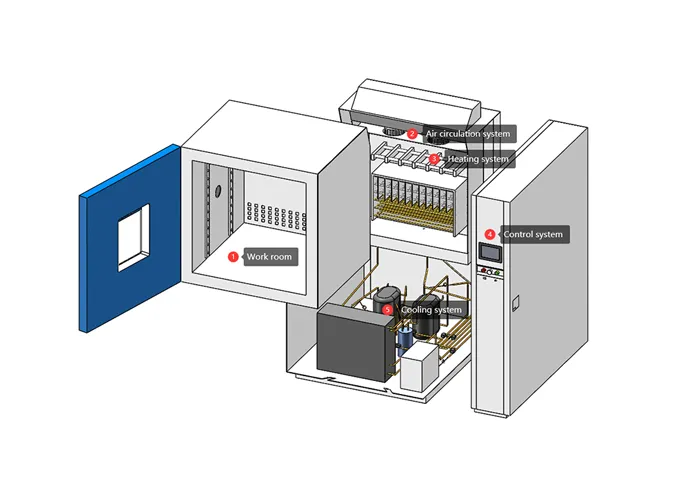
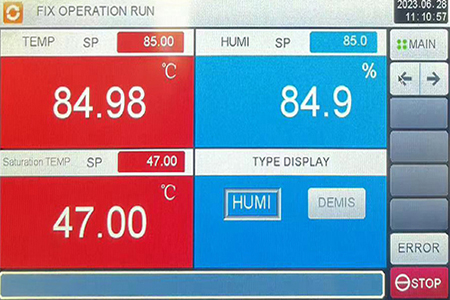
The control system manages temperature, humidity, salt spray and other programmed stages, allowing the chamber to automatically switch between different environmental conditions during a test cycle.
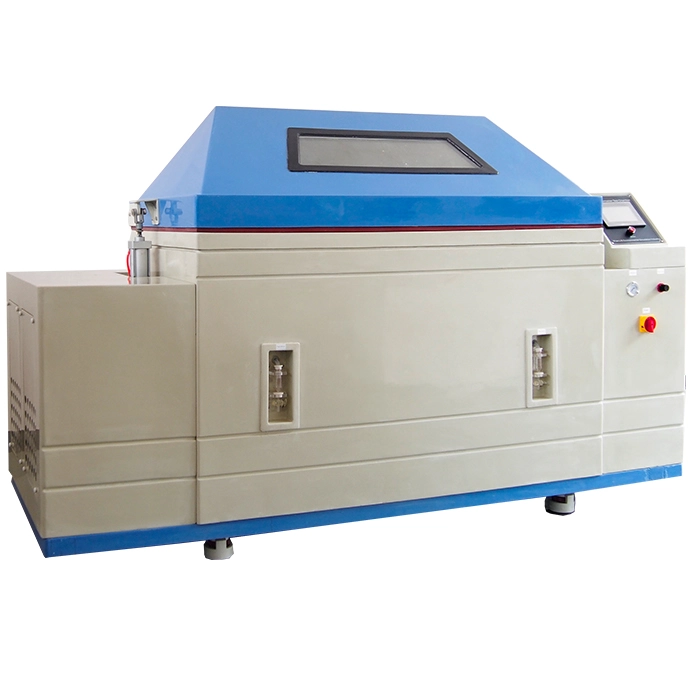
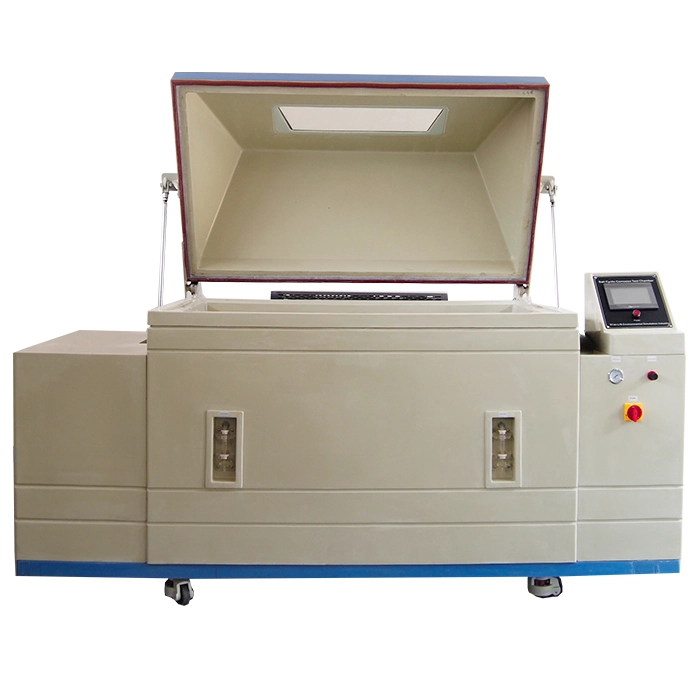
Corrosion-Resistant FRP Workroom
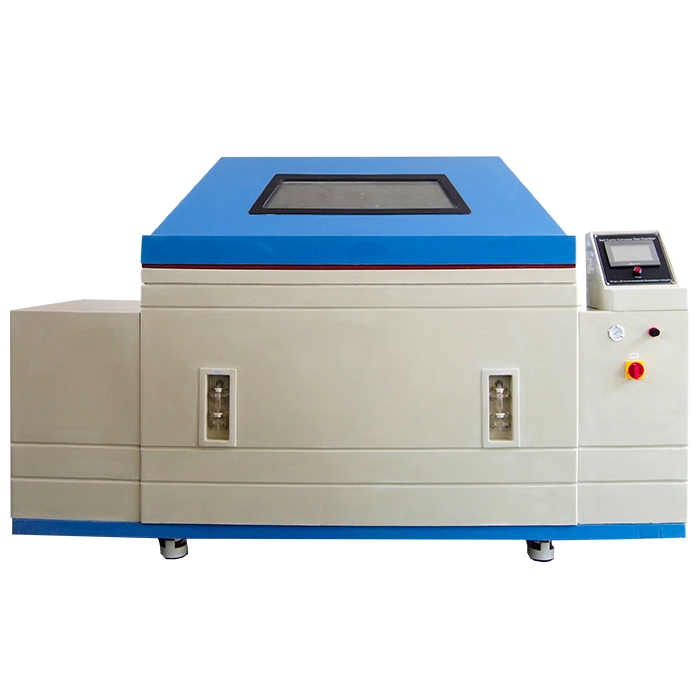
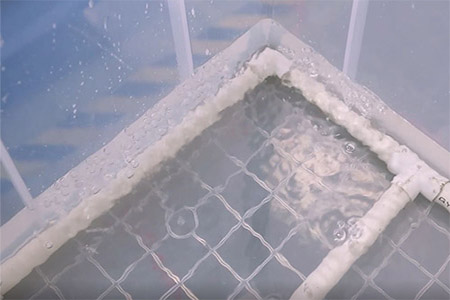
The reinforced glass fiber reinforced plastic workroom is molded as an integrated structure to provide corrosion resistance and reduce the risk of water leakage.
Controlled Salt Fog Distribution
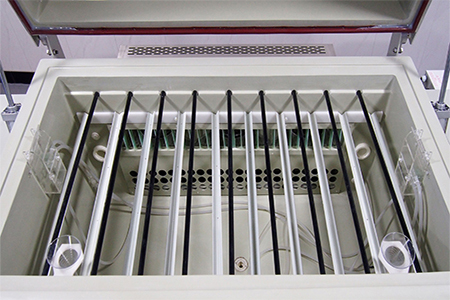
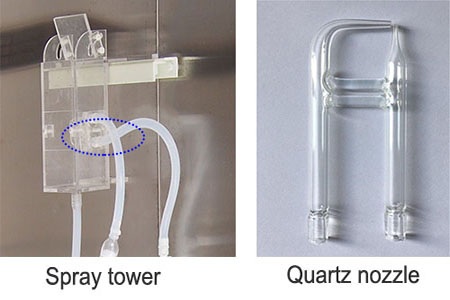
The atomizer tower and spray nozzles generate salt fog and distribute it throughout the workroom. Salt fog deposition can be monitored using the standard collection system.
Integrated Temperature and Humidity Control
Heating, refrigeration and humidification systems work together to establish the temperature and humidity conditions required for different stages of cyclic corrosion testing.
Adjustable Specimen Placement
The standard round-bar sample holder allows specimens to be positioned at different angles. Customized specimen fixtures are also available for special test requirements.
Automated Operation and Safety Protection
The programmable controller enables automated test operation, while multiple protection functions help safeguard the equipment during long-duration testing.
Cyclic Corrosion Test Chamber Specifications
Model | SC-010 | SC-016 | SC-020 |
Internal dimensions (mm) | 1300*1000*600 | 1600*900*720 | 2000*1000*800 |
Overall dimensions (mm) | 2000*1300*1600 | 2300*1300*1700 | 2700*1300*1900 |
Interior Volume (L) | 780 | 1280 | 1800 |
Temperature Range | +10 ℃ ~ +90 ℃ |
Temperature Fluctuation | ± 0.5 ℃ |
Temperature Deviation | ± 2.0 ℃ |
Humidity Range | 30% ~ 98% RH |
Humidity Deviation | + 2%, - 3% |
Salt Fog Deposition | 1~2ml / 80cm2 · h |
Cooling system | Mechanical compression refrigeration system |
Humidifier | External isolation, stainless steel surface evaporation humidifier |
Water supply system | Water purification system |
Air Preheating | Saturated air barrel (31Liter) |
Spraying System | Atomizer tower and Spray nozzles |
Salt Fog Collected | Fog collector and fog measure cylinder |
Controller | Programmable color LCD touch screen controller, Ethernet connection |
Air Circulation | Centrifugal wind fan |
Safety Device | Humidifier Dry-combustion Protection; Over-temperature Protection; Over-current Protection; Water Shortage Protection; Earth leakage Protection |
Material | Glass fiber reinforced plastics |
Standard Configuration | 8 round bars |
Customized Corrosion Testing Solutions
LIB Industry provides customized cyclic corrosion test chambers and related salt spray test chambers, salt spray cyclic corrosion tester , salt spray corrosion test chamber, filiform corrosion tester , and salt fog & SO₂ corrosion chamber according to your test standard, specimen size, corrosion cycle, chamber capacity, and fixture requirements.
With 16+ years of experience as a cyclic corrosion test chamber manufacturer, LIB Industry provides 3-Year Warranty, Lifetime Technical Support, professional installation, spare parts support, and customized engineering solutions.
Need the right corrosion testing solution? Contact LIB Industry for a customized configuration and quote.

 English
 русский
 français
 العربية
 Deutsch
 Español
 한국어
한국어 italiano
 tiếng việt
 ไทย
ไทย Indonesia
.webp "ISO 7326 Static Dynamic Ozone Chamber for Hose")
.webp "How Does a Xenon Weatherometer Support EN 50618 and EN 50289 Cable Reliability Testing?")
.webp "Benchtop vs Reach-In Environmental Chamber: Space, Capacity and Performance Compared")