 Sunlight, heat, humidity, and rain can cause polymers, coatings, textiles, and finished products to fade, crack, yellow, or lose mechanical performance long before the end of their expected service life. Xenon arc weathering testing accelerates these environmental stresses in a controlled laboratory environment.
ASTM G151 and ASTM G155 are often referenced together, but they serve different roles: G151 sets out the general principles for laboratory light-source exposure testing, while G155 gives xenon-arc-specific operating practices — light source, filters, irradiance, temperature, humidity, water spray, and exposure cycles. For laboratories selecting a Xenon Arc Weathering Test Chamber, understanding this distinction is the starting point for specifying the right equipment.
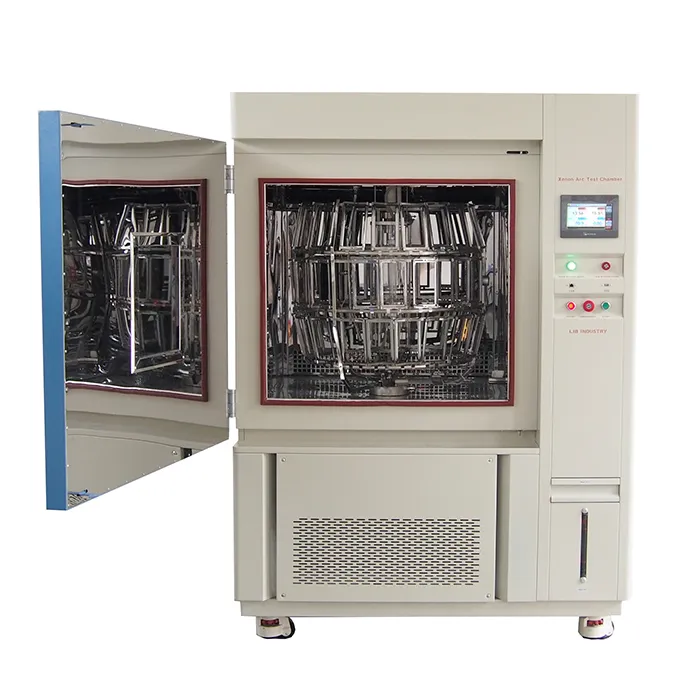
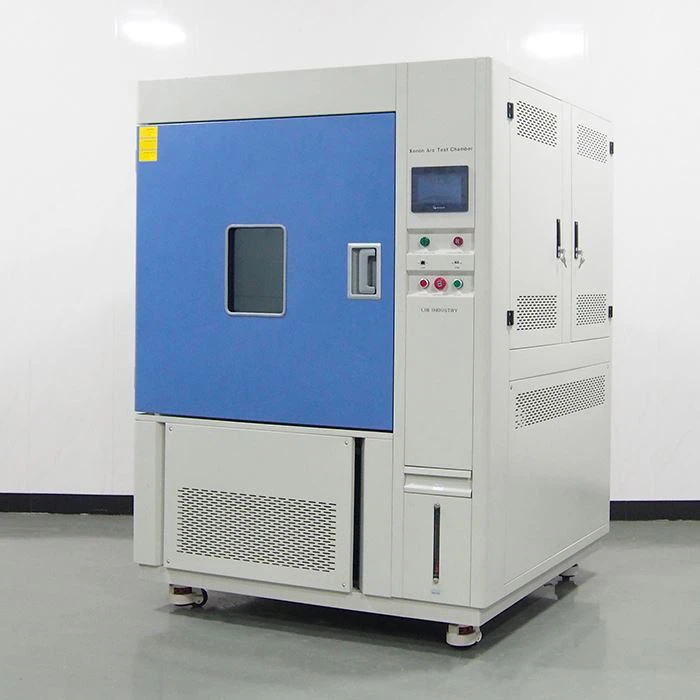
LIB Industry's ASTM G151/G155 Xenon Light Radiation Exposure Test Machine combines xenon arc radiation with programmable temperature, humidity, irradiance, and water spray control for accelerated weathering evaluation of plastics, coatings, textiles, automotive components, films, rubber, and other materials.
Note on exposure parameters: Neither G151 nor G155 defines a single universal irradiance, temperature, humidity, water-spray cycle, or duration for every material. The correct values always come from the applicable apparatus standard, material specification, product standard, or customer requirement — this applies throughout the sections below, so it isn't repeated at every parameter.
ASTM G151 is a general practice for exposing materials to accelerated weathering or light-aging conditions using laboratory light sources. It addresses:
Equipment performance
Specimen exposure
Control materials
Exposure variables
Operating conditions
Data interpretation and reporting
An important point: G151 does not support a simple conversion such as "1,000 chamber hours equals a fixed number of outdoor years." Accelerated weathering results depend on the interaction between radiation, temperature, moisture, material formulation, specimen geometry, and other environmental factors — so chamber hours should be treated as a ranking or comparison tool, not a calendar equivalent.
ASTM G155 covers the operation of xenon arc light apparatus for accelerated weathering and lightfastness testing. Xenon arc systems use filtered xenon radiation to reproduce important portions of natural sunlight or sunlight passing through window glass, combined with controlled heat, humidity, and water exposure to create repeatable laboratory weathering conditions.
G155 includes several exposure conditions rather than one universal cycle. A commonly referenced daylight exposure condition is Cycle 1:
Parameter | Value |
Irradiance | 0.35 W/(m²·nm) at 340 nm |
Black-panel temperature | 63°C |
Light-only phase | 102 minutes |
Light + water spray phase | 18 minutes |
ISO 4892-2 follows a similar xenon-arc weathering approach for plastics, also using filtered xenon radiation with controlled environmental conditions.
Item | ASTM G151 | ASTM G155 |
Main role | General laboratory light-source exposure practice | Xenon arc apparatus practice |
Light source | Laboratory light-source principles | Xenon arc light specifically |
Main focus | Exposure, specimen, control, and reporting principles | Xenon spectrum, filters, irradiance, temperature, humidity, water exposure |
Universal test cycle | No | No |
Typical application | General accelerated light exposure | Xenon arc weathering and lightfastness testing |
 A xenon arc weathering chamber needs to do more than contain a xenon lamp — it must hold each of these variables stable and repeatable for the duration of the test:
Xenon arc light source — broad-spectrum radiation, filterable to simulate outdoor daylight or daylight through window glass. Filter choice changes the spectral distribution, so it must match the test method.
Irradiance control — e.g., G155 Cycle 1's 0.35 W/(m²·nm) at 340 nm. Requires reliable monitoring with a sensor configuration and calibration matched to the method.
Black-panel temperature — the temperature of a dark exposed surface under radiation, which runs significantly hotter than ambient chamber air and is a key degradation driver.
Chamber temperature — the surrounding thermal environment, set by the chosen exposure cycle.
Relative humidity — adds moisture stress; must stay stable when the method calls for controlled RH.
Water spray — simulates rain or surface wetting; timing and duration must be programmable to match the required cycle.
Spectral filters — daylight filters for direct outdoor exposure, window-glass filters for products exposed through glazing.
Category | Typical items | What's evaluated |
Automotive | Dashboard polymers, exterior trim, paint panels, seals, synthetic leather, interior materials, display components | Color change, gloss reduction, cracking, yellowing, brittleness, mechanical retention |
Plastics & polymers | Outdoor housings, films, cable jackets, molded parts, composites, consumer components | Yellowing, cracking, elongation loss, strength reduction |
Paints & coatings | Various coated surfaces | Fading, chalking, blistering, cracking, gloss loss, color change |
Textiles | Automotive fabrics, outdoor textiles, dyed and coated fabrics, interior fabrics | Colorfastness, fading, strength retention (use a window-glass filter for behind-glass applications) |
The evaluation method should match the failure mode that matters in real service:
Color change — ΔE or individual color coordinates
Gloss retention — % of original gloss retained
Mechanical properties — tensile strength, elongation, impact-property retention
Visual degradation — cracking, chalking, blistering, fading, erosion
Physical changes — mass, thickness, adhesion, hardness
Results are most meaningful when exposed specimens are compared against controls run under identical conditions. Test reports should state the actual exposure cycle used, not just "tested according to ASTM G155."
Beyond the parameter checklist above, weigh these before purchasing:
Specimen capacity — dimensions, quantity, mounting method, and whether multiple materials need to run in the same program
Calibration and maintenance — regular monitoring of critical parameters, calibration support, and convenient service access
Long-term service support — lamp replacement, calibration, technical support, and spare-parts availability, which drive total cost of ownership for continuous testing programs
Don't select equipment based only on a general "ASTM G155 compatible" label — confirm it against your specific standard and cycle first.
LIB Industry's ASTM G151/G155 Xenon Light Radiation Exposure Test Machine is designed for accelerated weathering and light-aging evaluation using a water-cooled xenon arc lamp.
The system combines xenon radiation with controlled temperature, humidity, irradiance, and water spray, allowing laboratories to create repeatable exposure programs for different material and product requirements.
Parameter | LIB Capability |
Xenon source | 4500 W water-cooled lamp |
Irradiance range | 35–150 W/m² |
Irradiance measurement | 300–400 nm; 340 nm or 420 nm options |
Chamber temperature | Ambient to 100°C, ±2°C |
Black-panel temperature | 35–85°C, ±2°C |
Humidity | 50–98% RH, ±5% RH |
Water spray | Programmable, 1 min to 9999 h 59 min |
Specimen capacity | Up to 42 flat specimens, 95 × 200 mm |
Radiometer | UV radiometer, ±5% tolerance |
| Lamp life | ≥1,600 hours stated stable operation |
 | 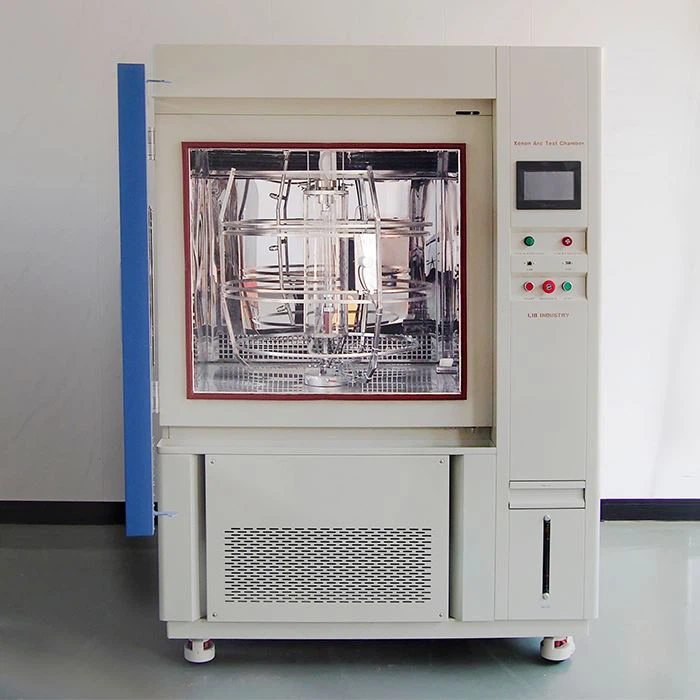 |
The 4500 W water-cooled xenon lamp provides broad-spectrum radiation for accelerated weathering testing.
Daylight, window-glass, and extended-UV filter options allow the system to be configured for different exposure requirements.
The system provides programmable irradiance control with radiometer feedback to support stable and repeatable exposure.
When a test method specifies a narrowband condition such as 0.35 W/(m²·nm) at 340 nm, the sensor and calibration configuration should be checked against the exact requirement.
The chamber combines black-panel temperature control, chamber temperature control, humidity, and programmable water spray.
This allows radiation, heat, and moisture to be incorporated into one controlled test program.
The equipment is designed to support ASTM G151, ASTM G155, ISO 4892-2, and other applicable xenon-light or lightfastness testing practices.
The exact exposure cycle should still be configured according to the applicable material or product specification.
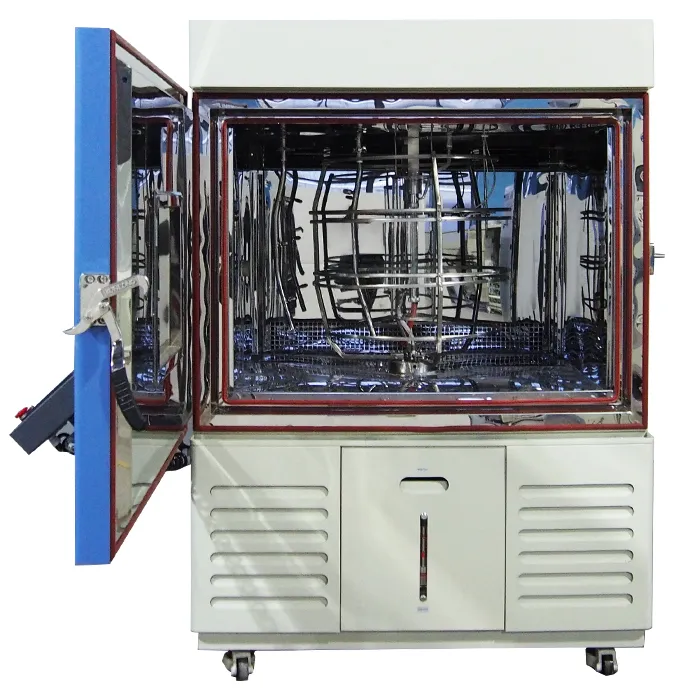
The rotating specimen rack can accommodate up to 42 flat specimens, allowing laboratories to compare multiple materials, formulations, coatings, or suppliers under the same exposure program.
Xi'an LIB Environmental Simulation Industry has produced environmental test chambers since 2012, covering climate, corrosion, dust, water ingress, weathering, and customized testing systems. LIB Industry supports the full equipment lifecycle — design, manufacturing, inspection, calibration, delivery, installation, training, and after-sales support — and every chamber undergoes 72-hour continuous testing before shipment, backed by a three-year warranty and lifetime service support.
Need an ASTM G155 xenon arc weathering chamber for your application? Contact LIB Industry with your required standard, exposure cycle, specimen dimensions, and test quantity for a suitable equipment configuration.
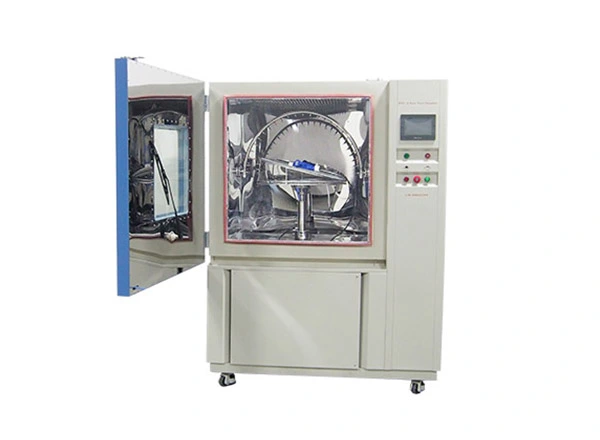
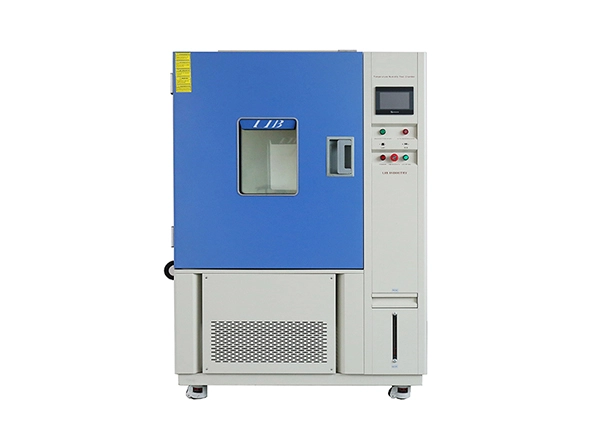
Weathering is often just one part of a broader qualification program. Laboratories running xenon arc testing frequently pair it with the following LIB Industry chambers to cover other environmental stresses:
|  |  |
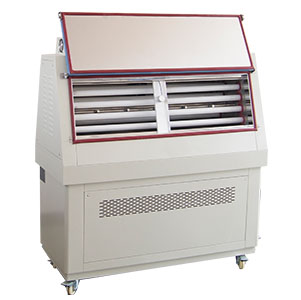
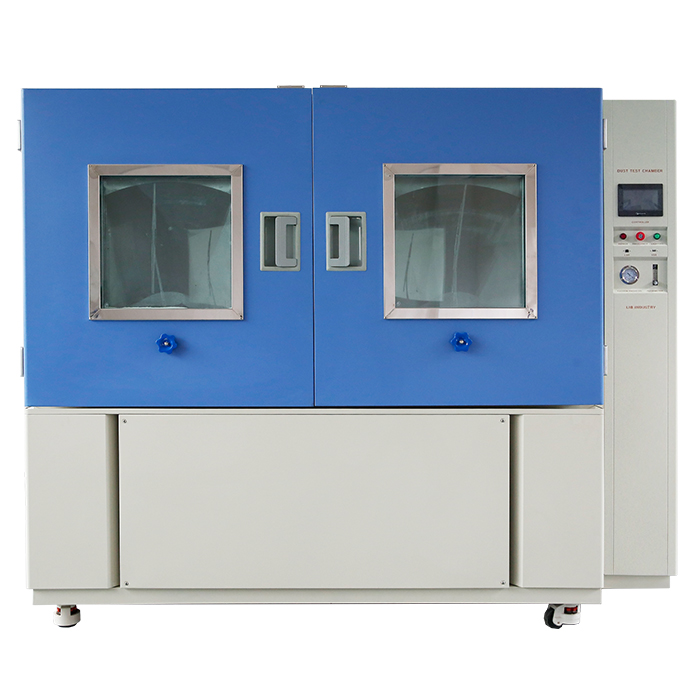
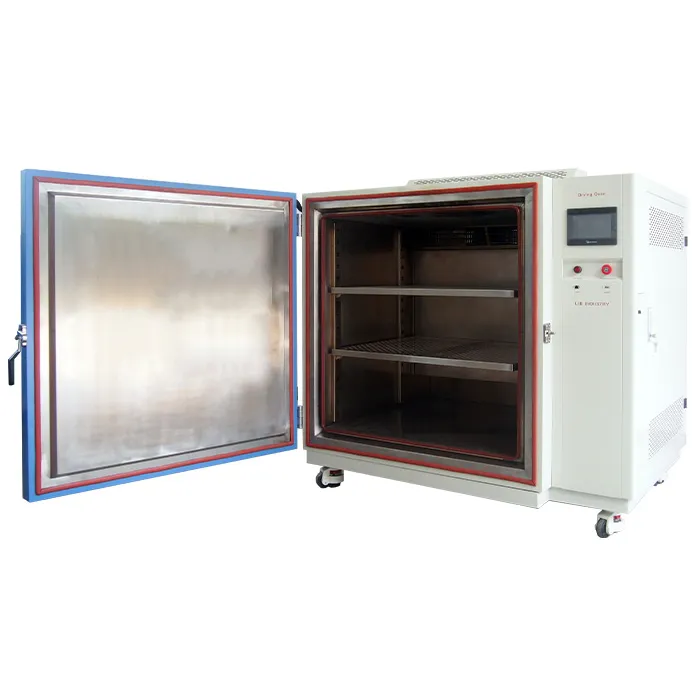
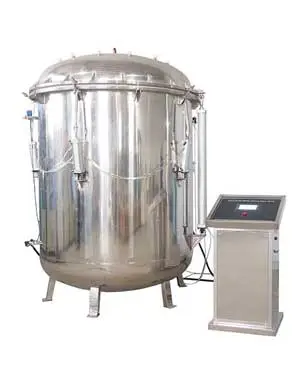
UV Aging Test Chamber (ASTM G154) — uses UV fluorescent lamps rather than xenon arc to focus specifically on the UV portion of sunlight, offering a lower-cost complement to xenon testing for materials where UV-driven degradation (yellowing, chalking, embrittlement) is the primary concern. | Salt Spray Corrosion Test Chamber — evaluates corrosion resistance of coatings, metals, and plated parts under neutral salt spray (NSS), acetic acid salt spray (AASS), or copper-accelerated (CASS) conditions, commonly specified alongside weathering tests for automotive and outdoor hardware. | Constant Temperature Humidity Chamber — provides programmable temperature and humidity cycling (e.g., damp heat, thermal shock) for reliability and durability testing of electronics, materials, and components beyond light-driven degradation. |
What materials can be tested with an ASTM G155 xenon chamber?
Plastics, polymers, coatings, paints, rubber, textiles, films, composites, and automotive interior/exterior materials — any product where sunlight-related degradation is a risk.
How long does an ASTM G155 xenon weathering test take?
There's no universal duration; it depends on the applicable product standard, customer spec, or a validated correlation study. Typical tests run 500–1,000+ hours, used for ranking or comparison rather than as a direct stand-in for outdoor years.
How do I choose an ASTM G155 xenon weathering test chamber?
Start with the required standard and exposure cycle, then check the chamber's xenon lamp, filter options, irradiance range and radiometer, temperature and black-panel temperature control, humidity, water spray, specimen capacity, and calibration/service support.
If you're unsure which configuration is suitable, provide LIB Industry with your testing standard, material type, specimen size, and required exposure condition for equipment recommendations.

 English
 русский
 français
 العربية
 Deutsch
 Español
 한국어
한국어 italiano
 tiếng việt
 ไทย
ไทย Indonesia