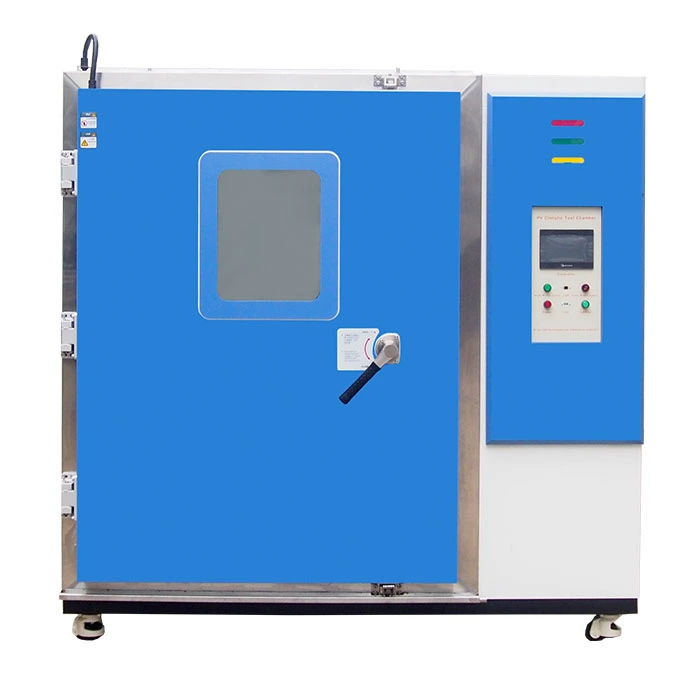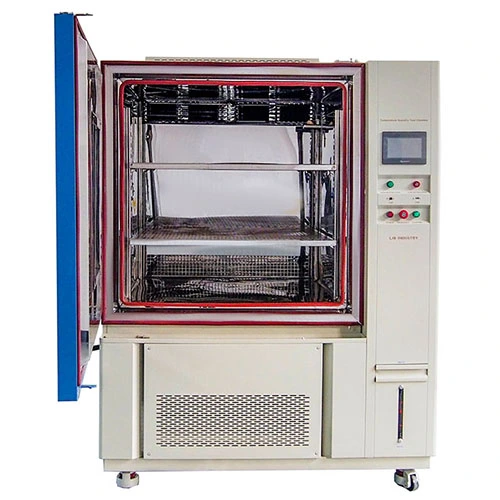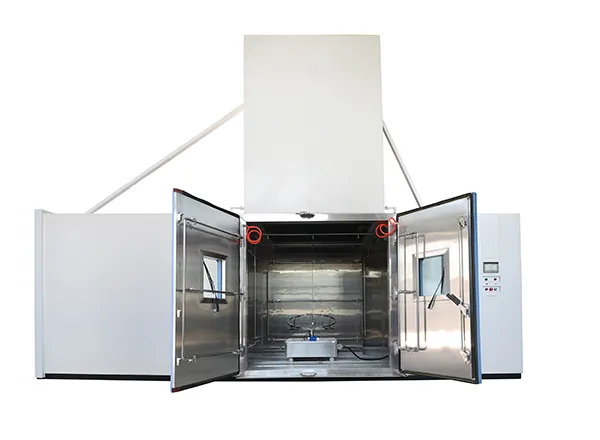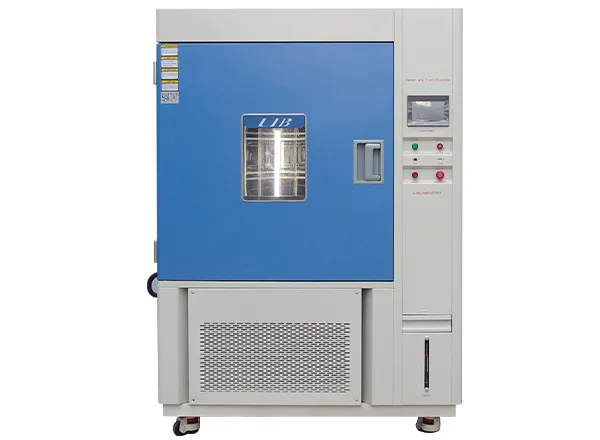
The challenge is not simply choosing an environmental test chamber. A complete battery testing program needs to connect the battery level, applicable standard, test conditions, safety configuration, and equipment into one testing process.
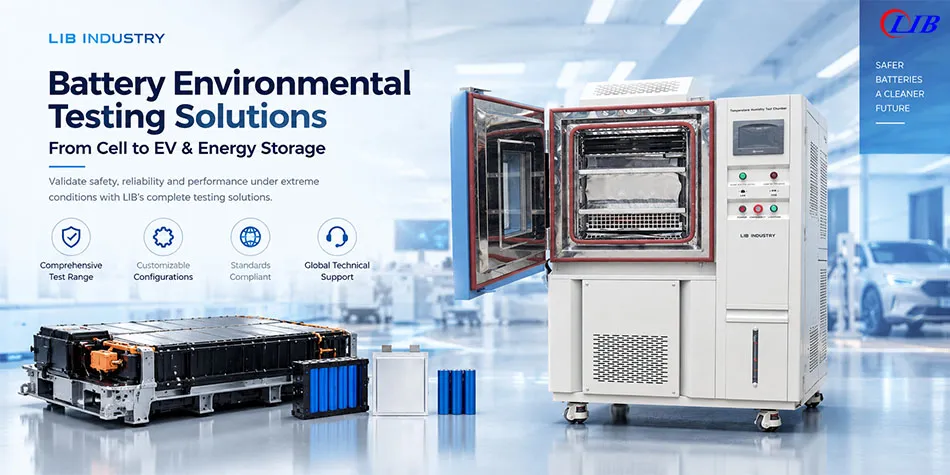
LIB Industry provides environmental simulation solutions for battery cells, modules, battery packs, EV applications, and energy storage systems, covering temperature cycling, thermal shock, thermal abuse, high-temperature endurance, humidity, dust, and water ingress testing. The equipment can also be customized around battery dimensions, electrical connections, fixtures, internal structures, and safety requirements.
LIB Industry has provided customized environmental testing equipment for Mercedes-Benz for battery pack testing. The project involved high- and low-temperature and oil immersion testing, requiring customized battery clamps, power connection openings, internal chamber structures, and a high-power heating tube to accelerate heating of the oil immersion tank.
This type of project demonstrates an important part of LIB's approach: when a standard chamber does not fully match the customer's test setup, the chamber can be engineered around the actual test requirements.
LIB Industry supports the complete equipment process from chamber design and customization to manufacturing, installation, commissioning, and operator training, allowing customers to build a more complete battery environmental testing laboratory.
Battery packs differ significantly in size, structure, electrical interfaces, fixtures, and safety requirements. LIB can customize chamber dimensions, internal structures, power connection openings, sample fixtures, heating systems, and safety configurations according to the application.
LIB Industry provides a 3-year manufacturer warranty together with lifetime technical service, supporting customers throughout the equipment lifecycle. Remote technical assistance and after-sales support are also available.
Battery testing requirements depend on the battery type, application, dimensions, and applicable certification standard. The following tests cover many of the environmental conditions encountered by cells, modules, battery packs, and energy storage systems.
Environmental Test | Typical Conditions | Main Purpose | Typical LIB Solution |
Thermal Cycling | Approx. -40°C to +85°C or application-specific | Temperature durability | |
Thermal Shock | Rapid hot/cold transition | Thermal stress and structural reliability | |
Thermal Abuse | Up to 130°C or higher | Safety under abnormal heating | |
High Temperature Endurance | Elevated temperature exposure | Thermal durability | |
Damp Heat | High temperature + high RH | Moisture/environmental durability | |
IP5X / IP6X | Controlled dust exposure / vacuum | Dust protection | |
IPX1–IPX9 | Dripping, spraying, jets, immersion, high-pressure water | Water ingress protection |
These are representative testing categories rather than one universal test sequence. The final test profile should always be established according to the applicable standard and battery application.
Environmental testing requirements become broader as the battery moves from an individual cell toward a complete battery system.
Cell-level environmental testing can focus on:
Temperature Cycling → High Temperature Endurance → Heating / Thermal Abuse → Damp Heat
The objective is to evaluate the cell under controlled thermal and environmental stresses.
At the module level, testing can expand to:
Temperature Cycling → Thermal Shock → High/Low Temperature → Temperature & Humidity
The equipment may also require customized fixtures and electrical interfaces according to the module structure.
Battery packs introduce additional enclosure and environmental protection requirements:
Thermal Cycling → Thermal Shock → Thermal Abuse → IP5X/IP6X → IPX1–IPX9
For larger battery packs, chamber dimensions, door structure, sample loading, power connections, and safety systems become particularly important.
At the system level, environmental validation can combine:
Temperature Exposure → Humidity → Dust → Water Ingress → Customized Environmental Testing
The actual sequence depends on the intended operating environment and applicable standards.
This is why LIB's battery testing solution is not limited to one chamber type. Different stages of battery development can require different environmental simulation capabilities.
Battery cells and packs can experience substantial temperature changes during transportation, charging, operation, and storage. Thermal cycling exposes the battery repeatedly to high and low temperatures to evaluate its environmental durability.
IEC 62660-2 includes temperature cycling for lithium-ion cells, using a minimum temperature of -40°C or the specified Tmin and a maximum temperature of 85°C or the specified Tmax, with the procedure including 30 cycles. UL 2580 and UL 2271 also include high- and low-temperature cycling conditions around 85±2°C to -40±2°C.
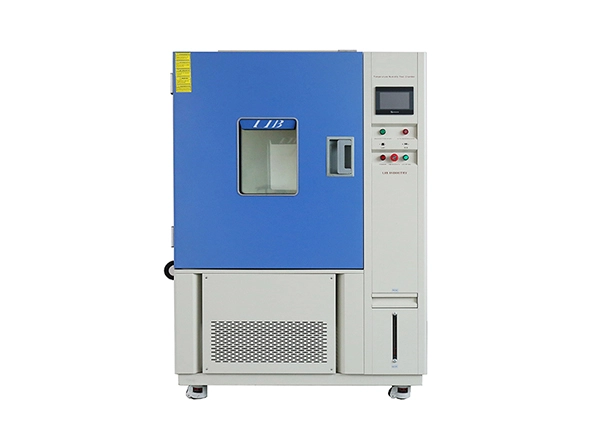
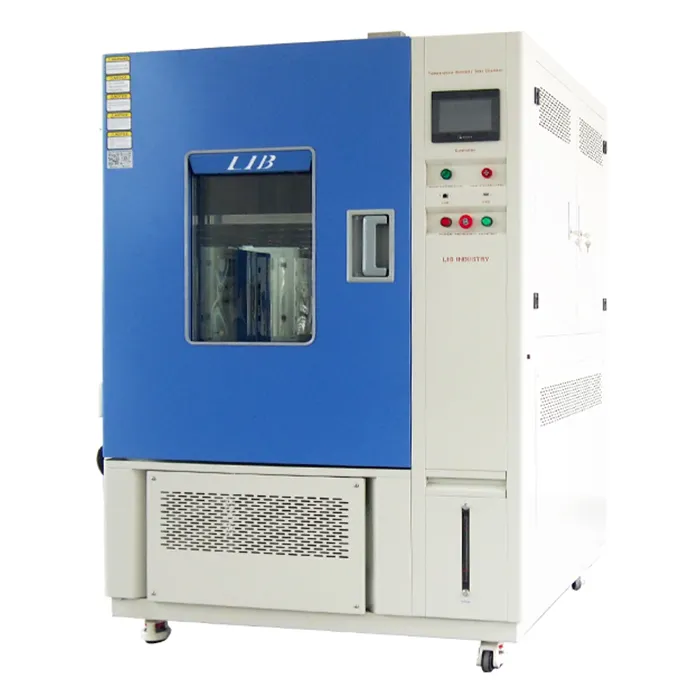
Temperature Range Temperature Fluctuation Heating Rate Available Capacities | 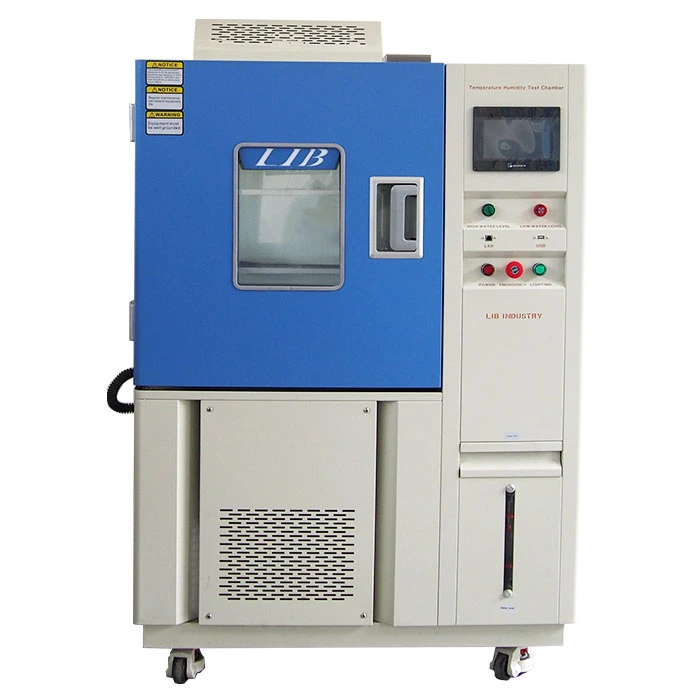 |
The chamber can also be configured with battery-oriented safety features, including a reinforced observation window, safety door lock, smoke detection, and fire suppression systems.
Engineering value: the chamber reproduces repeated temperature exposure under controlled conditions, allowing engineers to evaluate battery durability before field deployment.
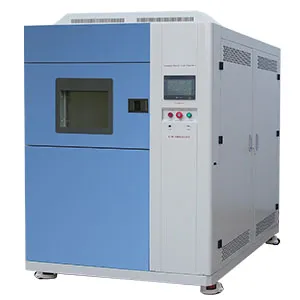
Thermal shock differs from conventional thermal cycling because the emphasis is on rapid transfer between hot and cold environments.
SAE J2929 includes thermal shock testing for complete EV battery systems, with temperature conditions of approximately -40±5°C to +85±2°C.
LIB's thermal shock chamber uses separate hot and cold zones with an automatic basket transfer system.
|
|
|
Hot Zone: up to +200°C
Cold Zone: down to -65°C
Basket Transfer Time: <3 seconds
Temperature Recovery: within approximately 5 minutes
The rapid transfer mechanism exposes the test sample to sudden environmental changes rather than gradually changing the chamber temperature.
For battery modules and packs, this can be used to investigate how components and structures respond to rapid thermal stress.
Battery safety programs may require controlled exposure to high temperatures to evaluate thermal stability and abnormal heating behavior.
For IEC 62133 thermal abuse testing, fully charged cells are heated from approximately 20±5°C to 130±2°C at 5±2°C/min and maintained for 30 minutes. UL 1642 and UL 2054 also contain controlled heating procedures for lithium batteries and battery packs.
LIB provides dedicated thermal abuse and heating test configurations.
 | 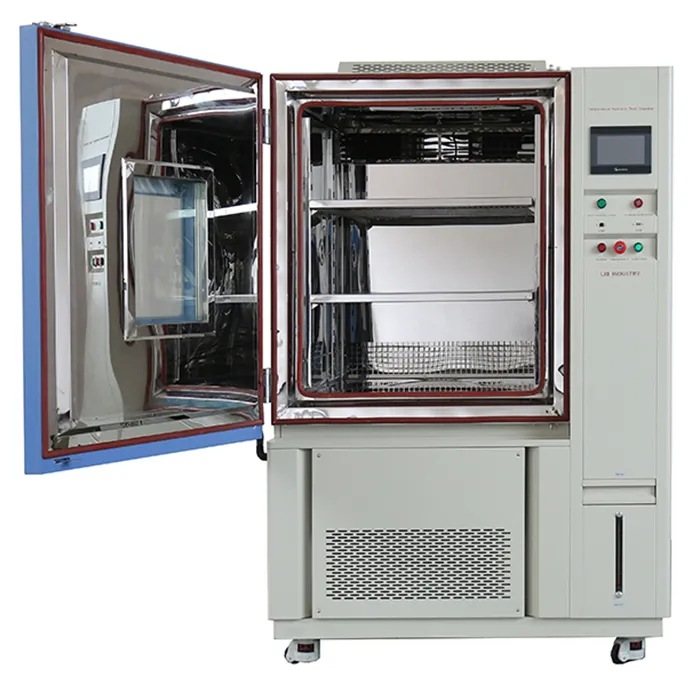 |
Maximum Temperature: up to +170°C
Heating Control: PID controlled
Safety Options: smoke detection and fire suppression
Maximum Temperature: up to +170°C
Heating Rate: 5±2°C/min
These systems provide controlled thermal exposure for battery safety testing while allowing the chamber configuration to be adapted to the test sample and required safety level.
Long-term exposure to elevated temperatures can affect battery materials, components, and overall reliability. High-temperature endurance testing evaluates battery behavior during sustained heat exposure.
IEC 62660-2 includes a high-temperature endurance procedure in which cells are heated at 5 K/min to 130°C and maintained for 30 minutes. Other standards, including UL 1642, UL 2054, and IEC 62133, also contain temperature-related battery tests.
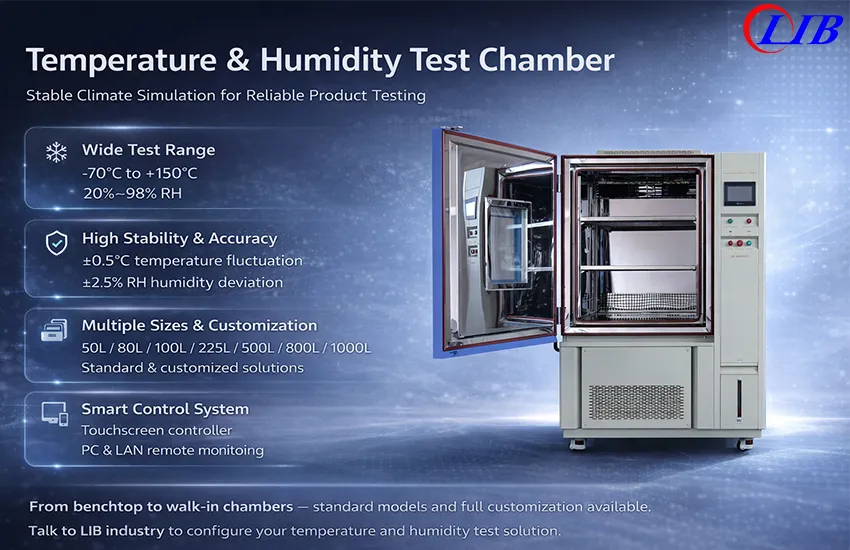
Temperature: up to +170°C
Temperature Fluctuation: ±0.5°C
Available Volume: 100–1000 L
The chamber can therefore be configured for different battery sizes, from smaller cells and components to larger battery assemblies.
Temperature is not the only environmental factor affecting battery systems. Humidity and condensation can also challenge electrical components and enclosure structures.
IEC 60068-2-30 includes cyclic damp heat testing using humidity levels of ≥95%RH or ≥80%RH, depending on the selected test variant.
LIB temperature and humidity chambers can provide controlled combinations of temperature and relative humidity for environmental durability testing.
For EV battery packs and energy storage systems, environmental protection of the enclosure is an important part of system reliability.
 |  |
| |
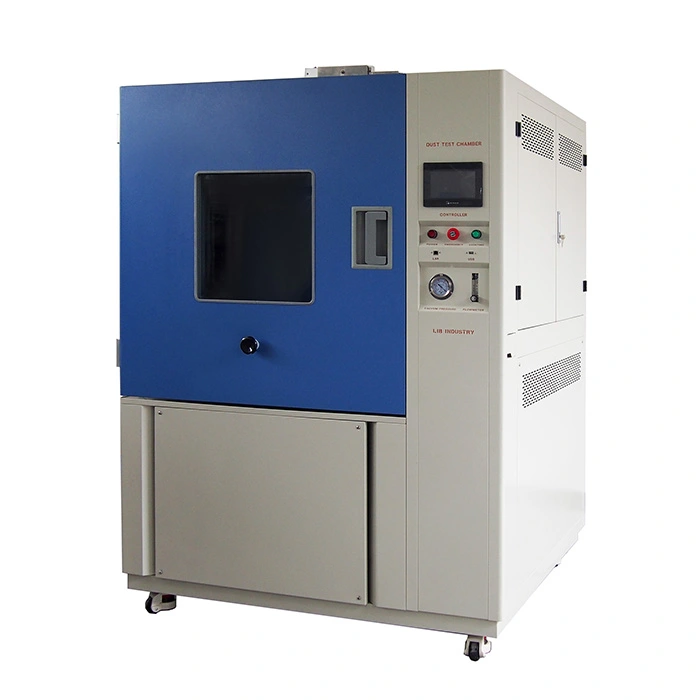
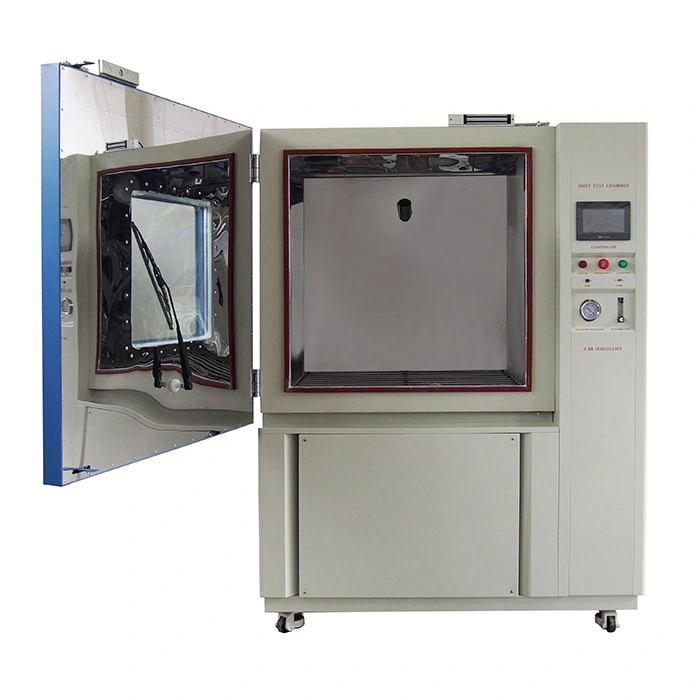
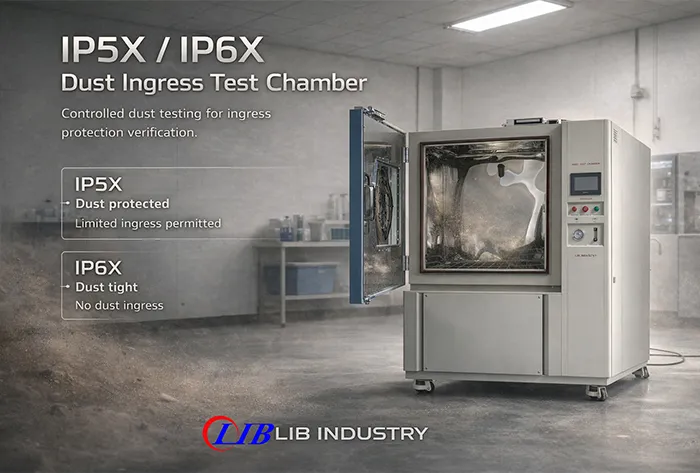
IP5X evaluates protection against dust ingress, while IP6X evaluates dust-tightness under the applicable test conditions.
The referenced IEC 60529 test procedures include 8-hour dust exposure for IP5X and vacuum conditions for IP6X testing.
LIB's IP5X/IP6X dust testing system provides controlled dust circulation and vacuum conditions for battery enclosure testing. Safety functions can include over-temperature, over-current, phase-sequence, and leakage protection.
Water protection requirements can range from simple dripping to high-pressure, high-temperature water exposure.
IP Rating | Typical Exposure |
IPX1 / IPX2 | Dripping water |
IPX3 / IPX4 | Water spray / splash |
IPX5 / IPX6 | Water jet |
IPX7 | Temporary immersion |
IPX8 | Continuous immersion under specified conditions |
IPX9 | High-pressure, high-temperature water |
Typical test conditions in the referenced configuration include:
IPX1: 1 mm/min dripping
IPX3/IPX4: 0.4 mm spray holes
IPX5: approximately 12.5 L/min
IPX6: approximately 100 L/min
IPX7: approximately 1 m water depth for 30 minutes
IPX9: 80±5°C water at 8–10 MPa
For battery packs, the purpose is not simply to confirm an IP rating. Water ingress testing can expose potential weaknesses in seals, doors, connectors, joints, and enclosure structures.
Different battery standards address different product types and test requirements. The table below connects common standards with the environmental tests and typical LIB equipment used to implement them.
Standard | Battery Application | Relevant Environmental Test | Typical LIB Solution |
UL 2580 | EV battery packs / assemblies | Thermal cycling | Thermal Cycling Chamber |
UL 2271 | Batteries for light electric vehicles | Thermal cycling | Thermal Cycling Chamber |
IEC 62660-2 | Lithium-ion cells for EV propulsion | Temperature cycling / high-temperature endurance | Thermal Cycling / High Temperature Chamber |
UL 1642 | Lithium batteries | Heating / temperature cycling | Thermal Abuse / Thermal Cycling Chamber |
UL 1973 | Stationary and energy storage batteries | Thermal cycling | Thermal Cycling Chamber |
SAE J2929 | EV battery systems | Thermal shock | Thermal Shock Chamber |
IEC 60068-2-30 | Environmental testing | Damp heat | Temperature & Humidity Chamber |
IEC 62133 | Rechargeable batteries | Thermal abuse | Thermal Abuse Chamber |
UL 2054 | Household / commercial battery packs | Heating / temperature cycling | Heating / Thermal Cycling Chamber |
IEC 60529 | Battery enclosures | Dust / water ingress | IP5X/IP6X & IPX1–IPX9 |
The standard-to-equipment relationship should be treated as a test planning reference, not as a universal one-to-one equipment requirement. The exact test method, conditions, sample configuration, and safety provisions must be confirmed against the applicable edition of the standard and the customer's product requirements.
A complete battery environmental testing laboratory may combine several chamber types rather than relying on a single environmental test.
For example:
Thermal Cycling
→ High Temperature Endurance
→ Thermal Abuse
→ Damp Heat
Thermal Cycling
→ Thermal Shock
→ Temperature & Humidity
→ Customized Electrical Connections
Thermal Cycling
→ Thermal Shock
→ Thermal Abuse
→ IP5X / IP6X
→ IPX1–IPX9
The actual test sequence should be established from the applicable standards and product development requirements. LIB can then configure the chamber type, working volume, safety system, sample fixture, electrical interfaces, and environmental conditions around that test plan.
Send LIB your battery type, sample dimensions, applicable standard, required temperature range, test cycles, IP rating, and safety requirements.
LIB Industry can use these details to recommend a suitable chamber configuration or develop a customized testing system.
A battery testing chamber sometimes needs to do more than reproduce temperature.
For a Mercedes-Benz battery pack testing project, the required application included high- and low-temperature and oil immersion testing. LIB developed a customized T-350 chamber with battery clamps, customized power connection openings, an adjusted internal structure, and a high-power heating tube designed to accelerate heating of the oil immersion tank. Detailed design drawings were also provided before production.
The customized equipment was delivered and put into operation in November 2022.
This project illustrates how LIB approaches non-standard battery testing requirements: instead of forcing a customer's test setup into a standard chamber, the chamber structure and functions can be modified around the actual test process.
LIB Industry can customize chamber structures, fixtures, power interfaces, internal components, and safety configurations around your testing application.
Battery environmental testing equipment is a long-term laboratory investment. LIB Industry provides:
3-Year Manufacturer Warranty
Full functional coverage for 36 months.
Lifetime Technical Service
Continued technical support throughout the equipment lifecycle.
Installation & Training
Support for equipment installation, commissioning, and operator training.
12/5 English Technical Support
Remote assistance for operation, troubleshooting, and maintenance.
LIB also provides customized laboratory solutions covering equipment selection, system configuration, installation, commissioning, and technical support.
Whether you are testing a battery cell, module, battery pack, EV battery system, or energy storage system, the right environmental test program starts with the product and the applicable standard.
Tell LIB Industry:
Battery type
Cell / Module / Pack / ESS
Sample dimensions and weight
Applicable IEC / UL / SAE standard
Temperature range
Humidity requirements
Thermal cycling requirements
IP rating
Test duration and cycle count
Electrical connection requirements
Special safety or customization requirements
LIB Industry can then develop the corresponding chamber type, working volume, environmental conditions, safety configuration, and customized functions for your application.
Contact LIB Industry at inquiry@libtestchamber.com to discuss your battery environmental testing requirements.
 English
 русский
 français
 العربية
 Deutsch
 Español
 한국어
한국어 italiano
 tiếng việt
 ไทย
ไทย Indonesia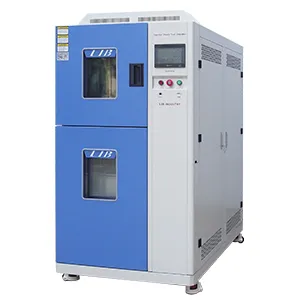
.webp "thermal shock chamber (2).jpg")
.webp "FIAT 50417 Vulcanized Rubber Ozone Test Chamber")
.webp "ASTM D1149 Ozone Test Chamber")