Packaging materials can experience sunlight, UV radiation, heat, humidity, temperature changes, corrosion, and pressure changes during storage, transportation, and use. These environmental conditions can gradually affect color, appearance, dimensional stability, mechanical properties, adhesion, sealing performance, and package integrity.
Accelerated environmental testing allows manufacturers to expose packaging materials to controlled environmental conditions and evaluate potential degradation in a shorter laboratory testing period.
However, there is no single test suitable for every packaging material. Plastic films, printed labels, corrugated packaging, laminated films, metal containers, and air-transport packaging may require different combinations of environmental tests.
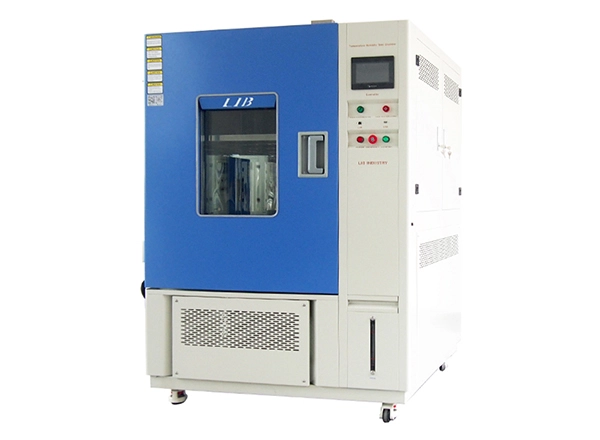
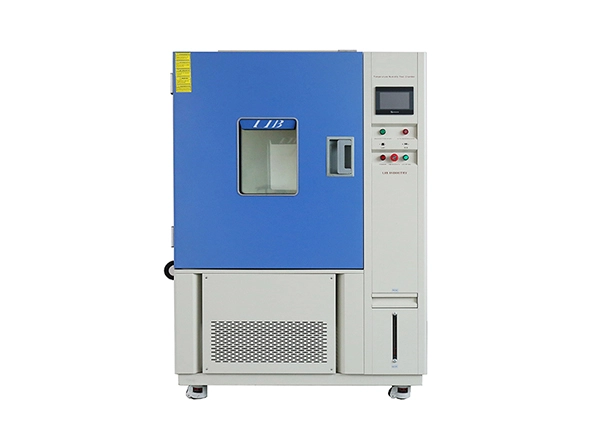
LIB provides environmental simulation equipment covering UV, xenon, temperature, humidity, thermal shock, salt spray, low pressure, and corrosive gas testing, allowing manufacturers to develop a packaging testing program according to the material, application, transportation conditions, and applicable standards.
Different environmental conditions produce different degradation mechanisms. The following tests are commonly considered when developing an accelerated packaging test program.
Test Type | Common Test Points | Key Standards | Typical Packaging Applications | LIB Equipment |
UV Accelerated Weathering | 340 nm, 0.89 W/m²/nm, around 60°C, UV/condensation cycle | ASTM G154, ISO 4892-3, | Plastic films, labels, coatings | UV Test Chamber |
Xenon Arc Weathering | 340 nm, around 0.55 W/m²/nm, controlled BPT/RH, light and water exposure | ASTM G155, ISO 4892-2 | Printed packaging, plastics, labels | Xenon Test Chamber |
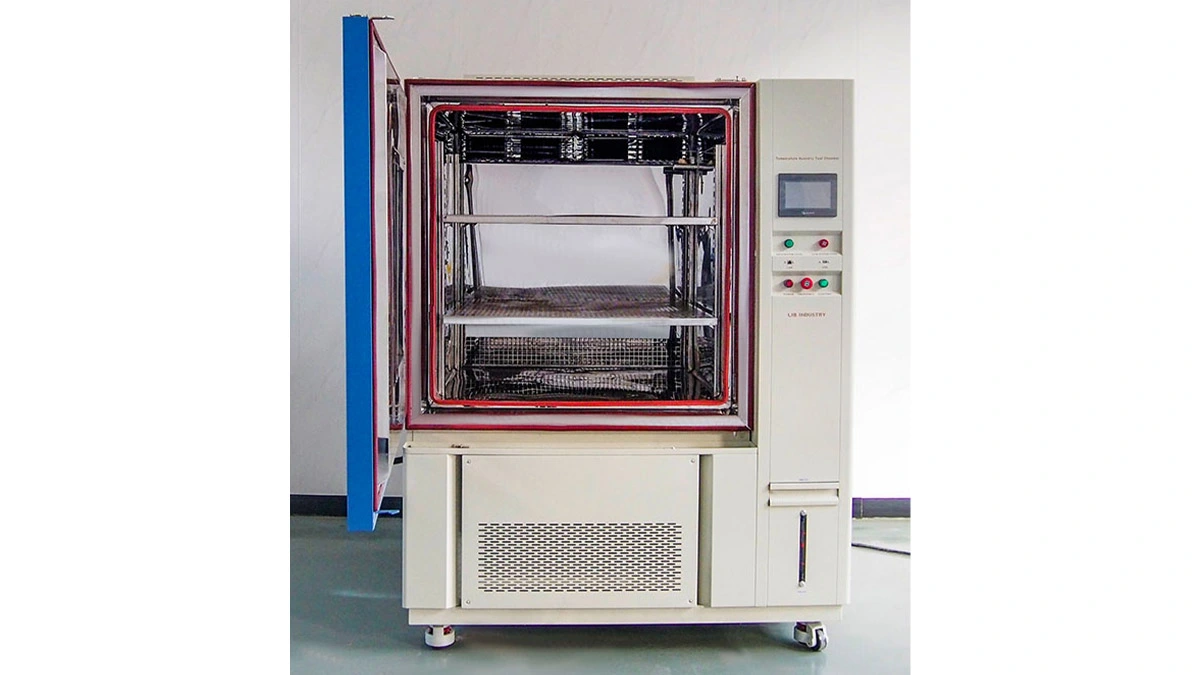
Temperature & Humidity | 23°C/50%RH; 40°C/75%RH; 85°C/85%RH | ASTM D4332, ISO 2233 | Paper, cartons, films, adhesives | T&H Chamber |
Temperature Testing | Typical points such as -40°C, -20°C, +60°C, +85°C | IEC 60068-2-1, IEC 60068-2-2 | Plastic and composite packaging | Temperature Chamber |
Thermal Shock / Rapid Temperature Change | Example: -40°C ↔ +85°C, defined dwell time and cycles | IEC 60068-2-14 | Laminated and composite packaging | Thermal Shock Chamber |
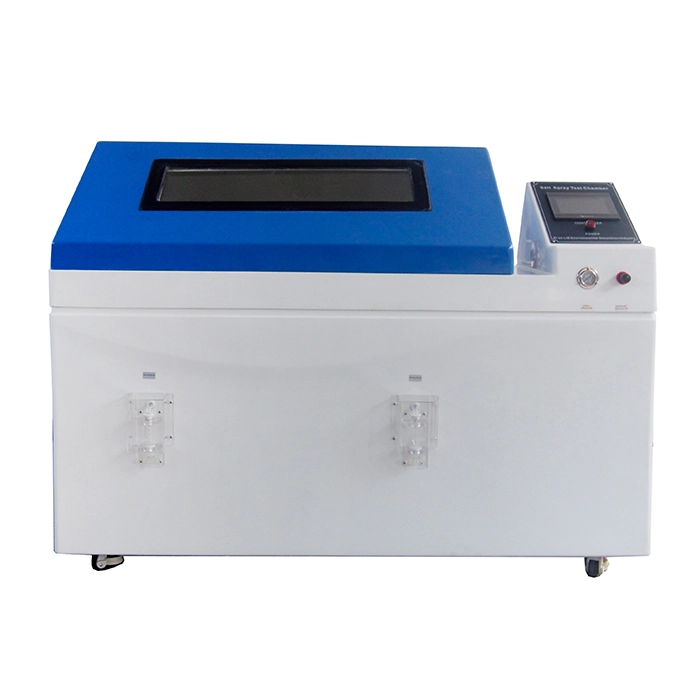
Salt Spray | 35°C, 5% NaCl, controlled spray rate, 24–240 h or as specified | ASTM B117, ISO 9227 | Metal packaging and components | Salt Spray Chamber |
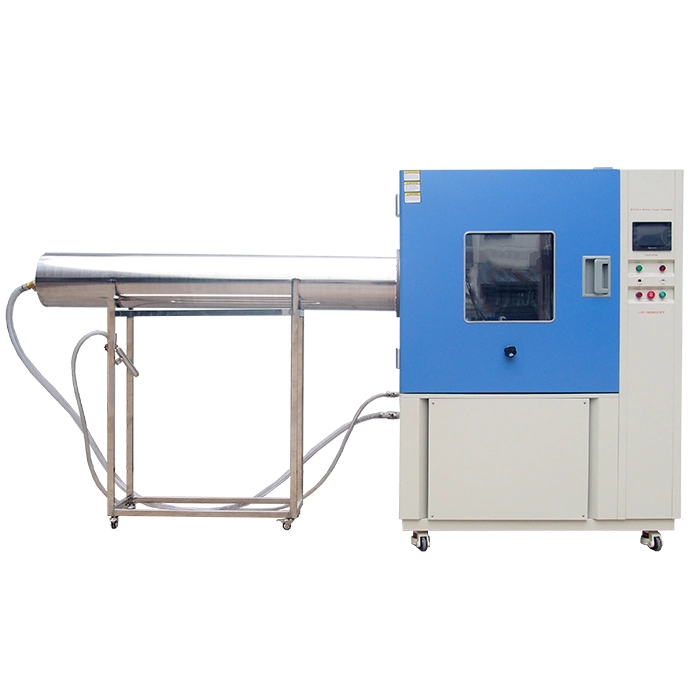
Low Pressure | Specified altitude/pressure, controlled pressure reduction and holding time | ASTM D6653 | Air-transport packaging | Low Pressure / Vacuum Chamber |
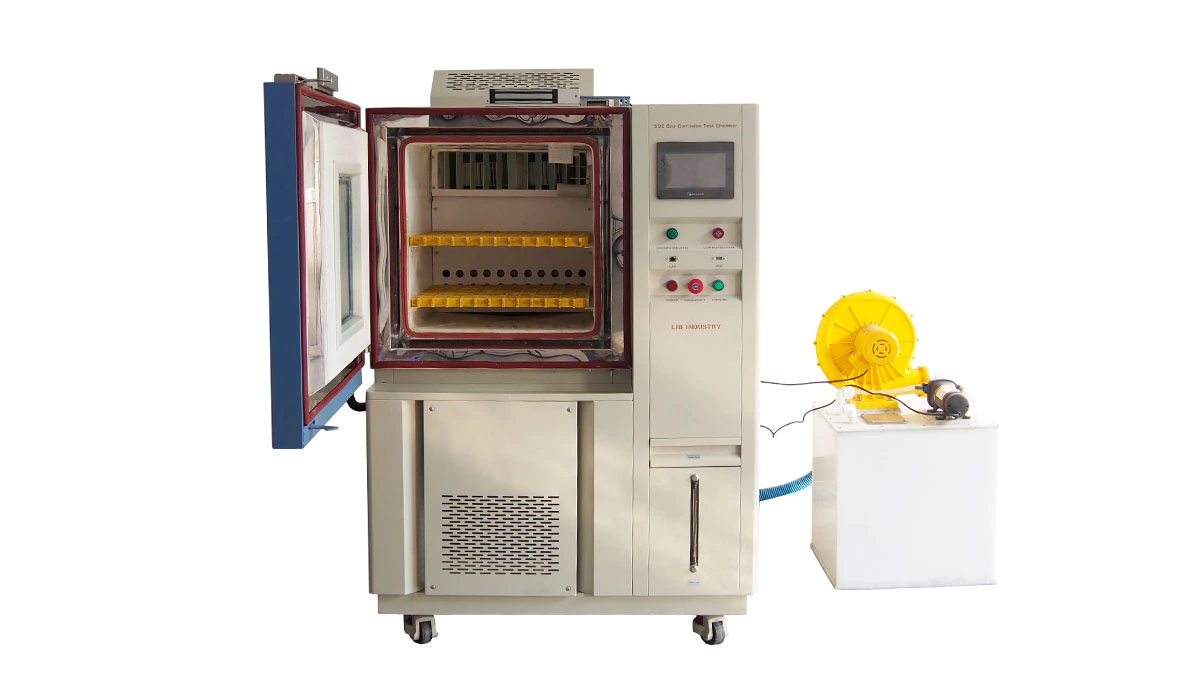
Gas Corrosion | Specified gas concentration, temperature, RH and exposure duration | IEC 60068-2-60 and applicable methods | Industrial and corrosion-protection packaging | Mixed Gas Corrosion Chamber |
These are typical reference conditions rather than universal requirements. The final test parameters should always be selected according to the applicable standard, material, package structure, and intended service environment.
UV radiation can accelerate degradation in polymers, coatings, printing inks, labels, and other packaging components. Depending on the material, exposure may cause fading, yellowing, cracking, embrittlement, or surface deterioration.
A commonly used UV-A 340 nm condition includes:
Wavelength: 340 nm
Irradiance: 0.89 W/m²/nm
Temperature: around 60°C for relevant exposure cycles
Cycle: 4 h UV followed by 4 h condensation
Exposure duration: determined by the application and test requirement
These conditions are associated with commonly used ASTM G154 cycles, but not every packaging application uses the same cycle.
Evaluated: color change/fading, yellowing, surface cracking, embrittlement, gloss/appearance change, printing and coating durability, retention of material properties.
Common standards include ASTM G154, ISO 4892-3, and GB/T 16422.3.
LIB industry UV test chambers can provide controlled UV radiation, temperature, condensation, and water exposure for accelerated weathering of packaging materials.
Xenon arc testing is useful when packaging needs to be evaluated under a broader simulation of sunlight. It is particularly relevant to printed packaging, labels, plastic films, coatings, and packaging intended for outdoor exposure.
A commonly used xenon test condition may include:
Irradiance: around 0.55 W/m²/nm at 340 nm
Black panel temperature: around 65°C
Relative humidity: controlled according to the selected method
Exposure: light with controlled water spray or other moisture conditions
Exposure duration: application-dependent
The exact combination of irradiance, temperature, humidity, filter system, and water exposure should be selected according to the applicable test method.
Evaluated: color difference (ΔE), fading, yellowing, gloss retention, ink durability, coating degradation, surface cracking, appearance retention.
Common standards include ASTM G155, ISO 4892-2, and GB/T 16422.2.
For packaging materials affected by both UV and visible radiation, xenon arc chamber can provide a broader weathering exposure than a UV-only test.
Temperature and humidity conditioning is especially important for paper, corrugated board, adhesives, plastic films, and composite packaging.
Common reference conditions include:
23°C ± 2°C / 50%RH ± 5%RH
This type of conditioning is commonly used to establish a controlled environment before packaging performance testing.
40°C / 75%RH
This can be used for selected accelerated environmental exposure or application-specific testing.
85°C / 85%RH
This is widely used for accelerated humidity-related evaluation in many industries, but it should not be considered a universal packaging requirement.
Evaluated: moisture absorption, dimensional change, strength retention, carton deformation, adhesive performance, seal integrity, softening, changes in barrier/protective performance.
Relevant packaging standards include ASTM D4332, ISO 2233, and GB/T 4857.2.
Temperature and humidity testing can also be used as a conditioning step before compression, vibration, drop, or other transportation tests.
Packaging may encounter high temperatures in warehouses, shipping containers, vehicles, or outdoor environments, while refrigerated transportation and cold storage can expose materials to low temperatures.
Typical reference temperatures may include:
-40°C
-20°C
0°C
+60°C
+85°C
Higher or lower temperatures may be selected for specific materials and applications.
Evaluated: low-temperature brittleness, high-temperature softening, shrinkage, expansion, deformation, dimensional stability, seal/adhesive performance, changes in mechanical properties.
IEC 60068-2-1 and IEC 60068-2-2 are commonly referenced for cold and dry heat testing.
The actual temperature range should be based on the expected transportation, storage, and service conditions rather than applying one fixed range to all packaging.
Thermal shock or rapid temperature change testing is more relevant to packaging structures that experience rapid temperature transitions, particularly laminated films, composite materials, coatings, and adhesive-bonded structures.
A typical application-specific test may use:
Low temperature: -40°C
High temperature: +85°C
Dwell time: 10–30 minutes or as specified
Cycles: 50, 100, 200 or application-specific
Rapid transition: controlled according to the equipment and test method
The critical parameters are not only the high and low temperatures, but also the transition rate, dwell time, and number of cycles.
Evaluated: cracking, delamination, interface separation, adhesive failure, seal failure, warping, dimensional change.
IEC 60068-2-14 provides commonly referenced temperature-change test methods.
LIB industry provides thermal shock and rapid temperature change chambers for applications requiring repeated or rapid transitions between hot and cold conditions.
Salt spray testing is not necessary for every packaging material. It is mainly relevant when packaging contains metal containers, closures, fasteners, metal components, coatings, or corrosion-protection systems.
A typical neutral salt spray condition includes:
Chamber temperature: 35°C
NaCl concentration: 5%
Solution pH: typically 6.5–7.2
Spray collection rate: approximately 1.0–2.0 mL/80 cm²/h
Exposure duration: 24, 48, 96, 168, 240 h or as specified
The exposure duration should be determined by the applicable standard and test objective. Longer exposure does not automatically mean a more appropriate test.
Evaluated: rust formation, corrosion area, coating failure, blistering, surface damage, corrosion-protection performance.
Common standards include ASTM B117, ISO 9227, and GB/T 10125.
For paper, cardboard, and polymer packaging without corrosion-sensitive metal components, other environmental tests are generally more relevant.
Air transportation can expose sealed packages to reduced atmospheric pressure. This can cause expansion, deformation, leakage, seal failure, or rupture.
Low-pressure testing can be considered for:
Flexible packaging
Sealed bags
Liquid-containing packages
Packages containing trapped air
Aviation-related packaging
Air-transport packaging
Instead of using one universal pressure value, the test should be defined by the target altitude, corresponding pressure, pressure reduction profile, and holding time.
Typical altitude scenarios may include:
2,000 m
3,000 m
5,000 m
8,000 m
The corresponding pressure should be selected according to the target altitude and applicable test procedure.
Evaluated: package expansion, deformation, leakage, seal integrity, rupture, pressure-induced damage, product/package interaction.
ASTM D6653 is an important standard for evaluating the effects of high altitude on packaging systems.
LIB industry provides low pressure / altitude test chambers for controlled reduced-pressure testing. The pressure range, chamber volume, and test configuration can be selected according to the package dimensions and testing requirements.
Industrial packaging may need to protect metal products or components against corrosive atmospheric gases. Gas corrosion testing is therefore more application-specific than UV, temperature/humidity, or transportation conditioning.
It may be considered for:
Metal components
Corrosion-protection coatings
Industrial packaging
Metal products protected by packaging
VCI-related corrosion-protection applications
Typical test parameters include:
Gas type
Gas concentration
Temperature
Relative humidity
Exposure duration
Gas flow rate where required
Depending on the application, gases may include SO₂, H₂S, NO₂, or mixed corrosive gases.
IEC 60068-2-60 is one of the relevant methods for mixed-flowing-gas corrosion testing.
Evaluated: corrosion formation, surface discoloration, coating degradation, corrosion area, protective performance, material compatibility.
LIB mixed gas corrosion test chambers can be configured according to the required gas composition, concentration, temperature, humidity, and exposure conditions.
Environmental testing is only one part of packaging validation. Packages may also experience vibration, dropping, compression, stacking, and impact during transportation.
Common transportation tests include:
Vibration
Drop
Compression
Stacking
Impact
Relevant standards and procedures include ASTM D4169, ASTM D5276, ASTM D642, ASTM D999, and applicable ISTA procedures.
A combined program may use environmental conditioning before mechanical testing, for example:
Temperature & Humidity Conditioning → Compression → Vibration → Drop
This approach can help determine whether environmental exposure changes the package's ability to withstand transportation stresses.
Different packaging materials require different combinations of tests.
UV / Xenon → Temperature & Humidity → Temperature Cycling
Used to evaluate weathering, discoloration, humidity effects, dimensional changes, and aging.
Xenon → UV → Temperature & Humidity
Focuses on color difference, fading, yellowing, gloss, ink durability, and surface degradation.
Temperature & Humidity Conditioning → Compression → Vibration → Drop
Focuses on moisture effects, dimensional stability, strength retention, stacking performance, and transportation durability.
Temperature & Humidity → Thermal Shock → Temperature Cycling → UV/Xenon
Helps evaluate delamination, cracking, adhesive failure, and environmental aging.
Salt Spray → Temperature & Humidity → Temperature Cycling
Focuses on corrosion, coating degradation, condensation effects, and dimensional changes.
Low Pressure → Temperature & Humidity → Mechanical Transportation Testing
Focuses on package expansion, deformation, leakage, seal integrity, and transportation durability.
The final combination should be selected according to the material, package structure, intended environment, transportation conditions, and applicable standards.
A suitable packaging test program should reproduce the environmental stresses most relevant to the package's intended application rather than simply applying every available test.
LIB provides environmental simulation equipment covering UV, xenon, temperature, humidity, thermal shock, salt spray, low pressure, and mixed gas corrosion testing.
Based on your packaging material, package dimensions, applicable standard, target temperature and humidity, irradiance requirements, pressure conditions, exposure duration, and cycle requirements, LIB can help recommend a suitable testing configuration.LIB supports customers beyond equipment supply with a 3-year warranty and lifetime service. Installation and training can also be provided according to project requirements, with technical support available for equipment operation and testing applications.
Please provide your packaging material, sample or package dimensions, applicable test standard, target test conditions, and required test duration when requesting a quotation.
 English
 русский
 français
 العربية
 Deutsch
 Español
 한국어
한국어 italiano
 tiếng việt
 ไทย
ไทย Indonesia