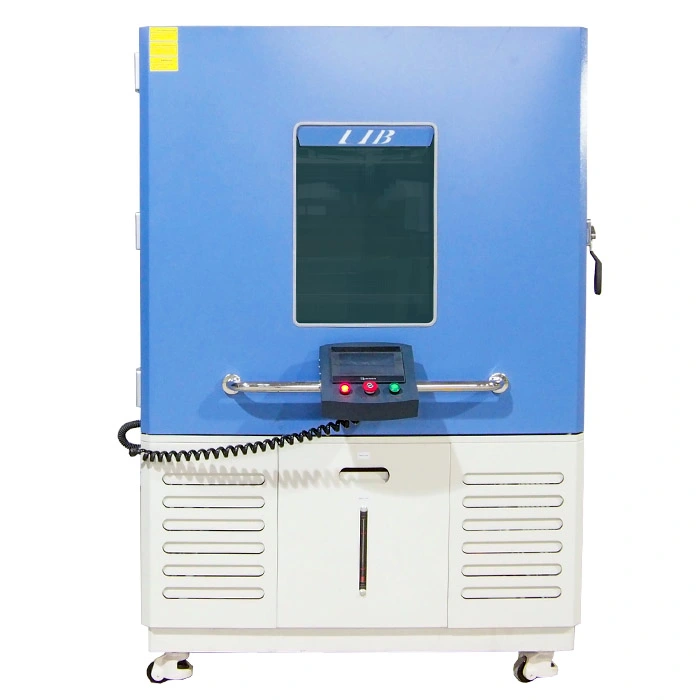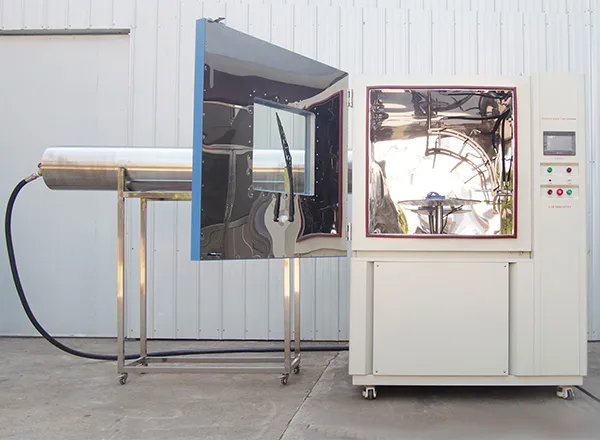
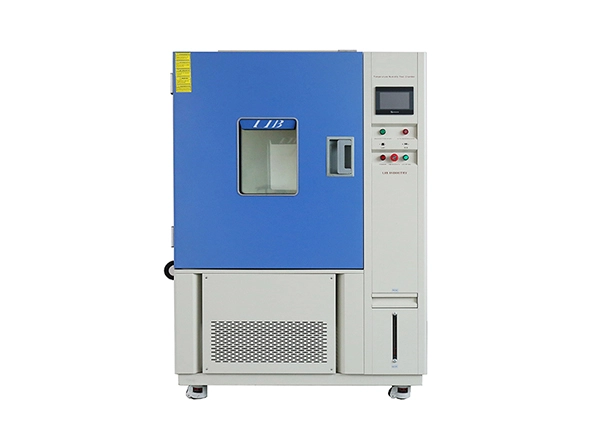
For ESS, HALT and HASS programs, the right equipment depends on whether the objective is controlled temperature cycling, accelerated stress discovery, or production screening. A fast temperature change chamber is designed for rapid and repeatable thermal transitions, while a thermal shock chamber focuses on much more abrupt changes between hot and cold zones. IEC 60068-2-14 and JESD22-A104 are commonly relevant to temperature-change and temperature-cycling programs, while HALT and HASS are guided by practices such as IEST-RP-PR003 rather than one universal test profile. The key selection factors are actual sample temperature ramp rate, sample heat load, working volume, airflow, recovery performance, and safety requirements.
The role of temperature testing is changing as electronic products, energy-storage systems, automotive electronics and high-density assemblies become more compact and thermally complex.
Traditional environmental testing often focuses on whether a product can survive a specified high or low temperature. Rapid thermal cycling, however, is increasingly used to investigate what happens when a product repeatedly moves between thermal extremes.
Typical specimens include:
ESS battery modules, packs and electrical assemblies
Power electronics and inverters
PCBs and semiconductor assemblies
Automotive sensors and electronic control units
Connectors, solder joints and interconnects
Aerospace and defense electronics
Consumer electronic assemblies
The failure mechanisms can be different from those observed during constant-temperature exposure. Repeated expansion and contraction can create mechanical stress between materials with different coefficients of thermal expansion. This can contribute to solder fatigue, connection failures, seal degradation, cracking, delamination and intermittent electrical faults.
For ESS products, another consideration is internal heat generation. A battery or power-electronics specimen may continue producing heat while the chamber is trying to move the environment from one extreme to another. Therefore, the chamber's advertised air ramp rate does not necessarily represent the actual temperature change experienced by the specimen.
This distinction is becoming increasingly important as testing moves toward larger, powered and instrumented products.
Temperature cycling, rapid temperature change and thermal shock should not be treated as interchangeable terms.
IEC 60068-2-14:2023 defines environmental tests for changes in temperature and considers factors including high and low conditioning temperatures, conditioning time and the rate of temperature change.
JESD22-A104 applies to temperature cycling of components and solder interconnections using single-, dual- or triple-chamber approaches. The current method specifically distinguishes temperature cycling from thermal shock testing.
For HALT and HASS, IEST-RP-PR003 provides guidance on highly accelerated life testing and highly accelerated stress screening, including equipment, fixturing and additional environmental stresses. It is a recommended practice rather than a universal product qualification specification.
Standard / Method | Primary purpose | Temperature condition | Humidity | Cycle / transition | Key consideration |
IEC 60068-2-14:2023 | Change of temperature | High/low temperatures defined by test plan | Not inherently required | Controlled temperature changes and conditioning | Specimen response matters |
JESD22-A104F.01 | Semiconductor temperature cycling | Defined high/low extremes | Generally dry air/gaseous medium | Single, dual or triple chamber cycling | Component and solder reliability |
MIL-STD-810H Method 503.7 | Temperature shock | Tailored hot/cold extremes | Not the primary stress | Sudden air-temperature changes; >10°C/min defines “sudden” in the method | Tailoring is essential |
IEST-RP-PR003 | HALT/HASS guidance | Application-dependent | Application-dependent | Accelerated stress profiles | Not a standalone qualification limit |
ESS program | Production/reliability screening | Product-specific | Optional depending on program | Repeated thermal cycling | Detect latent manufacturing defects |
MIL-STD-810H Method 503.7 defines temperature shock as an air-temperature change greater than 10°C within one minute and emphasizes tailoring the method to the intended application.
The trend is therefore not simply toward “the fastest chamber.” It is toward equipment capable of delivering the required specimen-level thermal profile under the actual load.
Parameter | Standard Thermal Chamber | Fast Temperature Change Chamber | HALT/HASS Chamber | Thermal Shock Chamber |
Temperature range | Moderate to wide | Wide, application-dependent | Wide and highly accelerated | Typically very wide |
Humidity range | Available on climatic models | Optional depending on design | Usually secondary | Usually not the main function |
Chamber volume | Benchtop to walk-in | Benchtop to large | Usually optimized for accelerated testing | Often smaller working zones |
Ramp rate | Moderate | High | Very high / stress-oriented | Extremely rapid transfer |
Airflow | Controlled circulation | High-performance circulation | High airflow for rapid transitions | Hot/cold zone transfer or rapid conditioning |
Sample heat load | Important | Critical | Critical | Critical for actual shock response |
Safety configuration | Standard protection | Enhanced over-temperature and load monitoring | Safety interlocks and stress monitoring | High-temperature and refrigeration protection |
Applicable standards | IEC 60068, product standards | IEC 60068-2-14, JESD22-A104 and tailored programs | IEST-RP-PR003 and product-specific plans | MIL-STD-810, applicable shock methods |
LIB's Thermal Chambers category currently includes dedicated solutions such as Fast Change Rate Chamber, Environmental Stress Screening ESS Test Chamber, Rapid Rate Thermal Cycling Chamber, Temperature Cycling Chamber and High Ramp Rate Thermal Test Chamber.
This range reflects an important industry trend: manufacturers increasingly need different thermal architectures for ordinary conditioning, accelerated cycling, ESS screening and thermal shock rather than relying on one generic chamber.
1. Choosing the chamber from its empty-chamber ramp rate
A chamber may achieve a specified ramp rate without a load, but a large battery module or powered electronics assembly can significantly reduce the effective rate. Ask for performance under the expected sample heat load.
2. Confusing rapid cycling with thermal shock
Rapid thermal cycling uses controlled transitions between temperature conditions. Thermal shock is intended to produce a much more abrupt thermal change. JESD22-A104 explicitly distinguishes temperature cycling from thermal shock.
3. Ignoring powered samples
ESS and electronics testing often involves energized samples. The product may generate heat during the test, changing the actual thermal profile and increasing the refrigeration or heating demand.
4. Using chamber-air temperature as the only measurement
For reliability testing, the sample temperature can be more meaningful than the controller display. Instrumentation should be positioned to measure representative or worst-case locations.
5. Selecting too much chamber volume
A larger chamber is not automatically better. Excess volume increases the thermal mass that must be controlled and may make rapid transitions more difficult. The chamber should provide sufficient clearance without unnecessarily increasing the working volume.
6. Focusing only on minimum and maximum temperature
For rapid thermal cycling, the transition rate, recovery time, dwell time and sample temperature response can be more important than the headline temperature range.
7. Forgetting infrastructure
High-performance chambers may require substantial electrical capacity, heat rejection, drainage, ventilation and installation clearance. ESS and battery applications may additionally require dedicated safety systems, exhaust arrangements and abnormal-condition protection.
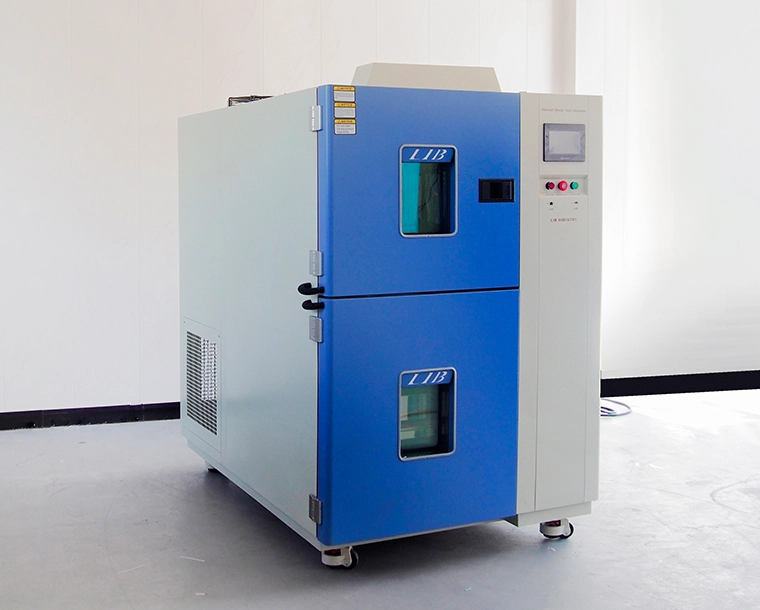
The appropriate LIB configuration should be selected according to the purpose of the thermal program.
Benchtop: Suitable for small electronic components, PCBs, sensors and laboratory screening where sample volume and heat load are limited.
Reach-In: A practical choice for medium-sized assemblies and repeated temperature cycling. It provides more working space while maintaining relatively efficient thermal control.
Walk-In: Appropriate for large battery assemblies, vehicle components, multiple specimens or large fixtures. The main design challenge is maintaining uniformity and ramp performance with a large thermal load.
Thermal Shock: Select this configuration when the test specifically requires sudden transfer between extreme hot and cold environments rather than ordinary rapid cycling. LIB's Thermal Chamber portfolio includes thermal shock solutions and models advertised for ranges extending from -70°C to +220°C.
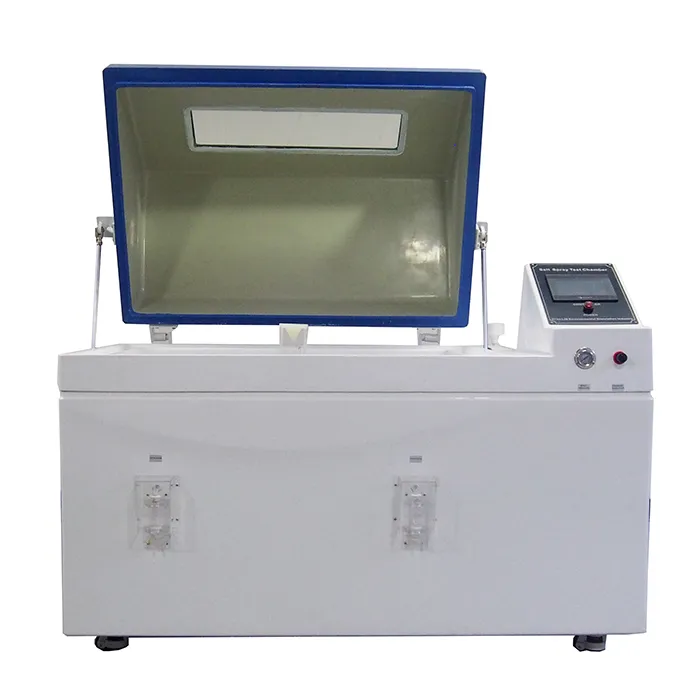
Salt Spray: Not a substitute for a fast temperature chamber. It should be selected when corrosion exposure is the primary requirement.
IP: Appropriate when ingress protection against dust or water is the test objective rather than thermal cycling.
Special Custom Chamber: Consider this option for large ESS systems, unusual specimen configurations, integrated electrical testing, special safety requirements or customized thermal profiles.
For most ESS, electronics and accelerated temperature-cycle applications, the best starting point is LIB's Thermal Chambers category, which covers conventional thermal chambers as well as fast-change, rapid-rate, ESS and temperature-cycle configurations.
For battery-focused applications, LIB also provides a Battery Technology solution path, which is useful when chamber selection must account for battery size, operating state and safety requirements.
A useful related topic for engineers comparing accelerated thermal methods is Thermal Shock Test Chamber: The Three Major Working Principles, which helps establish whether a rapid-rate chamber or a dedicated thermal-shock configuration is appropriate for a particular test plan.
For ESS modules and packs, a fast temperature change chamber or battery-capable thermal chamber is generally appropriate when controlled rapid cycling is required. The final selection should consider sample size, electrical operation, heat generation, temperature range, ramp rate and safety requirements.
An ESS test chamber is generally selected around the environmental stress-screening requirements of the product or production process. HALT is a reliability-development method intended to expose design weaknesses through accelerated stresses. IEST-RP-PR003 describes HALT and HASS as qualitative reliability and screening approaches rather than universal qualification tests.
No. A fast temperature change chamber is designed for controlled, repeatable high-rate transitions. A thermal shock chamber is designed for much more abrupt temperature changes, often using separate hot and cold zones or other rapid-transfer approaches.
There is no single correct ramp rate. The required rate should come from the applicable test method and product specification. For example, MIL-STD-810H Method 503.7 defines a sudden air-temperature change as greater than 10°C within one minute, while other temperature-cycling methods use different profiles.
The total duration depends on the number of cycles, temperature extremes, dwell periods, transition rates and product requirements. A short cycle does not necessarily mean a short qualification program because hundreds of cycles may be required.
Measure the complete test setup, including the battery or module, electrical fixtures, cables, instrumentation, safety clearance and airflow space. For powered ESS samples, also provide the expected heat generation so the chamber can be sized for the real thermal load.
Potentially, but only when its temperature range, ramp performance, sample heat-load capability, controls, safety configuration and instrumentation meet both test plans. A chamber should not be considered suitable simply because its temperature range covers both programs.
An RFQ should specify the temperature range, required ramp rate, sample dimensions and weight, quantity of samples, powered or unpowered status, maximum heat generation, dwell time, cycle count, humidity requirements, monitoring points, applicable standards, safety requirements and available installation utilities.
 English
 русский
 français
 العربية
 Deutsch
 Español
 한국어
한국어 italiano
 tiếng việt
 ไทย
ไทย Indonesia