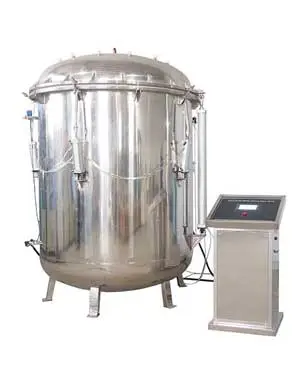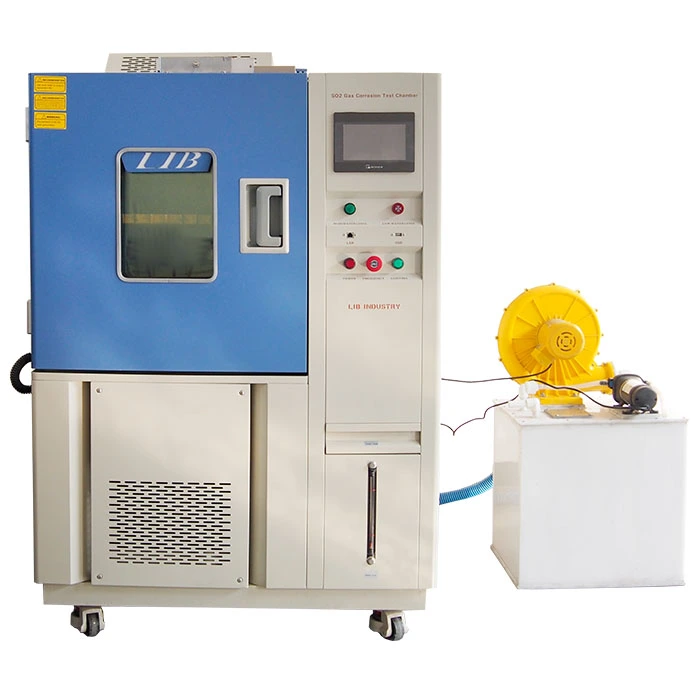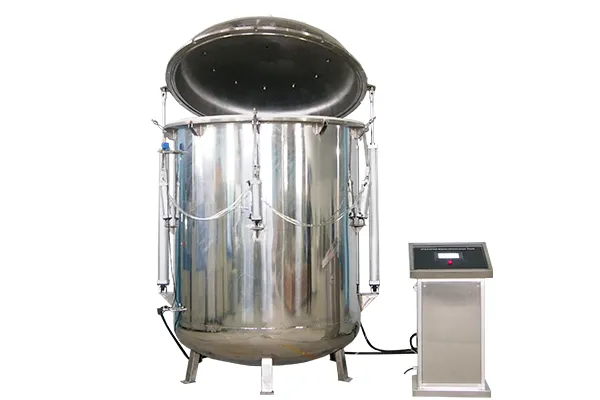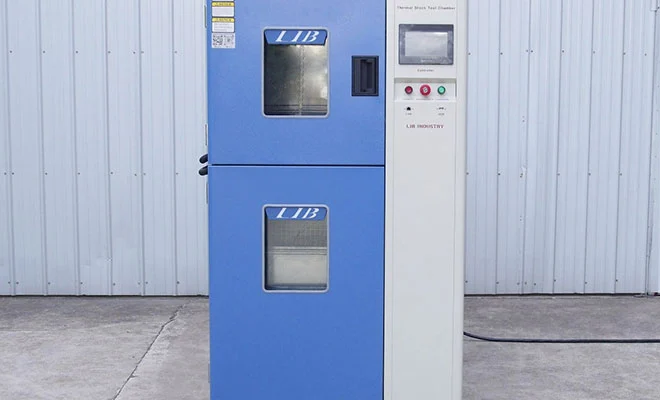
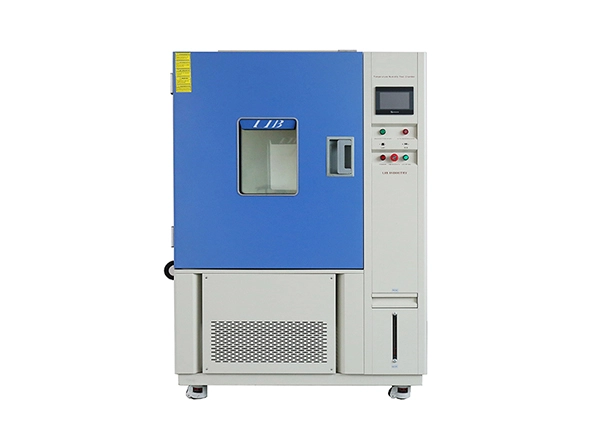
For ingress protection testing, the correct equipment depends first on whether the product is general electrical equipment or road-vehicle equipment. IEC 60529 is the general reference for degrees of protection provided by enclosures, while ISO 20653:2023 specifically addresses electrical equipment installed in road vehicles. The two systems share the basic IP-code concept, but ISO 20653 adds automotive-specific requirements and special K codes, including ratings such as IP5KX, IP6KX, IPX6K and IPX9K. For general products, select equipment according to IEC 60529. For automotive components, confirm the vehicle manufacturer's specification and ISO 20653 requirements before choosing IP test equipment.
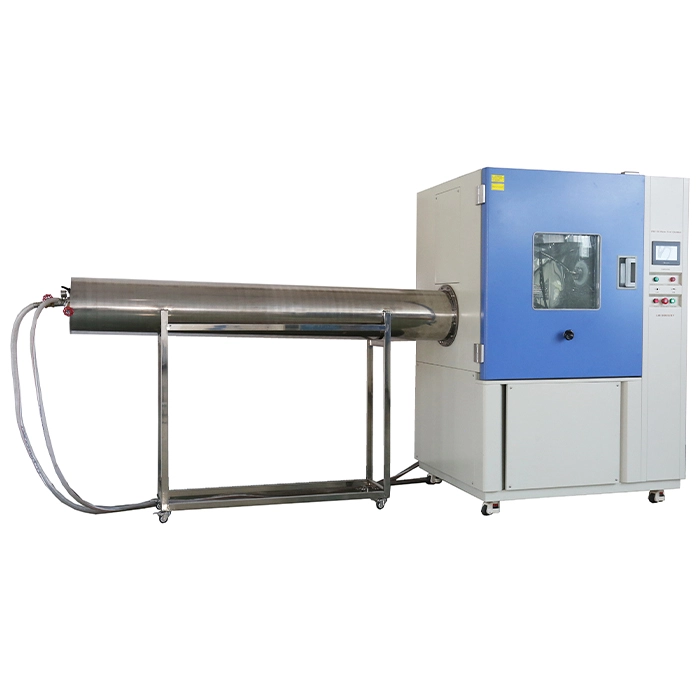
Ingress protection testing determines how effectively an enclosure protects internal electrical equipment against foreign objects, dust, water and access to hazardous parts.
For general electrical and electronic products, IEC 60529 provides the familiar IP code. The first characteristic digit addresses protection against solid foreign objects and access, while the second characteristic digit addresses protection against water. IEC 60529 applies to enclosures for electrical equipment with rated voltages up to 72.5 kV.
Typical applications include:
Industrial electrical enclosures
Consumer electronics
Lighting products
Control cabinets
Outdoor electrical equipment
Sensors and connectors
ISO 20653:2023 has a more specific scope. It applies to electrical equipment of road vehicles, covering protection against foreign objects, water and access. The standard also defines automotive-specific IP codes and test requirements.
This distinction becomes important when testing automotive components such as:
ECUs and control modules
Automotive sensors
Connectors
Exterior lighting
Battery and high-voltage electrical components
ADAS equipment
Vehicle-mounted electronic housings
The key point is that an automotive IP rating should not automatically be interpreted as identical to the corresponding IEC 60529 rating.
The basic IP-code structure is shared, but ISO 20653 introduces additional automotive requirements. ISO itself states that its IP codes are based on IEC 60529 except for K codes, which describe special road-vehicle requirements not covered by IEC 60529.
Standard / Rating | Main application | Test medium | Typical test condition | Key consideration |
IEC 60529 IP5X/IP6X | General electrical equipment | Dust | Controlled dust exposure | Enclosure dust protection |
IEC 60529 IPX3/IPX4 | General electrical equipment | Water spray | Controlled spray from specified directions | Rain/splash resistance |
IEC 60529 IPX5/IPX6 | General electrical equipment | Water jet | Controlled water flow and nozzle | Powerful water-jet protection |
ISO 20653 IP5KX/IP6KX | Road vehicles | Dust | Automotive-specific dust exposure | Vehicle environment |
ISO 20653 IPX6K | Road vehicles | High-pressure water | Automotive high-pressure water exposure | Vehicle-specific protection |
ISO 20653 IPX9K | Road vehicles | Hot high-pressure water | Approximately 80°C water, close-range high-pressure spray | Severe washdown exposure |
ISO 20653:2023 specifically expanded the IPX9K test conditions, including impact-force measurement, additional tolerances and visualization methods. It also added further details for water tests such as degrees 3, 4 and 4K.
LIB's technical information for its IPX9K equipment identifies 8,000–10,000 kPa pressure, 14–16 L/min flow and 80 ±5°C water, with multiple spray angles. These parameters illustrate why automotive IPX9K testing requires equipment specifically designed for the test rather than a conventional rain chamber.
LIB's IP equipment portfolio supports a broad range of ingress protection methods, including IPX1–IPX9K, dust testing and immersion testing.
Selection Factor | IEC 60529 Equipment | ISO 20653 Automotive Equipment |
Temperature range | Depends on test method | Depends on automotive test method |
Humidity range | Usually secondary | Depends on specified vehicle test |
Chamber volume | Benchtop to walk-in | Benchtop to large automotive systems |
Ramp rate | Usually not primary | Usually secondary unless combined with climatic testing |
Airflow | Depends on dust/water method | Depends on automotive procedure |
Sample heat load | Generally limited importance | Important for operating automotive components |
Water system | Drip, spray, jet or immersion | Automotive-specific spray, jet or immersion systems |
Safety configuration | Water, electrical and pressure protection | High-pressure, high-temperature and automotive safety configuration |
Special codes | Standard IP codes | K codes such as IP5KX, IP6KX, IPX6K and IPX9K |
Applicable standards | IEC 60529 and product standards | ISO 20653 and vehicle/OEM specifications |
The equipment should therefore be selected according to the test code rather than the product name.
For example, an industrial enclosure requiring IPX6 under IEC 60529 may need a water-jet system. An automotive enclosure requiring IPX6K or IPX9K may require a substantially different pressure, temperature and spray configuration.
LIB's waterproof test machine provides IPX1 through IPX6 testing and lists both IEC 60529 and ISO 20653 among its applicable standards.
The basic IP concept is related, but ISO 20653 adds road-vehicle-specific requirements and K codes.
An IP6X result under one standard should not automatically be treated as an automotive IP6KX qualification. The complete test method and acceptance criteria must be checked.
IPK ratings such as IP5KX, IP6KX and IPX9K indicate automotive-specific requirements. The K is not simply a marketing suffix.
Water pressure is only one parameter. Flow rate, nozzle geometry, spray distance, water temperature, impact force and exposure sequence can all affect the result.
IPX9K involves hot, high-pressure, close-range water exposure. ISO 20653:2023 specifically addresses these test conditions, so dedicated equipment is normally required.
Vehicle manufacturers may specify additional test requirements beyond the basic ISO 20653 rating. The component's purchasing or validation specification should therefore be checked before equipment selection.
The specimen, fixture, cables and required spray distance must all fit within the test system. Automotive assemblies may require a larger chamber or customized configuration.
A product may require both solid-particle and water-ingress testing. Selecting only a water system does not establish the complete IP rating.
The appropriate LIB configuration depends on the product and rating being verified.
Benchtop: Suitable for small electronic components, connectors, sensors and compact enclosures during R&D or preliminary qualification.
Reach-In: Appropriate for medium-sized electrical and automotive components requiring controlled IP testing.
Walk-In: Better suited to large automotive assemblies, vehicle components or multiple specimens. LIB offers large-scale environmental and IP test solutions for automotive applications.
Thermal Shock: Select when the test requires rapid temperature transitions rather than water or dust ingress testing.
Salt Spray: Intended for corrosion evaluation and should not be used as a substitute for IP water testing.
IP: The most direct choice for ingress protection qualification. LIB's IP Test Equipment portfolio includes water, dust and immersion equipment covering multiple IP levels.
Special Custom Chamber: Recommended when an automotive program combines IP testing with temperature, vibration, electrical operation or other environmental stresses.
For general waterproof testing, LIB's Water IP Test Device covers IPX1–IPX6 and lists both IEC 60529 and ISO 20653 among its applicable standards.
For automotive applications requiring high-pressure and high-temperature water exposure, the IPX9K Test Equipment is more appropriate than a conventional spray chamber.
LIB's Automotive Environmental Test Chamber portfolio also connects IP dust and water ingress testing with corrosion, temperature-humidity-vibration and thermal shock testing for vehicle components.
A useful related article is ISO 20653: Why LIB Industry's IPX9K Test Chamber is the Automotive-Grade Choice. It provides a more detailed look at ISO 20653, IPX9K and the requirements of automotive-grade high-pressure water testing.
IEC 60529 is a general standard for degrees of protection provided by enclosures for electrical equipment. ISO 20653 is specifically intended for electrical equipment installed in road vehicles.
The K identifies special requirements for road vehicles that are not covered by IEC 60529. Examples include IP5KX, IP6KX and IPX9K.
No. Although both concern dust protection, IP6KX is an automotive-specific code under ISO 20653. The test conditions and application context should be evaluated according to the applicable standard.
It depends on the required rating. Dust ratings require a suitable dust test chamber, while water ratings may require spray, jet, immersion or high-pressure/high-temperature equipment. IPX9K requires a dedicated high-pressure hot-water configuration.
Some equipment can support test methods from both standards, but the actual configuration must reproduce the conditions required by each standard. LIB lists equipment supporting both IEC 60529 and ISO 20653 for several IP test applications.
Start with the exact ISO 20653 rating, then confirm water or dust method, flow rate, pressure, temperature, spray angle, specimen dimensions, operating condition and any additional OEM requirements.
Not automatically. Different IP ratings represent different test conditions. A higher-looking number should not be treated as a universal substitute unless the applicable product or vehicle specification explicitly permits it.
Include the standard and exact IP code, specimen dimensions and weight, test medium, pressure, flow rate, water temperature, nozzle configuration, spray distance, test duration, sample operating status, chamber volume, drainage requirements and any OEM-specific test procedure.
 English
 русский
 français
 العربية
 Deutsch
 Español
 한국어
한국어 italiano
 tiếng việt
 ไทย
ไทย Indonesia
.webp "Industrial Freezing Chamber")