
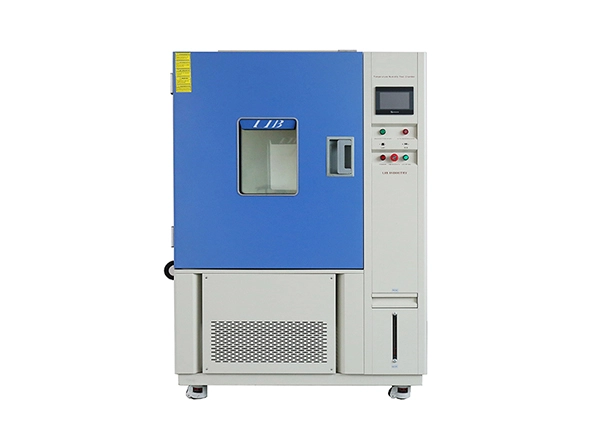
Outdoor power equipment is increasingly deployed in challenging environments such as solar farms, battery energy storage systems, EV charging networks, substations, mining facilities, and remote industrial sites. In these locations, dust and sand are not merely maintenance concerns—they are major factors affecting equipment reliability and service life.
Fine dust particles can penetrate ventilation paths, cable entries, pressure relief vents, connectors, and electrical compartments. Over time, dust accumulation can block cooling systems, increase operating temperatures, reduce insulation performance, and cause premature equipment failure. In desert or construction environments, high-speed sand can also erode coatings, seals, display panels, and exposed components.
A blowing sand and dust test chamber allows manufacturers to evaluate these risks under controlled laboratory conditions before products reach the field.
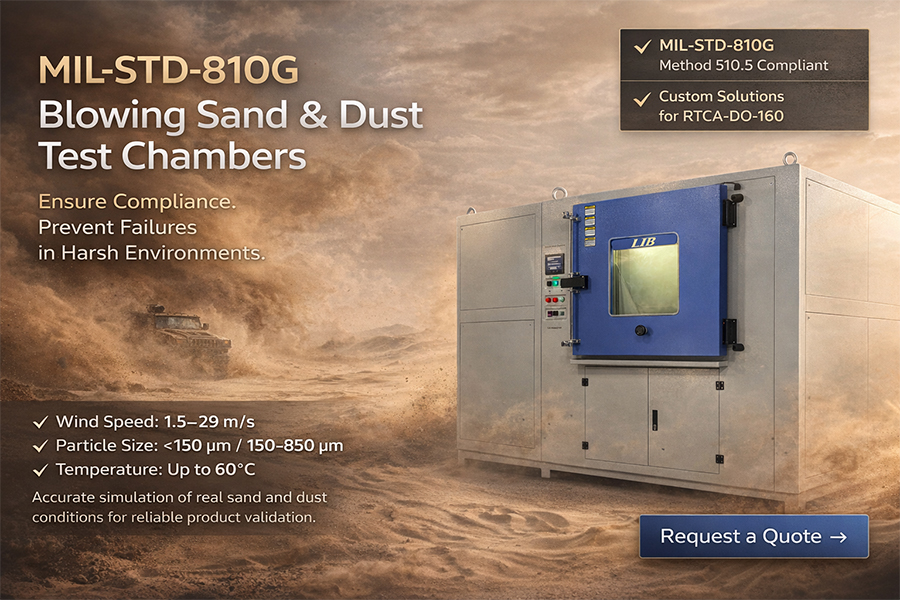
Outdoor electrical equipment rarely operates in clean environments. Depending on the installation location, equipment may be exposed to:
Desert sandstorms
Roadside dust
Mining particles
Agricultural soil
Construction-site debris
Windborne contaminants
Even equipment with robust enclosures can experience gradual dust accumulation around cooling systems and sealing interfaces.
Common consequences include:
Reduced cooling efficiency
Overheating of power electronics
Increased contact resistance
Insulation degradation
Fan blockage
Connector contamination
Premature component aging
For manufacturers and project owners, dust reliability testing helps identify weaknesses before deployment, reducing warranty claims, maintenance costs, and unexpected downtime.
Different products face different failure mechanisms under sand and dust exposure.
Equipment Type | Typical Risk |
Solar Inverters | Cooling blockage, connector contamination |
PV Combiner Boxes | Dust ingress through cable glands |
Battery Energy Storage Cabinets | Vent obstruction, thermal management issues |
EV Charging Stations | Connector wear, interface contamination |
Power Distribution Cabinets | Terminal contamination, insulation reduction |
Telecom Power Systems | Airflow restriction, filter clogging |
Testing helps verify that equipment can maintain performance and safety under realistic environmental conditions.
Many outdoor power products require compliance with IEC 60529 ingress protection standards.
Protection Level | Description |
IP5X | Dust Protected |
IP6X | Dust Tight |
IP testing evaluates enclosure protection against dust penetration, while MIL-STD-810 focuses on long-term operational reliability under blowing dust and sand exposure.
For critical outdoor equipment, manufacturers often perform both:
IEC 60529 IP5X/IP6X testing
MIL-STD-810 Method 510 blowing dust testing
MIL-STD-810 Method 510 blowing sand testing
This combination provides a more comprehensive assessment of enclosure performance and operational durability.
MIL-STD-810 Method 510 is one of the most widely recognized environmental testing standards for military and industrial equipment.
The standard defines two separate procedures:
Designed to evaluate dust penetration and operational performance under fine-particle exposure.
Typical requirements include:
Particle size: <150 μm
Air velocity: 8.9 ±1.3 m/s
Dust concentration: 10.6 ±7 g/m³
Relative humidity: ≤30%
Designed to evaluate abrasion and mechanical damage caused by larger particles.
Typical requirements include:
Particle size: 150–850 μm
Air velocity: 18–29 m/s
Quartz sand ≥95% SiO₂
Exposure duration: minimum 90 minutes per vulnerable surface
These tests help evaluate both dust ingress and abrasive wear mechanisms.
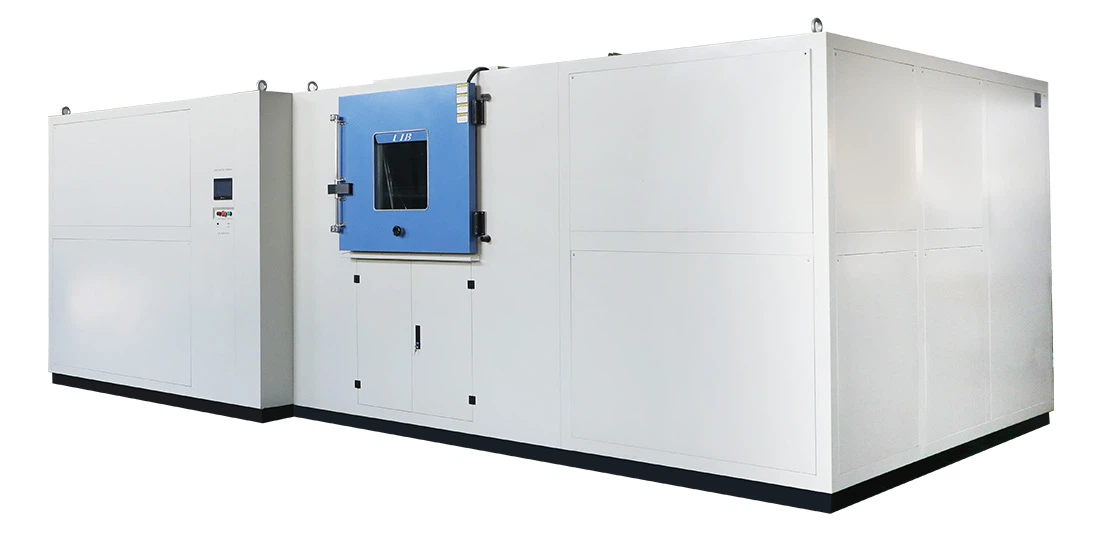 | |
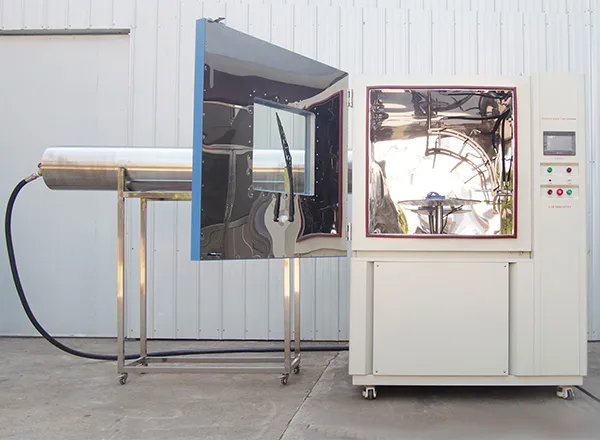
Interior Volume: 1000 L Blowing Dust: Air Velocity: 1.5 – 8.9 m/s Dust Concentration: 10.7 ± 7 g/m³ Dust Particles: <150 μm Blowing Sand: Air Velocity: 18.0 – 29.0 m/s Sand Concentration: 0.18 ± 0.2 g/m³; 1.1 ± 0.3 g/m³; 2.2 ± 0.5 g/m³ Sand Particles: 149 – 600 μm; 600 – 850 μm Controller: Programmable color LCD touch screen controller Door Lock: Electromagnetic lock Testing Platform Diameter: 600 mm Testing Platform Speed: 1 – 7 r.p.m Dust Detector: Integrated dust detector Exterior Material: A3 steel plate with protective coating Interior Material: SUS304 stainless steel Maximum Noise: ≤ 65 dBA |  |
 |  |
| Workroom | Large Centrifugal Fan |
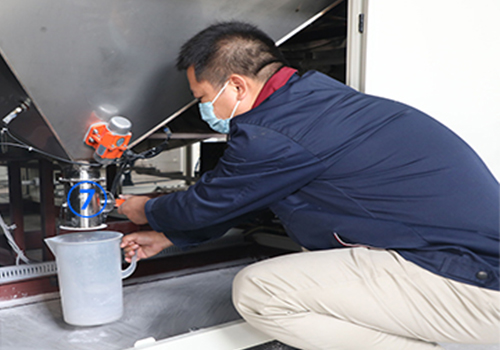 | 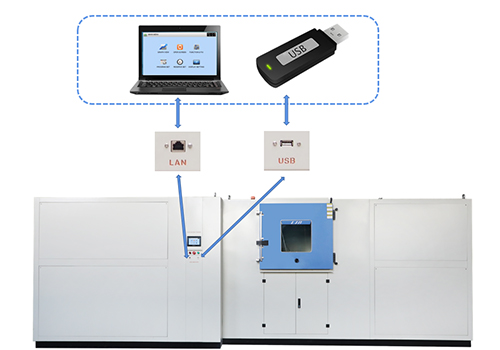 |
Dust & Sand Recovery Port | PLC Controller & Remote Control |
Choosing the right chamber depends on the size of the product, applicable standards, and testing objectives.
Consider the dimensions of the test specimen:
Components and electronics
Solar inverters
Charger modules
Battery cabinets
Distribution enclosures
The test specimen should not occupy excessive chamber volume to ensure proper airflow distribution.
A suitable chamber should support:
1.5–8.9 m/s for blowing dust
18–29 m/s for blowing sand
This allows compliance with MIL-STD-810 Method 510 procedures.
Advanced chambers should provide:
Temperature control
Humidity control
Dust concentration monitoring
Programmable test cycles
Modern laboratories increasingly require:
Touch-screen controllers
Ethernet communication
Data logging
Remote monitoring capability
These features improve repeatability and documentation quality.
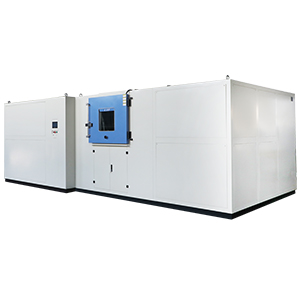
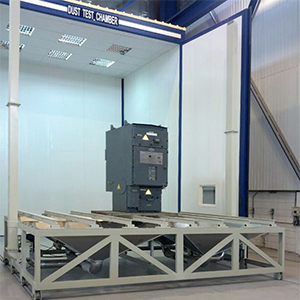
IP5X/IP6X Dust Test ChamberIdeal for:
Key Benefits:
|
A well-designed test program provides valuable engineering data before equipment is deployed.
Testing reveals:
Door seal weaknesses
Cable entry leakage paths
Pressure relief valve vulnerabilities
Interface gaps
Testing confirms whether:
Filters become clogged
Fans remain effective
Heat sinks maintain performance
Thermal management systems function properly
Identifying design weaknesses during development is significantly less expensive than repairing equipment after installation.
For remote solar farms, energy storage facilities, or charging networks, preventing a single field failure can often offset the entire cost of laboratory qualification testing.
LIB Industry has specialized in environmental simulation testing equipment for more than 16 years.
Our capabilities include:
Custom blowing sand and dust chambers
MIL-STD-810 Method 510 compliance solutions
IEC 60529 IP dust testing equipment
Complete installation and commissioning support
Factory-direct manufacturing
Global project experience
3-year warranty
Lifetime technical support
12/5 English after-sales service
LIB chambers are widely used in renewable energy, automotive electronics, aerospace, research laboratories, battery testing, and industrial manufacturing applications worldwide.
Whether you need to verify IP5X/IP6X protection, perform MIL-STD-810 Method 510 qualification testing, or evaluate large outdoor power equipment under realistic environmental conditions, LIB Industry can provide a customized testing solution.
Our engineers can assist with:
Chamber selection
Standard interpretation
Test method recommendations
Custom chamber design
Technical specifications
Quotation support
Contact LIB Industry today to discuss your testing requirements and receive a customized solution within 24 hours.
It is used to evaluate a product's resistance to dust ingress and sand abrasion under controlled laboratory conditions.
Yes. Many products are tested while operating to evaluate cooling systems, electrical performance, and functional reliability during exposure.
Solar energy, battery storage, EV charging, aerospace, defense, automotive electronics, telecommunications, and industrial power systems.
MIL-STD-810 Method 510 and IEC 60529 IP5X/IP6X are among the most frequently specified standards.
Yes. Chamber dimensions, airflow performance, temperature range, fixture design, and control systems can all be customized to suit specific testing requirements.
 English
 русский
 français
 العربية
 Deutsch
 Español
 한국어
한국어 italiano
 tiếng việt
 ไทย
ไทย Indonesia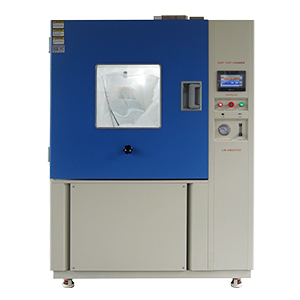
_20260824102429.webp "IPX7 IPX8 Pressurized Water Ingress Protection Tester")


.webp "How Energy-Efficient Environmental Chambers Reduce Testing Cost Without Sacrificing Performance")