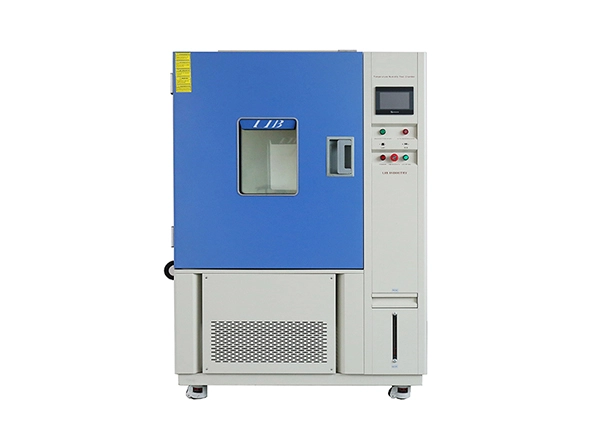
A humidity sensor is a critical measurement component in environmental testing. It monitors relative humidity (RH) and provides the feedback needed to maintain stable test conditions.
Humidity sensors are used in environmental chambers, industrial monitoring systems, laboratories, HVAC equipment, data loggers, and sensor calibration systems. In environmental testing, even a small RH deviation can affect test repeatability, material degradation, corrosion behavior, and product reliability results.
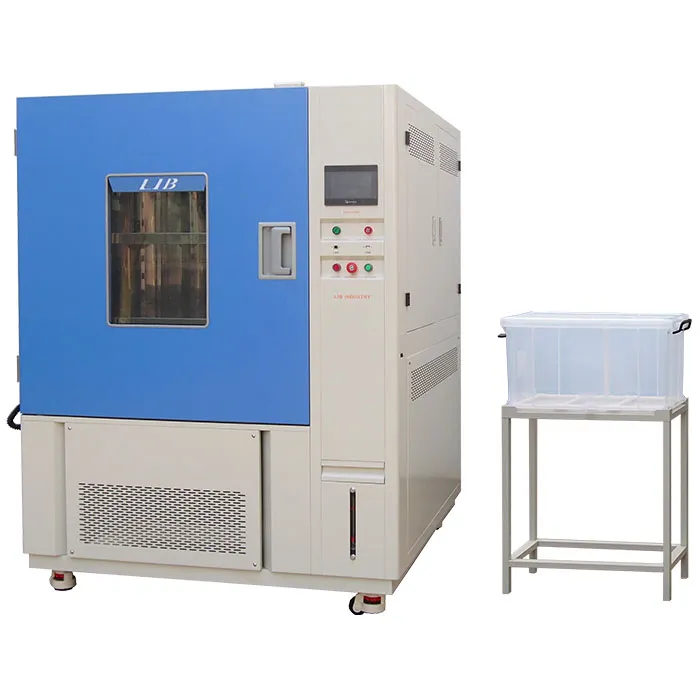
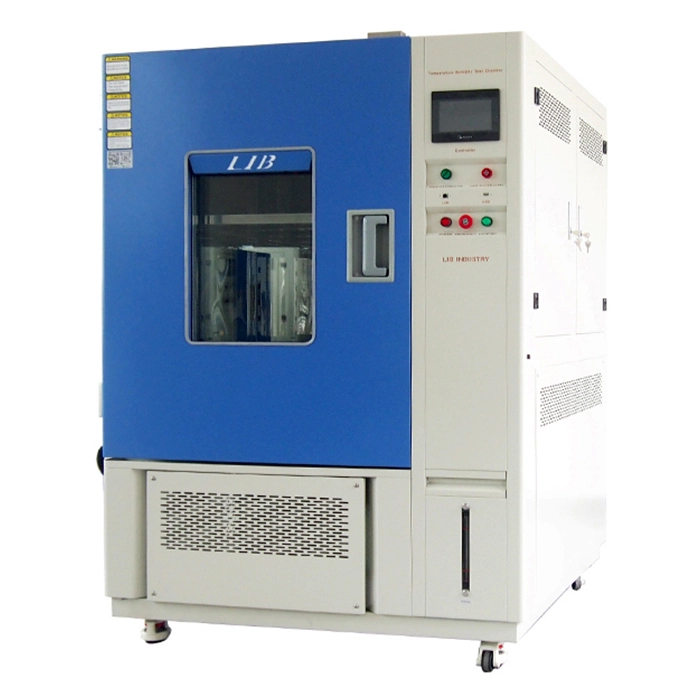
LIB industry provides environmental test chambers for humidity sensor calibration, temperature and humidity testing, and controlled corrosive gas testing.
But how do humidity sensors work? Why do they need calibration? And what should be considered when using humidity probes inside humidity calibration chambers or noxious gas test chambers?
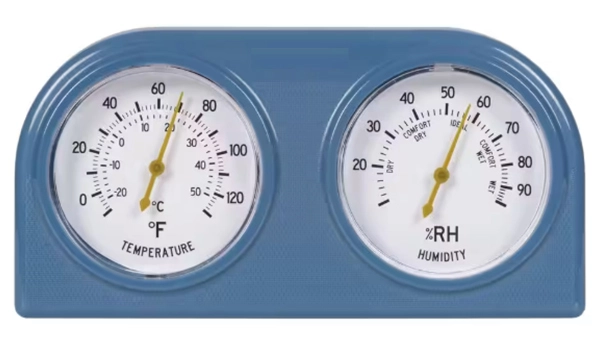
A humidity sensor measures the amount of moisture present in the air. In environmental testing, the most commonly monitored parameter is relative humidity (RH), expressed as a percentage.
For example, an environment maintained at 75% RH means that the air contains approximately 75% of the water vapor it could hold at that specific temperature before reaching saturation.
Because relative humidity is strongly related to temperature, accurate temperature measurement and stable temperature control are also important for reliable humidity measurement.
Two commonly used approaches are wet-bulb/dry-bulb measurement and capacitive humidity sensing.
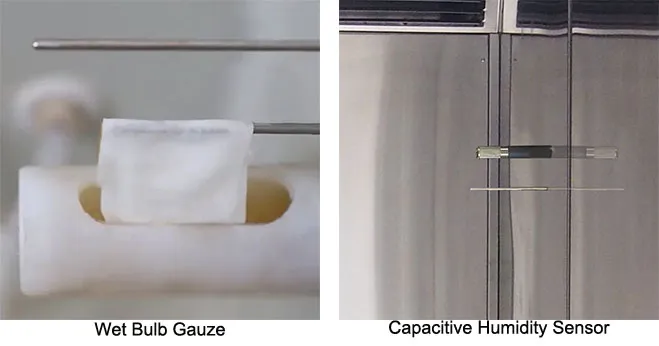
The wet-bulb/dry-bulb method is a traditional approach to humidity measurement.
A dry-bulb sensor measures the actual air temperature, while a wet-bulb sensor is covered with a wetted material. As water evaporates from the wet bulb, it causes the wet-bulb temperature to decrease.
The difference between the dry-bulb and wet-bulb temperatures can then be used to determine relative humidity.
The method is well established, but it requires a water supply and appropriate airflow. It can also require more maintenance than electronic humidity sensors.
A capacitive humidity sensor measures changes in capacitance caused by changes in moisture absorbed by its sensing material.
As humidity changes, the dielectric properties of the sensing layer change. This produces a corresponding change in capacitance, which the electronic circuit converts into a relative humidity reading.
The basic measurement process can be summarized as:
Humidity Change → Dielectric Change → Capacitance Change → Electrical Signal → RH Reading
Capacitive sensors are widely used in automated environmental equipment because they can provide:
Continuous humidity measurement
Fast response
Compact construction
Good repeatability
Easy integration with electronic control systems
Feature | Wet-Bulb/Dry-Bulb | Capacitive |
Measurement principle | Evaporative cooling | Capacitance change |
Water required | Yes | No |
Response | Relatively slower | Generally faster |
Maintenance | Relatively higher | Relatively lower |
Automation | More limited | Excellent |
Typical use | Traditional/reference measurement | Industrial monitoring and automated equipment |
Neither technology is universally suitable for every application. Sensor selection depends on the required accuracy, environmental conditions, response time, maintenance requirements, and compatibility with the test environment.
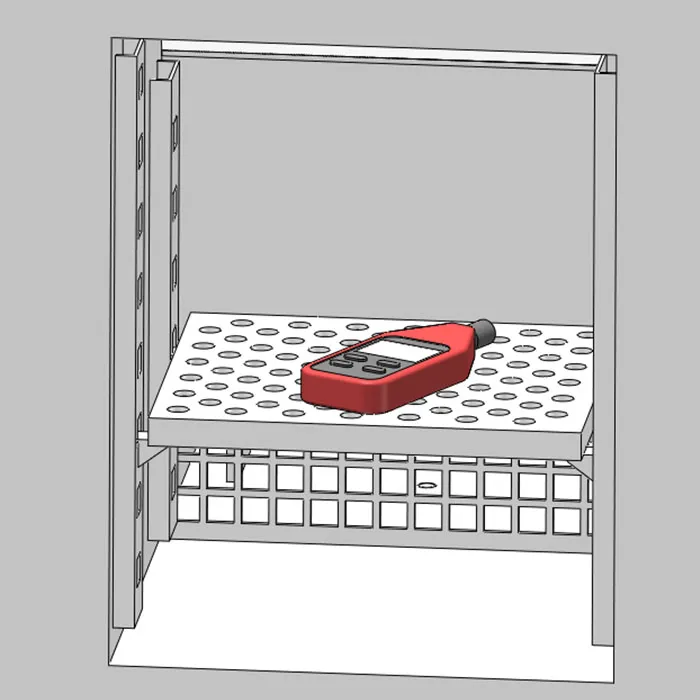 Even a high-quality humidity sensor can experience measurement drift over time.
Sensor performance may be affected by:
Long-term operation
Repeated exposure to high humidity
Temperature cycling
Contamination
Aging of sensing materials
Chemical exposure
Mechanical or environmental stress
For example, if a reference environment is maintained at 75% RH, but a sensor reports 79% RH, the 4% RH difference may be significant in applications that require tightly controlled environmental conditions.
This is why humidity sensors used in laboratories, environmental chambers, and industrial monitoring systems should be periodically verified or calibrated.
v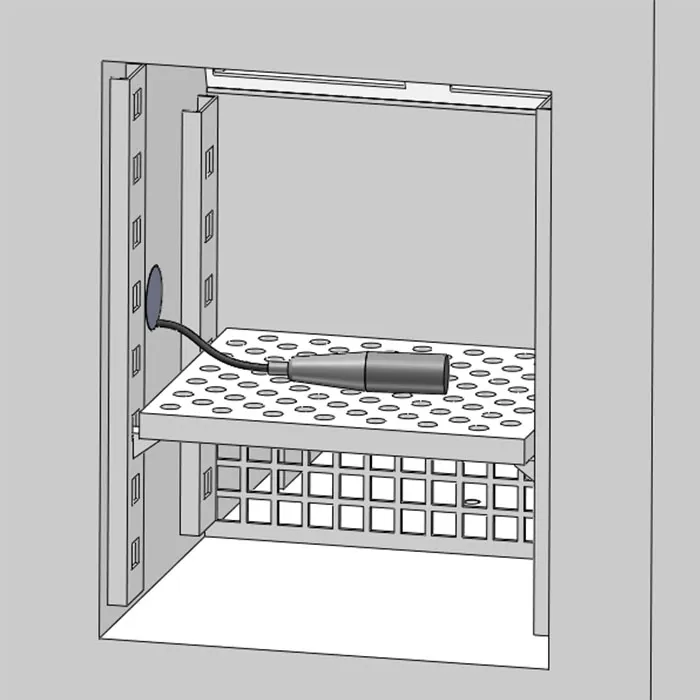 Several methods can be used for humidity sensor calibration.
A relatively simple method uses controlled salt solutions that generate known equilibrium humidity levels. This can be useful for basic verification and laboratory applications.
For more controlled and repeatable calibration, a humidity calibration chamber can create a stable temperature and humidity environment. The sensor under test can then be compared with a calibrated reference sensor at multiple humidity points.
A typical calibration sequence may include:
30% RH → 50% RH → 75% RH → 90% RH
At each point, the system allows the environment to stabilize before comparing the reference reading with the device under test.
The resulting data can be used to determine:
Sensor accuracy
Measurement deviation
Repeatability
Response across the operating range
A humidity calibration chamber is designed to establish a stable and controlled temperature and humidity environment for calibrating or verifying humidity sensors and probes.
Unlike a conventional environmental test chamber, whose primary purpose is to expose products to specified environmental conditions, a calibration chamber focuses on creating a controlled reference environment for measurement verification.
The key requirements include:
Stable temperature
Stable relative humidity
Good chamber uniformity
Repeatable environmental conditions
Accurate reference measurement
Reliable control performance
Humidity Calibration Chamber | Temperature & Humidity Test Chamber | |
Primary purpose | Sensor calibration and verification | Product and component testing |
Typical test object | Humidity sensors and probes | Materials, products, electronics, components |
Main requirement | Environmental stability and uniformity | Environmental simulation and reliability |
| Typical result | Sensor accuracy/deviation | Product performance or failure behavior |
.webp "Portable Temperature Humidity Calibration Chamber for Thermometers and Hygrometers (4).jpg") | 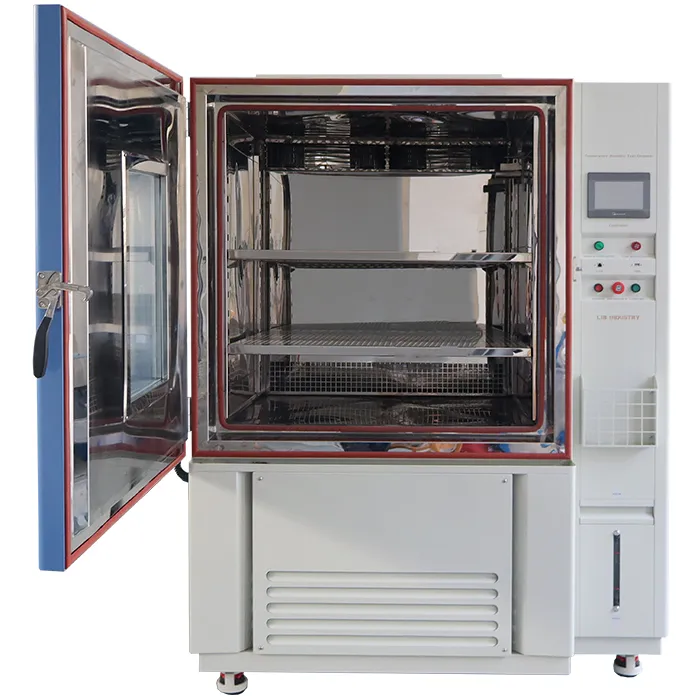 |
A temperature and humidity chamber can maintain controlled RH conditions, but a dedicated calibration chamber is specifically designed around the requirements of sensor verification and calibration.
A multi-point calibration procedure typically places the sensor under test and a calibrated reference sensor inside the controlled chamber.
The chamber is then set to a series of humidity points.
For example:
Step 1: Set the chamber to 30% RH
Step 2: Allow the environment to stabilize
Step 3: Record the reference and sensor-under-test readings
Step 4: Calculate the deviation
Step 5: Repeat at 50%, 75%, 90% RH or other required points
This process provides a controlled way to evaluate sensor performance across the required humidity range.
Humidity measurement is not limited to calibration equipment. Humidity sensors can also play an important role in environmental chambers used for controlled corrosive gas testing.
A noxious gas test chamber is designed to expose test specimens to a controlled atmosphere containing specified corrosive or harmful gases.
For gas corrosion testing, the test environment is not determined by gas concentration alone.
Important parameters may include:
Gas concentration
Temperature
Relative humidity
Exposure time
Test cycle or profile
These parameters can interact with each other and influence the resulting test conditions.
For example, in SO₂ corrosion testing, moisture can affect the condition of the specimen surface and the interaction between the corrosive atmosphere and the tested material. Maintaining stable humidity therefore helps improve test repeatability and consistency.
A humidity sensor can provide real-time RH measurements to the chamber control system.
The basic control loop is:
Humidity Sensor → RH Measurement → PID Controller → Humidification/Dehumidification → RH Adjustment → Feedback
The controller continuously compares the measured humidity with the target value.
If the measured RH is below the setpoint, the humidification system can increase moisture in the chamber. If RH is above the target, the dehumidification system can reduce the humidity.
This closed-loop control helps maintain the required environmental conditions throughout the test.
LIB noxious gas test chambers can integrate temperature, humidity, gas concentration, and programmable control into one testing system, allowing these parameters to be managed together during corrosive gas exposure.
Capacitive humidity sensors can be used for humidity monitoring in gas test equipment, but their suitability depends on the specific chamber environment.
Corrosive gases such as SO₂ can affect sensor materials and electronic components. Therefore, sensor selection should consider:
Gas concentration
Exposure duration
Temperature and humidity range
Chemical compatibility
Sensor construction
Protective coating or membrane
Required measurement accuracy
Long-term stability
Protective materials such as chemically resistant membranes or coatings may be used in certain sensor designs to reduce direct exposure to corrosive environments. However, protection can also affect sensor response time and measurement characteristics.
For this reason, the humidity probe used in a noxious gas chamber should be selected according to the actual gas composition and operating conditions rather than based on humidity range alone.
Different humidity-related applications require different environmental testing equipment.
A humidity calibration chamber is primarily used for controlled calibration and verification of humidity sensors, RH probes, transmitters, data loggers, and other measurement devices.
Important considerations include:
Humidity stability
Temperature stability
Chamber uniformity
Calibration range
Chamber capacity
Reference measurement accuracy
Temperature and humidity test chambers are designed for environmental conditioning, accelerated aging, reliability testing, and performance evaluation.
They can expose products or components to programmed temperature and humidity conditions over defined test periods.
Typical applications include:
Electronics reliability testing
Material aging
Product environmental testing
Component qualification
Temperature/humidity cycling
A noxious gas test chamber is designed for controlled exposure to corrosive or harmful gases.
Depending on the configuration, the system can integrate control of:
Temperature
Relative humidity
Gas concentration
Exposure time
Programmable test profiles
For SO₂ testing, maintaining controlled temperature and humidity together with the specified gas concentration is important for producing repeatable corrosion test conditions.
For large products, assemblies, or production-scale testing, a walk-in environmental chamber provides substantially more usable test space than a standard laboratory chamber.
The appropriate chamber type ultimately depends on the test objective, specimen size, environmental parameters, required accuracy, and applicable testing procedure.
A humidity sensor is the sensing element or measurement device that detects moisture in the environment. A humidity probe generally refers to a complete probe assembly that may contain the sensing element, electronics, protective housing, and connection interface.
Yes. A humidity calibration chamber can establish multiple controlled RH points, allowing sensor performance to be evaluated across its operating range.
The appropriate calibration interval depends on sensor type, accuracy requirements, operating conditions, exposure to high humidity or chemicals, and the user's quality-control procedures. Sensors used in demanding environments may require more frequent verification.
It depends on the sensor construction and the specific gas environment. Corrosive gases may affect conventional humidity sensors, so chemical compatibility, concentration, exposure duration, sensor protection, and long-term stability should be evaluated before installation.
LIB industry provides customized humidity calibration chambers and noxious gas test chambers for accurate, repeatable environmental testing.
Whether you need to calibrate capacitive humidity probes, verify RH sensor performance, or simulate controlled corrosive gas environments, our engineering team can recommend a suitable chamber configuration based on your test requirements.
3-Year Warranty
Lifetime Maintenance Support
24/7 English After-Sales Support
1–3 Hour Rapid Response
72-Hour Pre-Shipment Testing
Customized Chamber Configurations
Tell us your temperature, humidity, gas, sensor, and testing requirements, and our engineers will provide a suitable chamber configuration and technical solution.
 English
 русский
 français
 العربية
 Deutsch
 Español
 한국어
한국어 italiano
 tiếng việt
 ไทย
ไทย Indonesia