Choose UVA-340 when the objective is to reproduce the damaging short-wave ultraviolet portion of natural sunlight and evaluate realistic outdoor weathering behavior. Choose UVB-313 when faster and more aggressive degradation is required to reveal potential material weaknesses in a shorter test period. Both lamp types can be used in a UVA UVB test chamber with controlled temperature, condensation, water spray, and irradiance. Common testing methods include ASTM G154 and ISO 4892-3, but the lamp should be selected according to the specific procedure and material. The most important factors are spectral distribution, test objective, material type, exposure cycle, irradiance, and whether field correlation or accelerated screening is the priority.
UV weathering testing evaluates how materials change after exposure to ultraviolet radiation and associated environmental stresses.
Typical test specimens include:
Plastics and polymers
Rubber products
Paints and protective coatings
Automotive exterior components
Building materials
Textiles
Outdoor equipment
Packaging materials
Adhesives and sealants
The main failure modes include discoloration, fading, cracking, chalking, embrittlement, peeling, loss of gloss, oxidation, and reduction in mechanical strength.
The choice between UVA-340 vs UVB-313 is mainly a question of how the UV radiation should interact with the material.
UVA-340 lamps provide radiation concentrated in the UVA range, approximately 315–400 nm, with a spectrum designed to closely represent the short-wave UV portion of natural sunlight. This makes them useful when the objective is to study outdoor weathering behavior with stronger emphasis on realistic solar UV exposure.
UVB-313 lamps operate in a shorter wavelength range, approximately 280–315 nm. Their higher-energy radiation can produce faster and more aggressive degradation, making them useful when the test needs to expose potential weaknesses efficiently.
The lamp itself is only one part of the test. Temperature, condensation, water spray, irradiance, specimen distance, and exposure cycle can all influence the final result.
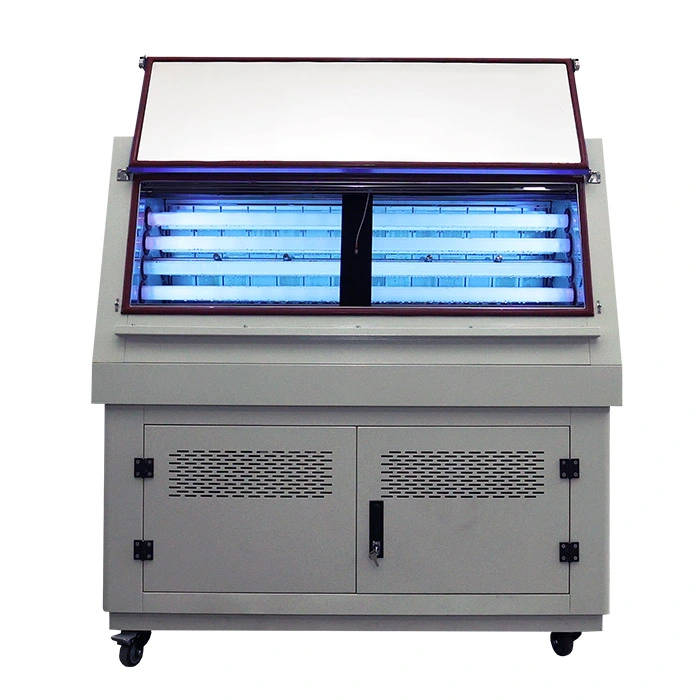
UV weathering tests combine ultraviolet exposure with environmental conditions such as temperature, condensation, and water spray. The exact cycle should be established according to the intended application rather than selected solely by lamp type.
Test Method / Application | UV Source | Temperature | Humidity / Moisture | Exposure Pattern |
Fluorescent UV weathering | UVA-340 or UVB-313 | Programmable | Condensation or spray | UV + moisture cycles |
Outdoor plastics | UVA-340 | Up to about 90°C chamber capability | High humidity / condensation | Light and condensation |
Accelerated degradation | UVB-313 | Controlled | Condensation / spray | Accelerated UV exposure |
Coating weathering | UVA-340 or UVB-313 | Material dependent | Condensation / spray | Light + moisture |
Automotive exterior testing | Lamp selected by procedure | Controlled | Condensation / spray | Repeated environmental cycles |
LIB's UV weathering equipment supports UVA-340 and UVB-313 fluorescent lamps, with programmable irradiation, temperature, condensation, and water spray. The UV-SI-260, for example, has eight 40 W fluorescent lamps, a temperature range from ambient to approximately 90°C, black panel temperature control from 35–80°C, and humidity of ≥95% RH.
Representative methods used with fluorescent UV weathering equipment include ASTM G154. The exact lamp and cycle should be matched to the selected procedure and product requirements.
Parameter | UVA-340 | UVB-313 |
Primary wavelength range | Approx. 315–400 nm | Approx. 280–315 nm |
Main purpose | Closer simulation of damaging solar UV | More aggressive accelerated degradation |
UV weathering behavior | Emphasizes realistic outdoor UV exposure | Produces faster stress on susceptible materials |
Temperature range | Determined by chamber | Determined by chamber |
Humidity range | Determined by chamber and cycle | Determined by chamber and cycle |
Chamber volume | Depends on equipment model | Depends on equipment model |
Ramp rate | Usually not the primary selection factor | Usually not the primary selection factor |
Airflow | Supports temperature and moisture uniformity | Supports temperature and moisture uniformity |
Sample heat load | Influences surface temperature | Influences surface temperature |
Safety configuration | Over-temperature, over-current, water and electrical protection | Same chamber-level protections |
Typical use | Outdoor weathering and durability comparison | Accelerated screening and rapid degradation evaluation |
UVA-340 is often the better choice when the test needs to approximate the damaging UV portion of natural sunlight.
Its spectral output is concentrated around the wavelengths that are important to outdoor photodegradation. This makes it useful for studying gradual changes such as fading, cracking, embrittlement, gloss loss, and coating degradation.
For example, an outdoor plastic component may be exposed to sunlight for years. A UVA-340 test can accelerate the UV portion of this exposure while temperature and moisture cycles provide additional environmental stress.
This does not mean UVA-340 testing exactly reproduces every outdoor condition. Natural weather includes changing solar intensity, visible light, infrared radiation, rain, dew, pollutants, and temperature fluctuations. The purpose is instead to create a controlled and repeatable UV exposure that is relevant to outdoor durability.
UVB-313 uses shorter-wavelength, higher-energy radiation and can accelerate degradation more aggressively.
This makes it useful during material screening and comparative studies where engineers need to identify weaknesses quickly.
A formulation that performs well under UVA-340 may show substantially faster degradation under UVB-313. That difference can be useful for ranking materials or identifying a weak formulation during development.
However, faster degradation should not automatically be interpreted as more realistic degradation. If the test objective is to correlate laboratory behavior with actual outdoor exposure, the spectral characteristics of the lamp and the complete exposure cycle should be considered carefully.
The wavelength range is important, but it does not define the entire test. Irradiance, temperature, condensation, spray, and exposure duration also affect material aging.
A more aggressive lamp can shorten the test, but faster degradation does not necessarily provide better representation of outdoor performance. The correct lamp depends on the test objective.
Lamp output changes over time. LIB's UV systems can use irradiance monitoring to maintain stable exposure and provide more consistent results between tests.
Outdoor materials can experience long periods of moisture from dew and humidity. A UV test without appropriate moisture exposure may miss important degradation mechanisms.
The distance between the lamps and specimens affects radiation intensity. Samples should be positioned according to the intended test procedure rather than simply filling available space.
Large or irregular samples may receive different UV exposure across their surfaces. Appropriate fixtures and positioning are important for repeatable testing.
A material exposed to UVA-340 and another exposed to UVB-313 are not necessarily receiving equivalent UV stress. Lamp type, irradiance, cycle, and duration should all be considered before comparing results.
.webp "UV_Accelerated_Weathering_Tester_(2).webp")
The selection process should begin with the required UV spectrum, followed by the material type, exposure cycle, sample geometry, temperature, moisture conditions, and test capacity.
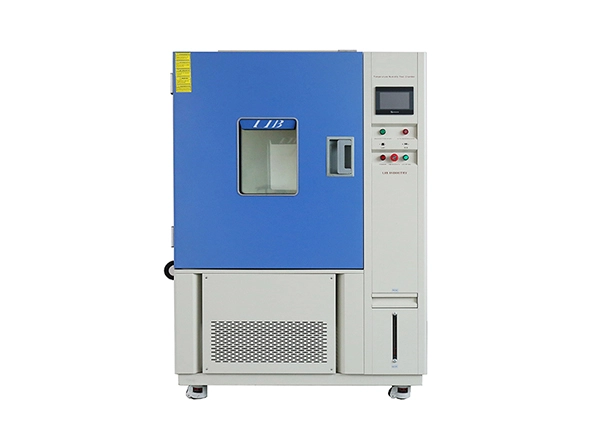
LIB's UV Weathering Tester range includes UV Test Chambers, UV Light Fastness Test Chambers, UV Accelerated Weathering Testers, UV Aging Chambers, Xenon Arc Chambers, and customized weathering equipment. This makes the product range a useful starting point when deciding between fluorescent UV and broader-spectrum weathering systems.
Benchtop: Suitable for small material panels, coatings, plastics, and laboratory development.
Reach-In: Appropriate when larger specimens or higher sample capacity are required.
Walk-In: Suitable for large components, assemblies, or specialized sample fixtures.
Thermal Shock: Better when sudden temperature transitions are the primary stress rather than UV radiation.
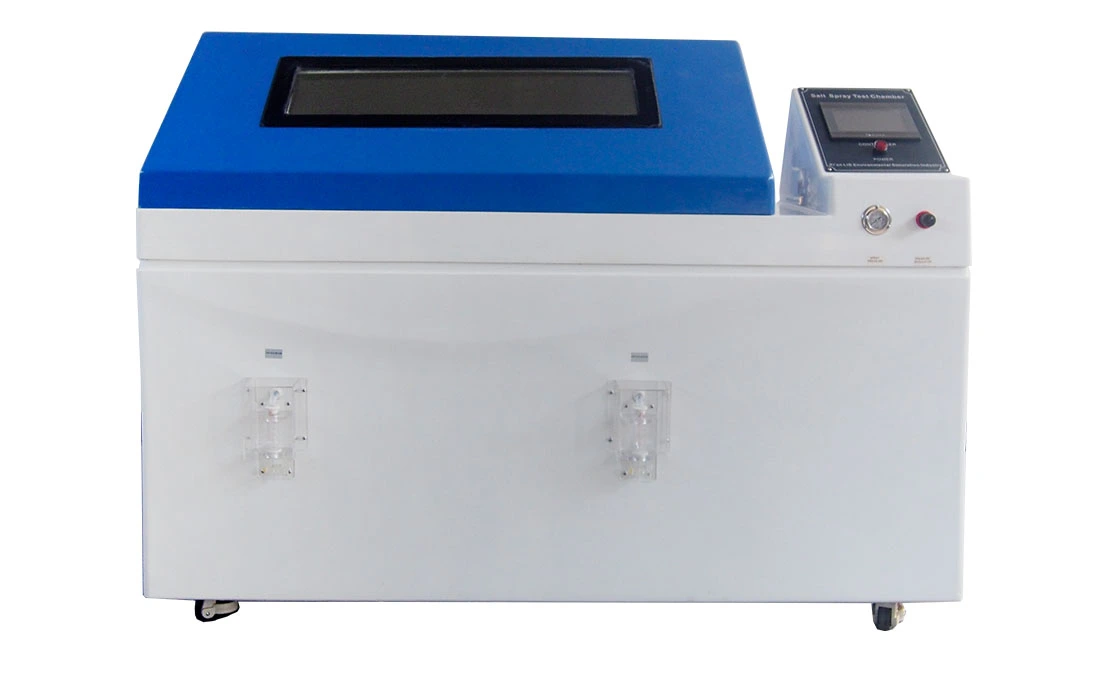
Salt Spray: Appropriate for corrosion-focused testing.
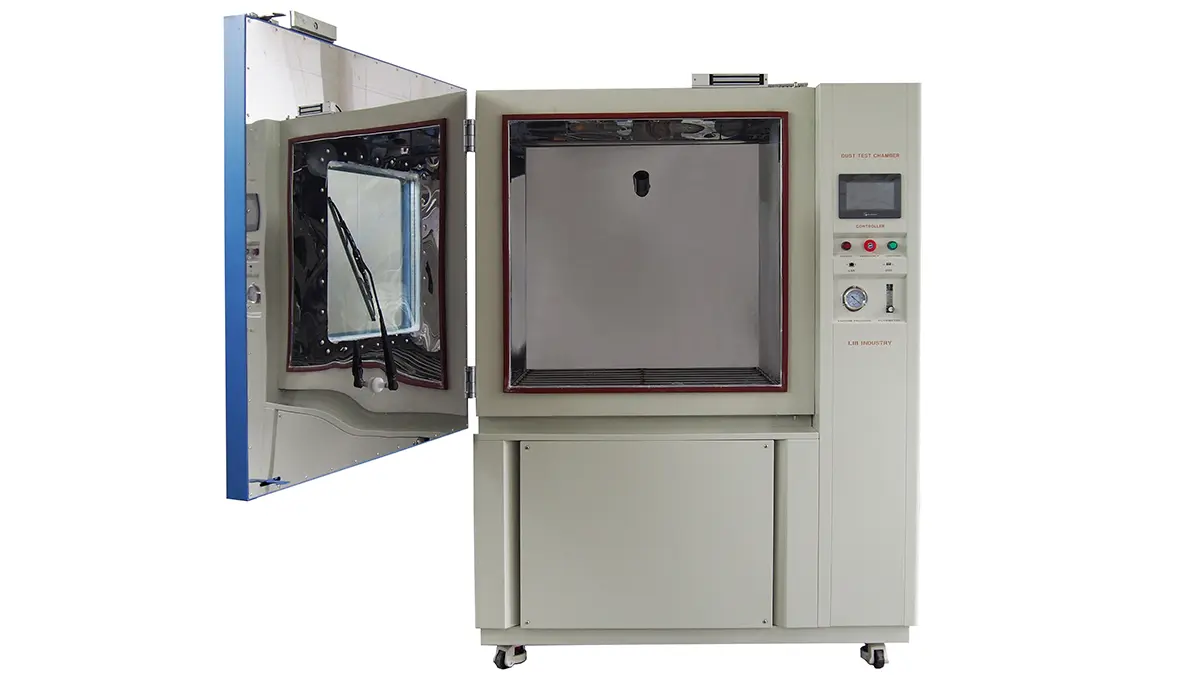
IP: Designed for dust and water ingress evaluation.
Special Custom Chamber: Suitable when UV exposure must be combined with unusual temperature, humidity, spray, or specimen requirements.
For standard fluorescent UV weathering, the LIB UV Accelerated Weathering Tester uses selectable UVA-340 or UVB-313 lamps. The UV-SI-260 configuration includes eight 40 W fluorescent lamps, 56 specimen positions based on the listed holder configuration, programmable test cycles, and Ethernet connectivity for data access.
The LIB UV Light Fastness Test Chamber also supports UVA-340 and UVB-313 lamps and combines UV exposure with temperature, humidity, condensation, and water spray. This makes it suitable when light resistance needs to be evaluated together with environmental moisture effects.
Industry requirements can further influence the choice. LIB's Environmental Test Chamber for Automotive Industry includes UV weathering solutions for automotive applications, where exterior plastics, coatings, trim, and other components may experience sunlight, temperature, and moisture during service.
For a more focused comparison, LIB's article What Is the Application Difference of UVA340 and UVB313 Lamp in UV Aging Test Chamber? explains how the two lamp types differ in spectral characteristics and application objectives.
UVA-340 is generally a suitable starting point when the objective is to simulate the damaging UV portion of natural sunlight and evaluate outdoor durability.
UVA-340 provides a spectrum closer to the short-wave UV portion of natural sunlight, while UVB-313 uses shorter-wavelength, higher-energy radiation to accelerate material degradation.
UVB-313 can produce more aggressive degradation in susceptible materials because of its shorter-wavelength, higher-energy radiation. However, the actual test rate also depends on irradiance, temperature, moisture, material composition, and exposure cycle.
Yes. LIB's UV-SI-260 configuration supports UVA-340 and UVB-313 fluorescent lamps, allowing the light source to be selected according to the test objective.
Typical applications include plastics, rubber, coatings, paints, automotive components, textiles, building materials, and printed products.
The duration depends on the material, lamp type, irradiance, temperature, moisture cycle, and evaluation criteria. Accelerated testing can reveal degradation within weeks, but the test duration should be determined from the intended test procedure rather than using a fixed conversion from laboratory hours to outdoor years.
Consider specimen dimensions, quantity, holder configuration, required spacing, and future testing volume. LIB's UV-SI-260 lists an internal working space of 450 × 1170 × 500 mm and can accommodate up to 56 standard specimen positions depending on holder configuration.
An RFQ should specify the preferred lamp type, wavelength, irradiance, temperature range, black panel temperature, condensation and spray requirements, sample dimensions, sample quantity, exposure cycle, data-recording requirements, and whether customized fixtures are needed.
 English
 русский
 français
 العربية
 Deutsch
 Español
 한국어
한국어 italiano
 tiếng việt
 ไทย
ไทย Indonesia