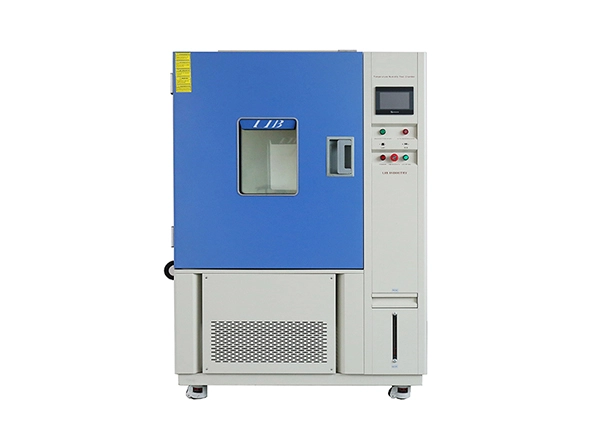
For engineering teams, QA managers, procurement departments, and finance leaders evaluating reliability testing strategy in 2026, the decision between outsourcing environmental testing to a third-party laboratory and investing in a benchtop environmental chamber for in-house testing is not simply a capital expenditure question — it is a total cost of ownership calculation that must account for repeated external lab fees, prototype shipping costs, engineering delay costs, design iteration speed, test schedule control, and the cumulative competitive disadvantage of slower product development cycles. Outsourced testing may appear cost-effective when testing is occasional, but as testing frequency increases during active R&D, design validation, incoming quality control, and customer complaint analysis, the true cost of third-party lab dependency becomes visible in delayed product launches, repeated booking fees, and engineering teams waiting days or weeks for test results that could have been available the same afternoon.
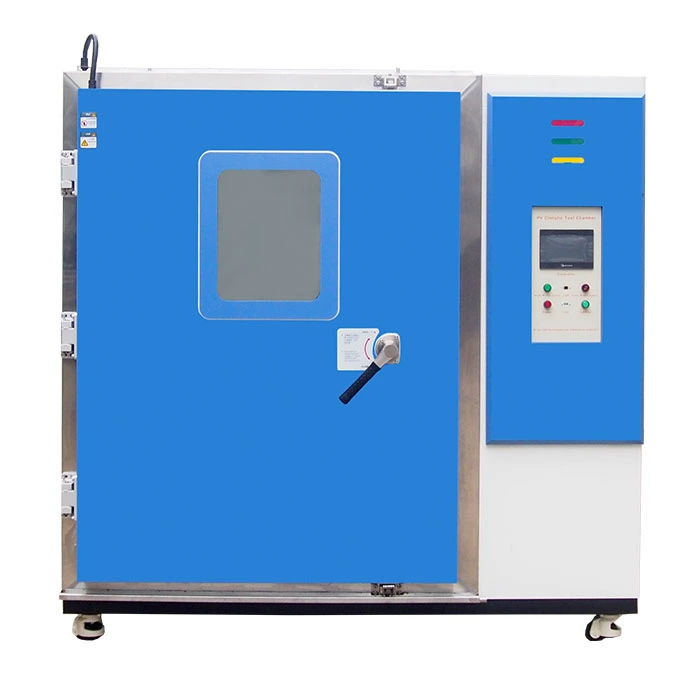
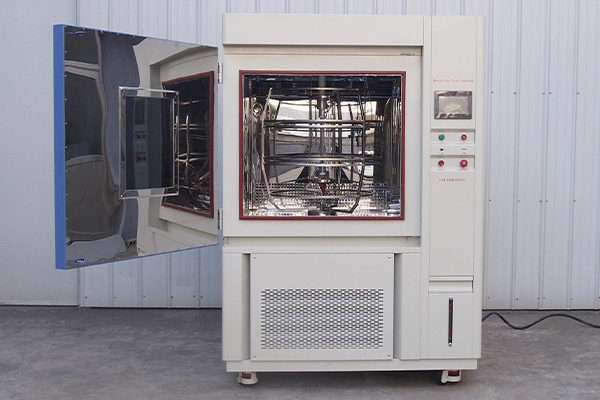
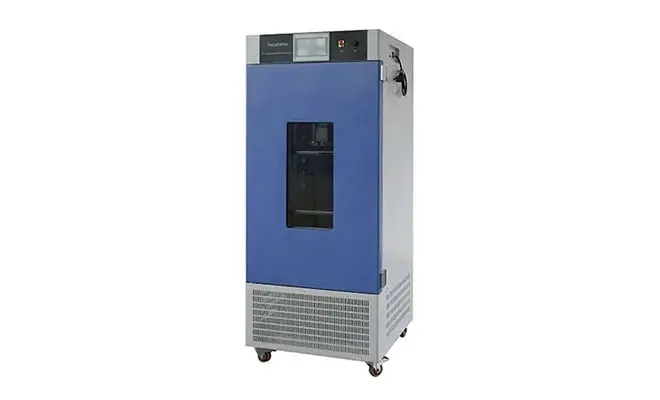
Bench top environmental chambers — compact, space-efficient desktop test chambers that simulate controlled temperature and humidity conditions for small samples, components, electronics, materials, and R&D prototypes — provide the in-house testing capability that allows engineering teams to test sooner, modify faster, and validate more thoroughly without the scheduling constraints, shipping risks, and repeated fees of outsourced testing. LIB's benchtop environmental chamber is designed as a compact, space-saving desktop chamber for temperature or temperature-humidity simulation, suitable for laboratories and limited-space testing areas — providing the testing capability that R&D teams, QA departments, and product validation engineers need without requiring the space, installation complexity, or capital budget of a larger walk-in chamber.
This guide covers the complete ROI picture for procurement managers, engineering leaders, and finance teams: why outsourced testing creates hidden costs that accumulate faster than most organizations realize, what a benchtop environmental chamber is and how it functions as an in-house reliability testing asset, how to calculate the ROI payback period for chamber investment, how to evaluate chamber specifications for specific testing requirements, and what maintenance practices protect the chamber investment through its service life.
The commercial case for investing in a benchtop environmental chamber starts with an honest accounting of the true cost of outsourced environmental testing — and why the visible lab fee is typically the smallest component of the total cost that outsourced testing creates for product development organizations.
Engineering delay cost is the largest and most consistently underestimated component of outsourced testing cost — because it is measured in engineering time and project schedule impact rather than in direct financial transactions. When an engineering team submits a prototype for outsourced environmental testing, the typical cycle includes booking the test slot, shipping the prototype, waiting for the test to be scheduled and executed, waiting for the test report, reviewing the results, and deciding on design changes — a process that commonly takes one to three weeks per test cycle. For a product development program that requires five to ten test cycles across temperature, humidity, thermal cycling, and combined stress testing, the cumulative engineering delay from outsourced testing can extend the product development schedule by two to six months — a competitive disadvantage that is far more costly than the lab fees themselves.
Repeat testing cost from design iteration is the direct financial cost that accumulates most rapidly when outsourced testing is used for active R&D rather than final certification. When a test reveals a design problem — as it frequently does during R&D — the engineering team must modify the design, rebuild the prototype, reship it to the lab, rebook the test slot, and wait for the repeat test results. Each iteration cycle incurs the full cost of the original test: lab fee, shipping, and engineering waiting time. For products that require multiple design iterations before passing environmental testing, the repeat testing cost can easily exceed the cost of a benchtop environmental chamber within a single product development program.
Scheduling inflexibility cost is the operational cost that affects engineering productivity most directly — because outsourced testing schedules are controlled by the laboratory's booking queue rather than by the engineering team's development timeline. When a critical design decision depends on test results, and the next available test slot is two weeks away, the engineering team either waits — losing two weeks of productive development time — or proceeds with the design change without test validation, accepting the risk that the change may not solve the problem. Neither option is acceptable for a competitive product development program, and both create costs that a benchtop environmental chamber eliminates.
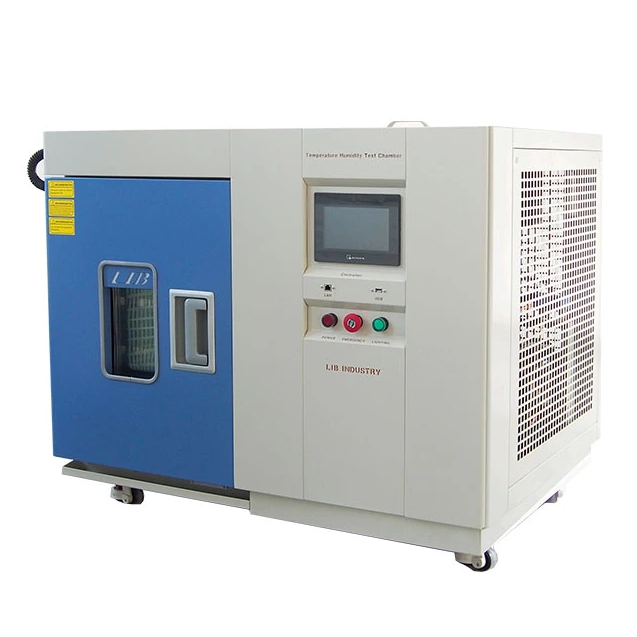
Understanding what a benchtop environmental chamber is — and how its compact design, temperature and humidity control capability, and multi-department utility make it a high-value in-house testing asset rather than a single-purpose capital expenditure — is essential for procurement managers and finance leaders evaluating the investment case.
A benchtop environmental chamber is a compact test chamber used to simulate controlled environmental conditions — temperature, humidity, heat, cold, and thermal cycling — for small samples, components, electronics, materials, sensors, packaging, and R&D prototypes. LIB describes its benchtop environmental chamber as a small desktop chamber that can simulate temperature or temperature-humidity environments, with a small footprint suitable for workbenches, stands, laboratories, and limited-space testing areas.
The key commercial distinction between a benchtop environmental chamber and a third-party laboratory is control — control over test scheduling, test conditions, test duration, data access, and design iteration speed. When the chamber is in-house, the engineering team can start a test this afternoon, review the results tomorrow morning, modify the design, and start the repeat test the same day — compressing a two-week outsourced testing cycle into a two-day in-house testing cycle that accelerates product development and reduces the competitive disadvantage of slow iteration.
LIB's benchtop chamber series includes TH-50 and TH-80 models with 50L and 80L internal volumes, temperature range options of -20°C, -40°C, or -70°C to +150°C, humidity range of 20% to 98% RH, temperature fluctuation of ±0.5°C, SUS304 stainless steel interior material, a side cable hole for powered-on electronics testing, air circulation system, and Ethernet remote access for real-time monitoring and control from a PC — providing the specification range that covers the most common reliability testing requirements for electronics, components, materials, and R&D prototypes.
The ROI calculation framework that allows procurement managers and engineering leaders to quantify the financial return on benchtop environmental chamber investment — and the business case structure that presents this return in terms that finance leaders and senior management can evaluate and approve — is the commercial knowledge that transforms a capital expenditure request into a strategic investment proposal.
The fundamental ROI calculation for benchtop environmental chamber investment is:
ROI Payback Period = Equipment Investment ÷ Annual Savings from In-House Testing
The annual savings calculation should include all cost categories that in-house testing eliminates or reduces:
| Cost Category | How In-House Testing Creates Savings |
|---|---|
| Third-party lab fees | Eliminated for all tests that can be performed in-house |
| Prototype shipping cost | Eliminated — no shipping required for in-house testing |
| Engineering waiting time | Reduced from weeks to days or hours per test cycle |
| Repeat testing fees | Eliminated — repeat tests cost only engineering time |
| Project schedule delay cost | Reduced — faster iteration shortens development timeline |
| Failure analysis delay | Reduced — in-house testing enables immediate investigation |
| Evaluation Factor | Outsourced Testing | In-House Benchtop Environmental Chamber |
|---|---|---|
| Upfront cost | Lower — no capital expenditure | Higher — equipment investment required |
| Cost per test | Repeated external fees per test cycle | Near-zero marginal cost after equipment purchase |
| Test scheduling | Depends on laboratory availability | Controlled internally — test when needed |
| Design iteration speed | One to three weeks per cycle | Same day or next day |
| Test condition flexibility | Limited by laboratory process | Conditions adjustable immediately |
| Data access | Wait for laboratory report | Immediate internal observation and logging |
| Multi-department utility | Single-use per booking | Shared asset across R&D, QA, and engineering |
| Best fit | Occasional certification or specialized testing | Frequent R&D, screening, and reliability testing |
Fast iteration is the strongest ROI argument for benchtop environmental chamber investment in active product development programs — because the value of compressing a two-week outsourced testing cycle into a two-day in-house testing cycle compounds across every test cycle in the development program. LIB's content on benchtop environmental chambers notes that a single tabletop environmental testing system can serve multiple departments, helping maximize utilization and ROI — reflecting the multi-department utility that makes the chamber a shared organizational asset rather than a single-team capital expenditure.
The systematic evaluation of benchtop environmental chamber components — workroom volume, temperature and humidity range, ramp rate, controller capability, interior material, and remote monitoring — against the specific testing requirements of the application is the technical procurement knowledge that ensures the selected chamber delivers the testing capability the organization needs.
| Component | Function | Engineering Evaluation Criterion |
|---|---|---|
| Workroom | Determines sample capacity | Volume must accommodate largest test sample with adequate clearance |
| Heating system | Controls high-temperature testing | Temperature range, uniformity, and ramp rate |
| Cooling system | Enables low-temperature and thermal cycling | Minimum temperature and cooling rate |
| Humidity system | Supports temperature-humidity testing | Humidity range, accuracy, and control stability |
| Air circulation | Improves uniformity | Temperature and humidity deviation across workroom |
| Controller | Sets programs and monitors tests | Programming capability, alarm functions, data logging |
| Cable port | Enables powered-on electronics testing | Port size and location for test sample wiring |
| Interior material | Affects durability and cleanability | SUS304 stainless steel for corrosion resistance |
| Remote monitoring | Supports off-hours test supervision | Ethernet connectivity and PC control capability |
LIB's chamber configuration includes 50L and 80L workroom options, SUS304 stainless steel interior, side cable hole for powered-on testing, air circulation system, cooling system, and Ethernet remote access for real-time monitoring and control from a PC — providing the component specification that covers the most common in-house reliability testing requirements.
| Selection Factor | Benchtop Environmental Chamber | Walk-In Environmental Chamber |
|---|---|---|
| Best use | Small samples, components, prototypes | Large products, assemblies, batch testing |
| Initial investment | Lower | Higher |
| Lab space requirement | Compact — fits on workbench or stand | Requires dedicated floor space |
| Installation complexity | Lower — plug-in operation | Higher — may require facility modifications |
| Maintenance | Simpler | More comprehensive |
| Ideal users | R&D labs, startups, QA teams | Industrial QA labs, automotive, aerospace |
LIB's comparison content states that benchtop chambers are suitable for small component or sample testing, limited lab space, high-precision environmental control, and short-duration or R&D-focused tests — while walk-in chambers are better for large products, batch testing, system-level testing, and long-duration powered-on environmental simulations.
Benchtop environmental chambers deliver the most ROI for: electronics R&D teams that require frequent thermal cycling and humidity testing during component and PCB development, automotive component suppliers that need to validate parts against temperature and humidity specifications before customer submission, medical device developers that require controlled environmental testing for regulatory submission support, battery cell and module developers that need thermal performance characterization across temperature ranges, IoT and sensor manufacturers that require environmental stress screening before production release, and startup product development teams that need professional reliability testing capability without the capital budget for a large walk-in chamber.
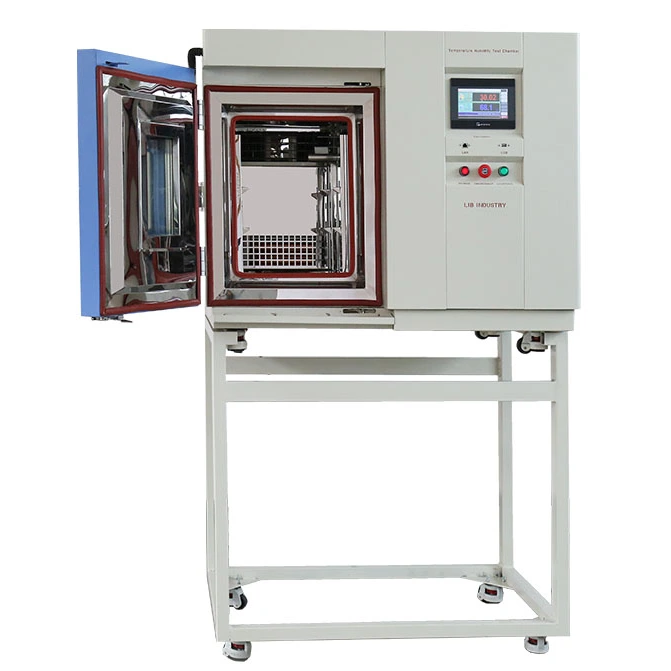
Procuring the right benchtop environmental chamber for a specific in-house reliability testing application requires systematic pre-order confirmation of testing requirements, space constraints, electrical requirements, and maintenance expectations — and a maintenance program that protects the chamber investment through its service life.
Before requesting a quotation for a benchtop environmental chamber, prepare and confirm the following:
Confirm the sample size and quantity — and verify that the selected chamber volume, either 50L or 80L, can accommodate the largest test sample with adequate clearance for air circulation
Confirm the required temperature range — -20°C, -40°C, or -70°C to +150°C — based on the product standard, operating environment, and customer testing requirement
Confirm whether humidity testing is required — and verify that the selected chamber includes humidity control capability with the required range of 20% to 98% RH
Confirm the required ramp rate — 1°C/min, 2°C/min, or 5°C/min — based on the thermal cycling profile required by the applicable test standard
Confirm whether powered-on testing is required — and verify that the selected chamber includes a cable port of adequate size for the test sample wiring
Confirm the applicable test standards — IEC, ISO, MIL-STD, JEDEC, ASTM, ICH, or customer specifications — and verify that the selected chamber's specifications meet the requirements of those standards
Confirm the available laboratory space, ventilation, and electrical supply — and verify that the selected chamber's footprint, ventilation requirements, and power supply requirements are compatible with the installation location
Confirm the remote monitoring requirement — and verify that the selected chamber includes Ethernet connectivity and PC control capability if off-hours test supervision is required
Confirm the annual test volume and expected utilization — to verify that the selected chamber's capacity and duty cycle are adequate for the planned testing workload
Keep the chamber clean and dry after humidity tests — residual moisture in the workroom accelerates corrosion and can affect the accuracy of subsequent temperature tests
Inspect door seals regularly — a damaged or compressed door seal reduces temperature and humidity control accuracy and increases energy consumption
Check water quality for humidity systems — using distilled or deionized water prevents mineral buildup in the humidity system that reduces performance and service life
Calibrate sensors according to internal QA requirements — regular sensor calibration ensures that the chamber's temperature and humidity measurements remain traceable and accurate for test data validity
Clean condenser and ventilation areas as recommended — blocked condenser airflow reduces cooling performance and increases compressor load, shortening equipment service life
Keep test records and maintenance logs — a complete maintenance record supports equipment calibration traceability, internal audit requirements, and warranty service claims
Schedule preventive maintenance instead of waiting for failure — planned maintenance during low-utilization periods prevents unplanned downtime during critical testing programs
In 2026, the engineering organizations that achieve the fastest product development cycles, the lowest reliability testing costs, and the strongest product quality outcomes are those that have built in-house environmental testing capability — investing in bench top environmental chambers that allow their teams to test sooner, modify faster, and validate more thoroughly than outsourced testing schedules permit. The ROI calculation is straightforward: when testing is frequent, the annual savings from eliminated lab fees, avoided shipping costs, reduced engineering waiting time, and faster design iteration cycles typically deliver a payback period that justifies the investment within the first one to two years of operation — and the competitive advantage of faster product development continues to compound for the full service life of the equipment.
LIB offers compact benchtop environmental chambers with 50L and 80L sizes, temperature options from -20°C, -40°C, and -70°C to +150°C, humidity range of 20% to 98% RH, SUS304 stainless steel interior, air circulation, cooling system, cable port, Ethernet remote access, 16 standard models, and customization support for R&D, QA, laboratory, and limited-space reliability testing applications.
Contact LIB today to discuss your sample size, temperature range, humidity range, test standards, chamber volume, ramp rate, powered-on testing needs, and ROI target. LIB can help evaluate the right benchtop environmental chamber specification for your in-house reliability testing requirements and provide the technical support and supply reliability that professional environmental testing equipment procurement requires.
Q1: What is a benchtop environmental chamber and what can it test?
A benchtop environmental chamber is a compact desktop test chamber used to simulate controlled temperature and humidity conditions for small samples, components, electronics, materials, sensors, packaging, and R&D prototypes. It can perform temperature testing, humidity testing, thermal cycling, and combined temperature-humidity stress testing — providing the environmental simulation capability that product reliability testing, design validation, material screening, and incoming quality control require in a compact, space-efficient format suitable for laboratories and limited-space testing areas.
Q2: How do I calculate the ROI payback period for a benchtop environmental chamber?
The ROI payback period is calculated by dividing the equipment investment by the annual savings from in-house testing. Annual savings include eliminated third-party lab fees, avoided prototype shipping costs, reduced engineering waiting time, eliminated repeat testing fees, and the value of faster design iteration cycles. For organizations that outsource testing frequently, the payback period is typically one to two years — after which the chamber continues to deliver savings for its full service life.
Q3: What are the main benefits of in-house reliability testing with a benchtop environmental chamber?
The main benefits include faster design iteration — test, modify, and retest in days rather than weeks; better test schedule control — test when the engineering team needs results, not when the laboratory has availability; immediate failure analysis — investigate test failures the same day they occur; lower repeat testing cost — repeat tests cost only engineering time after the equipment purchase; reduced prototype shipping risk — no shipping required for in-house testing; and multi-department utility — one chamber can serve R&D, QA, and engineering teams across multiple projects.
Q4: What temperature range should I choose for a benchtop environmental chamber?
 English
 русский
 français
 العربية
 Deutsch
 Español
 한국어
한국어 italiano
 tiếng việt
 ไทย
ไทย Indonesia