 Introduction: Why Outdoor Displays Need Reliable Rain Spray Testing
Outdoor displays are designed to operate in harsh environments, including heavy rain, street splash, cleaning water, dust, temperature changes, and long-term outdoor exposure. Although an enclosure may appear completely sealed, water can still enter through weak points such as cable glands, connectors, service doors, ventilation openings, fasteners, and module joints.
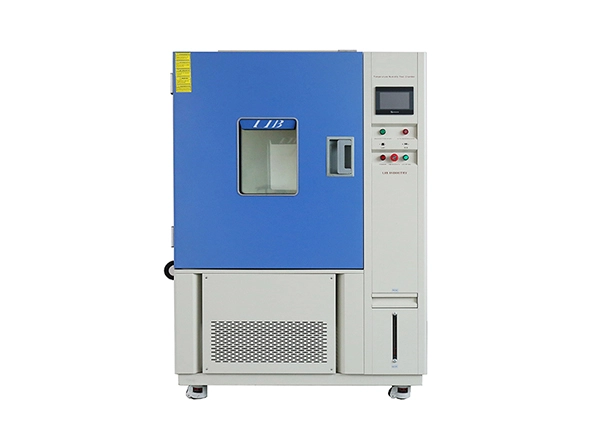
A Rain Spray Test Chamber provides a controlled method to simulate real-world rain and water exposure, helping engineers verify enclosure sealing performance, validate IP protection levels, identify leakage paths, and improve product reliability before field installation.
This article explains what a rain spray test chamber is, how it works, which waterproof testing standards apply, how to select the right equipment, and how LIB Industry provides professional IP waterproof testing solutions for outdoor displays and electronic products.
Waterproof reliability is critical for outdoor electronic equipment. A display failure caused by moisture can lead to image distortion, communication interruption, electrical safety problems, corrosion, and expensive maintenance.
In practice, the most difficult leaks are rarely caused by large openings. They come from small design weaknesses: water traveling along cables, pooling behind seals, or working through gaps opened up by repeated thermal expansion and contraction. A display housing may even pass a visual inspection and still let moisture in through a poorly compressed gasket, an incorrectly installed connector, a damaged sealing strip, or a misaligned cabinet panel.
Common water entry points to check during design review:
Cabinet seams and panel joints
Rear access doors
Cable entry points
Connectors and terminals
Ventilation structures
Mounting holes
Aging sealing materials
Once moisture gets inside, it doesn't stay harmless for long:
| Water Exposure Risk | Possible Failure |
|---|---|
| Internal moisture | Short circuit or electrical failure |
| Connector corrosion | Signal interruption |
| Water accumulation | Component damage |
| Seal degradation | Reduced service life |
| Insulation damage | Safety risks |
For outdoor LED displays, traffic information screens, advertising displays, and industrial monitors, waterproof performance directly affects operational stability and maintenance costs — which is why a professional testing process, rather than a one-off visual check, is what actually catches these hidden risks before installation.
The IP (Ingress Protection) rating defined by IEC 60529 is the standard framework used to evaluate this. For water protection, the common levels are IPX3 (oscillating spray, for rain exposure), IPX4 (splash water, for general outdoor equipment), IPX5 (water jet, for cleaning environments), and IPX6 (powerful water jet, for heavy water exposure). Choosing the right one matters: a product that only ever sees normal rainfall needs a different verification method than equipment that gets hosed down during washing or maintenance.
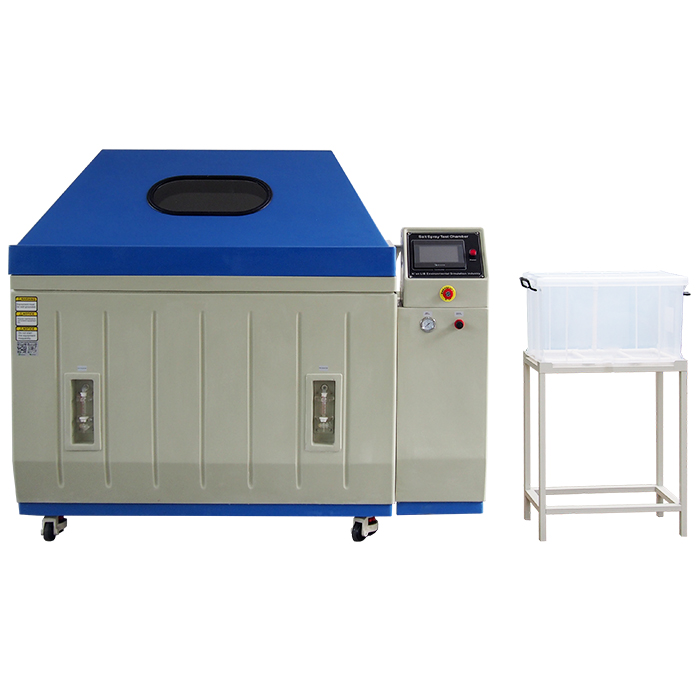
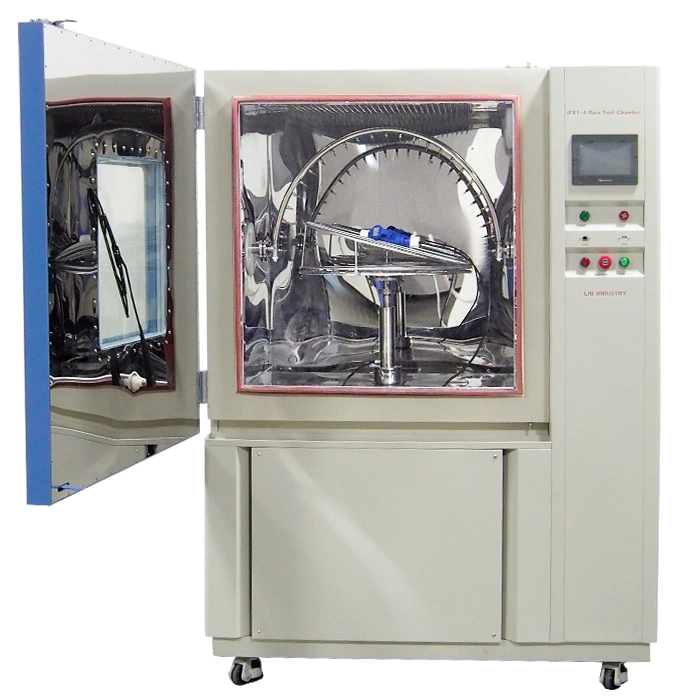
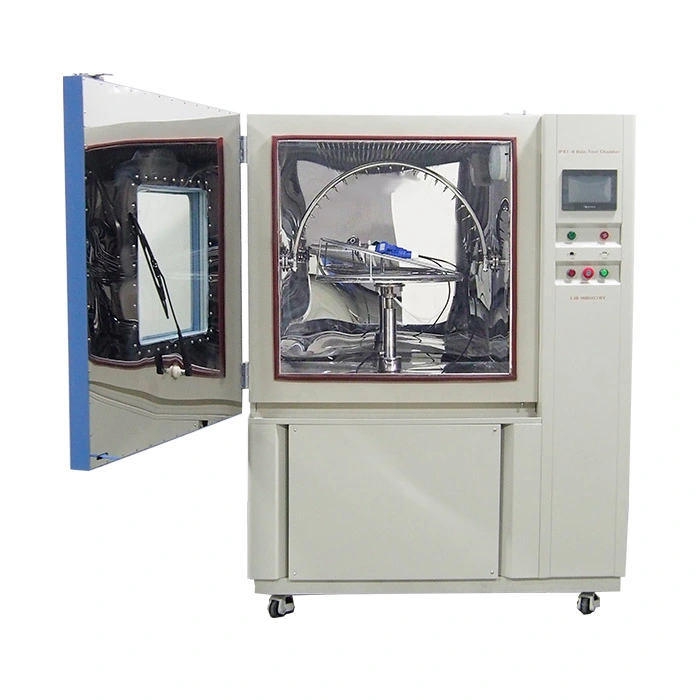
A Rain Spray Test Chamber is an environmental testing system designed to simulate rain, spray, and water splash conditions under controlled laboratory conditions. Unlike manual hose testing, which tends to produce inconsistent results, a rain spray chamber controls the variables that actually determine the outcome — water flow rate, spray angle, spray distance, testing duration, specimen movement, and water pressure — so engineers can repeat the same conditions across different product designs and compare results fairly.
How it works: water is supplied from a circulation tank, the pump delivers it to spray tubes or nozzles, the spray system forms the required water pattern, the specimen receives controlled exposure, and engineers then evaluate leakage, function, and internal condition once testing is complete.
A typical chamber is built from a few core components:
Component | Function |
Spray nozzle or oscillating tube | Generates specified water spray |
Rotating turntable | Ensures uniform sample exposure |
Flow control system | Maintains stable water conditions |
Water circulation tank | Supports continuous testing |
Filtration system | Prevents nozzle blockage |
Observation window | Allows monitoring during testing |
Waterproof power interface | Supports powered functional testing |
A reliable chamber design is what keeps results repeatable and consistent between labs — without it, two labs testing the "same" product can end up with different pass/fail conclusions.
A rain spray test is not just about spraying water onto a product. Preparation, testing conditions, and evaluation method all determine whether the result actually reflects real-world performance.
Before testing, the sample should stay in its normal production condition: standard gaskets and fasteners, cables and connectors installed as they would be in the field, original mounting orientation, and a baseline functional check beforehand. Temporary sealing tricks that mask weaknesses should be avoided — they defeat the point of the test.
From there, the process generally runs through four steps. First, engineers select the required standard — IEC 60529 IPX testing, ISO 20653 automotive waterproof testing, or a customer-specific requirement. Second, they set the testing parameters: water flow rate, spray angle, distance, exposure duration, and sample rotation speed. Third, the chamber performs the actual water exposure from the required directions, while engineers monitor display operation, image stability, communication signals, and any visible leakage. Finally, they complete the waterproof evaluation — checking for internal water traces, verifying electrical function, testing insulation, inspecting seals, and tracing the failure path if water did get in. The goal isn't only a pass/fail result; it's understanding exactly where and why water entered the product.
For outdoor displays and electronic enclosures, two standards come up most often: IEC 60529 and ISO 20653.
IEC 60529 defines the IP protection rating system for electrical and electronic enclosures, where the second digit of an IP code represents the level of protection against water ingress.
IP Rating | Test Method | Main Parameters | Typical Application |
IPX3 | Oscillating spray | Spray angle up to ±60° from vertical | Outdoor displays, lighting equipment |
IPX4 | Splash water | Spray from multiple directions | Outdoor electronic products |
IPX5 | Water jet | 6.3 mm nozzle, 12.5 L/min | Equipment exposed to water jets |
IPX6 | Powerful water jet | 12.5 mm nozzle, 100 L/min | Heavy outdoor environments |
For outdoor display manufacturers, IPX3 and IPX4 cover the day-to-day case: rain and splash water.
Vehicle-mounted displays and automotive electronic components fall under ISO 20653, which adds higher-pressure water tests on top of standard IP testing — IPX4K (pressure splash water) for automotive exterior components, IPX6K (high-pressure water jet) for vehicle-mounted electronic systems, and IPX9K (high-temperature, high-pressure cleaning) for parts exposed to washing. These come up routinely for vehicle displays, charging equipment, automotive sensors, and electronic control modules. As always, engineers should confirm the exact standard version and parameters called for in the product spec rather than assuming.
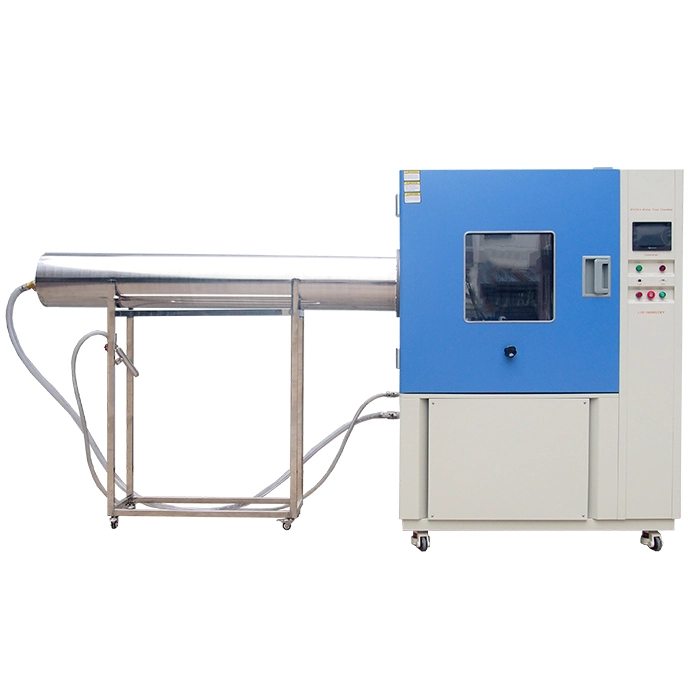
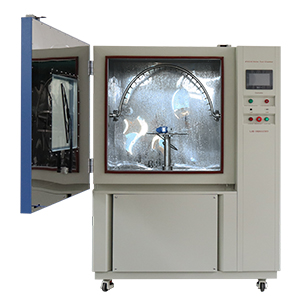
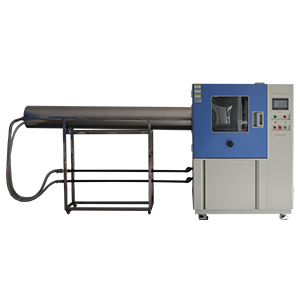
Both systems verify waterproofing, but they simulate different conditions — rain spray chambers reproduce rainfall and splash (IPX3/IPX4), while water jet chambers reproduce direct high-pressure impact (IPX5/IPX6). A roadside information display mainly needs rain and splash testing; a vehicle electronic module that goes through a car wash needs high-pressure jet testing instead. The right choice comes down to the environment the product will actually face, and for labs that need to cover several IP levels, an integrated testing setup is usually more efficient than running separate systems.
| Comparison | Rain Spray Test Chamber | Water Jet Test Chamber |
|---|---|---|
| Main Purpose | Simulate rainfall and splash conditions | Simulate strong water impact |
| Water Exposure | Spray and splash | High-pressure jet |
| Common Standards | IPX3, IPX4 | IPX5, IPX6 |
| Testing Focus | Sealing performance under rain | Resistance against direct water pressure |
| Typical Applications | Outdoor displays, LED signs, electronic cabinets | Automotive parts, industrial equipment |
 |  |
LIB Industry provides professional rain spray test chambers and IP waterproof testing solutions for electronic products, outdoor displays, automotive components, and industrial equipment. LIB systems are designed to help customers:
Verify waterproof performance
Meet international testing requirements
Identify sealing weaknesses
Improve product reliability before mass production
LIB industry rain test equipment supports testing based on IEC 60529 IPX1–IPX6, ISO 20653 automotive waterproof testing, and customer-specific verification requirements, allowing manufacturers to perform reliable and repeatable water ingress testing. That repeatability comes down to how tightly the spray conditions are controlled:
Controlled water flow
Adjustable spray angles
Uniform water distribution
Stable testing duration
Repeatable test results
For labs running frequent tests, build quality matters too:
Feature | Benefit |
SUS304 stainless steel chamber | Corrosion resistance and durability |
Adjustable oscillating tube | Supports IPX3/IPX4 spray testing |
400 mm and 600 mm tube radius options | Suitable for different specimen sizes |
Water circulation system | Reduces water consumption |
Fine filtration system | Prevents nozzle blockage |
Flow monitoring | Improves test accuracy |
Waterproof power interface | Enables functional testing during exposure |
For large outdoor displays or non-standard products, LIB can also provide customized fixtures, chamber dimensions, and testing configurations
Choosing the right chamber starts with the standard the product needs to meet — IEC 60529 IPX3/IPX4 for rain and splash, IPX5/IPX6 for water jet testing, or ISO 20653 IPX4K/IPX6K/IPX9K for automotive applications. These each call for different spray methods, water pressure, flow rates, nozzle designs, and testing distances, so picking equipment based on product size alone, without checking the standard first, is a common way to end up with inaccurate results.
Size and installation conditions matter next. Before purchasing, consider:
Display size
Product weight
Installation angle
Cable connection requirements
Fixture design
Outdoor displays in particular should generally be tested in their real installation condition, since water behavior shifts with mounting position, drainage structure, cable routing, and enclosure design.
It's also worth thinking ahead — a flexible system now can save a costly equipment swap later. Companies should consider whether they may eventually need:
Higher IP protection testing
Larger samples
Additional fixtures
Powered functional testing
Customized testing solutions
Finally, check the fundamentals of the equipment itself — stable water flow control, reliable pressure monitoring, uniform spray distribution, easy maintenance, and calibration support — plus the supplier's track record, since installation help, training, and after-sales support all affect how reliable the testing stays over time.
What is a Rain Spray Test Chamber used for?
It simulates rain, spray, and splash water conditions to evaluate whether a product enclosure can prevent water ingress. Common applications include outdoor displays, LED screens, electronic cabinets, automotive components, and industrial equipment.
What IP ratings can a Rain Spray Test Chamber test?
Standard configurations cover IPX3 and IPX4. Depending on setup, systems can also extend to IPX5, IPX6, IPX6K, and IPX9K — the required level depends on the product's application and applicable standard.
What is the difference between IPX3 and IPX4 waterproof testing?
IPX3 simulates water spray from limited angles, similar to rainfall. IPX4 simulates splash water from all directions around the enclosure, giving broader protection verification for products exposed to changing weather.
Can a Rain Spray Test Chamber test outdoor LED displays?
Yes — it's widely used for this, verifying cabinet sealing performance, connector protection, waterproof structure, and functional stability after water exposure. Large displays may need customized fixtures and chamber configurations.
What warranty and after-sales support does LIB provide?
LIB industry offers a 3-year warranty with lifetime service support, backed by four global service centers in the UK, US, Canada, and Malaysia, plus 29 agents worldwide — delivering true one-stop service from purchase through installation and ongoing support.
Outdoor products must withstand changing weather conditions, and waterproof reliability is essential for long-term operation. A Rain Spray Test Chamber helps manufacturers simulate real-world rain and water exposure under controlled conditions, allowing engineers to verify enclosure protection, identify leakage risks, and improve product designs.
From outdoor displays and electronic enclosures to automotive components, LIB Industry provides professional waterproof testing solutions based on international standards including IEC 60529 and ISO 20653. With experienced engineering support, customized equipment design, and complete after-sales service, LIB helps customers build more reliable products and accelerate environmental reliability testing.
Contact LIB Industry today to get technical specifications, product recommendations, and customized waterproof testing solutions for your application.
 English
 русский
 français
 العربية
 Deutsch
 Español
 한국어
한국어 italiano
 tiếng việt
 ไทย
ไทย Indonesia