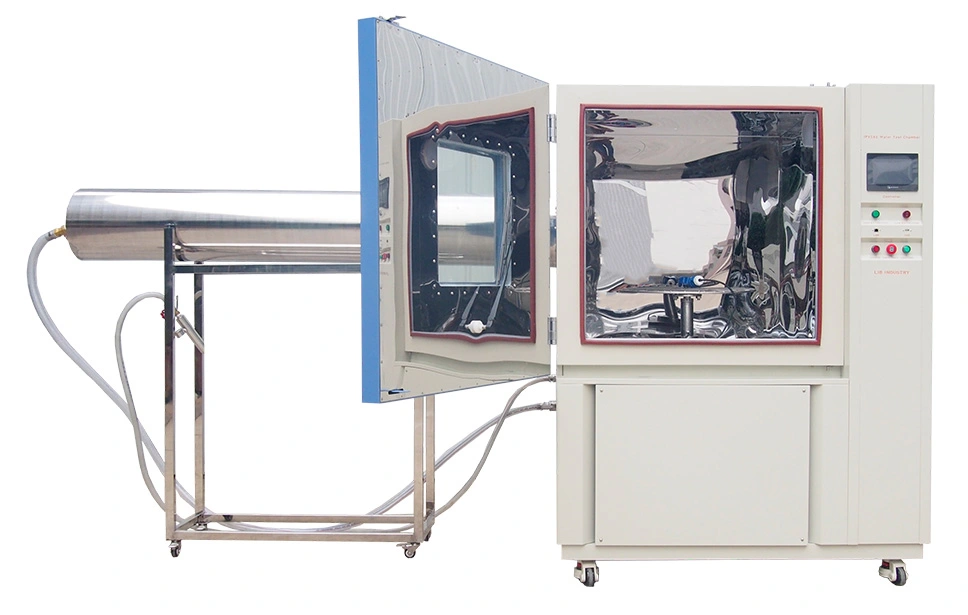
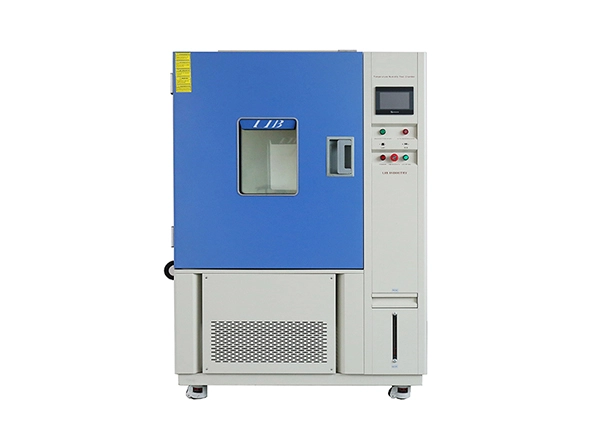
For MIL-STD-810H Method 510.7, the equipment should be selected according to whether the test requires Procedure I – Blowing Dust, Procedure II – Blowing Sand, or both. A blowing dust test uses fine particles below 150 μm and relatively moderate airflow, while a blowing sand test uses larger particles from 150 to 850 μm and much higher air velocity to evaluate abrasion and erosion. The most important selection factors are particle size, air velocity, concentration, temperature, test duration, specimen size and whether the product operates during exposure. A dedicated sand and dust chamber is preferable when one laboratory must reproduce both procedures with controlled and repeatable conditions.
MIL-STD-810H Method 510.7 is intended for products that may encounter dry blowing dust or sand during storage, transportation or operation. It can apply to mechanical, optical, electrical, electronic, electrochemical and electromechanical equipment.
The method contains two principal procedures:
Procedure I – Blowing Dust: evaluates the effects of fine dust particles on equipment.
Procedure II – Blowing Sand: evaluates the effects of larger, more abrasive particles under high-velocity airflow.
The difference is not simply particle size. It changes the primary failure mechanisms.
Fine dust below 150 μm can penetrate openings, cracks, seals, bearings and joints. It can also obstruct filters and ventilation paths. For equipment with electronics, accumulated dust can reduce heat dissipation and contribute to overheating.
Blowing sand presents a stronger mechanical challenge. Particles between 150 and 850 μm can cause abrasion, erosion, surface damage, seal wear and clogging. The standard notes that sand testing is intended to evaluate performance, reliability and maintainability under these effects.
This means the same enclosure may need two different evaluations. A product can have good dust sealing but still suffer surface erosion or mechanical wear when exposed to high-speed sand.
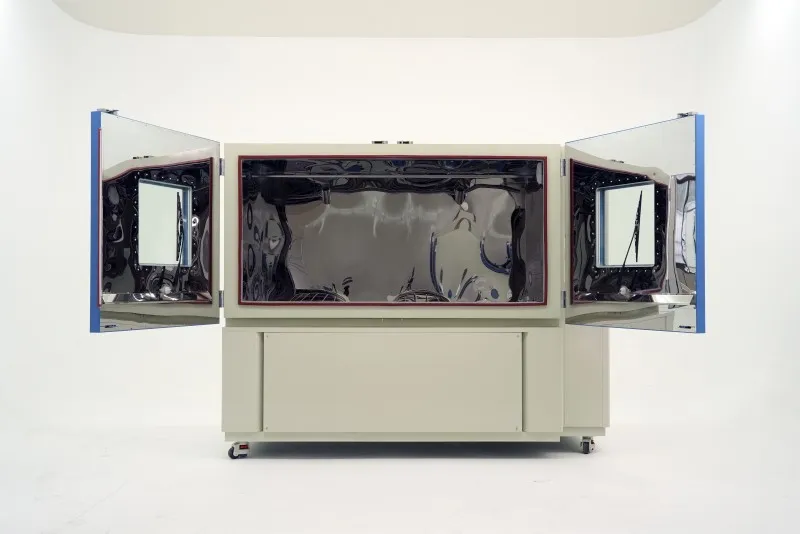
MIL-STD-810H emphasizes tailoring. The exact temperature, particle composition, airflow and duration should be selected according to the product's intended service environment rather than treating every product as having one universal test profile.
Parameter | Procedure I – Blowing Dust | Procedure II – Blowing Sand |
Standard | MIL-STD-810H Method 510.7 | MIL-STD-810H Method 510.7 |
Particle size | <150 μm | 150–850 μm |
Typical particle distribution | Median diameter about 20 ±5 μm | 90 ±5% between 150 and 600 μm; minimum 5% ≥600 μm |
Air velocity | 1.5 ±1 m/s during temperature conditioning; 8.9 ±1.3 m/s typical test velocity | About 18 m/s standard; gusts can reach 29 m/s |
Relative humidity | ≤30% RH | Dry environmental conditions; test-specific |
Temperature | Standard ambient and high operating/storage temperature as tailored | High operating/storage temperature as tailored |
Typical concentration | 10.6 ±7 g/m³ | 0.18, 1.1 ±0.3 or 2.2 ±0.5 g/m³ depending on application |
Minimum duration | Commonly 6 h at standard ambient plus 6 h at high temperature when the default sequence is used | Minimum 90 min per vulnerable face |
Main concern | Ingress, clogging, contamination and filter performance | Abrasion, erosion, clogging and mechanical durability |
The MIL-STD-810H method specifies that chamber relative humidity for blowing dust should not exceed 30%, because excessive humidity can cause dust to cake. It also specifies 1.5 ±1 m/s for temperature conditioning and 8.9 ±1.3 m/s as a typical desert-wind velocity when no other value is specified.
For blowing sand, the standard identifies wind speeds around 18 m/s, with gusts up to 29 m/s, and requires a minimum exposure of 90 minutes per vulnerable face. The test item can be re-oriented at 90-minute intervals to expose other vulnerable surfaces.
The standard also specifies that sand concentration should be selected according to the expected environment, ranging from approximately 0.18 g/m³ for natural conditions to 2.2 ±0.5 g/m³ for equipment likely to operate near aircraft or helicopters.
Selection Factor | Blowing Dust Equipment | Blowing Sand Equipment |
Temperature range | Ambient and high operating/storage temperature | High operating/storage temperature |
Humidity range | ≤30% RH | Dry, application-specific |
Chamber volume | Medium to large; customized | Usually larger due to airflow requirements |
Ramp rate | ≤3°C/min during temperature transition | ≤3°C/min during temperature transition |
Airflow | 1.5–8.9 m/s typical | Approximately 18–29 m/s |
Sample heat load | Important during high-temperature operation | Important during high-temperature operation |
Safety configuration | Dust containment, filtration, interlock, electrical protection | Abrasion-resistant structure, high-speed airflow protection, interlock |
Particle control | <150 μm dust | 150–850 μm sand |
Main failure mode | Ingress, clogging, contamination | Abrasion, erosion, clogging |
Applicable standards | MIL-STD-810H Method 510.7 Procedure I | MIL-STD-810H Method 510.7 Procedure II |
The chamber architecture becomes particularly important when testing sand. MIL-STD-810H recommends that the test item occupy no more than 50% of the chamber cross-sectional area normal to airflow and 30% of chamber volume, allowing adequate circulation of sand-laden air. It also states that blowing sand should not simply be recirculated through the fan or air-conditioning equipment because of its abrasive characteristics.
LIB's dedicated Blowing Sand and Dust Test Chamber is designed to perform both Procedure I and Procedure II. Its published configuration includes automatic control of air velocity, dust concentration, temperature and test duration.
For its DIM-1000 configuration, LIB lists an internal size of 1000 × 1000 × 1000 mm, 1,000 L working volume, blowing-dust velocity of 1.5–8.9 m/s, blowing-dust concentration of 10.7 ±7 g/m³, and blowing-sand velocity of 18–29 m/s.
Procedure I and Procedure II use different particle sizes and airflow conditions. A chamber optimized for fine dust may not generate the velocity required for blowing sand.
Temperature is important, but airflow and particle control are often the defining equipment parameters for Method 510.7.
The standard recommends using representative environmental materials where possible. For blowing sand, quartz sand with at least 95% SiO₂ is specified unless otherwise tailored.
A large specimen can disturb airflow and create non-representative exposure. Chamber dimensions must be evaluated together with the sample's projected area and volume.
If the product is expected to operate in a dust or sand environment, the test plan may require operation during exposure. The standard specifically discusses operating the test item during the final portion of exposure and evaluating performance without automatically removing accumulated dust.
MIL-STD-810H warns that the structure and contamination of test sand can change. Reuse is generally not appropriate when the sand has lost its specified characteristics.
Dust accumulation can reduce the ability of an enclosure to release heat generated by electronics. This makes operational testing especially important for equipment with cooling openings or filters.
Method 510.7 is a tailored test method. The final test plan should reflect the product's intended environment, temperature, particle composition, airflow and exposure conditions.
The appropriate LIB equipment depends on the test objective and specimen dimensions.
Benchtop: Suitable for small components when the primary requirement is controlled fine-dust exposure during development.
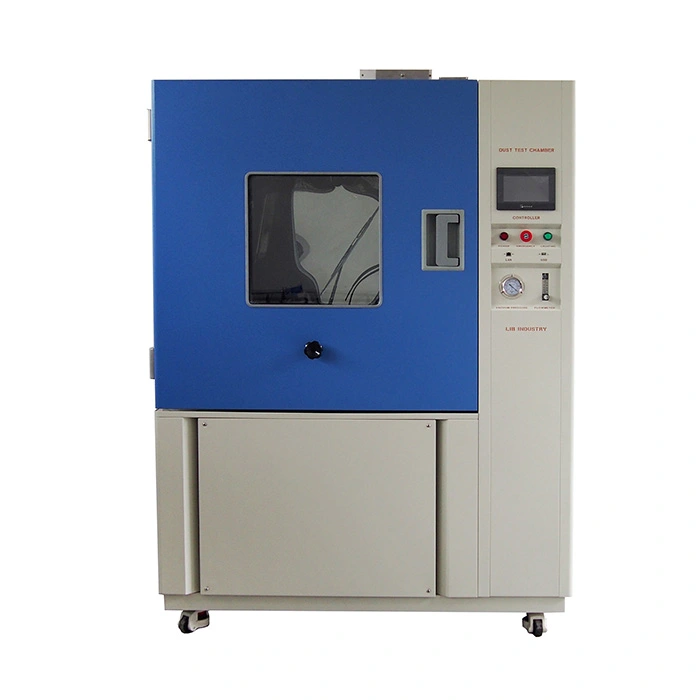
Reach-In: Appropriate for medium-sized electronic, optical and mechanical products requiring repeatable blowing-dust exposure.
Walk-In: Better for large equipment, vehicle components or batch testing. LIB's walk-in dust chamber uses multiple dust circulation systems to maintain consistent particle distribution across a large working area.
Thermal Shock: Not a replacement for sand and dust testing. It should be selected when rapid hot/cold transitions are the primary environmental stress.
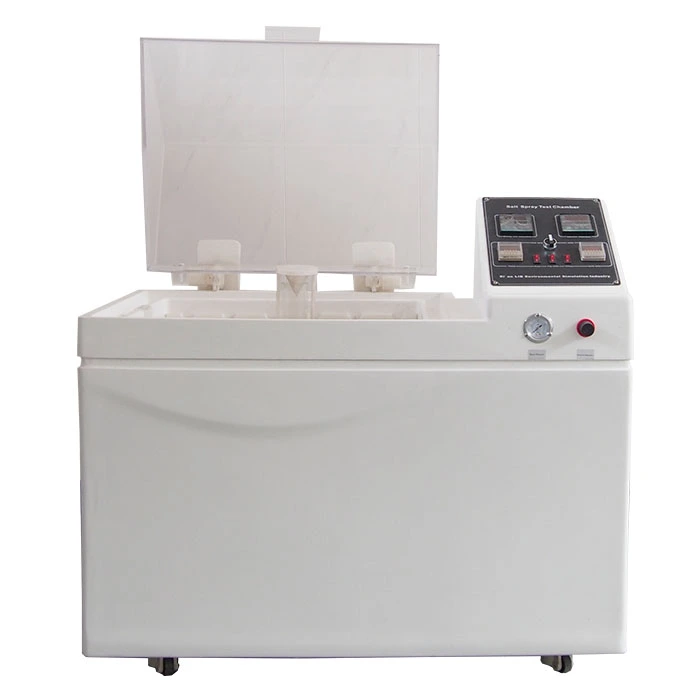
Salt Spray: Used for corrosion testing rather than dry particulate exposure.
IP: Appropriate when the requirement is IEC 60529 IP5X/IP6X ingress protection rather than MIL-STD-810 blowing sand or dust.
Special Custom Chamber: Recommended when the test combines high-speed sand, fine dust, high temperature, electrical operation, large specimens or customized environmental profiles.
LIB's Dust Test Chamber category includes dedicated MIL STD 810 Dust Chamber, Blowing Sand and Dust Test Chamber, Blowing Dust Test Chamber, Static Exposure Chamber and Walk-in Dust Test Chamber configurations.
For Procedure I, LIB's Blowing Dust Test Chamber is designed around MIL-STD-810 dust exposure and provides 1.5–8.9 m/s airflow with integrated temperature, wind-speed and concentration monitoring.
When both procedures are required, the Blowing Sand and Dust Test Chamber is the more suitable configuration because it is designed for both fine dust and high-speed sand exposure.
For large products or batch testing, LIB's Walk-in Dust Test Chamber provides multiple dust outlets and circulation loops for large working spaces.
For the industry layer, LIB serves Aerospace application, which can involve environmental qualification under severe particulate conditions.
A useful related resource is LIB's Behind the Blowing Sand and Dust Test: Methods and Standard. It provides additional background on sand and dust test methods and connects naturally to the equipment-selection discussion in this article. LIB's current blog index explicitly lists this article.
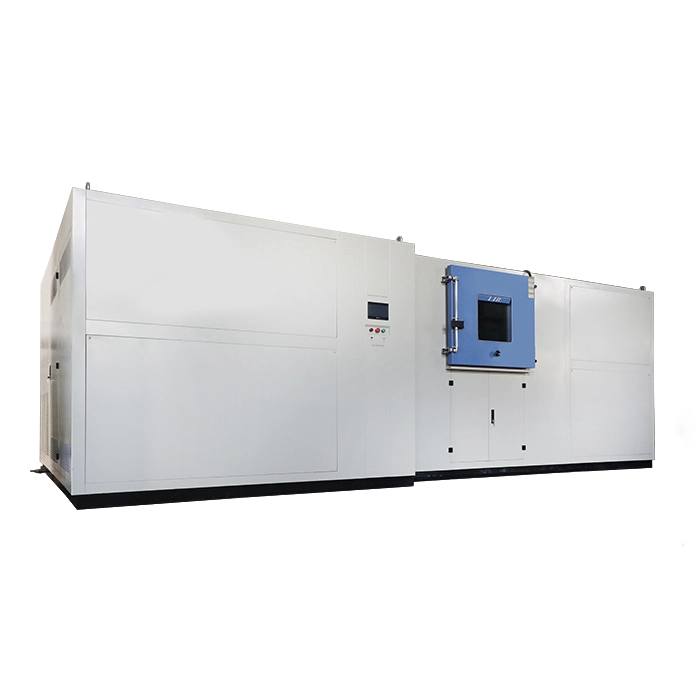
The chamber should be capable of reproducing the specific procedure and tailored conditions in the test plan. For both blowing dust and blowing sand, a dedicated sand and dust chamber with controlled airflow and particle concentration is generally the most practical option.
Blowing dust uses particles smaller than 150 μm and primarily evaluates penetration, contamination, clogging and filter performance. Blowing sand uses 150–850 μm particles at much higher air velocities and focuses more heavily on abrasion, erosion and mechanical durability.
The duration depends on the tailored test plan. A commonly used blowing-dust sequence involves six hours at standard ambient conditions and another six hours at high temperature, while blowing sand requires at least 90 minutes per vulnerable face.
Start with the complete specimen dimensions, mounting fixtures and airflow requirements. For blowing sand, the chamber should provide enough free cross-sectional area and volume to maintain representative particle circulation. MIL-STD-810H gives specific limits on how much of the chamber can be occupied by the test item.
Yes, if it is specifically engineered for both airflow ranges, particle sizes, concentrations and control requirements. LIB's blowing sand and dust chamber is designed to perform both Procedure I and Procedure II.
No. IP6X focuses on enclosure dust ingress under IEC 60529. Method 510.7 evaluates environmental exposure to blowing dust and sand, including airflow, particle movement, abrasion and operational effects.
Include the required MIL-STD-810 revision and Method 510.7 procedure, particle type and size, concentration, airflow velocity, temperature, humidity, exposure duration, specimen dimensions and weight, operating status, orientation requirements, chamber occupancy and available installation space.
 English
 русский
 français
 العربية
 Deutsch
 Español
 한국어
한국어 italiano
 tiếng việt
 ไทย
ไทย Indonesia
.webp "IPX5 IPX6 High Pressure Water Flow Tester")