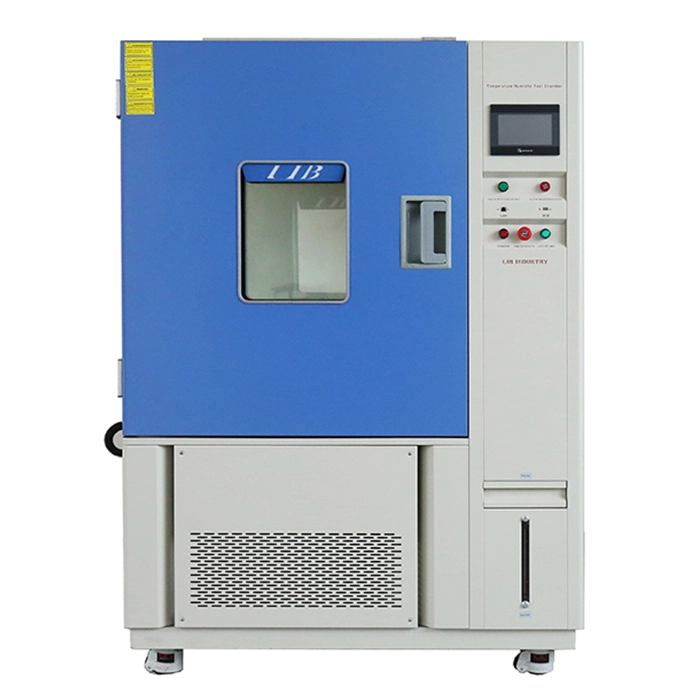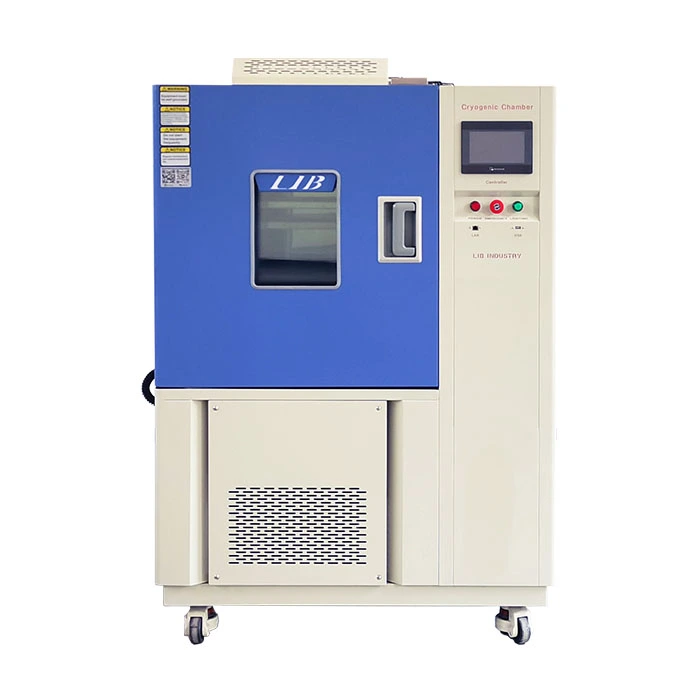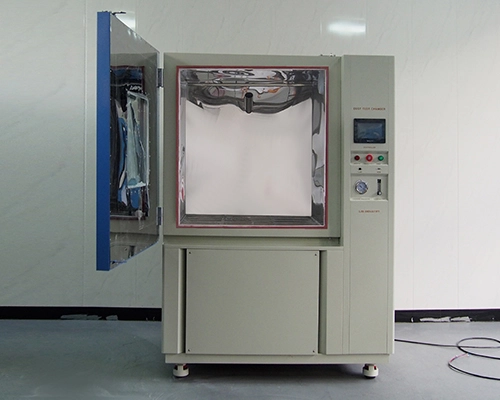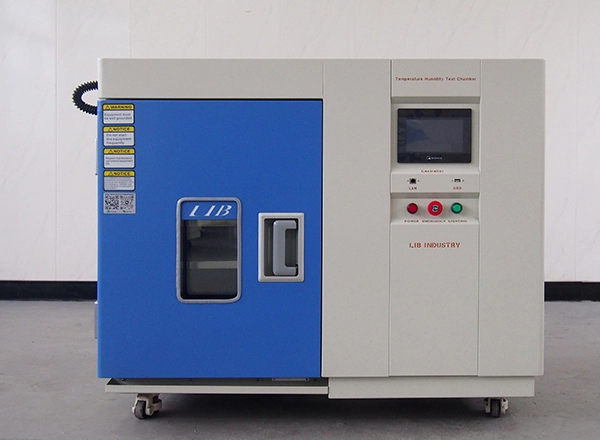
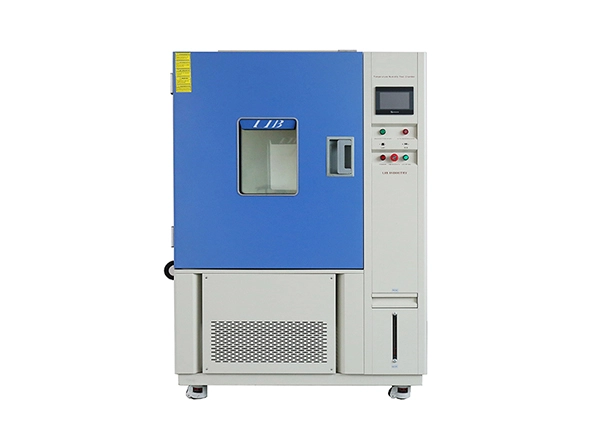
Choose a salt spray chamber when the main goal is consistent corrosion screening, coating comparison, or evaluating metals and surface treatments under continuous salt-fog exposure. Choose a cyclic corrosion chamber when the test needs alternating salt spray, humidity, drying, and temperature stages that more closely resemble changing outdoor conditions. Salt spray testing is commonly used for standardized salt-fog exposure, while cyclic corrosion testing introduces programmable environmental changes. The key selection factor is not simply test duration, but whether the chamber reproduces the environmental stresses that the product is expected to encounter.
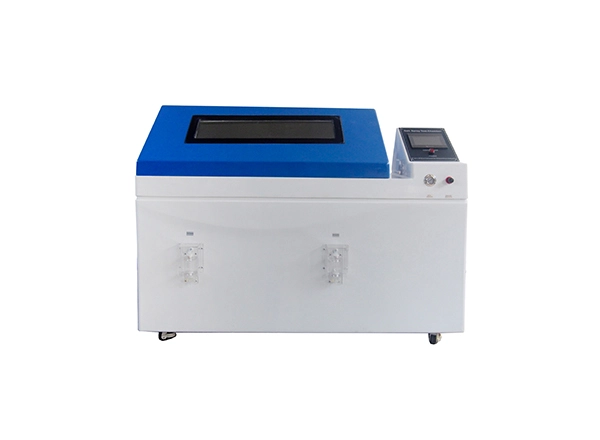
Corrosion testing evaluates how materials, coatings, metal surfaces, fasteners, and finished components respond to moisture, salt, temperature changes, and repeated wet-dry exposure.
Typical specimens include painted metal panels, plated parts, automotive components, fasteners, aluminum alloys, steel parts, protective coatings, and assemblies containing different metals.
The main failure mechanisms include:
Red rust and white corrosion
Coating blistering
Peeling and delamination
Surface pitting
Creep corrosion around scratches
Loss of coating adhesion
Galvanic corrosion
Corrosion around joints and fasteners
The fundamental difference in salt spray vs cyclic corrosion test is the environmental sequence.
A conventional salt spray chamber maintains a controlled salt-fog atmosphere. Salt solution is atomized into fine droplets and continuously deposited on exposed specimens. This creates a repeatable corrosive environment for comparing different materials or surface treatments.
A cyclic corrosion chamber changes the environment throughout the test. Depending on the selected program, the specimen can experience salt spray, high humidity, condensation, drying, and temperature changes in repeated stages.
This difference affects how corrosion develops. Continuous salt fog provides a relatively simple and stable exposure, while cyclic testing introduces wetting and drying transitions that can influence oxygen availability, electrolyte concentration, coating behavior, and corrosion-product formation.
Therefore, neither chamber is universally better. The appropriate choice depends on whether the objective is controlled salt-fog comparison or more complex environmental simulation.
Different corrosion methods use different combinations of salt concentration, temperature, humidity, spray duration, drying, and condensation. The equipment should be configured around the exact procedure rather than selected only by the chamber's maximum temperature or volume.
Test Method | Typical Temperature | Humidity | Exposure Pattern | Main Application |
Salt Spray / NSS | Around 35°C | High humidity | Continuous salt fog | Coating and material comparison |
Acidified Salt Spray | Around 35°C | High humidity | Acidified salt fog | Accelerated coating evaluation |
Copper-Accelerated Salt Spray | Around 50°C | High humidity | Accelerated salt fog | More aggressive corrosion evaluation |
Modified Salt Spray | Procedure dependent | Procedure dependent | Modified or cyclic exposure | Specialized corrosion testing |
Cyclic Corrosion | Cycle dependent | Multiple stages | Salt spray + humidity + drying | Environmental simulation |
Automotive CCT | Program dependent | Programmable | Wet, salt, humid and dry stages | Automotive components |
LIB's Salt Spray Chamber range provides conventional salt-fog testing with an operating temperature of approximately ambient to +60°C and relative humidity of around 95–98% RH.
LIB's Cyclic Corrosion Test Chamber provides programmable temperature, humidity, salt spray, and drying functions for more complex corrosion cycles.
Parameter | Salt Spray Chamber | Cyclic Corrosion Chamber |
Temperature range | Ambient to about +60°C on standard LIB models | Approximately +10°C to +90°C on selected models |
Humidity range | Typically 95–98% RH | Programmable across multiple stages |
Chamber volume | Multiple configurations | Multiple configurations |
Ramp rate | Usually not a primary parameter | Controlled environmental transitions |
Airflow | Supports salt-fog distribution | Supports drying, humidity and temperature control |
Sample heat load | Generally limited | More important during temperature transitions |
Safety configuration | Corrosion-resistant structure, temperature and water protection | Corrosion-resistant structure, temperature, humidity, water and electrical protection |
Applicable standards | Salt spray and modified salt-fog methods | Cyclic corrosion and automotive corrosion procedures |
A salt spray chamber creates a continuous corrosive atmosphere using an atomized salt solution.
LIB's Salt Spray Chamber uses corrosion-resistant GRP construction, a spray tower, salt-water tank, corrosion-resistant nozzles, and specimen holders designed to distribute salt mist across the testing area.
This configuration is particularly useful when several coatings or materials need to be compared under the same exposure conditions.
For example, a manufacturer could use salt spray testing to compare:
Different paint systems
Zinc and other protective coatings
Plated fasteners
Aluminum surface treatments
Corrosion-resistant steel
Different coating thicknesses
The relatively simple environmental sequence also makes it easier to maintain consistent test conditions between batches.
A cyclic corrosion tester introduces multiple environmental stages instead of maintaining continuous salt fog.
A typical sequence may include:
Salt spray → high humidity → condensation → drying → temperature change → repeat
The exact sequence depends on the selected test procedure.
LIB's Cyclic Corrosion Test Chamber combines salt spray, temperature, humidity, and drying functions within one system.
This approach is particularly useful for automotive components and products exposed to changing outdoor conditions. During real service, a component may become wet from rain or road spray, remain humid, dry under warmer conditions, and then become wet again. A cyclic program can reproduce these transitions more effectively than constant salt fog.
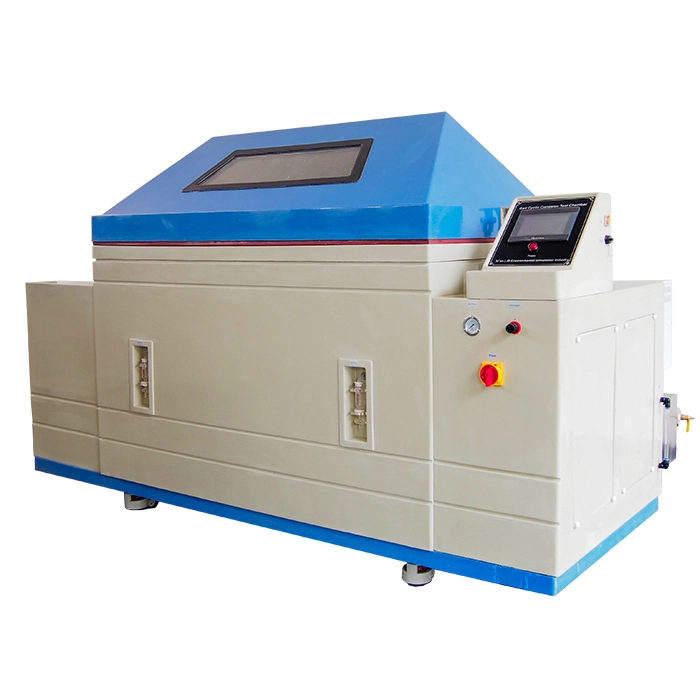
A longer exposure period increases corrosion stress, but it does not create a simple conversion between chamber hours and outdoor service years. Laboratory corrosion mechanisms can differ significantly from natural exposure.
Cyclic corrosion testing is not one single environmental profile. Different programs may use different temperatures, humidity levels, salt concentrations, drying periods, and cycle durations.
The cycle should therefore be defined before selecting the equipment.
Uneven spray distribution can cause different corrosion rates across specimens. Nozzle condition, salt concentration, solution pH, collection rate, and sample positioning should be checked regularly.
Panels and components can interfere with one another if they are positioned too closely. Incorrect angles can also change salt deposition and drainage.
Drying is an important part of many cyclic corrosion programs. Incorrect temperature, airflow, or drying duration can change the corrosion behavior of the sample.
The nominal chamber volume does not equal usable testing capacity. Samples, racks, fixtures, and required spacing all occupy working space.
A 500-hour salt spray test and a multi-stage cyclic corrosion test with the same nominal duration do not necessarily produce comparable corrosion exposure. The environmental sequence matters as much as the total time.
Equipment selection should begin with the corrosion mechanism and environmental sequence, followed by sample size, test volume, temperature range, humidity requirements, and cycle control.
LIB's Salt Spray Chambers product category includes Salt Spray Chambers, Salt Spray Cabinets, ASTM G85 equipment, Salt Spray Cyclic Corrosion Testers, ASTM B117 systems, Cyclic Corrosion Test Chambers, and other corrosion-testing configurations. The category can therefore be used as the starting point when comparing conventional salt-fog testing with more advanced cyclic exposure.
Benchtop: Suitable for small panels, fasteners, coatings, and laboratory screening.
Reach-In: Appropriate for larger components and multiple specimens requiring additional working space.
Walk-In: Suitable for large vehicle components, assemblies, or higher-volume corrosion programs.
Thermal Shock: Appropriate when sudden temperature changes are the primary environmental stress rather than corrosion.
Salt Spray: Recommended for continuous salt-fog exposure and coating comparison.
IP: More suitable for evaluating dust and water ingress.
Special Custom Chamber: Appropriate when salt spray or cyclic corrosion needs to be combined with additional environmental conditions.
For conventional corrosion screening, the LIB Salt Spray Chamber provides different chamber sizes and configurations for neutral, acidified, and copper-accelerated salt spray applications. Listed models cover different working volumes so that laboratories can select equipment according to specimen dimensions and testing quantity.
For more complex environmental sequences, the LIB Cyclic Corrosion Test Chamber combines salt spray, temperature, humidity, and drying functions. This configuration is better suited to programs where the sample needs to experience repeated wet-dry and temperature transitions.
Industry requirements should also be considered. LIB's Environmental Test Chamber for Automotive Industry includes environmental testing solutions for automotive components, where corrosion may occur on body panels, fasteners, connectors, coatings, and other metal parts.
For related technical information, LIB's article Cyclic Corrosion Test and Its Testing Procedures explains how cyclic programs combine different environmental stages and why the sequence of salt spray, humidity, drying, and temperature changes matters when designing a corrosion test.
A salt spray chamber is generally more convenient when the main objective is to compare coating systems under a consistent salt-fog environment. It provides a relatively straightforward way to compare visible corrosion, blistering, and coating degradation.
Salt spray testing typically exposes specimens continuously to salt fog, while cyclic corrosion testing alternates between two or more environmental stages such as salt spray, humidity, drying, and temperature changes.
Not necessarily. CCT can better represent certain changing outdoor environments, but its effectiveness depends on how closely the selected cycle matches the actual service conditions. A poorly selected cycle may not provide meaningful field correlation.
The duration depends on the material, coating, test method, and evaluation objective. Programs may range from short screening exposures to several hundred or more hours. Test duration should be established according to the intended comparison rather than treating hours as a direct prediction of service life.
Some equipment can support multiple corrosion-testing functions, but this depends on the chamber's temperature, humidity, spray, drying, and control capabilities. The required cycle should be confirmed before equipment selection.
Start with the dimensions and quantity of the specimens rather than nominal chamber volume. Include racks, fixtures, spacing, drainage, and sample orientation when calculating the required working area.
An RFQ should specify the test method, salt concentration, temperature, humidity, spray duration, cycle sequence, drying conditions, sample dimensions and weight, chamber volume, specimen quantity, fixtures, data recording requirements, and any special environmental conditions.
 English
 русский
 français
 العربية
 Deutsch
 Español
 한국어
한국어 italiano
 tiếng việt
 ไทย
ไทย Indonesia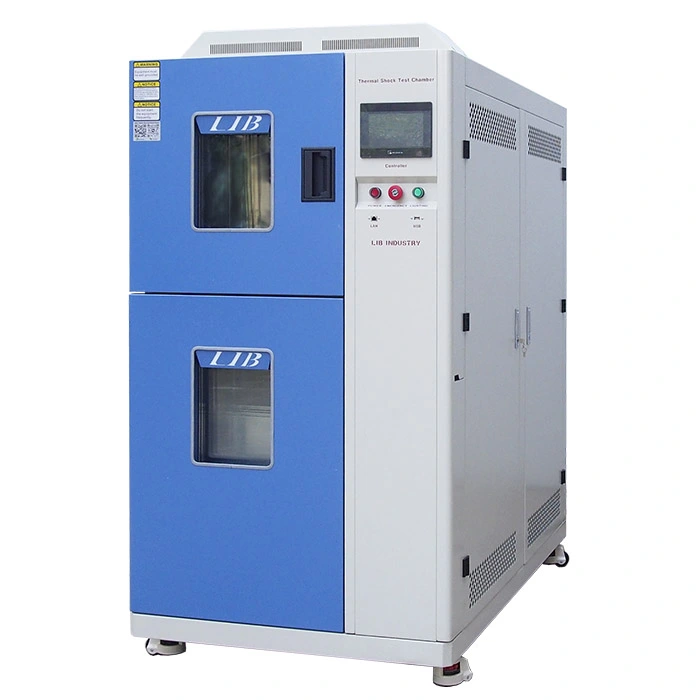
.webp "ISO 7326 Static Dynamic Ozone Chamber for Hose")