When it comes to environmental testing, MIL-STD-810 is one of the most authoritative standards in the world. Originally developed by the U.S. military, this standard defines a wide range of test methods to ensure equipment reliability in extreme environments. Today, it is widely adopted across aerospace, automotive, electronics, and energy industries.

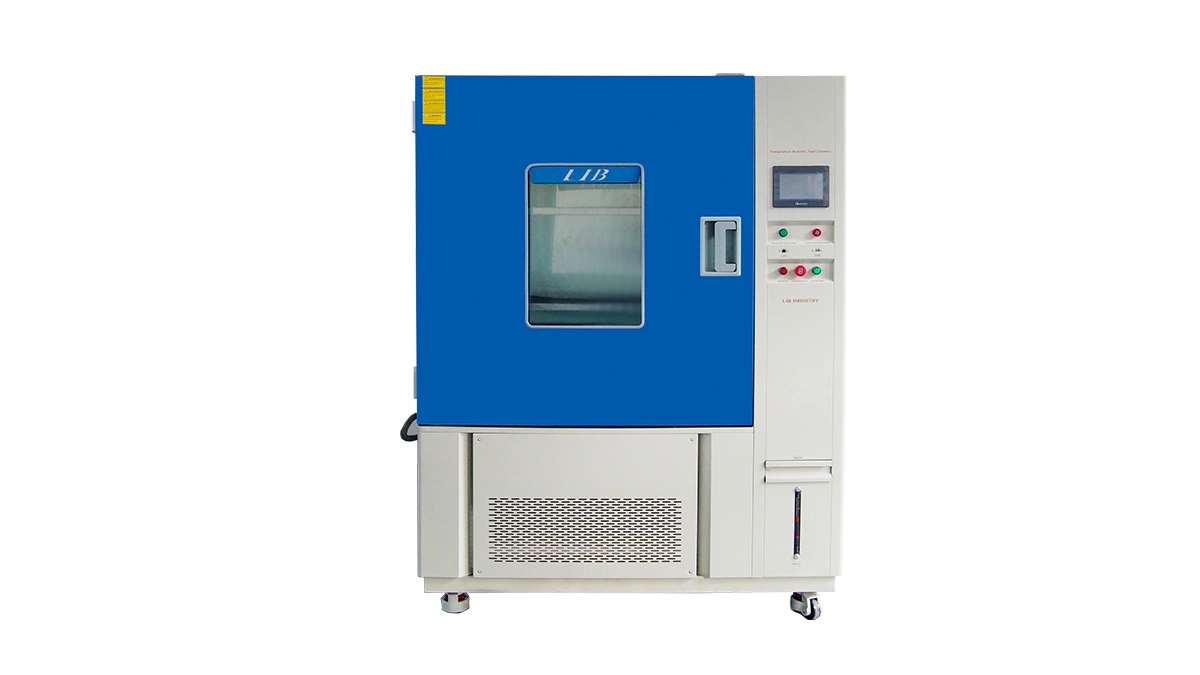
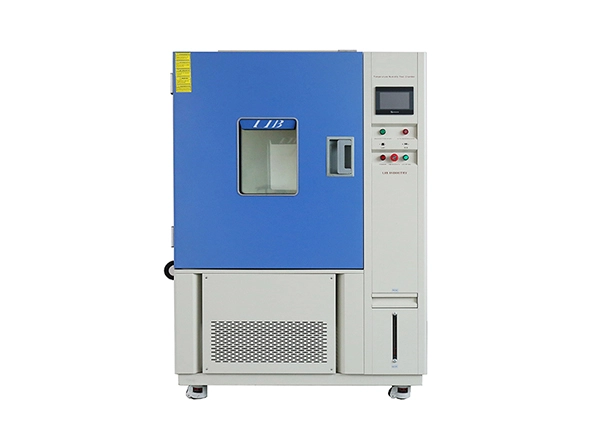
Among the many tests defined in MIL-STD-810H (the latest version), sand & dust testing and rain testing are especially critical for outdoor-use products. To meet these requirements, LIB provides advanced MIL-STD-810 rain test chambers and MIL-STD-810 dust test chambers, helping companies verify the durability and protection level of their products under harsh natural conditions.
The MIL-STD-810 standard evaluates product performance under multiple environmental stresses, including:
High and low temperature cycles
Humidity and fungus exposure
Vibration and shock
Salt spray and corrosive environments
Sand and dust exposure
Rain, freezing rain, and wind-driven rain
Its goal is to simulate real-world service conditions indoors, ensuring that products maintain functionality and safety even in extreme situations.
In this article, we focus on rain testing and dust testing, and how LIB’s test chambers deliver precise simulation capabilities.
The MIL-STD-810 rain test chamber uses a specialized spray system with adjustable water pressure and nozzle design to simulate different rainfall intensities —from light drizzle to heavy storms. It can replicate vertical rainfall, inclined rainfall, and even wind-driven rain to evaluate product sealing and waterproof performance.
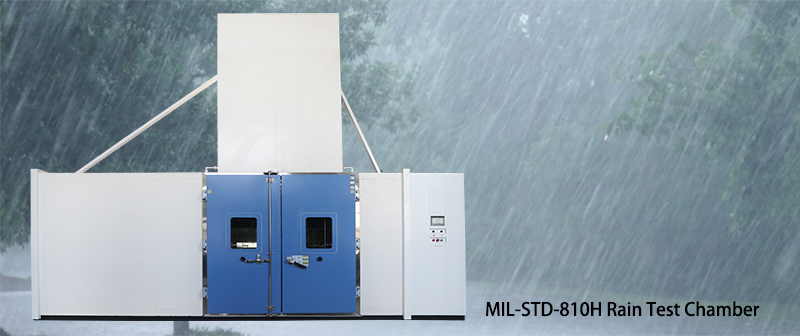
Raindrop velocity | 9 m/s |
Rainfall rate | ≥1.7 mm/min |
Raindrop diameter | 0.5 – 4.5 mm |
Nozzle pressure | 276 kPa |
Water circulation | Continuous stable rainfall |

- Aerospace: testing aircraft fuselage, avionics, and engine components under heavy rain
- Automotive: verifying waterproof sealing of windows, headlights, and electronic systems
- Electronics & Telecom: ensuring mobile devices, base stations, and outdoor communication equipment function reliably in wet climates
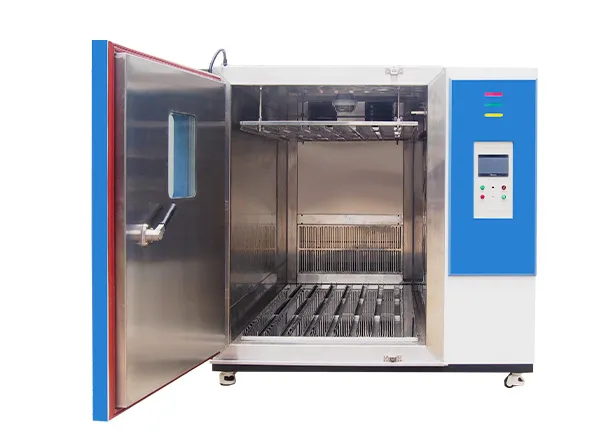
The MIL-STD-810 dust test chamber uses a powerful air circulation and dust injection system to create controlled dust storm conditions. It can simulate both blowing dust and blowing sand, exposing products to desert-like environments.

Blowing dust wind speed | 1.5 – 8.9 m/s |
Dust density | 10.7 ± 7 g/m³ |
Dust particle size | <150 μm |
Blowing sand wind speed | 18 – 29 m/s |
Sand particle size | 149 – 850 μm |
Sand concentration | Up to 2.2 ± 0.5 g/m³ |
Standard compliance | MIL-STD-810H Method 510.6 |

- Military equipment: tanks, weapons, and communication devices exposed to battlefield dust
- Power & Energy: transformers, switchgear, and renewable energy systems tested for insulation and protection
- Solar & Wind industry: evaluating dust accumulation and its effect on efficiency and lifespan
Dust testing can ensure the normal operation of these devices under sand-filled conditions to maintain combat effectiveness and communication capabilities.
LIB’s MIL-STD-810 rain and dust test chambers provide a powerful solution for manufacturers who need to guarantee product reliability in extreme outdoor environments. By combining strict compliance with MIL-STD-810H standards, precise simulation systems, and user-friendly control, LIB chambers help companies:
- Ensure product safety and reliability
- Meet international qualification requirements
- Gain a competitive advantage in global markets
- 3-year warranty and lifetime service guarantee your test. No worries about the future!
Looking for a reliable partner in environmental testing?
Explore LIB’s MIL-STD-810 test chambers today and strengthen your product reliability strategy.
Contact LIB for a custom solution at inquiry@libtestchamber.com
 English
 русский
 français
 العربية
 Deutsch
 Español
 한국어
한국어 italiano
 tiếng việt
 ไทย
ไทย Indonesia
.webp "UV Accelerated Weathering Tester")
.webp "Mini Environmental Test Laboratory Kit")