Rubber is a vital material in countless applications—from automotive seals and gaskets to electrical insulators, hoses, and tires. Its flexibility, durability, and resistance to weathering make it indispensable. However, one silent and highly reactive environmental factor often undermines rubber’s longevity: ozone.

Ozone (O₃) is a triatomic form of oxygen found in the atmosphere in trace amounts. Though it plays a protective role in the upper atmosphere, at ground level it becomes a powerful oxidant. For rubber-based products, exposure to even low concentrations of ozone—typically between 50 and 100 parts per hundred million (pphm)—can result in cracking, surface degradation, and loss of mechanical properties. This form of decay, known as ozone cracking, is particularly aggressive under tension.
Even at concentrations as low as 50 pphm, ozone can trigger chain-scission reactions in rubber compounds, especially those with double bonds like natural rubber or SBR (Styrene-Butadiene Rubber). When rubber is under tension—whether stretched by 20% or more—micro-cracks can appear within hours under laboratory ozone exposure.
In a ozone test chamber, scientists can raise the ozone concentration up to 1000 pphm, far exceeding atmospheric levels, to simulate years of aging in just days. Temperature also plays a key role: oxidation reactions accelerate notably above 40°C, which is why controlled test environments typically use a range between +10°C and +60°C.
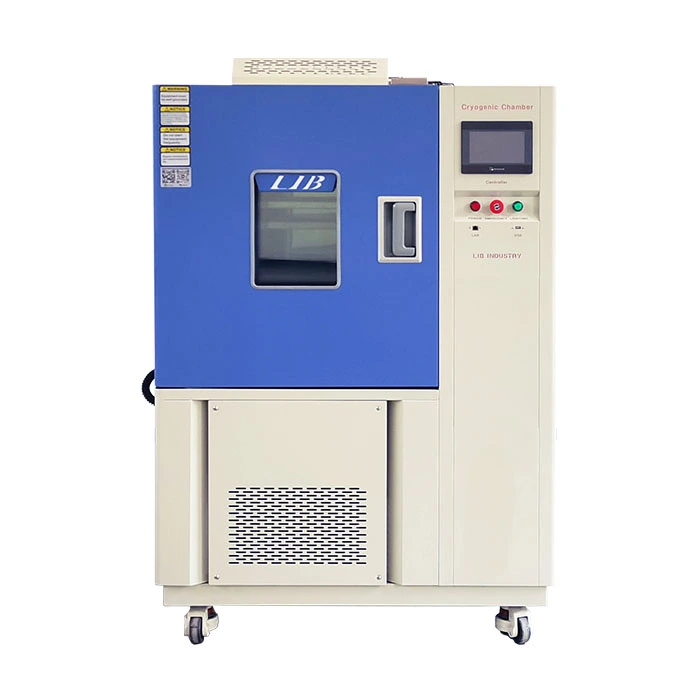
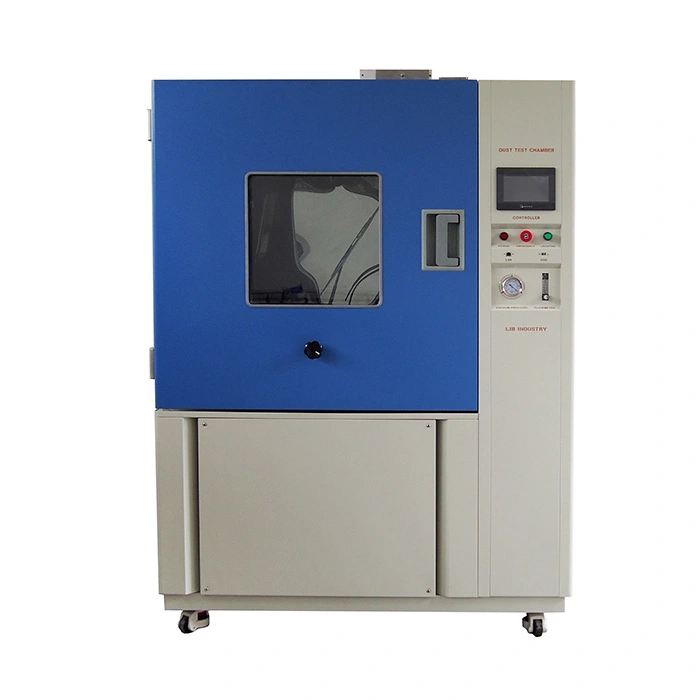
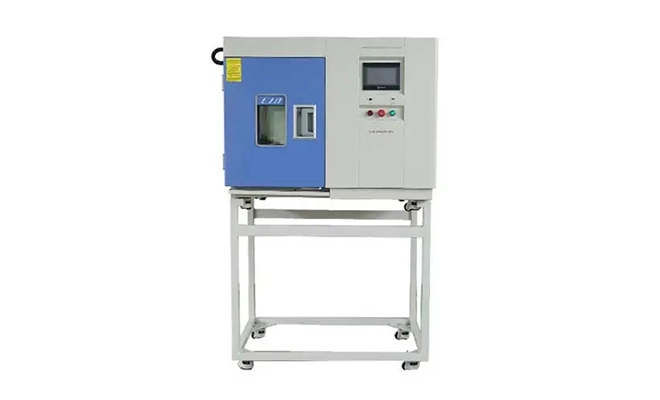
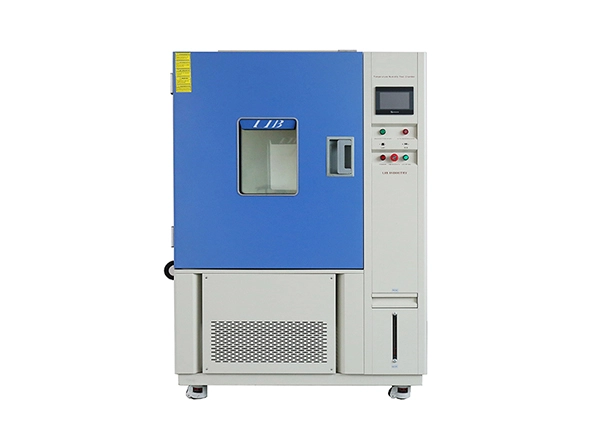
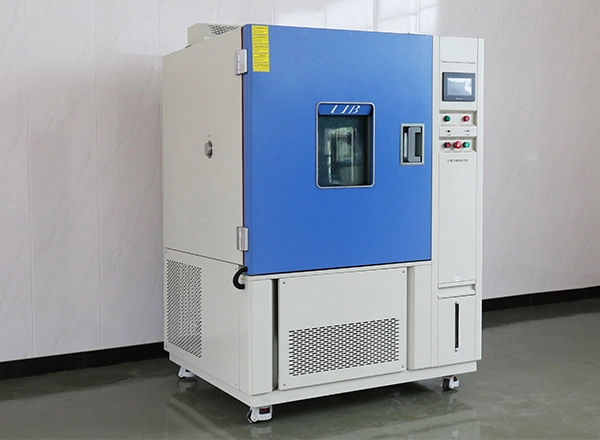
To meet the demand for precision and repeatability, LIB’s ozone test chamber for rubber is engineered with tightly controlled test parameters and an intuitive user interface,compliant with ASTM D1149, ISO 1431 and etc.
Key specifications:
Temperature Range | 0℃ ~ +100 ℃ |
Temperature Fluctuation | ± 0.5 ℃ |
Temperature Deviation | ± 2.0 ℃ |
Humidity Range | 30% ~ 98% RH |
Humidity Deviation | ± 2.5% RH |
Cooling Rate | Ambient ~ 0℃ within 20 min |
Ozone Concentration | 1~1000PPHM |
Sample Holder Rotate Speed | 0~10 r/min |
Airflow Rate | 0 ~ 60L/min |
Clamps Tensile Stretch | 5%~35% |
 | |
LIB ozone test chamber's closed-loop ozone generation ensure stable, repeatable results. Internal circulation fans maintain uniform ozone distribution, and the programmable controller enables automated multi-step test cycles.
By replicating harsh ozone environments, this kind of testing allows material scientists and product developers to evaluate the real-world durability of rubber components before they’re deployed. Whether it’s sealing rings in a car engine, vibration dampers in industrial machines, or insulation in electrical cables, accelerated ozone testing can help ensure product reliability and reduce field failure rates.
Incorporating LIB’s ozone test chamber into the quality assurance process offers not only accurate results but also operational efficiency. Trusted by global manufacturers, LIB provides both standard models and tailored solutions based on specific testing requirements.
Learn more about how LIB helps safeguard rubber performance in ozone-rich environments:
https://www.libtest.com/products/ozone-test-chamber/
In addition to standard models, LIB offers extensive customization options for ozone aging test machines to meet specific testing requirements. Whether it's adjusting the chamber size, ozone concentration range, temperature profile, or designing unique sample holders and rotating fixtures—LIB can tailor the chamber to your exact needs. If you're looking for a reliable partner to provide a customized solution for ozone rubber aging tests, LIB welcomes your inquiry. Share your test parameters, application scenarios, or special requirements—and let us build the right ozone test chamber for you.
 English
 русский
 français
 العربية
 Deutsch
 Español
 한국어
한국어 italiano
 tiếng việt
 ไทย
ไทย Indonesia