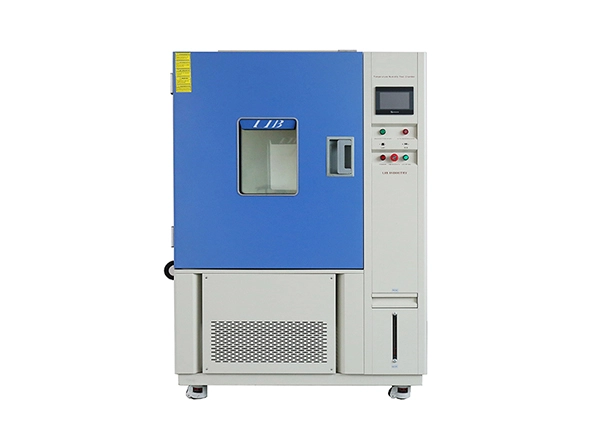
Thermal runaway in lithium-ion batteries is one of the most catastrophic risks facing modern energy storage and electric vehicle (EV) technologies. A single malfunctioning battery cell can trigger a chain reaction, releasing toxic gases, generating intense heat, and potentially causing uncontrollable fires. Consequences range from damaged equipment and costly recalls to serious safety hazards for personnel.
Battery Test Chambers are essential in preventing such incidents. These chambers act as the first line of defense during the development and testing phase. By safely reproducing extreme conditions and stress scenarios, high-quality battery test chambers allow engineers to monitor failure precursors, validate safety measures, and ensure compliance with international standards.
Investing in a premium battery test chamber is a strategic move that enhances risk management, protects equipment, and ensures compliance with industry safety standards such as EUCAR, IEC 62619, and UL 1973.

Understanding the root causes of thermal runaway is essential for prevention. There are three primary triggers:
Thermal Abuse
External heat exposure or inadequate cooling can push a battery beyond its thermal stability limits. Even moderate environmental fluctuations can accelerate chemical reactions inside the cell, increasing the likelihood of runaway.
Electrical Abuse
Overcharging, deep discharging, or high-rate current surges disrupt lithium-ion chemistry. Electrical stress generates localized heat and gas production, often triggering cascading failures across multiple cells.
Mechanical Abuse
Compression, punctures, or other physical damage can compromise battery integrity. Mechanical stress may rupture internal separators or electrodes, immediately initiating thermal runaway.
High-performance environmental chambers for battery testing allow engineers to safely identify these critical thresholds. With precise environmental control, gas detection, and integrated safety systems, these chambers are the only reliable way to evaluate battery performance under extreme conditions without endangering personnel or infrastructure.
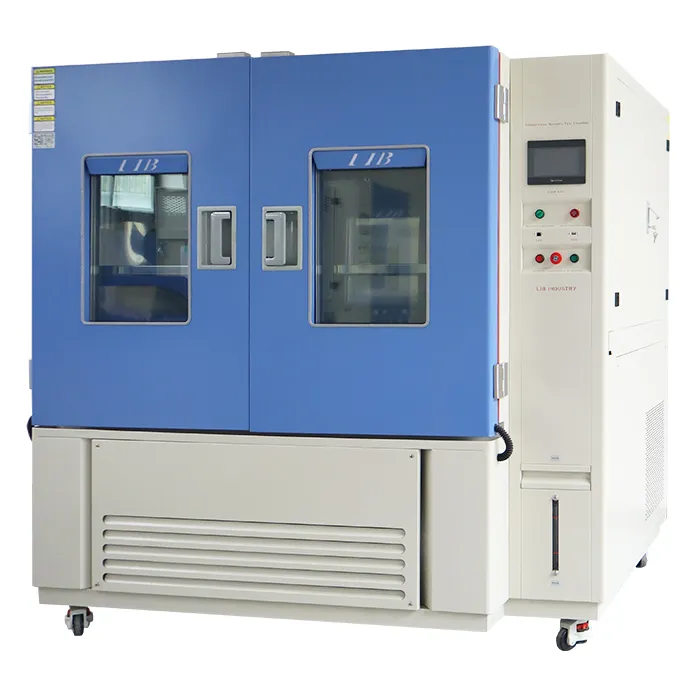
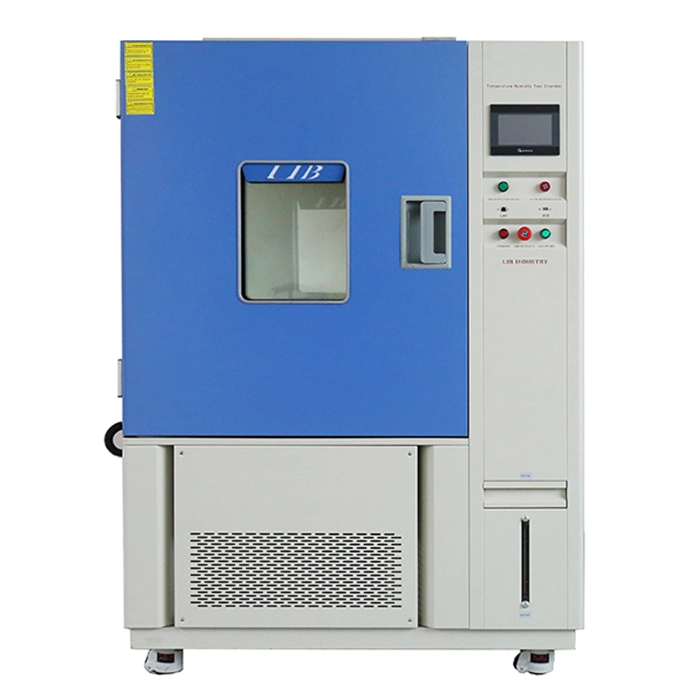
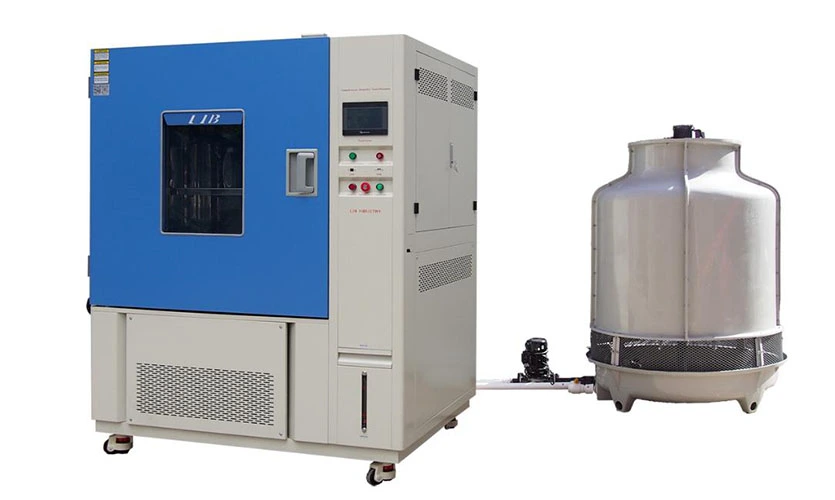
When evaluating battery test solutions, safety and operational versatility are paramount. LIB industry Battery Test Chambers combine advanced engineering with customizable features to mitigate thermal runaway risks.
 |  | |
Model | TR10-1000C | |
Internal Dimension (mm)
| 1000*1000*1000 | |
Overall Dimension (mm)
| 2120*1200*2100 | |
Interior Volume | 1000L | |
Parameters | Temperature Range | C : -70℃ ~ +170 ℃ |
Temperature Fluctuation | ± 0.5 ℃ | |
Temperature Deviation | ± 2.0 ℃ | |
Cooling Rate | 10 ℃ / min (average) | |
Heating Rate | 10 ℃ / min (average) | |
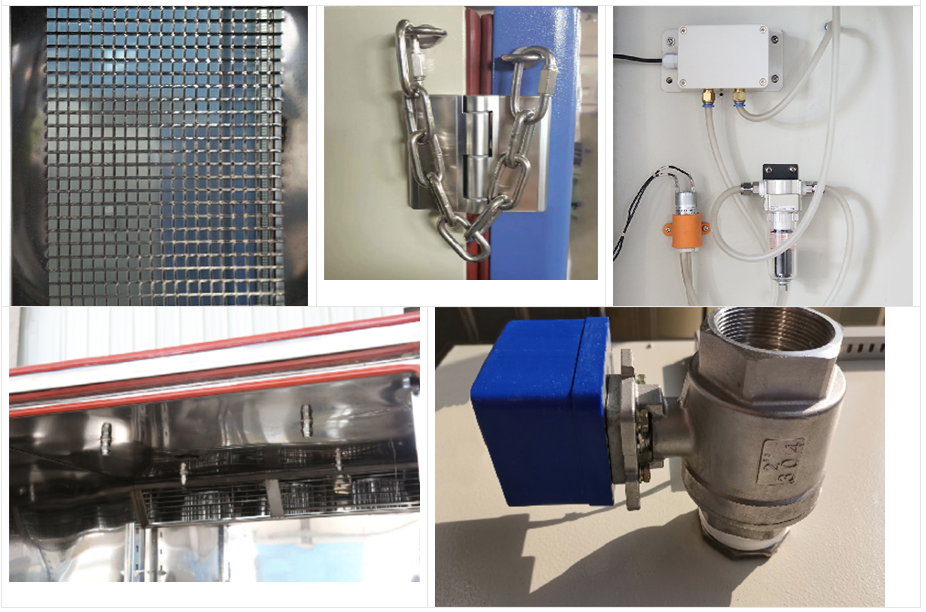 | ||
Function: Provides a controlled outlet for gases when battery pressure rises, preventing chamber rupture.
Key Parameters:
Maximum internal pressure tolerance: ≥3 bar
Gas venting capacity: 10–50 L/min per vent
Standards Compliance: Designed according to EUCAR Level 3–7 explosion safety guidelines.
Customizable Features: Vent placement and number can be adjusted based on battery energy density to ensure safety for single cells or full packs.
Function: Automatic activation of sprinklers, CO₂, or nitrogen systems in response to heat or smoke.
Key Parameters:
Full chamber coverage: 100% test area
CO₂ system capacity: 20–50 kg
Activation response time: <5 seconds
Standards Compliance: ISO 14520 / NFPA 2001
Enhanced Safety Design: Modular systems can be tailored for EUCAR Level 1–7, supporting lab-scale testing and high-energy packs.
Function: Detects H₂, CO, and volatile organic compounds (VOCs) in real time.
Key Parameters:
H₂ detection range: 0–10,000 ppm
CO detection range: 0–1,000 ppm
Response time: <2 seconds
Standards Compliance: IEC 60079-29-2 for combustible gas monitoring
Application Note: High-frequency sampling integrated with data acquisition captures early-stage gas emissions, providing real-time monitoring for thermal runaway prevention.
Function: Reinforced doors, chassis, and safety chains protect operators and equipment from chamber breaches.
Key Parameters:
Door and wall thickness: ≥12 mm steel with safety chain reinforcement
Explosion containment rating: Level 3–7 EUCAR
Enhanced Safety Design: Customizable for full battery packs or single-cell testing, ensuring safe testing across scales.
Function: Independent over-temperature circuits prevent chamber faults from triggering thermal runaway.
Key Parameters:
Adjustable over-temperature trigger: 80–120°C
Redundant power and control circuits for multi-cell testing
Standards Compliance: UL 1973 / IEC 62619
Technical Highlight: Enables safe parallel testing of multiple battery modules without risk to operators or data integrity.
EUCAR Hazard Level | Max Battery Energy | Pressure Relief Vents | Fire Suppression | Gas Detection | Explosion-Proof Structure |
Level 1 | ≤ 1 kWh | Standard | Optional | Basic | Standard |
Level 3 | 1–10 kWh | Enhanced | CO₂/N₂ | Advanced | Reinforced |
Level 5 | 10–50 kWh | Customizable | CO₂/N₂ + Sprinkler | Full Multi-Gas | Fully Reinforced |
Level 7 | >50 kWh | Fully Custom | Modular Full | Full Multi-Gas | Maximum Containment |
Advanced battery test chambers allow predictive safety testing under controlled conditions:
Extreme Temperature Cycling
Range: -40°C to +85°C
Temperature stability: ±0.5°C
Compliance: IEC 62133 / UN 38.3
Thermal Abuse Testing
Simulates cooling system failures or localized overheating
Heating rate: 5°C/min
Compliance: UL 2580 / IEC 62619
Rate Charge/Discharge with Environmental Stress
Test range: 0.5C to 3C
Temperature coupling: environmental chamber synchronized with electrical load
Compliance: EUCAR Level 3–7
Application Note: Fully programmable protocols, high-frequency data logging, and optional remote monitoring make LIB industry chambers suitable for EV battery validation. These capabilities can identify potential failures that conventional testing may miss, improving safety and efficiency.
Selecting a battery test chamber involves balancing safety, customization, and operational efficiency:
Compliance: Ensure the chamber meets international safety standards, including EUCAR Levels 1–7.
Customization: Venting, fire suppression, gas sensors, and chamber size can be tailored to battery type and energy density.
Data Acquisition & Monitoring: High-frequency sampling captures rapid thermal events and chemical transitions.
Technical Highlight: LIB industry provides complete technical consultation for chamber design, custom configurations for single cells or high-energy packs, and lifetime service support.
Call to Action: Contact LIB industry to explore customized battery test chambers and consultation services.
Investing in a high-quality Battery Test Chamber is a critical risk management decision. By preventing thermal runaway, protecting personnel, and safeguarding equipment, these chambers preserve operational continuity and product reliability.
Enhanced Safety Design: Emphasizing a safety-first testing culture positions companies as leaders in EV and energy storage safety.
Professional Support: With LIB industry Battery Test Chambers, clients gain:
3-year warranty on all chambers
Lifetime technical support
English-speaking responsive service
Flexible modular customization for any battery type
For businesses committed to battery safety, advanced battery test chambers provide precise engineering, regulatory compliance, and proactive risk mitigation in a single solution.

 English
 русский
 français
 العربية
 Deutsch
 Español
 한국어
한국어 italiano
 tiếng việt
 ไทย
ไทย Indonesia