In today’s highly advanced technology sectors—microelectronics, aerospace, and automotive electronics—even microscopic corrosion can lead to catastrophic system failures. A tiny chemical reaction on a circuit contact or sensor can trigger malfunctions, leading to costly recalls, downtime, or even safety hazards.
Traditional testing methods, such as simple salt spray tests, no longer provide the level of precision required to predict product longevity under real-world conditions. For manufacturers aiming to ensure reliability and protect brand reputation, Corrosive Gas Testing using a Mixed Gas Test Chamber is no longer optional—it is essential.
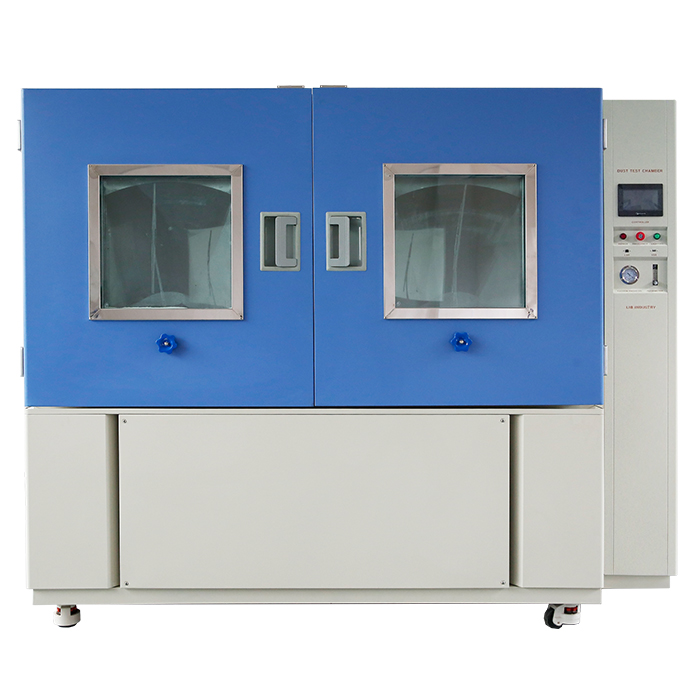
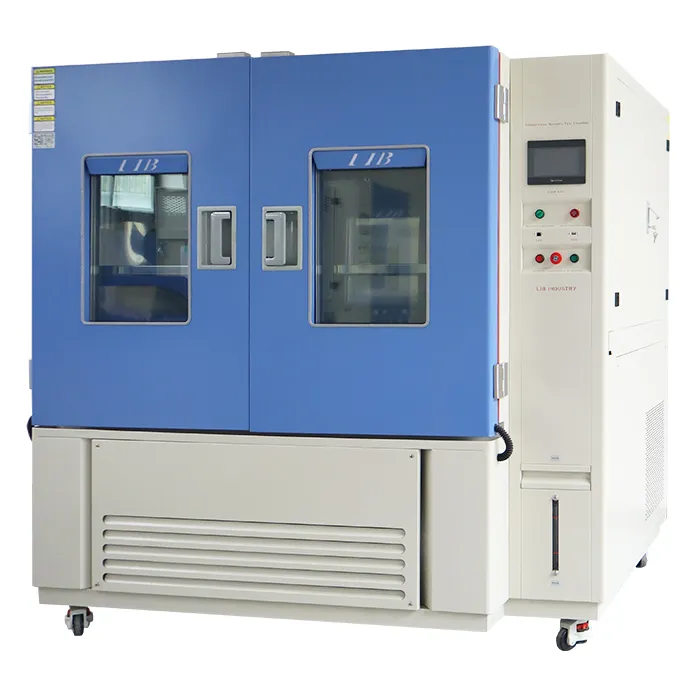
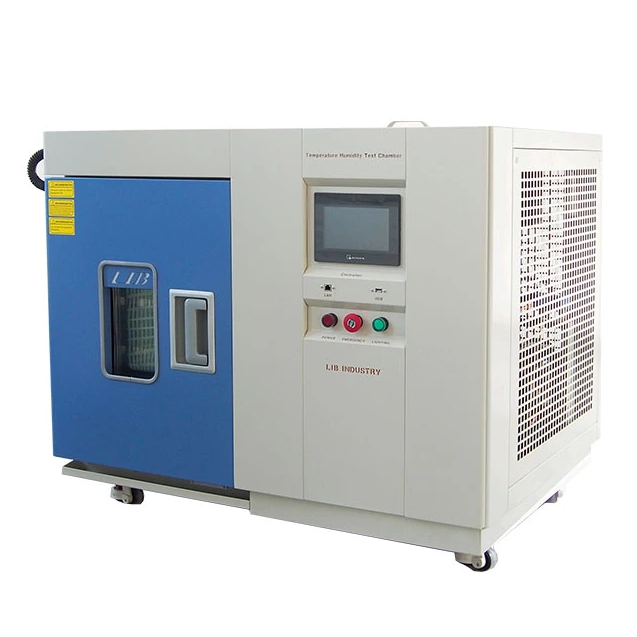
By simulating complex atmospheric environments, these chambers allow engineers to detect early corrosion that standard tests might miss, preventing failures before they occur. LIB industry offers a complete portfolio of corrosion testing solutions, including Mixed Gas Test Chambers for advanced Corrosive Gas Testing and salt spray test chambers for marine or coating-focused applications.
One common misconception among engineers and QA teams is that salt spray testing can fully represent corrosion risks. It’s important to clarify the difference:
Salt Spray Test (Salt Fog Test):
Primarily simulates marine environments, focusing on chloride ion corrosion.
An “extreme acceleration” test that exposes samples to highly concentrated saline mist.
Useful for coatings and metal finishes in coastal conditions, but limited for indoor electronics or industrial atmospheres.
LIB industry offers salt spray test chambers that comply with ASTM B117 and ISO 9227, providing reliable, standardized testing for coatings, metals, and components exposed to marine environments.
|
| ||||
Corrosive Gas Testing:
Simulates chemical corrosion caused by atmospheric pollutants such as SO2, NO2, H2S, and Cl2.
Replicates real-world environments like urban smog, industrial emissions, or automotive exhaust exposure.
Conducted in a Mixed Gas Test Chamber, it provides far more accurate and predictive results for electronic components, connectors, and sensors.
If your product isn’t intended for marine environments, relying solely on salt spray tests can give a false sense of security. Accurate Corrosive Gas Testing is the key to preventing subtle but critical failures. This is also the reason engineers increasingly turn to Mixed Gas Test Chambers from LIB industry for real-world reliability testing.
Not all corrosive gases are created equal. Single gas test chambers can measure the effect of one pollutant at a time, but they fail to capture the complex chemical interactions that occur in real atmospheres.
Feature | Single Gas Test Chamber | Mixed Gas Test Chamber (FMG Test Chamber) |
Realism | Low – pure pollutants rarely exist alone | High – multiple pollutants co-exist as in actual atmospheres |
Chemical Synergy | Cannot simulate interactions | Accurately simulates reactions between SO2, NO2, Cl2, H2S |
Test Accuracy | Prone to false negatives/positives | High precision – can detect subtle resistance changes in contacts |
Standard Compliance | Limited to basic standards | Fully compliant with IEC 60068, ASTM B827, ISO 21207 |
The Mixed Flowing Gas Test creates corrosion products that single-gas setups cannot, making it particularly critical for assessing the durability of precious metal coatings such as gold and silver. Engineers can reliably predict micro-scale corrosion that could compromise electrical performance.
|
|
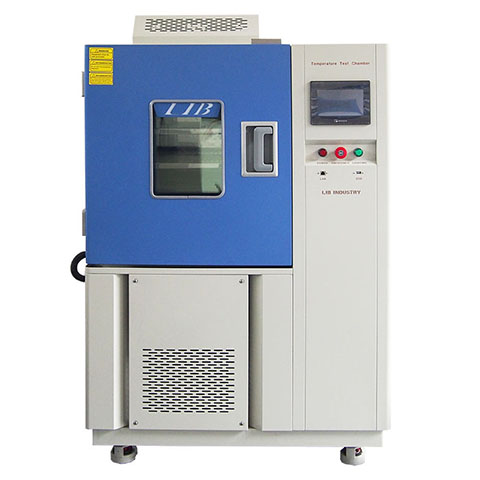
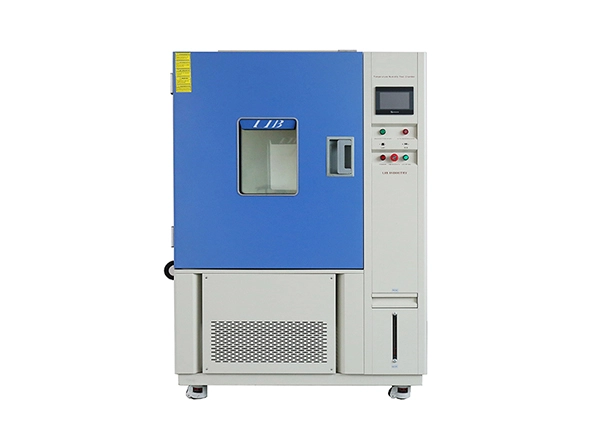
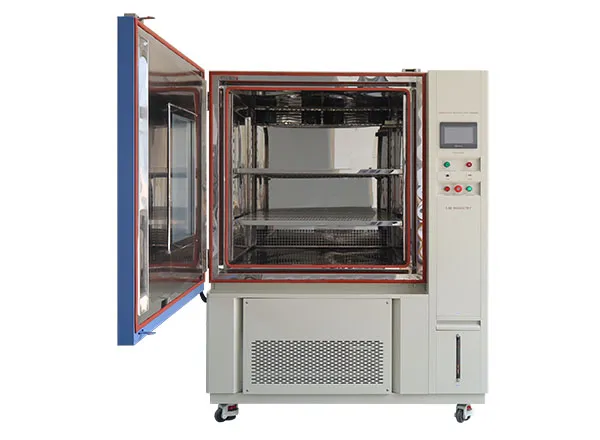
LIB industry MFG Test Chambers are engineered to replicate these multi-pollutant environments with precision, providing results that support both product development and certification needs.
Model | GCM-100 | GCM-225 | GCM-500 |
Interior Volume (L) | 100 | 225 | 500 |
Temperature Range | 15 ℃ ~ 80 ℃ | ||
Temperature Fluctuation/Deviation | ± 0.5 ℃/± 2.0 ℃ | ||
Humidity Range | 30% ~ 98% RH with ±2.5% RH deviation | ||
SO2 Concentration | 100 ~500 ppb± 20 ppb (Adjustable) | ||
H2S Concentration | 10 ~100 ppb ± 20 ppb (Adjustable)
| ||
NO2 Concentration | 200 ppb ± 20 ppb (Adjustable)
| ||
Cl2 concentration | 10 ~20 ppb ±5 ppb (Adjustable) | ||
Air Change Rate | 3~10times /h | ||
Controller | Programmable color LCD touch screen controller Ethernet connection, PC Link | ||
Gas Sensor | H2S/NO2/CL2/SO2 gas sensor | ||
Air Circulation | Centrifugal wind fan | ||
Door Lock | Electromagnetic lock | ||
Gas Exhaust Device | Exhaust Unit | ||
Interior material | SUS316 stainless steel +Glass fiber reinforced plastics | ||
A high-performance Noxious Gas Test Chamber must replicate the complexity of real atmospheric pollution—not just expose samples to one gas at a time.
LIB industry Mixed Gas Test Chambers support single or simultaneous delivery of multiple corrosive gases, including:
SO2, H2S, NO2, NH3, HCl, CO2, and Cl2
This enables accurate simulation of:
Industrial acid-gas environments
Urban pollution exposure
Automotive exhaust atmospheres
Electronics used in chemical plants or refineries
Why this matters:
Real corrosion rarely results from a single pollutant. The interaction between sulfur compounds, nitrogen oxides, chlorides, and humidity creates aggressive chemical byproducts that cannot be reproduced in single-gas chambers.
With true multi-gas capability, LIB industry FMG Test Chambers generate realistic corrosion mechanisms that directly impact:
Contact resistance
Precious metal plating integrity
PCB reliability
Connector lifespan
This is the foundation of accurate Corrosive Gas Testing.
Precision determines credibility. A professional Noxious Gas Test Chamber must deliver stable, measurable, and repeatable conditions.
LIB industry integrates:
PT-100 Class A temperature sensors
Advanced PID control algorithms
Closed-loop gas concentration monitoring
This ensures:
Temperature accuracy: ±0.5°C
Humidity accuracy: ±1–2% RH
Gas concentration accuracy: ±0.1% FS
Why this matters:
Even minor fluctuations in temperature or humidity dramatically change corrosion rates. Tight environmental control ensures:
Reliable comparison between test batches
Compliance with IEC 60068-2-60 and ASTM B827
Defensible, audit-ready data for certification
Gas stratification is a hidden risk in inferior chambers. Uneven exposure leads to inconsistent corrosion, invalidating test results.
LIB industry FMG Test Chambers feature:
3–5 air changes per hour
High-efficiency centrifugal fans
Optimized airflow baffles
Carefully engineered internal circulation paths
These systems eliminate dead zones and ensure uniform gas distribution across all test specimens.
Handling SO2, H2S, Cl2, and other corrosive gases requires uncompromising safety standards.
LIB industry Mixed Gas Test Chambers integrate:
Automatic NaOH tail-gas scrubber systems
Double-seal silicone gaskets
Electromagnetic door locking mechanisms
Real-time gas leakage detection
Emergency shutdown protocols
Exhaust gases are neutralized before release, protecting both laboratory personnel and the environment.
Why this matters:
Meets environmental compliance requirements
Reduces risk in high-value R&D labs
Enables continuous operation without external gas treatment systems
A high-end Noxious Gas Test Chamber must protect people as much as it tests products.
Mixed gas environments are inherently aggressive—not only toward test samples but also toward the chamber itself.
LIB industry designs its Mixed Gas Test Chambers with:
316 stainless steel interior workspace (acid-resistant)
A3 structural steel exterior with protective coating
Corrosion-resistant fittings and gas pipelines
Long-life sealing materials
Durability ensures consistent testing capability year after year—essential for automotive, aerospace, and electronics manufacturers.
Modern product validation requires traceability and data integrity.
LIB industry Mixed Gas Test Chambers include:
Advanced touchscreen controller
Up to 120 programmable test profiles,100 segments per program
USB and LAN data export
Remote monitoring capability
Automatic alarms for abnormal conditions
For certification, compliance, and global quality systems, traceability is non-negotiable. LIB industry ensures every MFG Test Chamber supports complete documentation and reporting.

Beyond standard Mixed Gas Test Chambers, LIB industry offers fully customized solutions tailored to your specific testing needs. From chamber size and gas composition to temperature, humidity, and airflow control, our engineering team can design equipment that fits unique applications, including large-scale or walk-in corrosive gas environments.
A high-quality Mixed Gas Test Chamber complies with international standards for accelerated corrosion testing, demonstrating professional credibility:
IEC 60068-2-60: Environmental testing of electrical and electronic equipment using mixed flowing gases.
ASTM B827: Standard practice for evaluating corrosion on materials in mixed gas atmospheres.
ISO 21207: Artificial atmosphere testing to accelerate corrosion in industrial environments.
By adhering to these standards, engineers can confidently rely on LIB industry MFG Test Chambers for certification, product development, and quality assurance.
All LIB environmental test chambers come with a 3-year warranty and ongoing maintenance support. Our 24/7 English-language customer service and global network across Asia, Europe, and North America ensure fast, reliable assistance. For inquiries, leave a message and our team will provide personalized guidance and prompt solutions.
For manufacturers seeking precision, safety, and predictive insight, LIB industry’s Mixed Gas Test Chambers and salt spray chambers are strategic assets—ensuring your products perform reliably under any environmental condition.
 English
 русский
 français
 العربية
 Deutsch
 Español
 한국어
한국어 italiano
 tiếng việt
 ไทย
ไทย Indonesia