.webp) A finished medical device rarely stays in a controlled room. It leaves the factory, sits in an unheated cargo hold, waits in a cold warehouse, and is finally switched on in a clinic that may be far colder or warmer than the lab where it was designed. Any one of those steps can harden a seal, dim a display, drain a battery, or shift a sensor reading — and the failure may not even show up until the device warms back up and condensation forms inside the housing.
A finished medical device rarely stays in a controlled room. It leaves the factory, sits in an unheated cargo hold, waits in a cold warehouse, and is finally switched on in a clinic that may be far colder or warmer than the lab where it was designed. Any one of those steps can harden a seal, dim a display, drain a battery, or shift a sensor reading — and the failure may not even show up until the device warms back up and condensation forms inside the housing.
This article explains why low-temperature reliability testing matters for medical instruments, walks through the relevant test standards, compares test chamber types, and shows how an industrial freezing test chamber from LIB Industry Environmental Simulation helps engineering and quality teams turn cold-weather risk into documented, repeatable evidence.
Low temperature attacks materials and electronics at the same time. Plastics become brittle, adhesives lose peel strength, lubricants thicken, and cables stiffen. On the electronics side, battery voltage drops, oscillator timing drifts, and solder joints contract at a different rate than the circuit board they're mounted on.
The danger doesn't end when the cold exposure does. A device stored at -30°C can fail only after it returns to a warm room, because moisture condenses on a cold circuit board the moment it meets warm, humid air. That's why a proper medical device reliability testing plan checks three separate windows: performance during exposure, performance immediately after recovery, and performance across repeated cycles — not just a single cold soak.
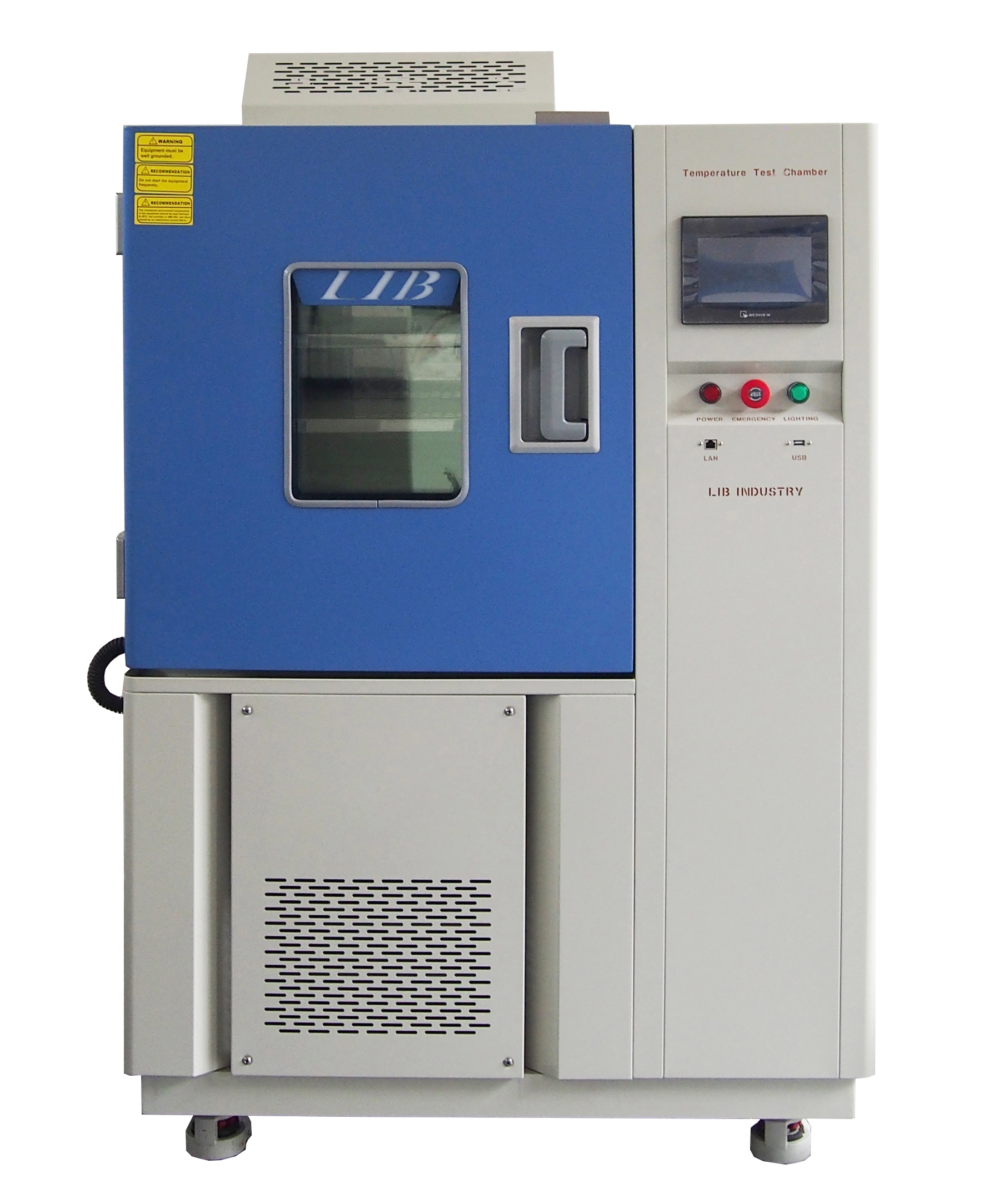
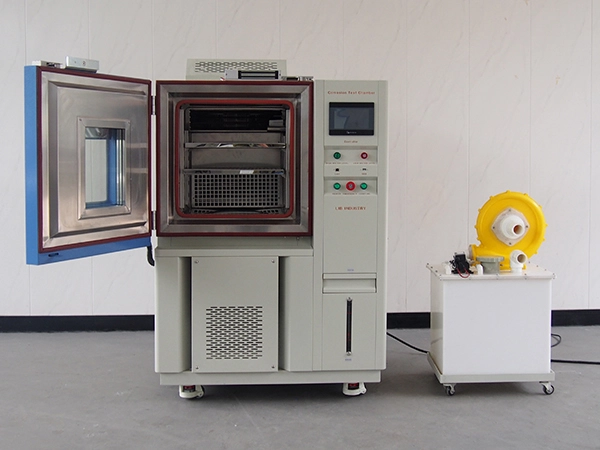
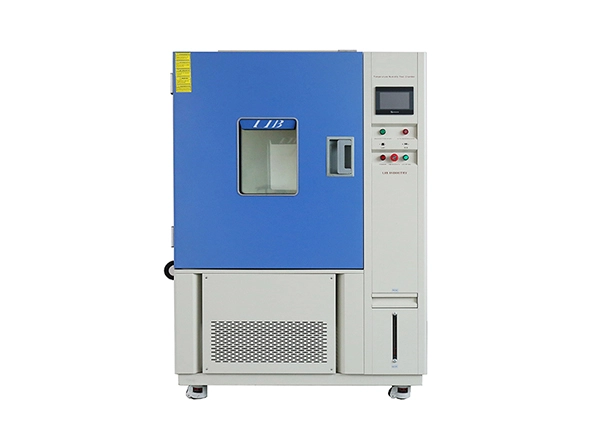
An industrial freezing test chamber reproduces these real-world cold conditions inside a controlled, calibrated, and repeatable environment. It can hold a finished device, a subassembly, a component, or a fully packaged shipment at a precise setpoint — powered or unpowered — while engineers record boot time, leakage, sensor drift, and measurement error before, during, and after exposure. In short: it replaces guesswork about "how cold is too cold" with data the design and quality teams can act on.
Diagnostic equipment. Analyzers, imaging subsystems, and lab instruments combine sensors, optics, pumps, and precision mechanics. Cold testing can expose delayed start-up, calibration drift, cracked housings, or sluggish valves — for example, a blood analyzer's boot time and measurement error can be logged before exposure, at setpoint, and after recovery.
Portable and home-care devices. Handheld readers, portable monitors, and emergency equipment see wider temperature swings than fixed hospital systems. Testing should use realistic battery charge levels, since a fully charged battery can mask cold-start weakness, and should check buttons, touchscreens, connectors, and wireless links while the unit is still cold.
Components and subassemblies. Circuit boards, connectors, seals, cables, and bonded joints can be isolated and tested individually, with resistance, current draw, signal noise, and insulation monitored through a test chamber cable port — helpful for tracing a system-level failure back to a specific part.
Standard / Regulation | What It Covers |
IEC 60068-2-1:2025, Test A: Cold | Preferred severities of +5, -5, -10, -20, -25, -33, -40, -50, -55, and -65°C, with preferred durations of 2, 16, 72, and 96 hours. Test chamber air should hold within ±2 K of the target during steady state (wider tolerances apply at the coldest severities). |
IEC 60068-2-14, Change of Temperature | Used when the transition between temperatures — not just the cold soak — is the failure mode of interest. The device specification must define low/high temperatures, ramp time, dwell time, and cycle count. |
ISO 13485:2016 | A quality-management standard, not a temperature spec. Clauses 7.3.6–7.3.7 require documented verification and validation plans, methods, and acceptance criteria using representative product. |
ASTM D4332-22 | Governs conditioning of packages before transit simulation, commonly at -18 ±2°C (frozen) or -55 ±3°C (cryogenic), chosen to represent the actual distribution hazard. |
FDA QMSR (21 CFR Part 820) | As of February 2, 2026, incorporates ISO 13485:2016 by reference. The FDA does not mandate one universal freezing profile — manufacturers must justify test conditions, sample selection, and acceptance criteria against intended use and risk. |
Low-temperature exposure test — the specimen cools gradually, holds at setpoint after stabilization, then recovers, with pass/fail limits (start-up time, enclosure integrity, measurement accuracy) written before the run. A device rated for -20°C storage might be qualified at -30°C for 16 hours with a two-hour controlled recovery.
Temperature cycling test — moves the specimen between two extremes (e.g., -30°C to +60°C at 1–3°C/min), holding at each plateau for 20–50 cycles, to expose interface and fatigue failures a single soak would miss. Recovery should happen in a dry or humidity-controlled space to avoid condensation from confusing the result.
Long-term reliability test — runs for 72–96 hours or longer to validate storage claims and slow material degradation, with periodic functional checks along the way.
Feature | Benchtop / Small Test Chamber | Industrial Freezing Test Chamber (LIB Industry) | Walk-In Test Chamber |
Typical workspace | Under 100 L | 100–1,000 L (custom sizes available) | Multiple cubic meters |
Best for | Small components, single-unit spot checks | Finished portable/diagnostic devices, subassemblies, packaged shipments | Full pallets, large equipment, multi-unit batch testing |
Cold-rate control | Often fixed or limited | Programmable ramp/dwell/cycle profiles | Programmable, slower ramp due to volume |
Typical setup cost & footprint | Lowest | Moderate | Highest |
| Powered testing during exposure | Limited cable access on some models | Standard cable port included | Standard, with more routing options |
| 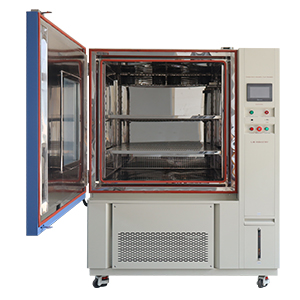 | 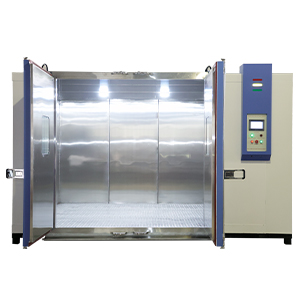 |
For most medical device engineering and QA labs, the mid-size industrial freezing test chamber is the practical middle ground: large enough for finished devices and shipping packages, but still fast enough on ramp rate and precise enough on uniformity to support IEC 60068-2-1 and 60068-2-14 protocols.
Capability | Performance |
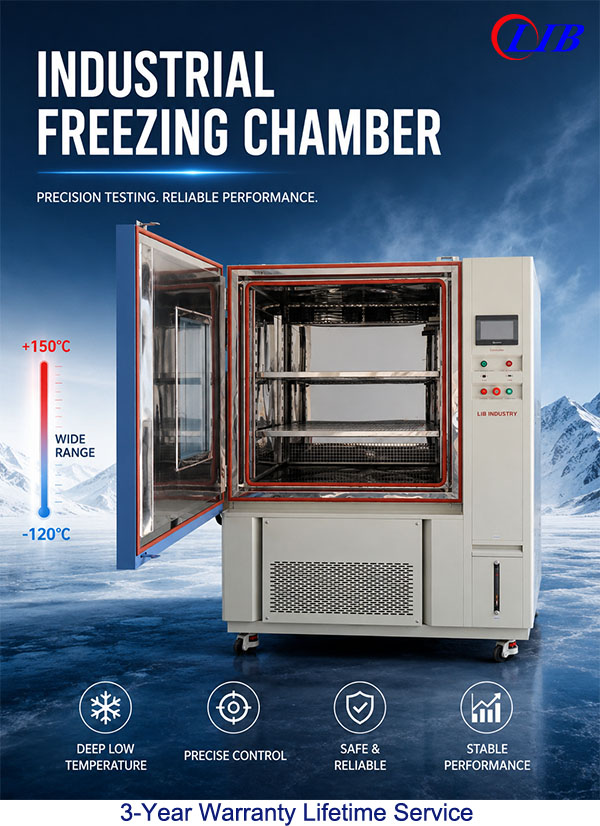
Temperature range | -120°C to +150°C |
Temperature fluctuation | ±0.5°C |
Temperature deviation | ±2.0°C |
Standard cooling / heating rate | 1°C/min cooling; 3°C/min heating |
Faster cooling (custom) | Up to 3°C/min |
Workspace volume | 100–1,000 L, custom sizes available |
Interior construction | SUS304 stainless steel, insulated cabinet, observation window |
Data & control | Programmable touchscreen, temperature-curve logging, USB / RS485 / Ethernet |
| Safety protection | Over-temperature, over-current, refrigerant high-pressure, earth-leakage |
| |
Cascade mechanical refrigeration keeps deep-cold operation stable, multi-blade air circulation reduces hot and cold spots across the workspace, a heated anti-fog window allows visual inspection mid-test, and a 50 mm cable port supports powered testing and external measurement — all of which can be resized or reconfigured around a specific specimen and lab layout.
|
|
|
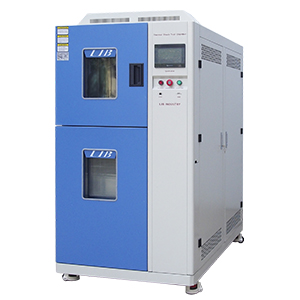
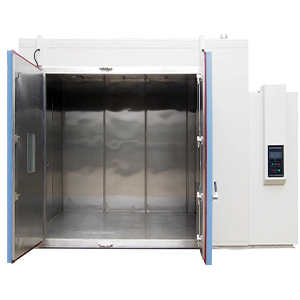
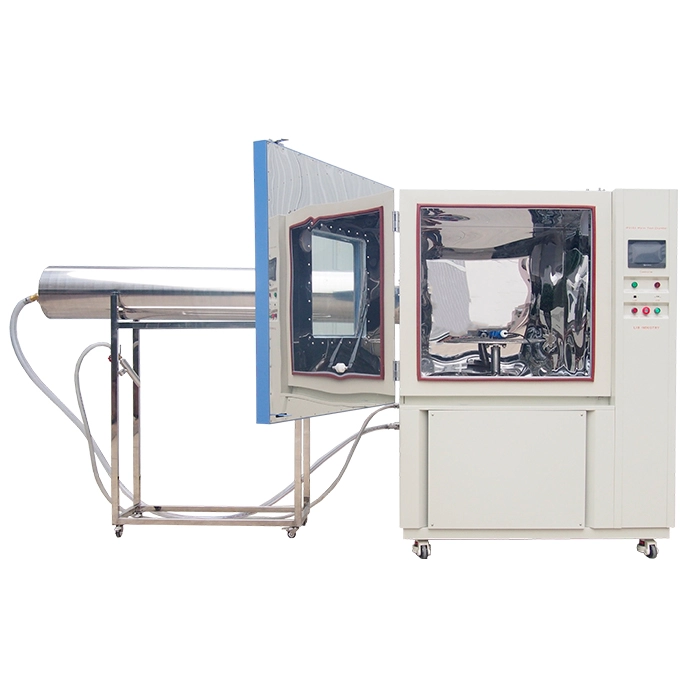
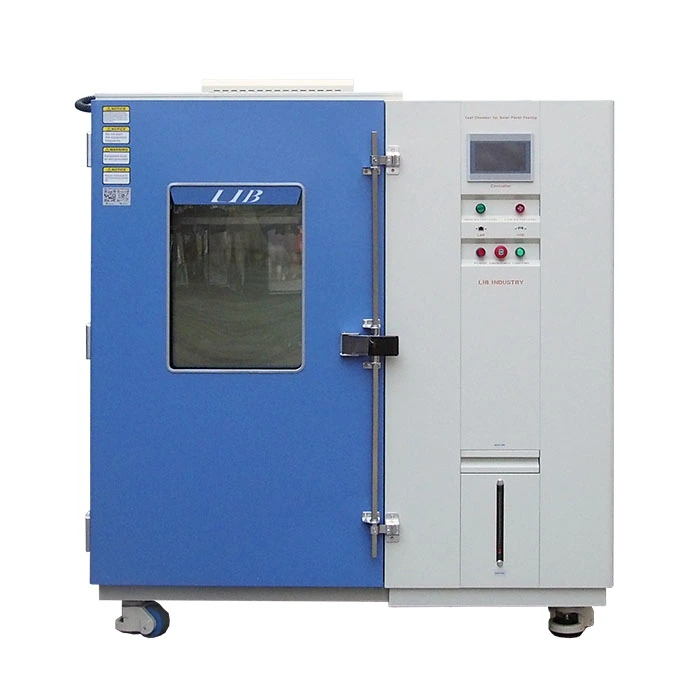
| Temperature & Humidity Test Chamber — combines controlled cold and humidity in one profile, useful when a device specification calls for both damp-heat and condensation testing alongside cold exposure. | Thermal Shock Test Chamber — moves specimens between hot and cold zones in seconds rather than minutes, for products where rapid temperature transition — not just steady cold — is the failure mode of concern. | Walk-In Environmental Test Chamber — a larger-volume option for labs that need to batch-test multiple finished units or full shipping pallets under one profile. |
LIB Industry's environmental simulation test chambers are engineered, built, and commissioned as a complete project rather than a stand-alone box. Every test chamber that leaves the factory completes a 72-hour operating test and full calibration before shipment. After installation, customers receive on-site or remote setup guidance and operator training so lab staff can run IEC/ASTM-aligned profiles correctly from day one, backed by LIB Industry's three-year warranty and ongoing technical follow-up through its after-sales and local service teams. (Site photos, installation records, and training documentation from completed LIB Industry projects are available on request.)
What is an industrial freezing test chamber used for in medical instrument testing?
It exposes devices, components, or packaged shipments to controlled low temperatures to check storage survival, cold start, functional accuracy, material integrity, and post-recovery performance.
Why does temperature uniformity matter for reliability testing?
Uneven temperature across the workspace means specimens at different shelf positions see different stress levels, which makes failures harder to compare. A deviation of ±2°C and fluctuation of ±0.5°C keeps exposure consistent across a fully loaded test chamber.
How cold does a test chamber need to go for medical device testing?
It depends on the device's storage, transport, and use claims plus the applicable standard — IEC 60068-2-1 lists preferred severities from +5°C down to -65°C, so the setpoint should come from the risk analysis and specification, not a single default.
Can a freezing test chamber test a powered device?
Yes — test chambers with a cable port (LIB Industry's standard test chambers include a 50 mm port) allow external power and measurement leads to run into the workspace so devices can be monitored live during exposure.
Can LIB Industry test chambers be customized for a specific test program?
Yes. Workspace size, cooling rate, ports, shelving, fixtures, and data connections can all be configured around the specimen, the test profile, and the lab's documentation requirements.
An industrial freezing test chamber turns cold-weather risk into measurable evidence — but only when the specimen state, temperature, ramp, dwell, recovery, and acceptance criteria are defined before testing starts. Xi'an LIB Industry Environmental Simulation designs, builds, installs, and calibrates test chambers to match a device's risk file and applicable standard.
Every LIB Industry test chamber ships with a 3-year warranty, and customers continue to receive lifetime technical support — maintenance guidance, spare-parts assistance, and after-sales service — for as long as the equipment is in operation.
Contact LIB Industry today to request a test chamber specification sheet, a customized cold-testing proposal, or a quote for your device's temperature range, workspace size, and validation requirements.

 English
 русский
 français
 العربية
 Deutsch
 Español
 한국어
한국어 italiano
 tiếng việt
 ไทย
ไทย Indonesia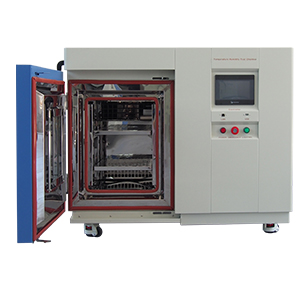

.webp "Aerospace Rapid Temperature Change Chamber")