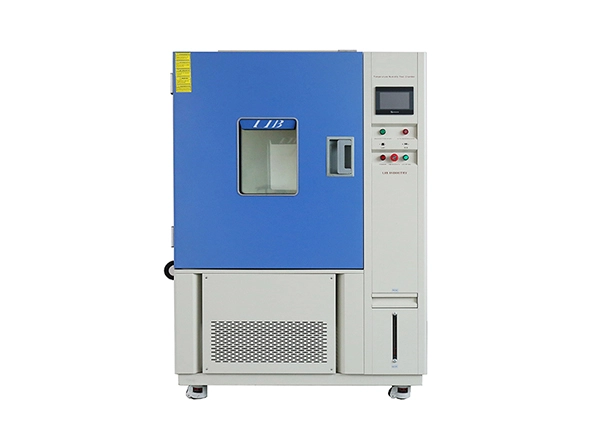
Ingress Protection (IP) testing is a critical process used to evaluate how well electrical and electronic products resist water intrusion. From automotive electronics and outdoor lighting to consumer devices and industrial equipment, waterproof performance must be verified before products enter the market.
During IP rain testing, engineers typically focus on parameters such as spray pressure, nozzle configuration, water flow rate, and test duration. However, one often overlooked factor can significantly influence the reliability and repeatability of the test — the water used in the testing system.
At first glance, water might appear to be a simple test medium. In reality, the type and quality of water used in a rain test system can affect spray stability, nozzle performance, and even long-term equipment reliability.
This leads to a common question in many laboratories:
What water should be used for IP rain testing, and does it really matter for waterproof evaluation?
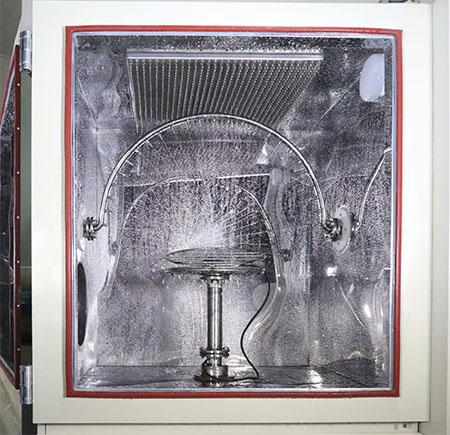
IP waterproof testing defined by standards such as IEC 60529 and ISO 20653 simulates rainfall or water jet exposure under controlled laboratory conditions. These standards specify parameters including water pressure, spray angle, flow rate, nozzle configuration, and test distance.
Although the standards clearly define how water should be delivered during testing, they generally do not strictly specify a particular type of water.
In most laboratories, the following water types are typically used:
Clean tap water
Filtered water
Low-mineral water
Water that contains excessive mineral content, sediment, or other impurities is generally avoided. Contaminants can gradually accumulate within the spray system and affect long-term test stability.
Using clean or filtered water helps maintain consistent spray patterns and prevents blockages in precision spray nozzles. This ensures that each rain test is conducted under stable and repeatable conditions.
For laboratories performing frequent waterproof testing, integrating water filtration and circulation systems into the testing equipment is a common solution for maintaining consistent water quality.
Although rain testing primarily focuses on water exposure conditions, the quality of the water supply can directly influence both equipment performance and test accuracy.
Precision spray nozzles are designed to produce specific spray angles and flow patterns. When minerals or particles accumulate inside the nozzle, the spray pattern may change, reducing the uniformity of water distribution.
Sediment or mineral buildup inside pipelines and pumps can interfere with the water delivery system. This may lead to fluctuations in spray pressure, particularly during high-pressure jet tests such as IPX5 or IPX6.
If some spray outlets become partially blocked, the rain pattern across the testing area may become uneven. As a result, certain sections of the test sample may receive less water exposure than intended.
Hard water deposits may also accumulate within valves, pumps, and pipelines. Over time, this can increase maintenance requirements and shorten the service life of critical components.
Because of these factors, modern rain test equipment often includes water filtration and circulation systems designed to maintain stable spray performance during extended testing cycles.
Accurate IP rain testing requires equipment capable of controlling multiple parameters simultaneously, including spray pressure, water flow rate, spray angle, and distribution uniformity.
LIB industry provides a comprehensive range of waterproof testing systems designed to meet international environmental testing standards. These systems are widely used in industries such as automotive electronics, electrical enclosures, outdoor lighting, consumer electronics, and industrial equipment manufacturing.
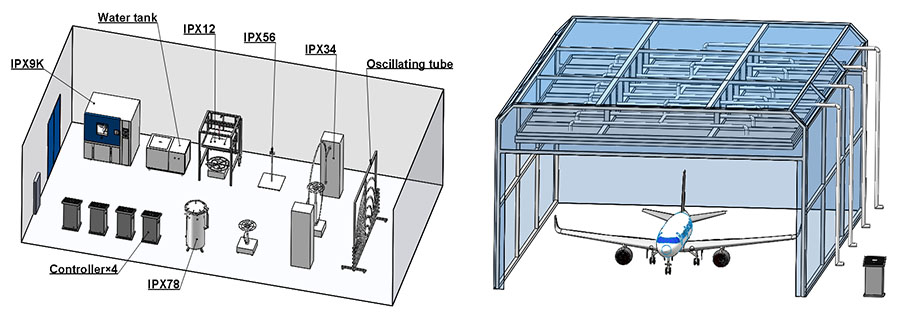
Available testing equipment includes:
IPX1/IPX2: Drip Test Chamber
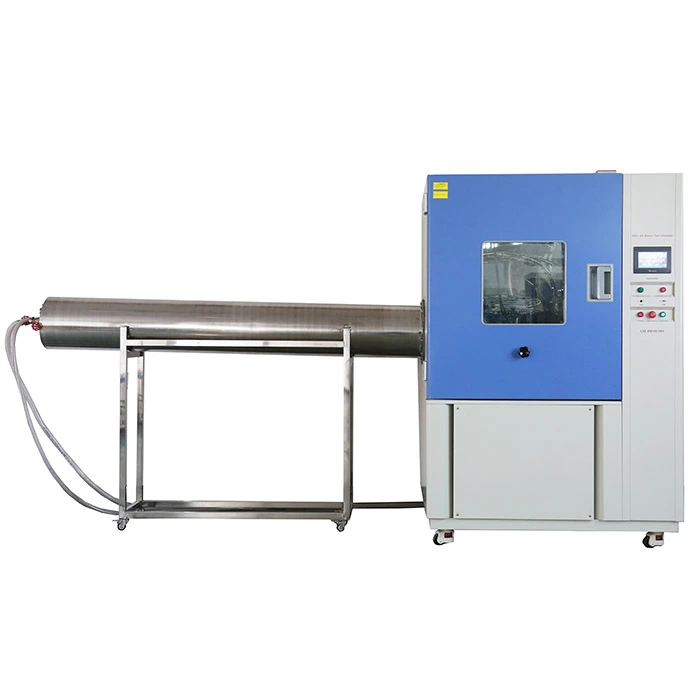
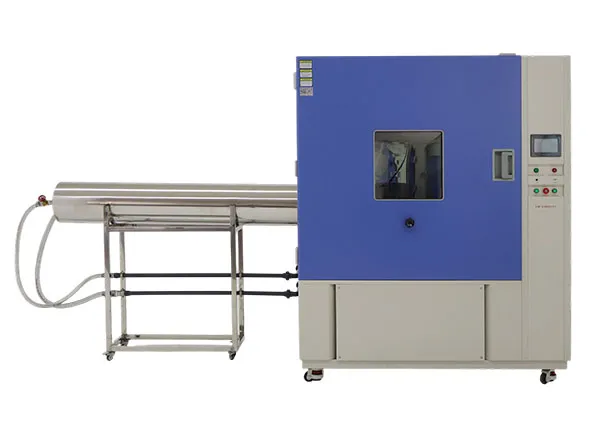
IPX3/IPX4: Oscillating Tube Rain Test Chamber
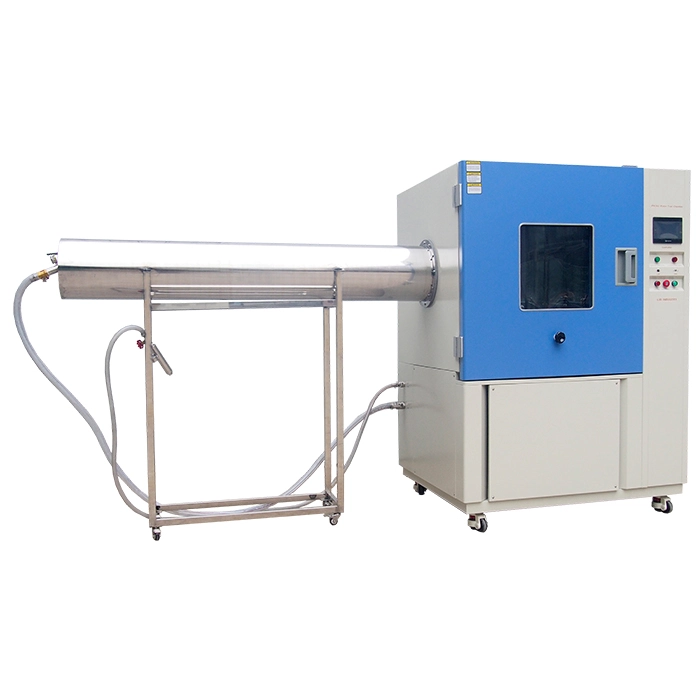
IPX5/IPX6: Water Jet Test Chamber
IPX7/IPX8: Immersion Test Chamber
Custom walk in rain test chamber
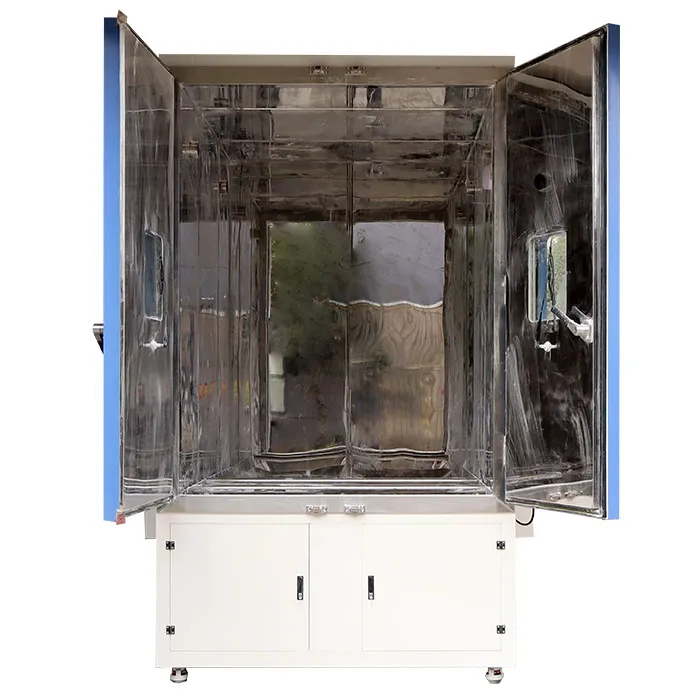
For laboratories that require multiple waterproof tests within a single platform, integrated systems can combine IPX1 through IPX6 testing capabilities in one chamber. This allows engineers to perform different rain and water jet tests without moving the sample between separate machines, improving laboratory efficiency and maintaining consistent test environments.
These systems are designed to simulate real-world exposure conditions ranging from light dripping water to powerful water jets and high-pressure washing environments.
Typical system capabilities include:
programmable rain and jet testing cycles
adjustable water pressure and flow rate
automatic water supply and circulation control
corrosion-resistant internal structures designed for long-term operation
Such configurations enable laboratories to perform reliable waterproof evaluations while accommodating a wide range of product sizes and testing requirements.
High-quality rain test equipment must maintain stable spray conditions throughout the entire testing process. Several design features contribute to improved testing accuracy and repeatability.
|
|
|
|
Workroom | View Window | Internal Power
| Build-in Lighting |
|
|  |  |
| Turnbale | Spray Nozzle | Water Jetting Outlet | Built-in waterproof power supply |
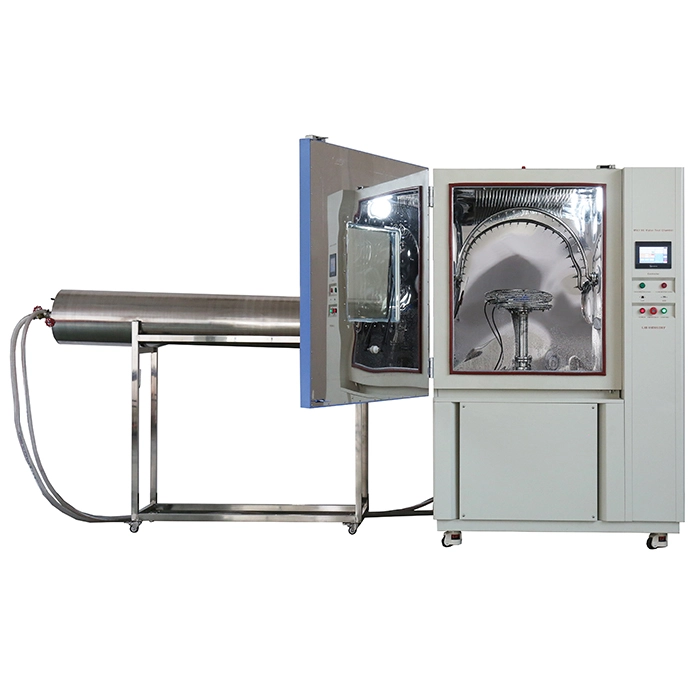
Drip devices used for IPX1 and IPX2 tests are engineered with multiple calibrated outlets that deliver controlled water flow. This configuration accurately simulates vertical dripping conditions required by waterproof test standards.
Many advanced rain testing systems incorporate closed-loop water circulation combined with filtration components. These systems remove particles and impurities from the water supply, helping maintain consistent spray conditions while reducing the risk of nozzle blockage.
Rotating platforms or adjustable turntables allow test samples to be positioned correctly during the test. This flexibility enables laboratories to evaluate products of different sizes while maintaining proper exposure to spray or dripping water.
To withstand long-term exposure to water and humidity, many rain test chambers use corrosion-resistant stainless steel structures such as SUS304. This material improves durability, simplifies cleaning, and supports long-term equipment reliability.
Together, these features help ensure stable spray patterns, accurate water distribution, and repeatable waterproof test conditions.
Even when high-quality testing equipment is used, routine maintenance and calibration remain essential for ensuring long-term performance and reliable testing results.
 |  |
Regular inspection and maintenance help prevent system degradation and extend the operational lifespan of rain test equipment.
Typical weekly inspections include:
inspecting and cleaning spray nozzles
checking the water filtration system
verifying pump and water circulation operation
inspecting pipelines and connectors for potential blockage or leakage
For systems equipped with water circulation systems, filters should be inspected regularly to prevent impurities from accumulating inside the spray system.
Monthly maintenance tasks may include:
verifying spray distribution uniformity
checking water pressure stability
inspecting valves, seals, and pipelines
confirming the proper operation of rotating sample platforms
Maintaining a clean and stable water circulation system is particularly important for preventing mineral buildup and ensuring consistent spray performance.
Calibration ensures that the key test parameters remain consistent with standard requirements.
Common calibration items include:
water flow rate verification
spray pressure gauge calibration
nozzle spray pattern inspection
water distribution uniformity testing
Regular calibration helps laboratories maintain compliance with international standards such as IEC 60529 and ISO 20653.
Most laboratories perform calibration every 6 to 12 months, depending on the testing frequency and laboratory quality procedures.
Yes, clean tap water is commonly used for rain testing. However, many laboratories install filtration systems to remove particles and impurities that could clog spray nozzles or affect spray stability.
Yes. Poor water quality may lead to nozzle blockage, unstable spray pressure, and uneven water distribution, all of which can influence test repeatability and accuracy.
IP waterproof tests are defined by international standards including:
IEC 60529
ISO 20653
These standards define test conditions such as spray pressure, nozzle configuration, flow rate, and exposure duration.
Most laboratories perform calibration every 6–12 months, depending on equipment usage and quality control requirements.
Rain test chambers can simulate several waterproof conditions including:
light dripping water exposure (IPX1, IPX2)
oscillating rain spray (IPX3, IPX4)
powerful water jet testing (IPX5, IPX6)
high-temperature high-pressure spray (IPX9K)
Some modern testing platforms allow laboratories to perform multiple protection level tests within one integrated system, enabling IPX1 through IPX6 testing without changing equipment.
Testing systems developed by LIB industry are designed to support a wide range of waterproof test standards and product sizes.
LIB industry offers a complete range of IP waterproof testing equipment covering IPX1 to IPX9K, providing reliable environmental testing solutions for laboratories and manufacturers worldwide. In addition, LIB industry ensures:
3-year warranty on major components
Lifetime technical support for installation, maintenance, and training
Custom solutions tailored to your products and lab requirements
Global service network to guarantee uninterrupted operation
With a complete range of IP waterproof testing equipment covering IPX1 to IPX9K, LIB industry provides reliable environmental testing solutions for laboratories and manufacturers worldwide.
For more information about waterproof testing systems or customized rain test equipment, contact LIB industry to explore solutions tailored to your product testing requirements.
 English
 русский
 français
 العربية
 Deutsch
 Español
 한국어
한국어 italiano
 tiếng việt
 ไทย
ไทย Indonesia