
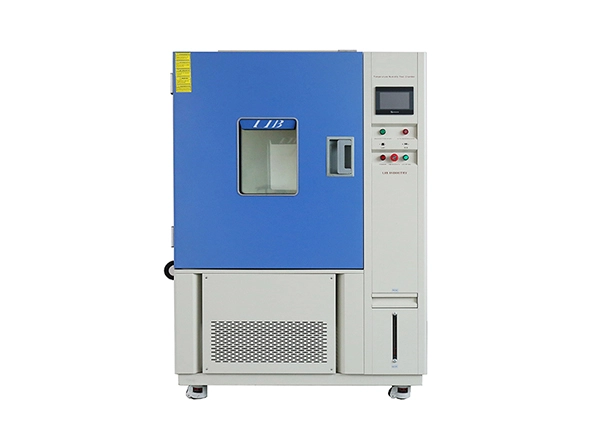
A UV weathering test chamber is an advanced laboratory testing apparatus designed to replicate the destructive effects of natural outdoor exposure within a significantly compressed timeframe. Natural weathering caused by sunlight, thermal shifts, rain, and dew can degrade materials over months or years. A UV weathering chamber condenses these complex environmental stressors into days or weeks of continuous, controlled exposure.
Unlike xenon arc chambers—which simulate the full spectrum of natural sunlight—UV chambers focus specifically on the ultraviolet spectrum (290 nm to 400 nm). Because ultraviolet light triggers the majority of photochemical degradation in organic materials, polymers, and coatings, UV weathering chambers provide a cost-effective, highly reproducible, and efficient solution for durability assessment.
Exposing materials to real-world outdoor environments for lifespan testing is often impractical due to lengthy timelines and unpredictable weather variables. Accelerated UV testing bridges this gap by delivering critical performance insights early in the product development cycle:
Shortened Time-to-Market: Validates material formulations rapidly, accelerating product release schedules.
Cost Reduction: Prevents catastrophic field failures, expensive product recalls, and warranty claims.
Quality Assurance: Ensures batch-to-batch material consistency and compliance with customer durability specifications.
Formulation Optimization: Allows research and development teams to evaluate different additives, UV stabilizers, and protective coatings side by side.
A high-performance UV weathering test chamber integrates specialized engineering subsystems to maintain consistent environmental conditions throughout the testing lifecycle:
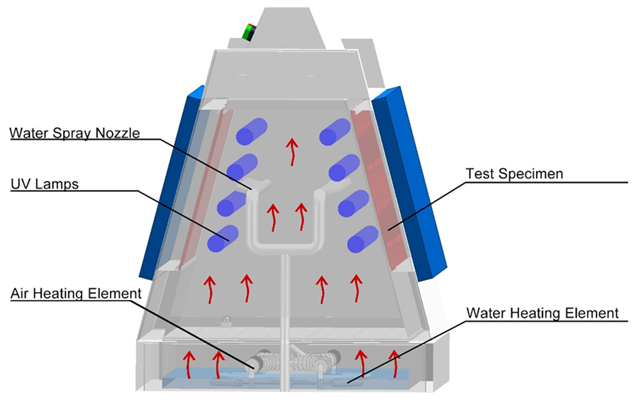
The chamber relies on specialized fluorescent lamps as its primary radiation source. Depending on the test requirements, two main lamp types are typically deployed:
UVA-340 Lamps: Mimic the critical short-wavelength solar UV spectrum (from 365 nm down to the solar cutoff at 295 nm). These are ideal for correlation with natural outdoor exposure.
UVB-313 Lamps: Utilize shorter, more aggressive UV wavelengths to induce maximum acceleration. They are commonly used for quality control, screening resistant materials, or fast-action stress testing.
Test samples are mounted on flat panel holders positioned along the perimeter of the test space. The specimen placement ensures uniform distance and irradiance exposure from the central light array.
Replicates the physical erosion caused by rain and thermal shocks caused by sudden temperature drops. Pure, deionized water is sprayed under regulated pressure directly onto the heated sample surfaces.
Simulates the subtle yet damaging impact of nighttime dew. Water heated in a basin at the bottom of the chamber creates warm steam, causing water vapor to condense on the exposed front surfaces of the cooler test specimens.
High-capacity heating units and circulation fans control internal air temperatures during both light and condensation cycles, ranging from ambient levels up to 80°C.
Modern units feature programmable controllers allowing technicians to configure multi-step exposure routines, set irradiance calibration thresholds, track operational hours, and log real-time data.
| Subsystem | Primary Function | Typical Operating Range |
|---|---|---|
| UV Lamp Array | Photochemical stress generation | UVA-340: 0.68–1.38 W/m², or UVB-313 |
| Water Spray | Rain simulation & thermal shock | Controllable cycle times (e.g., 15 min every 2 hours) |
| Condensation System | Dew simulation | 100% relative humidity, 40°C–60°C |
| Heating System | Accelerates chemical reactions | Up to 80°C during UV cycles |
| Irradiance Control | Auto-adjusts light output | Closed-loop feedback sensor tracking |
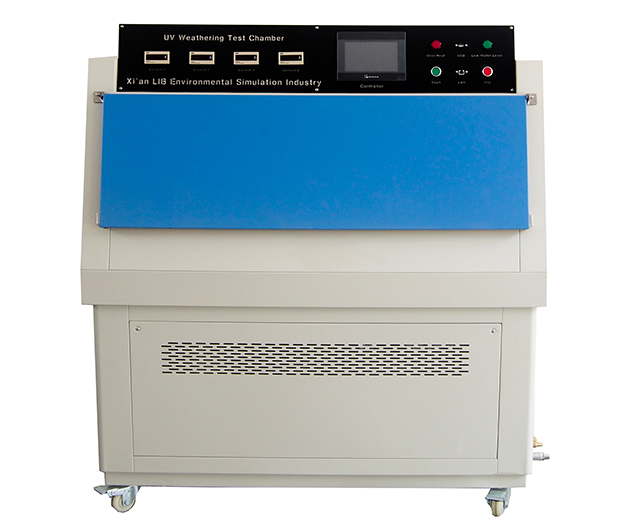 The accelerated aging process inside a UV chamber relies on four primary environmental factors acting in sequence or simultaneously:
Shortwave ultraviolet photons possess sufficient energy to disrupt chemical bonds within polymers, elastomers, and organic pigments. This triggers photo-oxidation, leading to chain scission, cross-linking, discoloration, and mechanical weakening.
Heat acts as a catalyst for photo-oxidation reactions. As a rule of thumb in chemical kinetics, every 10°C rise in temperature roughly doubles the rate of chemical degradation. Alternating between hot UV phases and cooler condensation phases creates cyclic physical expansion and contraction.
Moisture causes severe physical degradation. Condensation penetrates micro-cracks on material surfaces, leaching out stabilizers and plasticizers. When combined with UV exposure, moisture induces chalking, blistering, peeling, and rust formation.
A standard UV exposure test rotates through alternating environmental phases. A representative profile might run as follows:
8 Hours UV Exposure at 60°C → 4 Hours Condensation at 50°C → Repeat
UV weathering test chambers are employed across a wide spectrum of manufacturing and research sectors:
Plastics & Polymers: Evaluating structural integrity, yellowing indices, loss of tensile strength, and surface cracking in outdoor furniture, pipes, and packaging.
Automotive Exterior Components: Testing bumper trim, light lenses, side mirrors, and automotive clear coats against severe environmental degradation.
Paints & Surface Coatings: Assessing gloss retention, color fastness, resistance to chalking, flaking, and blistering on architectural coatings and industrial paints.
Textiles & Fabrics: Testing outdoor gear, awnings, marine vinyl, and synthetic fibers for color fading and fabric fiber degradation.
Building Materials: Verifying the longevity of roofing membranes, vinyl siding, solar panel backsheets, and window frames exposed to continuous weather elements.
 Primary International Test Standards
To maintain repeatability and global regulatory acceptance, testing must adhere to established international standards:
ASTM G154: Standard Practice for Operating Fluorescent Ultraviolet (UV) Lamp Apparatus for Exposure of Non-Metallic Materials. Defines standard operating cycles, lamp choices, and maintenance procedures.
ISO 4892-3: Plastics — Methods of Exposure to Laboratory Light Sources — Part 3: Fluorescent UV Lamps. Specifies exposure protocols tailored for polymer testing worldwide.
GB/T 16422.3: Plastics — Methods of Exposure to Laboratory Light Sources — Part 3: Fluorescent UV Lamps. Chinese national standard aligned closely with ISO protocols.
ASTM D4329: Standard Practice for Fluorescent UV Exposure of Plastics. Focuses specifically on plastic material stress evaluation.
To ensure accurate, repeatable results and maximize equipment lifespan, operators should observe the following guidelines:
Use Deionized (DI) Water: Always supply pure deionized water for water spray systems to prevent mineral deposits from contaminating test samples or clogging spray nozzles.
Routine Irradiance Calibration: Regularly calibrate UV irradiance sensors using specialized radiometers to correct for natural lamp aging and lumen loss.
Stagger Specimen Placement: Fill all available rack slots (using blank panels if necessary) to maintain uniform airflow and temperature distribution throughout the chamber.
Scheduled Lamp Rotation: Rotate and replace fluorescent lamps according to manufacturer recommendations to maintain consistent spectral distribution.
Understanding the working principles, key components, and global standards governing UV weathering test chambers is essential for developing durable, high-quality materials. By simulating years of severe outdoor exposure within controlled laboratory timelines, these chambers enable manufacturers to innovate confidently, lower product risks, and deliver long-lasting products to global markets.
 English
 русский
 français
 العربية
 Deutsch
 Español
 한국어
한국어 italiano
 tiếng việt
 ไทย
ไทย Indonesia
_20251204110329.webp "Xenon Arc Chamber for Automotive Embedded Systems — UV Aging for ECUs, Digital Clusters, and In-Vehicle Displays")