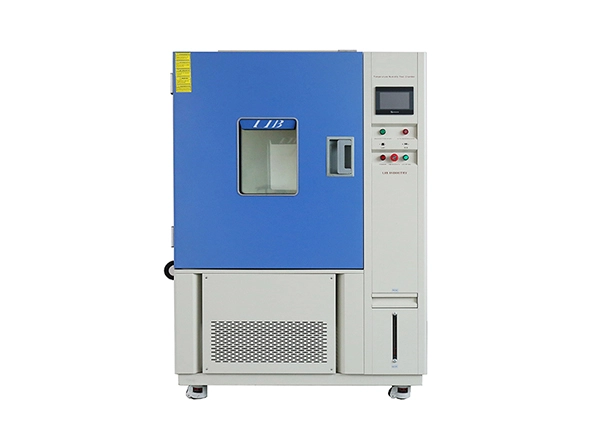
Every lab that runs reliability tests eventually hits the same wall: a full-size environmental chamber is overkill for a circuit board, a connector, or a handful of material samples. Limited lab space, higher operating costs, and small sample sizes all point to the same conclusion — you need a compact solution that doesn't compromise on accuracy.
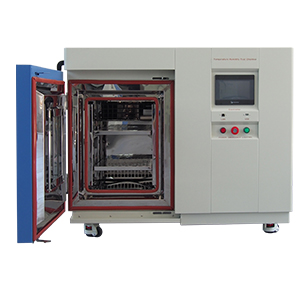
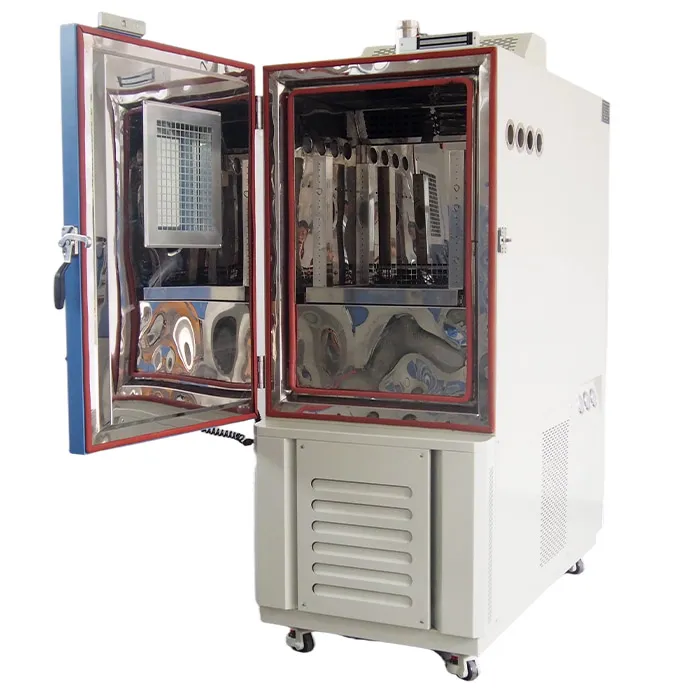
A Benchtop Environmental Chamber solves exactly this problem. It delivers precise, controlled temperature and humidity conditions in a compact footprint, letting engineers and researchers run reliable environmental simulation tests without dedicating an entire room to the equipment.
But not every benchtop chamber is built the same way. Getting it right means matching temperature range, humidity control, chamber volume, and testing accuracy to your actual application — and getting it wrong means wasted budget, unreliable data, or a chamber you outgrow in a year. Below is exactly what to check before you buy — and why a 3-year warranty backed by lifetime service support should be part of that checklist, not an afterthought.
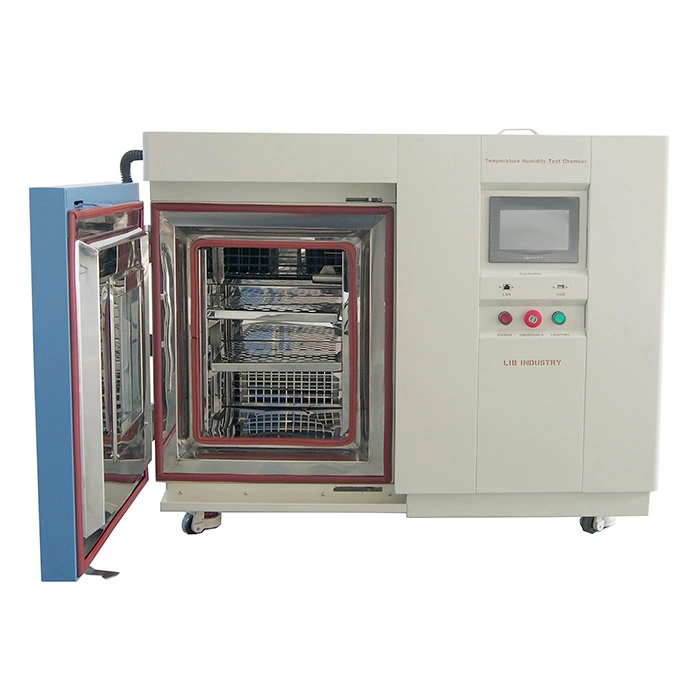 A Benchtop Environmental Chamber is a compact laboratory testing system designed to simulate controlled temperature and humidity conditions for evaluating the performance and reliability of products, components, and materials.
Unlike large walk-in environmental chambers built for complete products or large assemblies, benchtop models are purpose-built for laboratory-scale testing. They give you precise environmental control without eating up your lab's floor space — which is exactly why research labs, universities, and QC departments increasingly choose them over larger systems.
A typical benchtop environmental chamber can control:
• Temperature conditions
• Humidity levels
• Temperature and humidity cycling
• Long-term environmental exposure
During testing, samples sit inside the chamber while the equipment automatically holds programmed environmental conditions. Engineers can simulate real-world conditions such as high temperature, low temperature, moisture exposure, and accelerated aging environments — all without leaving the lab bench.
Common applications include:
• Electronic component reliability testing
• Automotive parts evaluation
• Material aging research
• Product development verification
• Research and laboratory experiments
If your lab mainly tests small components, a benchtop environmental chamber is very likely the smarter investment — offering the testing capability you need with far more installation flexibility and lower cost.
Picking a benchtop environmental chamber isn't just about finding a compact model — it's about matching the equipment to what you're actually testing. Get any one of these five factors wrong, and you risk unreliable results or a chamber that can't grow with your testing needs.
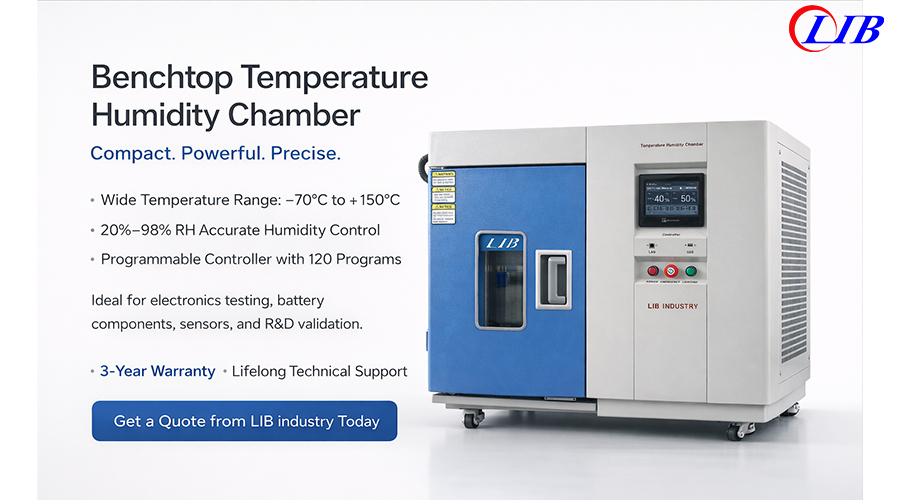
Temperature range is the single most important specification when selecting an environmental chamber — and the easiest one to get wrong by over- or under-buying.
−20℃ to +150℃ — Best for General Lab Testing — covers most routine environmental exposure testing, including electronic components, plastic materials, small mechanical parts, and basic reliability evaluation. If your testing needs are standard, this range will likely meet them without paying for capability you'll never use.
−40℃ to +150℃ — Best for Demanding, Real-World Conditions — the right call for automotive electronics, industrial components, sensors, and communication equipment, letting you evaluate performance under conditions your products will actually face in the field.
−70℃ to +150℃ — Best for Extreme Environment Simulation — for severe cold simulation, suited to aerospace components, advanced material research, and extreme environment simulation.
The rule of thumb: choose the range based on your real testing requirements, not the widest range on the spec sheet. Overbuying here just inflates your cost without improving your data.
Temperature alone isn't enough for many reliability tests. Humidity exposure can significantly affect electronic components, coatings, plastics, and other materials — and skipping humidity control is one of the most common ways labs end up with incomplete data.
• Humidity range
• Humidity stability
• Recovery performance
• Condensation control
For most laboratory applications, a humidity range of 20%–98% RH provides enough flexibility to cover the majority of temperature and humidity testing needs — used for corrosion evaluation, electronic reliability testing, material aging studies, and moisture resistance testing.
The chamber size should match your sample size and testing purpose — this is where labs most often overspend on space they don't need.
Common benchtop environmental chamber volumes include 50L and 80L, ideal for circuit boards, sensors, connectors, small electronic assemblies, and material samples.
• Less laboratory space required
• Faster temperature recovery
• Lower energy consumption
• Easier sample loading and monitoring
That said, if you're testing large products, complete vehicle components, or multiple large samples at once, a walk-in environmental chamber is the better fit. The goal isn't the biggest chamber — it's the right-sized one.
A chamber reaching the target temperature doesn't automatically mean it delivers reliable testing conditions. Real testing accuracy depends on temperature fluctuation, temperature uniformity, control stability, and recovery time after door opening.
This is exactly where LIB Industry benchtop environmental chambers stand out: engineered for precise temperature control, with temperature fluctuation as low as ±0.5℃, so the numbers you get back are numbers you can trust.
Many industries require environmental testing according to international standards, including the IEC 60068 series and ASTM environmental testing methods. Before selecting a chamber, confirm required test standards, sample requirements, testing duration, and environmental conditions — this is what ensures your lab produces consistent, traceable, audit-ready results.
Electronic components face constant temperature swings and humidity exposure during real-world operation. Benchtop chambers are the go-to tool for PCB testing, sensors, connectors, and small electronic devices — catching failure points before a product ships.
Modern vehicles are packed with electronic systems that must perform under changing environmental conditions. Labs rely on benchtop chambers to evaluate automotive sensors, control modules, switches, and electrical components.
Plastics, rubber, coatings, and adhesives can degrade in ways that aren't obvious until exposed to heat and moisture over time. Environmental chambers give researchers a controlled way to study aging behavior, performance changes, and material durability.
For academic and research settings, compact environmental chambers are often the smarter choice — delivering professional-grade testing capability without demanding dedicated facility space or budget.
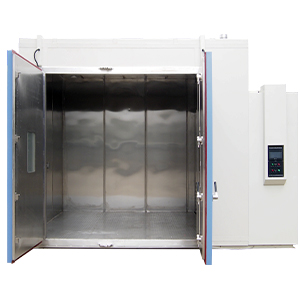
Feature | Benchtop Environmental Chamber | Walk-in Environmental Chamber |
Size | Compact design | Large testing space |
Sample type | Small components and materials | Large products and assemblies |
Installation | Easy laboratory installation | Requires dedicated space |
Energy consumption | Lower | Higher |
| Application | R&D and laboratory testing | Large-scale validation |
|  |
If your work centers on small components and lab-scale R&D, the benchtop option isn't just more convenient — it's usually the more cost-effective decision, freeing up budget you can put toward more testing cycles instead of more square footage.
LIB Industry designs compact environmental simulation equipment specifically for laboratory testing, research, and product reliability evaluation — so you're not choosing between precision and practicality.
The LIB TH Series Benchtop Environmental Chamber delivers accurate temperature and humidity control in a space-saving design, with:
Spec | Value |
Chamber volume | 50L / 80L |
Temperature range options | −20℃, −40℃, or −70℃ up to +150℃ |
Humidity range | 20%–98% RH |
Temperature fluctuation | ±0.5℃ |
 |  |
The compact design makes the TH Series a strong fit for research laboratories, universities, electronics manufacturers, automotive component testing, and material development.
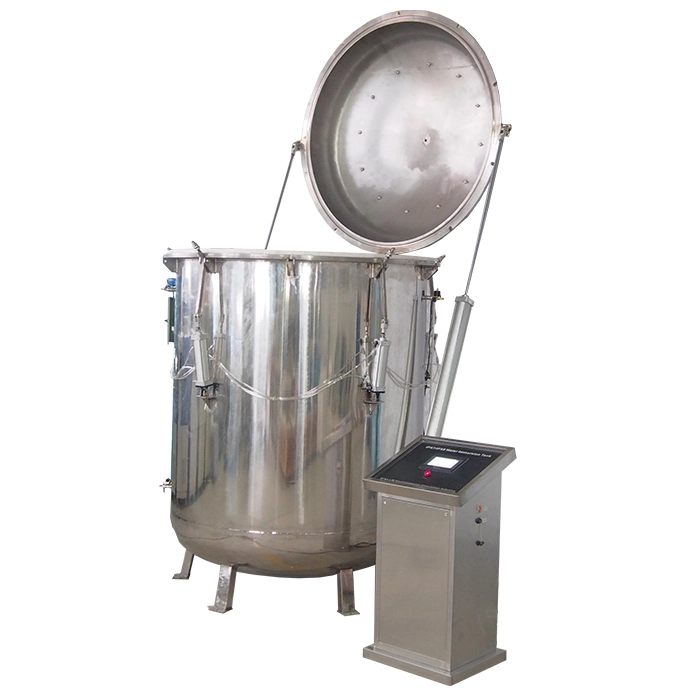
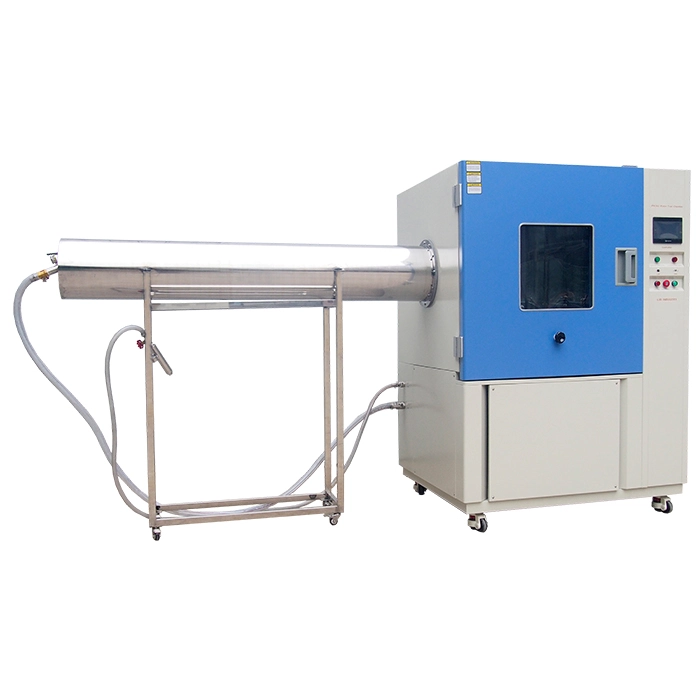
And if your testing needs grow beyond benchtop scale, LIB Industry's full equipment portfolio has you covered: temperature and humidity chambers, thermal shock chambers, salt spray corrosion chambers, xenon and UV weathering chambers, IP waterproof and dustproof test equipment, and walk-in environmental chambers. That means you can start with the right benchtop chamber today, and scale up with the same trusted manufacturer later — no need to requalify a new supplier down the line.
A lot of buyers compare chambers on spec sheets and price, then get blindsided later by repair costs, slow support, or a supplier that stops answering calls once the warranty runs out. That's the part of the decision most comparisons leave out — and it's exactly where LIB Industry is built to be different.
Every LIB Industry environmental test chamber comes with:
Coverage | What It Means | 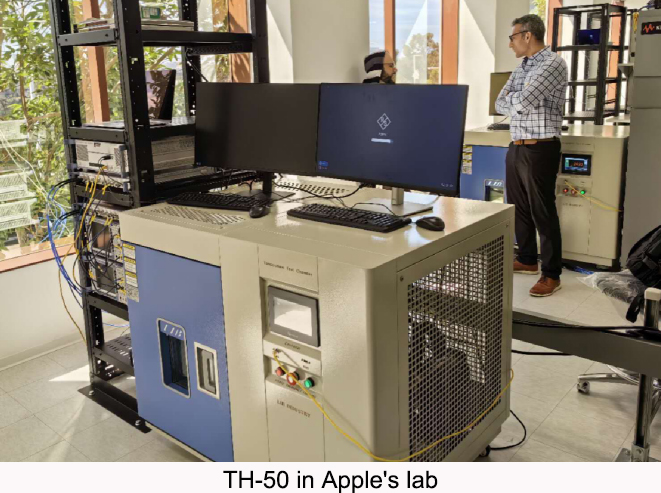 |
3-Year Warranty | Full technical support and maintenance assistance from day one, so equipment issues don't become testing delays. | |
Lifetime Service Support | Ongoing spare parts supply, technical consultation, and maintenance guidance for as long as you own the chamber. |
In practice, this means your lab isn't just buying a piece of equipment — it's securing a testing partner that stays with you well beyond the standard warranty window most manufacturers offer.
Q1: What warranty does LIB Industry provide for benchtop environmental chambers?
LIB Industry provides a three-year warranty for environmental test chambers, with full technical support and maintenance assistance throughout the warranty period. Even after the warranty ends, LIB Industry continues offering lifetime service support, including spare parts supply, technical consultation, and maintenance guidance.
Q2: Does LIB Industry manufacture other environmental testing equipment?
Yes. LIB Industry is a full-line environmental simulation equipment manufacturer, covering temperature and humidity test chambers, corrosion test chambers, accelerated weathering test chambers, waterproof test equipment, dust test chambers, thermal shock chambers, and customized environmental testing systems.
Q3: What industries use benchtop environmental chambers?
Benchtop environmental chambers are widely used across electronics, automotive, materials research, universities, and industrial laboratories — anywhere engineers need to verify reliability, durability, and performance under controlled temperature and humidity conditions.
Getting your benchtop environmental chamber right — temperature range, humidity capability, chamber size, accuracy, and testing standards — isn't just a technical checklist. It's what determines whether your test data holds up, whether your product passes validation the first time, and whether your lab budget goes toward real testing capacity instead of a chamber that doesn't fit your needs.
With precise environmental simulation technology, a complete testing equipment lineup, and — critically — a 3-year warranty plus lifetime service support, LIB Industry gives labs and manufacturers a benchtop environmental chamber they can build their testing program around for years, not just a piece of equipment that's on its own once the warranty period ends.
Ready to find the right chamber for your lab? Get in touch with LIB Industry's team to match your exact testing requirements to the right TH Series configuration — backed by support that doesn't stop after year three.

 English
 русский
 français
 العربية
 Deutsch
 Español
 한국어
한국어 italiano
 tiếng việt
 ไทย
ไทย Indonesia