 Aerospace equipment does not fail randomly—most failures begin with small, often invisible weaknesses. A few drops of water entering a connector, enclosure seam, or sensor interface can lead to corrosion, signal instability, insulation breakdown, or complete system shutdown.
For aerospace and defense systems, rain exposure is not a minor environmental factor—it is a critical reliability risk.
This is why MIL-STD-810H Method 506.6 has become the industry benchmark. It defines how equipment should be tested under rain, blowing rain, spray, and drip conditions—ensuring products can withstand real-world environmental stress before deployment.
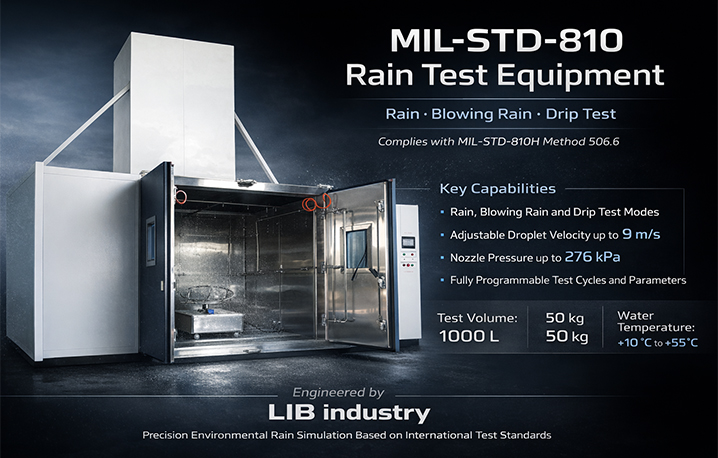
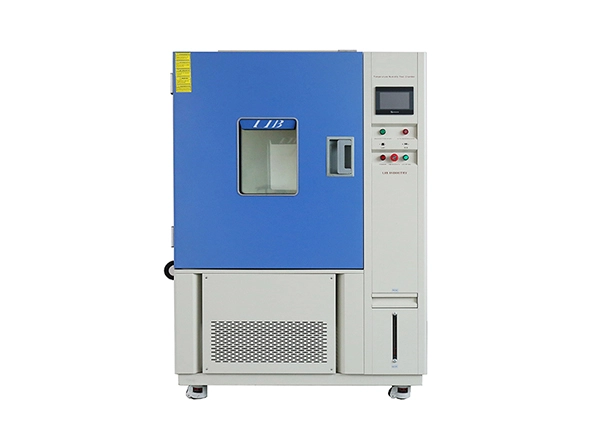
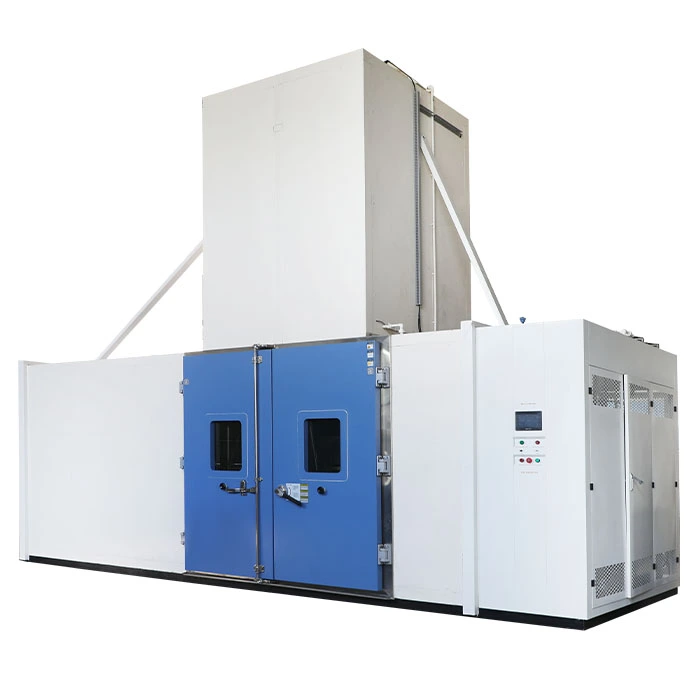
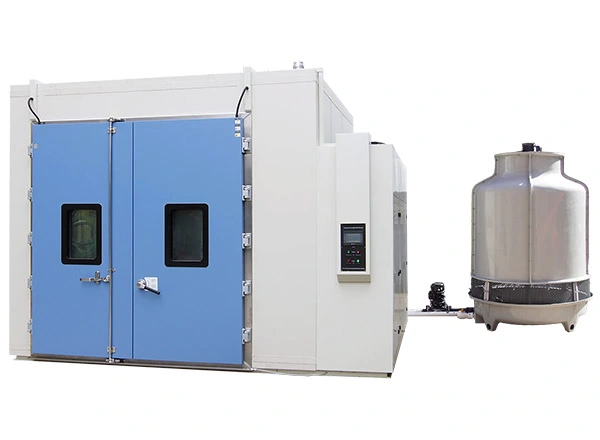
A MIL-STD-810H Rain Test Chamber from LIB industry enables precise, repeatable simulation of these conditions, helping engineers validate sealing integrity, identify leakage paths, and improve product durability.
Standard Ingress Protection (IP) ratings often fall short of aerospace requirements. MIL-STD-810H Method 506.6 is designed to address three specific aerospace pain points:
Pressure Differentials: When a warm electronics bay is hit by cold rain, it creates a vacuum effect, drawing moisture through gaskets that passed static "dry" inspections.
Wind-Driven Ingress: High-velocity wind (up to 18 m/s) forces water into vertical seams and breather membranes that gravity-fed rain would never reach.
Operational Integrity: Unlike commercial products, aerospace components must often remain fully functional during exposure, where signal stability and power insulation are non-negotiable.
A MIL-STD-810H Rain Test Chamber is an environmental simulation system designed to reproduce rain exposure scenarios encountered during:
Outdoor operation
Transportation
Ground handling
Storage
Unlike IP waterproof testing, it simulates multi-factor stress conditions, including:
Rainfall intensity
Wind-driven impact
Spray pressure
Droplet size and velocity
Temperature differentials
Equipment operating state
This makes it essential for high-reliability aerospace and defense testing.
Many buyers confuse IP ratings with MIL-STD-810H compliance.
Aspect | IPX5/X6/X7 | MIL-STD-810H |
Focus | Water ingress protection | Environmental reliability |
Wind Simulation | No | Yes |
Rain Dynamics | Static | Dynamic (wind-driven) |
Multi-Stress | No | Yes |
Operational Testing | Rare | Required |
Passing IP67 does NOT guarantee passing MIL-STD-810H.
MIL-STD-810H introduces:
Wind pressure
Droplet velocity
Thermal effects
Operational state testing
This is why aerospace and defense sectors rely on it as a higher-level validation standard.
To meet the rigorous "tailoring" requirements of Method 506.6, LIB Environmental provides precision-engineered chambers. Below are the core capabilities compared across the three primary procedures:
| Feature | Procedure I: Blowing Rain | Procedure II: Exaggerated | Procedure III: Drip |
| Primary Use | Outdoor/Flight-line exposure | Large items / High-flow check | Protected bays / Condensation |
| Rainfall Rate | ≥1.7mm/min | 20.8L/min(per nozzle) | ≥280L/m²/hr |
| Wind Velocity | 18 m/s(40 mph) | N/A (Droplet velocity 64km/h) | N/A (Gravity fed) |
| Droplet Size | 0.5mm - 4.5 mm | 500μm- 4500μm | Individual drops (not streams) |
| Nozzle Pressure | Standardized Spray | 276 kPa (40 psig) | N/A |
For nose-mounted sensors or wing-tip antennas, the Blowing Rain (Procedure I) test is vital. LIB chambers allow for a 10℃ temperature differential between the water and the test item, effectively simulating the "breathing" effect that occurs during rapid cooling.
Large transit cases and outdoor terminals often utilize Exaggerated Spray (Procedure II). This ensures that even if a full wind-tunnel setup is impractical, the seams and latches are tested against high-volume water impact.
Drip Testing (Procedure III) replicates water falling from overhead cable runs or condensation trays. Our chambers utilize a precision 20 - 25.4mm hole pattern to ensure uniform coverage without the "streaming" effect that can skew results.
| |
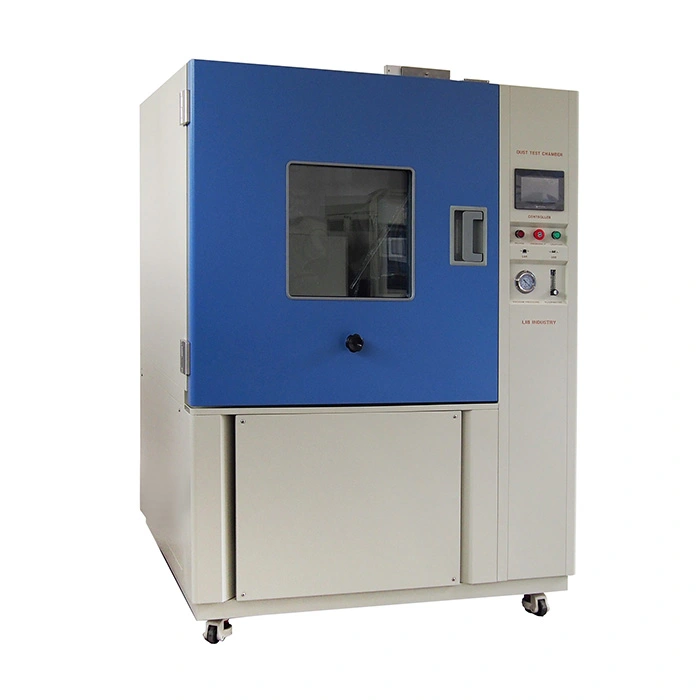
Interior Volume: 1000 L Blowing Dust: Air Velocity: 1.5 – 8.9 m/s Dust Concentration: 10.7 ± 7 g/m³ Dust Particles: <150 μm Blowing Sand: Air Velocity: 18.0 – 29.0 m/s Sand Concentration: 0.18 ± 0.2 g/m³; 1.1 ± 0.3 g/m³; 2.2 ± 0.5 g/m³ Sand Particles: 149 – 600 μm; 600 – 850 μm Controller: Programmable color LCD touch screen controller Door Lock: Electromagnetic lock Testing Platform Diameter: 600 mm Testing Platform Speed: 1 – 7 r.p.m Dust Detector: Integrated dust detector Exterior Material: A3 steel plate with protective coating Interior Material: SUS304 stainless steel Maximum Noise: ≤ 65 dBA | 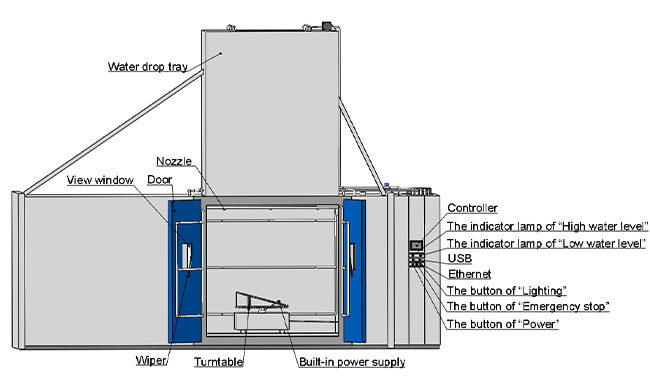 |
To meet aerospace laboratory demands, LIB industry integrates performance with long-term durability:
Stable rainfall distribution
Accurate wind simulation
Controlled droplet dynamics
304 stainless steel interior
Designed based on global project experience across 56+ countries
Optimized for long-term high-frequency testing
Recirculation system reduces water consumption
Filtration minimizes contamination during repeated testing
Programmable test cycles
Real-time monitoring
Data export for compliance reporting
LIB industry systems can support calibration aligned with:
ISO/IEC 17025 laboratory requirements
ILAC-MRA recognized testing frameworks
Ensuring traceable and globally accepted test results.
LIB industry is more than an equipment supplier—it is a partner in environmental reliability testing.
16+ years of experience in environmental simulation
Exported to 56+ countries
Turnkey solutions (design, installation, training)
Strong customization capability
Proven performance in aerospace and defense projects
Rain-related failures can compromise mission-critical systems. Controlled testing is the only reliable way to prevent them.
LIB industry provides:
MIL-STD-810H compliant rain test chambers
Custom engineering solutions
Fast technical consultation
Contact LIB industry today to receive:
A tailored test solution
Technical specifications
A competitive quotation
MIL-STD-810H emphasizes improved test tailoring and environmental realism, ensuring closer alignment with actual field conditions.
Advanced filtration and water management systems prevent particle buildup and ensure consistent test conditions.
Yes. Advanced chambers can integrate temperature and rain simulation for more realistic environmental testing.
LIB uses high-capacity blowers with integrated velocity sensors. Wind speed is verified at the specific coordinates of the Test Item (EUT) before the water spray begins.
Absolutely. Maintaining the 10℃ differential (test item warmer than water) is crucial for simulating vacuum-induced leaks, and our systems include precision heating/cooling modules for this purpose.
LIB industry provides a complete range of environmental test solutions, including IP dust test chambers for IEC 60529 IP5X/IP6X, IP rain and water spray test systems (IPX1–IPX9K), sand and dust test chambers for MIL-STD-810 blowing dust simulation, and temperature and humidity test chambers for climatic reliability testing.
 English
 русский
 français
 العربية
 Deutsch
 Español
 한국어
한국어 italiano
 tiếng việt
 ไทย
ไทย Indonesia