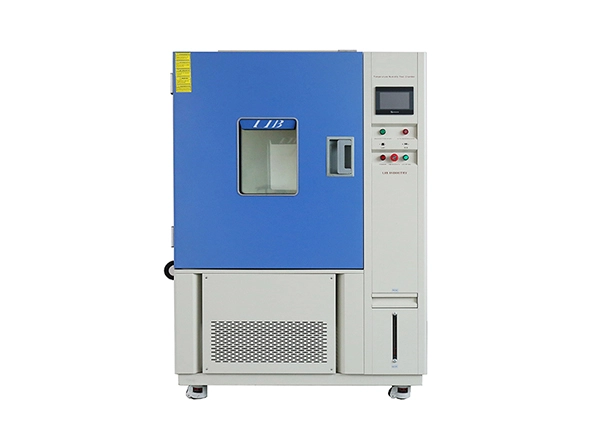
For telecom environmental test chamber selection, manufacturers should normally combine temperature, dust, rain and corrosion testing rather than rely on one environmental test. Temperature chambers evaluate thermal operating limits, while dust and rain equipment focuses on enclosure protection and outdoor exposure. Salt spray equipment is useful when connectors, coatings, fasteners or other metallic parts must withstand corrosive conditions. Depending on the application, test programs may reference IEC 60529, ISO 20653, IEC 60068, MIL-STD-810 and customer-specific requirements. The most important selection factors are sample size, operating heat load, required IP rating, environmental profile, test duration and whether the equipment remains powered during testing.
.webp "SAE_J2334_Cyclic_Corrosion_Chamber_for_Automotive_(1).webp")
Outdoor telecom equipment faces significantly more environmental stress than equipment installed in controlled indoor facilities.
A 5G base station can include radio units, antennas, power supplies, communication modules, cooling systems and protective enclosures. These components may be installed on towers, rooftops and other exposed locations where they experience temperature fluctuations, rain, dust, humidity and airborne contaminants.
A comprehensive 5G equipment testing program may evaluate:
High- and low-temperature operation
Thermal expansion and contraction
Dust penetration
Rain and water-jet ingress
Seal and gasket performance
Connector corrosion
Coating durability
Cooling-system performance
Long-term outdoor reliability
LIB's dedicated Environmental Test Chamber for Electronics specifically covers thermal testing, temperature and humidity testing, thermal shock, salt spray corrosion, and IP dust and water ingress testing for electronic products. The page also identifies IEC 60529 and ISO 20653 among the standards relevant to IP testing.
For example, LIB's published information on IPX6K testing specifically discusses communication base stations installed outdoors and exposed to rain, wind and other severe weather conditions.
The test objective should therefore be defined around the actual installation environment, rather than selecting equipment only according to a nominal IP rating.
The exact environmental profile depends on the equipment, installation location and qualification specification.
Test | Example Standard | Typical Condition | Main Purpose |
Cold testing | IEC 60068-2-1 | Low-temperature exposure | Verify operation at low temperature |
Dry heat | IEC 60068-2-2 | Elevated-temperature exposure | Evaluate thermal durability |
Temperature cycling | IEC 60068-2-14 | Repeated temperature changes | Identify thermal expansion effects |
Dust testing | IEC 60529 / MIL-STD-810 | Controlled dust or sand exposure | Evaluate enclosure sealing |
Rain / water ingress | IEC 60529 | Drip, spray or water-jet exposure | Evaluate waterproof protection |
Automotive/high-pressure water | ISO 20653 | High-pressure water conditions | Evaluate protection under severe water exposure |
Salt spray | ASTM B117 and applicable procedures | Controlled salt fog | Evaluate corrosion resistance |
For outdoor enclosure IP testing, the required IP level should be confirmed before equipment selection. LIB's rain-test portfolio covers IPX1 through IPX9K configurations and lists IEC 60529, ISO 20653 and MIL-STD-810H among applicable standards.
Selection Factor | Rain / IP Chamber | |||
Temperature range | Wide controlled range | Procedure-dependent | Procedure-dependent | Controlled test temperature |
Humidity range | Available on climatic models | Usually secondary | Water-based test | High-humidity salt fog |
Chamber volume | Benchtop to walk-in | Standard to large | Stand-alone to walk-in | Laboratory to large |
Ramp rate | Important | Usually secondary | Usually secondary | Usually secondary |
Airflow | Critical for uniformity | Critical for dust distribution | Important for spray coverage | Important for fog distribution |
Sample heat load | Critical for powered equipment | Usually limited | Usually limited | Usually limited |
Safety configuration | Thermal/refrigeration protection | Dust containment | Water/electrical protection | Corrosion-resistant construction |
Applicable standards | IEC 60068, customer procedures | IEC 60529, MIL-STD-810 | IEC 60529, ISO 20653 | ASTM B117 and related procedures |
This comparison shows why a complete telecom qualification program may require several types of equipment.
For example, temperature testing can evaluate whether a base station remains operational under climatic extremes, while rain and dust testing focus on the effectiveness of its enclosure. Salt spray addresses a different failure mechanism and should not be treated as a substitute for IP testing.
A cabinet may pass an IP test but still fail because of thermal stress, condensation or corrosion. Environmental qualification should therefore consider the complete operating environment.
Powered 5G equipment generates heat. When a base station is tested at elevated temperature, its internal heat generation can influence the actual chamber condition.
The RFQ should specify equipment power consumption and whether the sample will operate during testing.
Dust testing requires controlled particle circulation and exposure. LIB's Dust Test Chamber portfolio includes equipment for IP dust testing and sand-and-dust applications. This makes it possible to select the configuration according to the required standard rather than using one generic dust setup.
Dripping water, rain spray, splashing water and powerful water jets represent different test conditions. The required IP code should be identified before choosing the spray system.
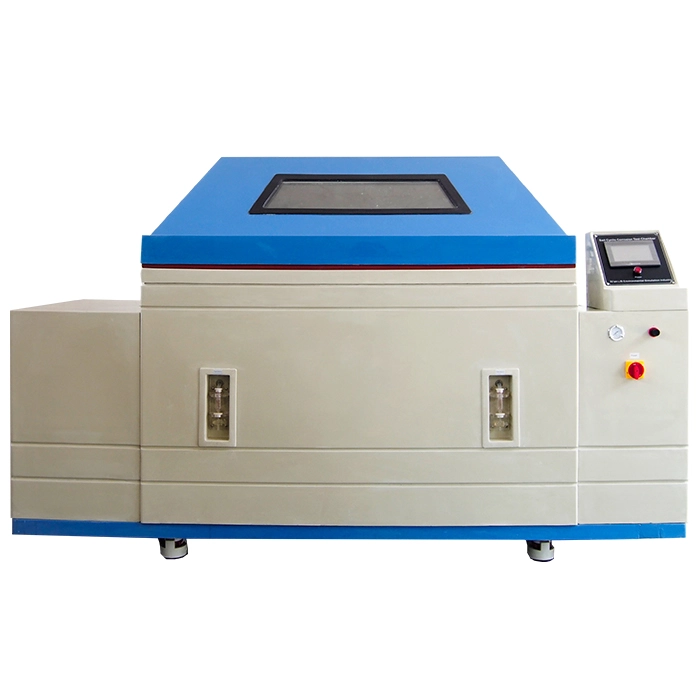
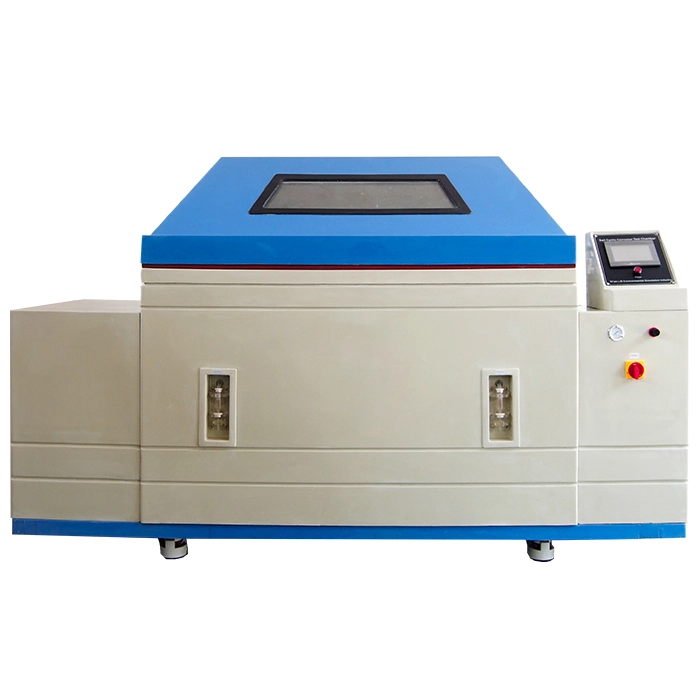
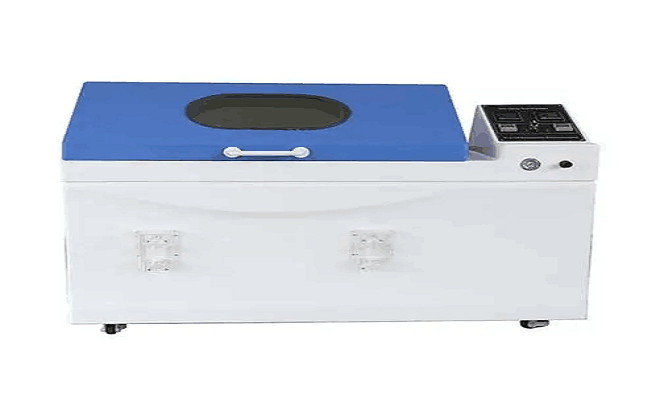
Outdoor telecom installations in coastal or industrial environments can experience corrosive exposure. Salt spray testing can help evaluate coatings, connectors, fasteners and exposed metallic parts.
Large communication cabinets may require substantial working space, fixtures and cable connections. These requirements should be considered before purchasing a standard chamber.
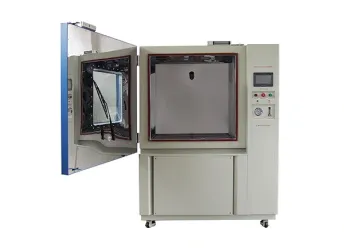
For small communication modules, sensors, connectors and electronic assemblies, a benchtop environmental chamber can be suitable for temperature-related testing and development work.
For individual telecom units or medium-sized outdoor enclosures, a reach-in chamber provides a practical balance between working volume and laboratory footprint.
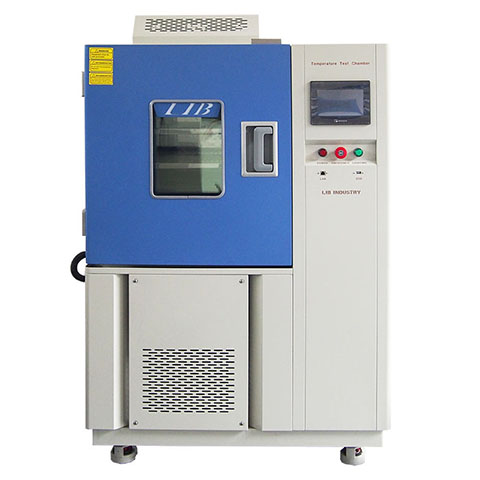
LIB's Reach-In Environmental Chamber is available in 100 L to 1000 L configurations, with temperature options extending to –70°C to +150°C and humidity control from 20% to 98% RH on the listed configurations. The chamber also uses forced air circulation to maintain environmental uniformity.
Complete 5G cabinets, multiple communication units or oversized outdoor equipment may require a walk-in system.
LIB's Walk-In IPX1-IPX9K Rain Test Chamber is designed for large products and can accommodate outdoor telecom cabinets. It supports IPX1, IPX2, IPX3, IPX4, IPX5, IPX6 and IPX9K testing, with customizable internal dimensions.
Thermal shock equipment is useful when the objective is to evaluate rapid temperature transitions rather than long-duration exposure at a fixed temperature. It can reveal stresses affecting seals, materials, solder joints and electronic assemblies.
For telecom equipment intended for coastal or industrial locations, salt spray testing can be used to evaluate corrosion resistance of coatings, fasteners and metallic components. Salt spray should be treated as a complementary corrosion test rather than a replacement for climatic or IP testing.
IP testing is essential when outdoor communication equipment must resist dust or water ingress.
LIB's rain-test portfolio includes equipment for dripping, oscillating spray, water jets and high-pressure water testing. Its systems cover IPX1 through IPX9K depending on configuration.
Custom equipment is appropriate when a base station cannot fit a standard chamber, when it must remain powered during testing, or when unusual dimensions, cable routing or environmental profiles need to be accommodated.
A useful LIB reference is IPX6K Test Machine: Full Coverage of 4 Application Fields. Its communication-equipment section specifically discusses outdoor base stations and explains how IPX6K testing can simulate strong wind and rain conditions for 5G equipment.
It depends on the qualification objective. Temperature chambers are used for thermal evaluation, while dust and rain equipment is selected according to the required enclosure protection level. Salt spray may be added for corrosion evaluation.
A temperature chamber controls the climatic environment around the sample. An IP chamber introduces controlled dust, rain, spray or water jets to evaluate enclosure protection.
There is no universal duration. Test time depends on the applicable standard, exposure level, number of cycles and customer qualification requirements.
Measure the complete equipment dimensions and allow space for fixtures, airflow, instrumentation and cable connections. Large cabinets may require a walk-in chamber.
Some customized systems can integrate multiple functions, but separate temperature, dust, rain and corrosion equipment is often more practical because each test uses different environmental mechanisms.
Provide equipment dimensions, weight, power consumption, operating condition, temperature range, required IP rating, dust or rain standard, corrosion requirements, test duration and cable-access requirements.
 English
 русский
 français
 العربية
 Deutsch
 Español
 한국어
한국어 italiano
 tiếng việt
 ไทย
ไทย Indonesia