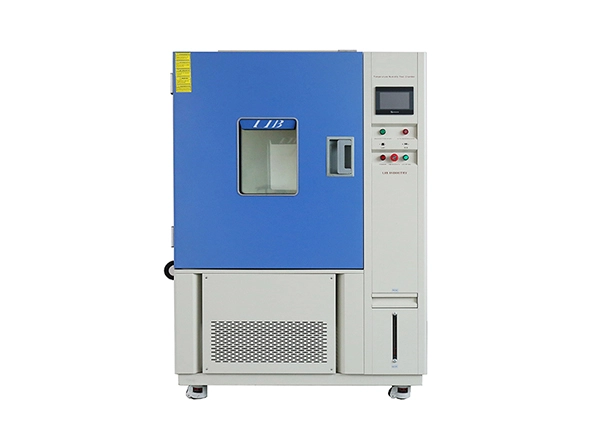
In the scorching summer heat, while we seek refuge in air-conditioned rooms, cars parked outdoors endure a relentless cycle of blistering sun, high temperatures, and sudden downpours. Over time, some vehicles begin to develop "skin diseases" : bumpers fade, intake grilles show micro-cracks, and headlight covers gradually turn yellow and blur.
Automotive exterior parts are not only the face of a vehicle but are also critical to aerodynamic performance and driving safety. Consequently, the automotive supply chain enforces extremely strict requirements on the weatherability and UV resistance of polymer materials. How can engineers predict the aging trajectory of these materials over the next 5 to 10 years before product delivery?
The answer lies in the laboratory’s ISO 4892 Xenon Light Fastness Test Chamber. Acting as a "time accelerator" for materials, it can reproduce years of outdoor weathering in just a few weeks.

In the field of material aging testing, several different light sources exist. However, why do automotive exterior parts specifically prefer xenon testing under the ISO 4892 standard?
Full-spectrum simulation: Unlike fluorescent UV lamps that only simulate short-wave UV light, a xenon arc lamp generates the full solar spectrum, including ultraviolet, visible, and infrared light. Since exterior parts are affected not only by UV degradation but also by thermal effects from infrared radiation, xenon lamps provide the highest realism.
Environmental synergy: Automotive aging is not caused by light alone, but by the combined effects of “light, heat, and water.” The ISO 4892 standard simulates natural cyclic weathering through controlled irradiation, temperature regulation, and water spray and condensation cycles.
Industry consensus: ISO 4892 (especially ISO 4892-2 for plastics) is the foundation of weathering testing in the global automotive industry. OEM standards such as Volkswagen PV 3929, GM GMW 3414, and Toyota TSM0501G are all derived from or based on its principles.
To develop a scientific xenon aging test plan for automotive exterior parts, four key parameters must be precisely controlled inside the chamber:
Exterior parts are exposed to long-term direct sunlight, so a Daylight Filter is required. It removes unnatural short-wave UV radiation, ensuring the output spectrum closely matches natural sunlight at ground level.
Irradiance determines the acceleration rate of aging. According to ISO 4892-2, a typical setting is:
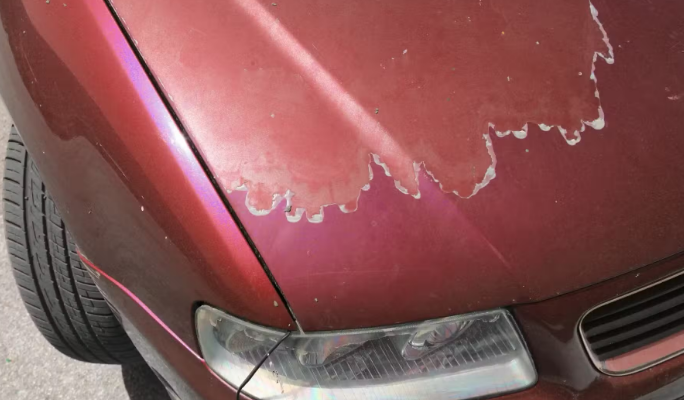
In some high-intensity tests, higher irradiance levels may be used, requiring strict stability throughout the test cycle.
Exterior parts, especially dark-colored ones, can reach extremely high temperatures under sunlight exposure. The chamber must control two temperatures:
Black Standard Temperature (BST / BPT): typically 65 ℃ ±3℃ or higher
Chamber Air Temperature: typically 38℃ ± 3℃
To simulate thermal shock caused by sudden rainfall, the standard typically uses:
102 minutes of dry light exposure + 18 minutes of water spray
[Sample Preparation & Baseline Measurement] ➔ [Chamber Operation & Monitoring] ➔ [Periodic Evaluation] ➔ [Final Data Analysis]
Step 1: Sample preparation and baseline recording
Prepare PP (bumper materials), ASA (grille materials), or PC (headlamp covers). Measure initial color values ($L^, a^, b^*$) and gloss using spectrophotometers and gloss meters.
Step 2: Chamber operation and monitoring
Mount samples in the chamber. Since testing may last 1000–3000 hours, lamp intensity and sensor stability must be monitored regularly.
Step 3: Periodic evaluation
At intervals such as 250h, 500h, and 1000h, samples are checked for micro-cracks or discoloration under standard lighting conditions.
Step 4: Final evaluation and data analysis
After reaching the target exposure, samples are conditioned for 24 hours before final performance testing.
A qualified automotive exterior material must meet the following requirements after ISO 4892 xenon aging:
Color change ( ): typically less than 2.0–3.0 depending on OEM requirements, with no visible discoloration
Gloss retention: typically ≥ 80% after testing
Visual defects: no cracking, blistering, peeling, or delamination under inspection
Mechanical retention: typically ≥ 75%–80% of tensile or impact strength for structural parts
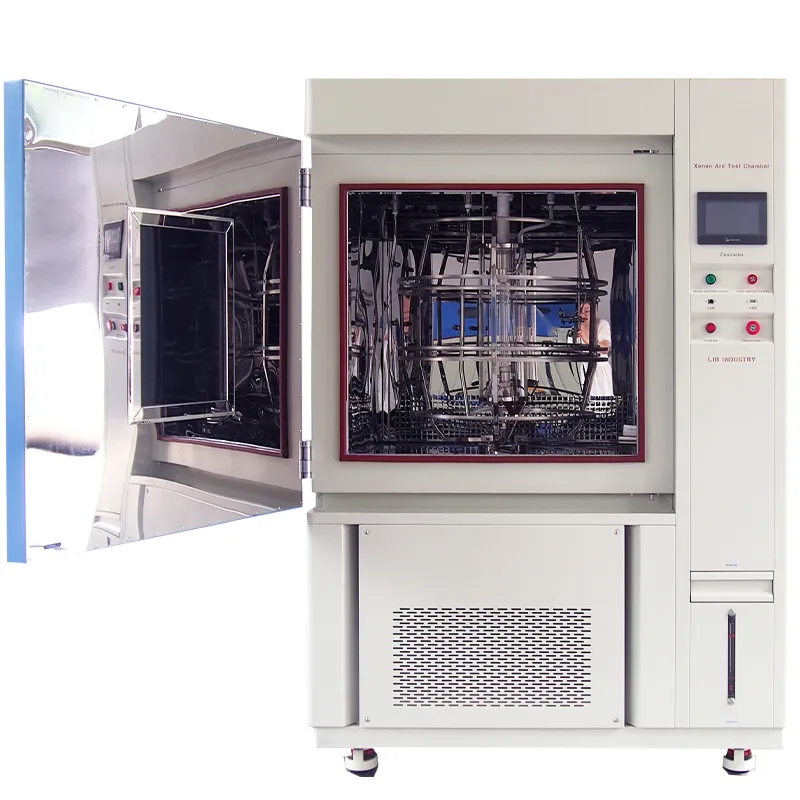
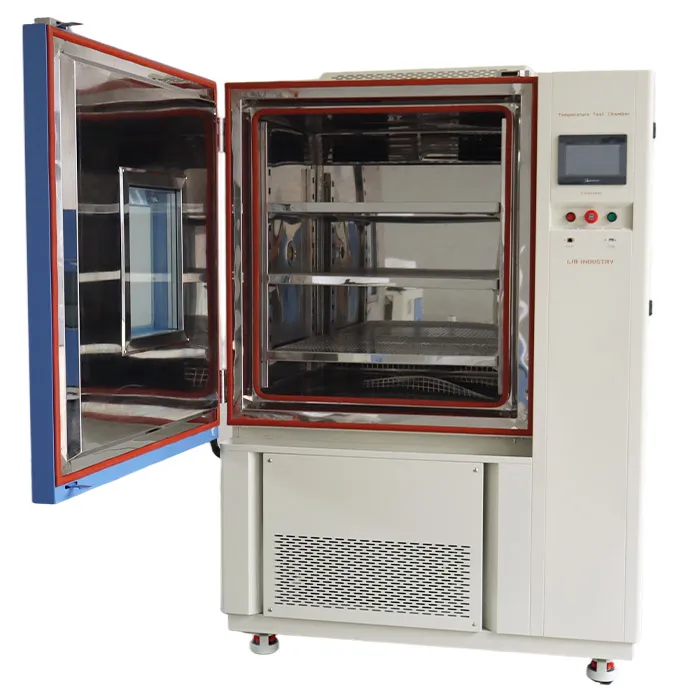
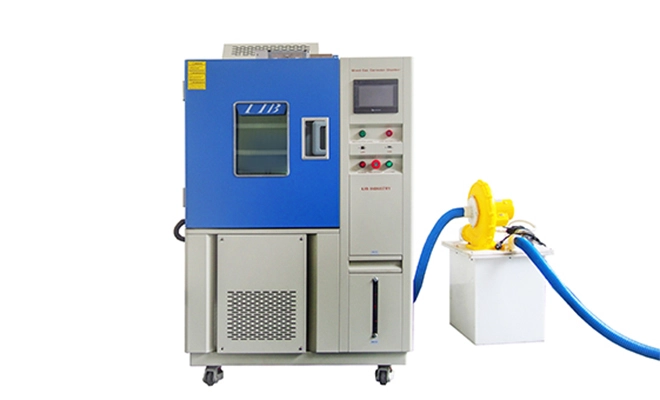
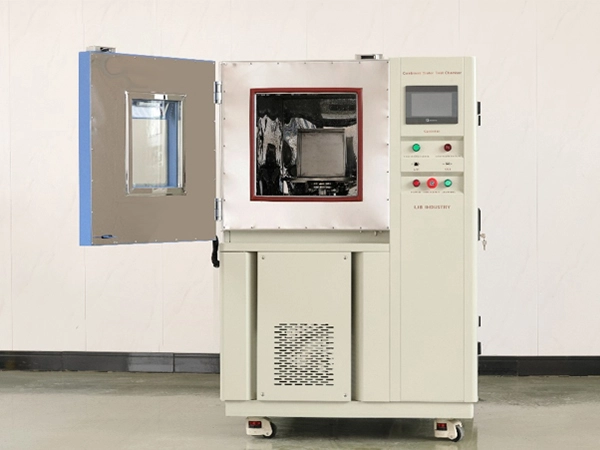
Selecting the right xenon test chamber is critical for obtaining accurate, repeatable, and standardized test results. The LIB Xenon Light Fastness Test Chamber is engineered specifically for high-precision ISO 4892 compliance testing and long-term industrial use.
| 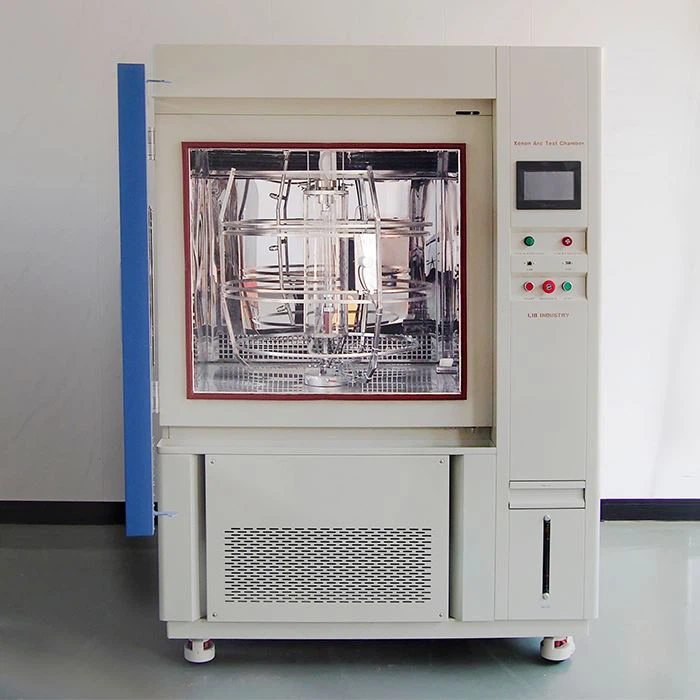 |
Model | XL-S-750 Xenon Arc Weathering Test Chamber |
Internal Dimension (mm) | 950*950*850 mm |
Overall Dimension (mm) | 1300*1420*1800 mm |
Sample holder | Adjustable speed, 1r /min |
Chamber Type | Rotating Holder |
Irradiation Source | 1 piece of 4500w water-cooled xenon arc lamp with inner quartz and outer borosilicate filter |
Irradiance Range | 150 W/㎡ |
Bandwidth Measurement | 300~400 nm |
Chamber Temperature Range | -40~ 100 ℃ ±2 ℃ |
Black Panel Temperature | BPT 35 ~ 85 ℃ ±2 ℃ |
Humidity Range | 30 % ~ 98 % RH |
Water Spray Cycle | 1~9999 H 59 M (Adjustable) |
Controller | Programmable color LCD touch screen controller |
Radiometer | UV Radiometer, Tolerance: ±5 % |
|
|
xenon lamp and filters
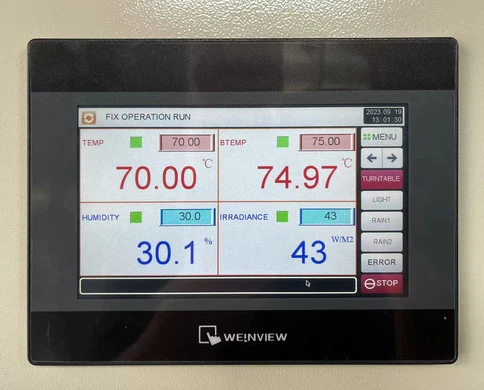 | 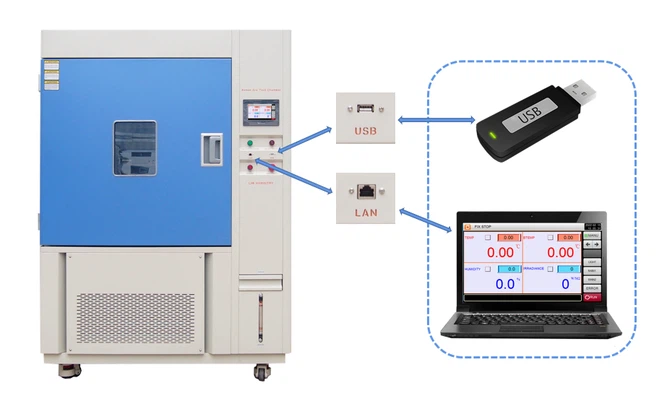 |
LIB chambers use a 4500W water-cooled xenon arc lamp with optimized optical filtering to closely match natural sunlight. The irradiance is controlled through a closed-loop feedback system, ensuring stable and consistent energy output throughout long testing cycles.LIB uses advanced closed-loop control technology with real-time irradiance sensors. The system automatically compensates for lamp aging, ensuring stable irradiance ( ) throughout long test cycles.
Temperature is regulated using a PID control system with ±0.5°C accuracy. Humidity is evenly distributed through a steam humidification system, ensuring stable and uniform environmental conditions across all test samples. Real-time sensors continuously monitor black panel temperature and environmental variations.
Consistency is critical in material validation. LIB systems are designed to minimize variation between test batches, ensuring highly repeatable results. This is particularly important for automotive OEM testing, where small deviations can lead to significant differences in material qualification.
LIB Xenon chambers are built for 24/7 continuous testing with reinforced chamber structures and optimized cooling systems. Integrated water filtration prevents nozzle blockage and ensures stable spray performance during long-term operation.
LIB industry provides comprehensive after-sales support, including a 3-year warranty and lifetime technical maintenance service. Global support includes installation guidance, calibration assistance, and troubleshooting, ensuring long-term operational reliability for laboratory users.
Q1: What is ISO 4892 Xenon Light Fastness Test used for?
It is used to simulate long-term sunlight exposure for evaluating durability of automotive exterior parts, plastics, and coatings under controlled laboratory conditions.
Q2: What is the difference between xenon aging and UV aging tests?
Xenon aging simulates full-spectrum sunlight (UV + visible + IR), while UV aging only uses ultraviolet light, making xenon testing more realistic for outdoor applications.
Q3: What industries use LIB Xenon Weathering Test Chambers?
They are widely used in automotive, coatings, plastics, and materials research industries for accelerated weathering tests.
Q4: Does LIB provide after-sales service and technical support?
Yes. LIB offers lifetime technical support, including installation guidance, calibration assistance, maintenance support, and global after-sales service.
Q5: Can LIB help with installation and operation training?
Yes. LIB provides full installation support and operator training to ensure proper chamber setup and ISO 4892 compliant operation.
Get in touch with LIB industry for a tailored ISO 4892 xenon test chamber solution for your laboratory.
 English
 русский
 français
 العربية
 Deutsch
 Español
 한국어
한국어 italiano
 tiếng việt
 ไทย
ไทย Indonesia


.webp "Salt Spray Chamber for ASTM B117 96-hour Corrosion Test")
.webp "Heat Cold Humidity Climate Chamber")