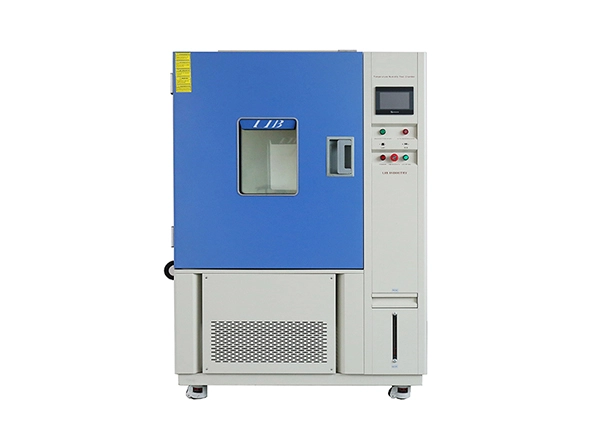
Rubber and elastomer materials are widely used in automotive sealing systems, cable insulation, industrial hoses, and aerospace components. However, one of the most destructive environmental factors affecting rubber performance is ozone exposure.
Even at extremely low concentrations in the atmosphere, ozone can cause surface cracking, embrittlement, and eventual failure of elastomer materials under mechanical stress. This is why ozone resistance testing has become a critical part of material qualification and quality assurance.
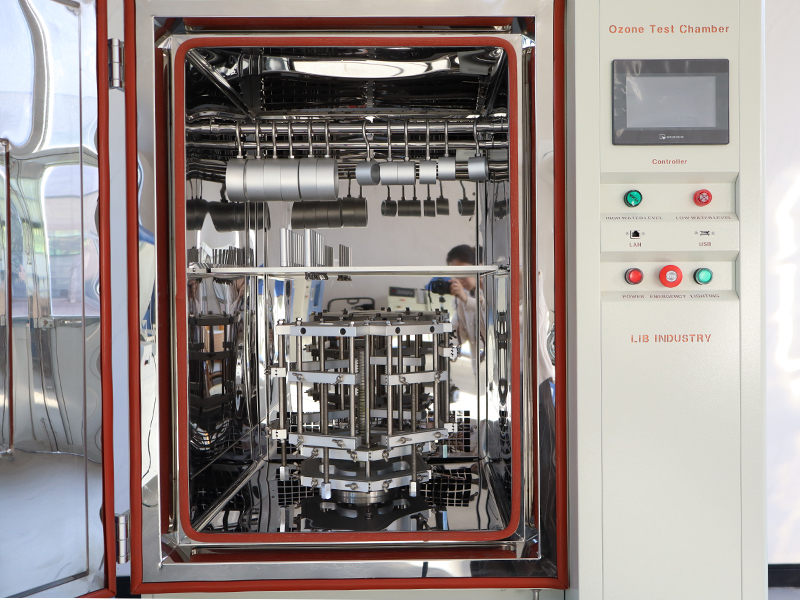
The standardized method defined in ASTM D1149 ozone test chamber is widely used to evaluate the resistance of rubber materials to ozone cracking under static or dynamic strain conditions.
Typical testing conditions include:
Ozone concentration: 10–500 pphm (parts per hundred million)
Temperature range: 20°C to 60°C (depending on material requirements)
Relative humidity: optional controlled environment (model dependent)
Airflow: continuous circulation for uniform ozone distribution
To accurately simulate real-world aging conditions, a professional ozone test chamber is required. Unlike general environmental chambers, an ozone chamber must ensure:
Precise ozone concentration control
Uniform gas distribution
Stable temperature and airflow
Safe exhaust and leakage protection
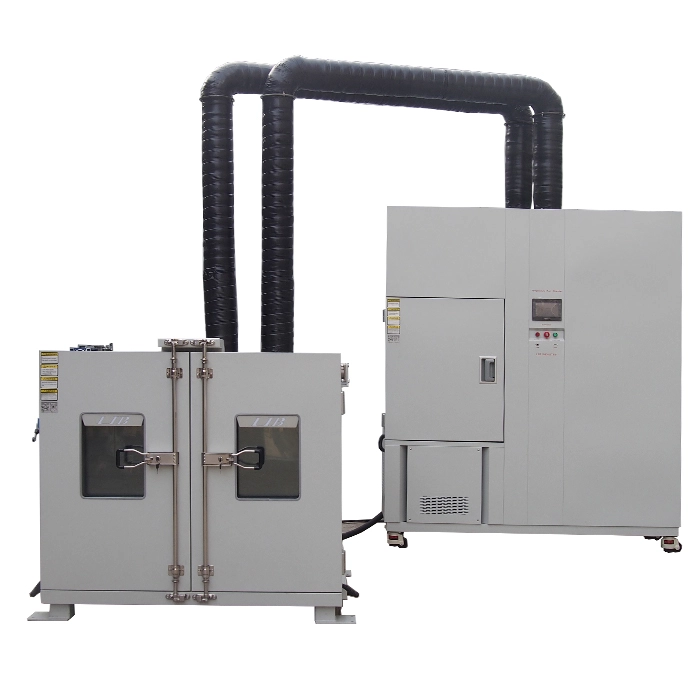
This is where advanced ozone test chamber systems from LIB industry play a crucial role in material reliability testing.
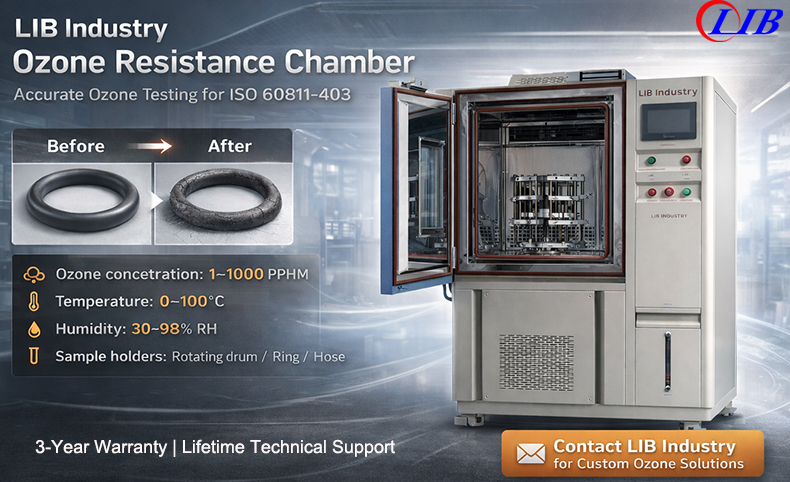
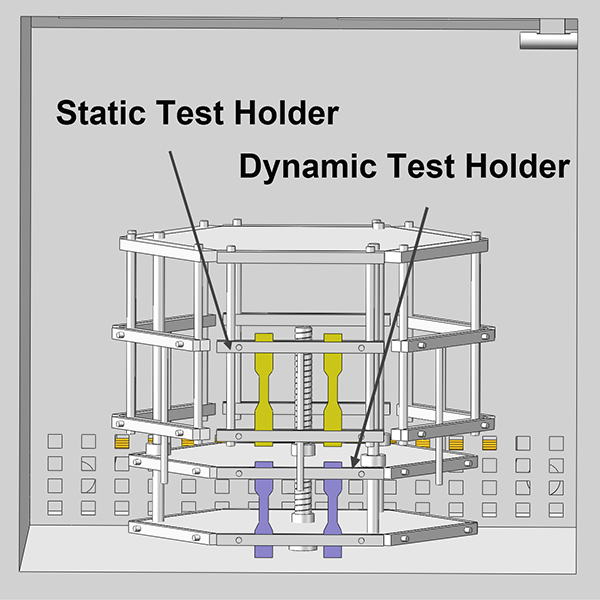 The core of ozone testing lies in how the rubber specimen is mechanically stressed during exposure. According to ASTM D1149, two primary methods are used: static strain and dynamic strain.
Understanding the difference between these two methods is essential for selecting the correct test setup.
In static strain testing, the rubber specimen is stretched to a fixed elongation and maintained at that constant deformation throughout the test.
Typical parameters:
Strain levels: 10%, 20%, 25%, up to 35% (depending on material specification)
Exposure duration: 48 hours to 168 hours or longer
Stress condition: constant mechanical deformation
Key characteristics:
Stable stress condition
High repeatability
Suitable for comparative material evaluation
Lower system complexity
Advantages:
Excellent consistency for pass/fail evaluation
Ideal for R&D material screening
Lower equipment maintenance requirements
Static testing is widely used in early-stage material development and compliance verification.
Dynamic strain testing introduces cyclic deformation during ozone exposure. The specimen continuously stretches and relaxes, simulating real-life operational conditions.
Typical parameters:
Frequency: 0.5–2 Hz (industry common range)
Strain amplitude: 5%–30% cyclic deformation
Motion type: sinusoidal or linear reciprocating motion
Key characteristics:
Simulates real-world mechanical fatigue
Combines ozone aging + mechanical cycling stress
Higher realism in service condition simulation
Advantages:
More accurate prediction of field performance
Ideal for automotive and industrial applications
Captures fatigue-crack propagation behavior
Dynamic testing is especially important for components exposed to continuous motion such as automotive seals, suspension rubber parts, and flexible cable systems.
| Feature | Static Strain | Dynamic Strain |
|---|---|---|
| Strain Type | Constant | Cyclic |
| Motion | None | Reciprocating |
| Simulation Level | Basic exposure | Real-world fatigue |
| Complexity | Low | High |
| Application | Material screening | Life prediction |
| Fixture requirement | Standard clamps | Motion-enabled fixtures |
Selecting the correct method depends on the end-use application of the material and the testing objective.
Static strain testing is suitable for:
Polymer formulation development
Material comparison studies
Compliance testing for ASTM D1149
Quality control in production batches
It is commonly used in laboratories where repeatability and efficiency are prioritized over real-world simulation accuracy.
Dynamic strain testing is recommended for:
Automotive sealing systems (door seals, window seals)
Cable insulation and flexible wiring
Aerospace elastomer components
High-reliability industrial rubber parts
If the application involves continuous movement or vibration, dynamic testing provides significantly more realistic failure prediction.
When selecting an ozone test chamber system, engineers should evaluate:
Ozone concentration range: 10–500 pphm
Control accuracy: ±5% or better
Temperature stability: ±0.5°C recommended
Strain range: 5%–35% adjustable
Sample capacity: 16–48 specimens typical
Air circulation uniformity
Fixture durability under ozone exposure
These parameters directly affect test repeatability and data reliability.
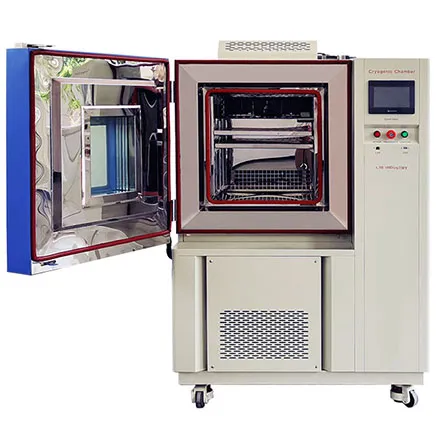
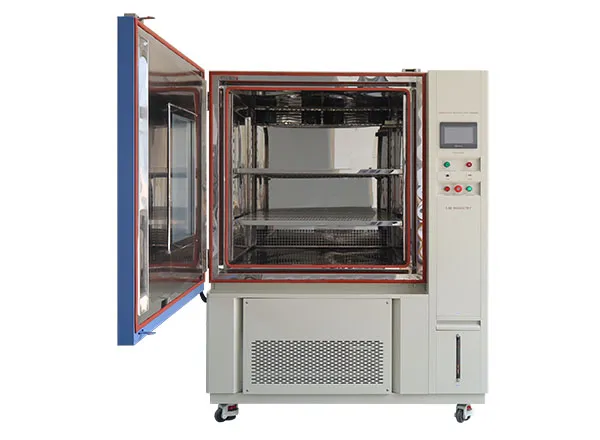
LIB industry designs advanced ozone test chambers engineered specifically for ASTM D1149 compliance and long-term durability testing of elastomer materials.
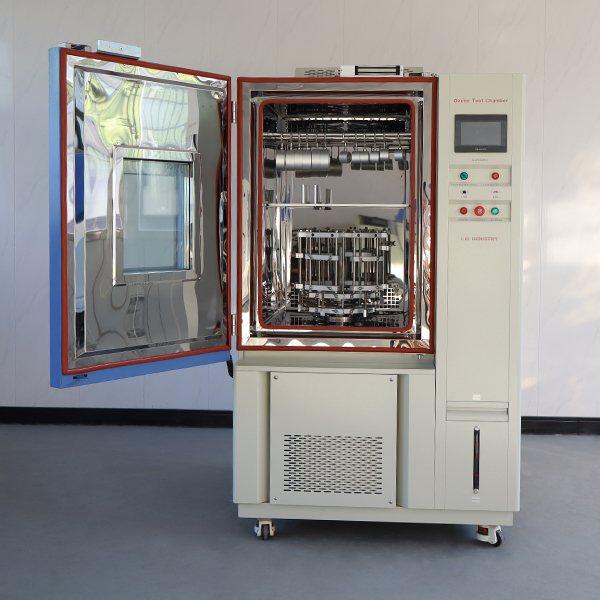 | Temperature Range | 0℃ ~ +100 ℃ |
Temperature Fluctuation | ± 0.5 ℃ | |
Temperature Deviation | ± 2.0 ℃ | |
Humidity Range | 30% ~ 98% RH | |
Humidity Deviation | ± 2.5% RH | |
Cooling Rate | Ambient ~ 0℃ within 20 min | |
Ozone Concentration | 1~1000PPHM | |
Sample Holder Rotate Speed | 0~10 r/min | |
Airflow Rate | 0 ~ 60L/min | |
Clamps Tensile Stretch | 5%~35% |
The ozone concentration system uses a corona discharge generator with closed-loop control.
Key specifications:
Ozone concentration range: 10–500 pphm (customizable higher ranges available)
Control accuracy: ±5%
Real-time ozone monitoring via UV absorption sensor
Automatic feedback regulation system
This ensures stable and repeatable exposure conditions throughout long test cycles.
Stable environmental conditions are critical for accurate ozone testing.
Temperature range: 0°C to 60°C (customizable)
Temperature stability: ±0.5°C
Air circulation system: uniform ozone distribution
Chamber interior: SUS304 stainless steel corrosion-resistant structure
The airflow system ensures homogeneous ozone concentration throughout the test space, preventing localized concentration deviation.
Ozone is a highly reactive and hazardous gas. Therefore, safety design is essential.
LIB ozone chambers include:
Ozone leakage detection system
Automatic exhaust and neutralization system
Door interlock safety protection
Emergency shutdown mechanism
These systems ensure safe laboratory operation even under high-concentration testing conditions.
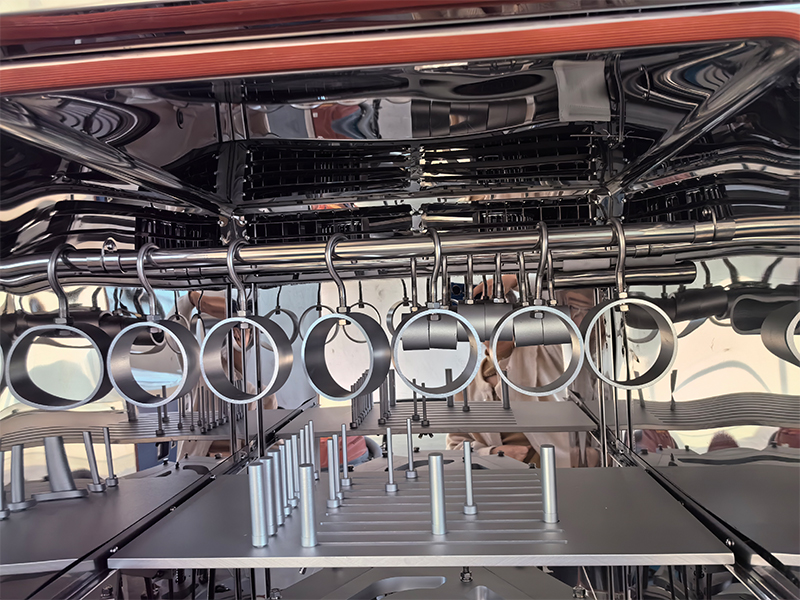
One of the most critical but often underestimated components of ozone testing is the specimen fixture system. Poor fixture design can lead to inaccurate strain application and unreliable test results.
LIB industry provides highly flexible fixture customization for both static and dynamic testing systems.
Fixed elongation clamps
Adjustable strain range: 10%–35%
Multi-sample configuration: 16 / 24 / 48 positions
Anti-corrosion materials: SUS316, aluminum alloy, PTFE coatings
These fixtures ensure stable long-term deformation without slippage.
For dynamic testing, LIB provides motor-driven reciprocating systems:
Frequency range: 0.5–2 Hz adjustable
Synchronous multi-sample motion system
Linear or sinusoidal motion options
High durability components for continuous operation
This system allows accurate simulation of real-world cyclic stress conditions under ozone exposure.
|  |
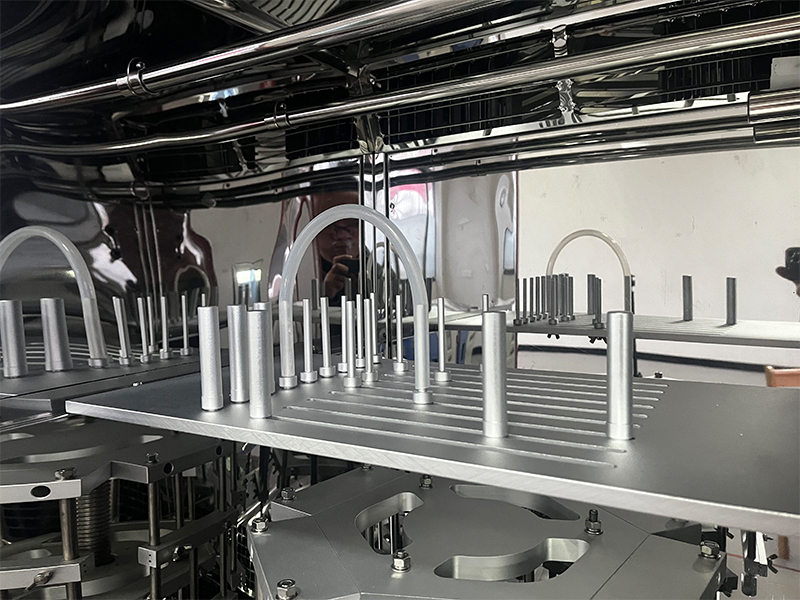 |
LIB offers fully customized fixture engineering based on customer requirements:
Non-standard specimen geometries (strips, tubes, sheets)
Application-specific clamping structures
Customized strain paths (linear / curved motion)
Industry-specific designs for automotive, cable, and rail transport
This flexibility ensures that testing systems match real application conditions rather than generic laboratory assumptions.
Ozone aging is one of the most aggressive degradation mechanisms affecting rubber and elastomer materials. Selecting the correct testing approach under ASTM D1149 is essential for obtaining meaningful and predictive material performance data.
Static strain testing is ideal for material comparison and standard compliance
Dynamic strain testing is essential for real-world service life prediction
Ultimately, the accuracy of your results depends not only on test conditions but also on the quality of the test system, fixture design, and environmental control precision.
With advanced engineering from LIB industry, laboratories can achieve highly stable ozone concentration control, precise strain application, and customizable fixture systems tailored to diverse industrial applications.
The most common test condition is 50 ± 5 pphm ozone concentration at 40°C ± 2°C. Some automotive specifications may require 100 pphm or higher. LIB ozone test chambers support a concentration range of 1–1000 pphm.
Yes. ASTM D1149 allows testing of finished products and irregular components. LIB can customize fixtures for O-rings, seals, hoses, cable jackets, and other non-standard specimens to ensure accurate strain control.
The standard dynamic testing frequency is typically 0.5 Hz (30 cycles/min). Excessive frequency may introduce heat buildup, while low frequency may not adequately simulate fatigue conditions. LIB's servo-driven system maintains frequency accuracy within ±0.05 Hz.
LIB provides a 3-year warranty and lifetime technical support. Customers receive rapid technical response, remote troubleshooting, spare parts support, and continuous after-sales service throughout the equipment lifecycle.
Yes. LIB can configure ozone test chambers with either static fixtures, dynamic fixtures, or interchangeable systems, allowing one chamber to support multiple ASTM D1149 testing methods.
 English
 русский
 français
 العربية
 Deutsch
 Español
 한국어
한국어 italiano
 tiếng việt
 ไทย
ไทย Indonesia