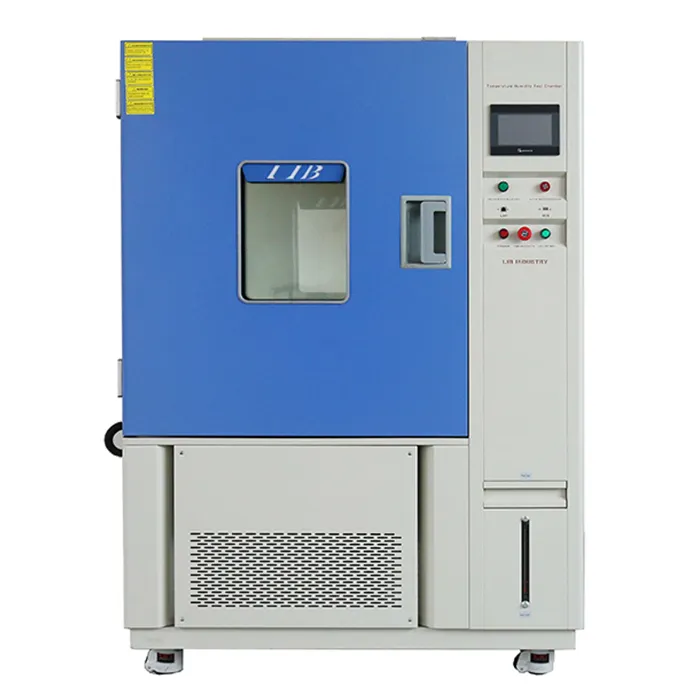
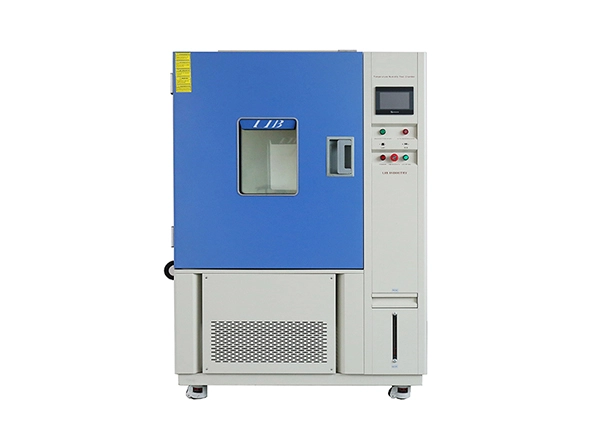
Drug stability testing in pharmaceuticals is seldom a simple routine. In early stages, it determines if a formula advances. It checks if a package works well. It verifies if a shelf-life claim has solid support. Many research teams now seek a small temperature humidity chamber. This device runs official ICH Q1A(R2) setups without dominating the lab space. The main idea is straightforward. The mini environmental chamber must maintain steady temperature and humidity levels. This supports valid data. It works best at 25°C/60%RH, 30°C/65%RH, and 40°C/75%RH.
A mini temperature humidity chamber suits this role perfectly. In a formula lab, teams use it for test tablets in packs, liquid in bottles, package tests, or fast checks after formula tweaks. Its benefits go beyond space savings. It allows small-batch drug stability tests under managed long-term, middle, and fast conditions. This happens before big production choices get costly.
You need to grasp ICH Q1A(R2) basics before picking any chamber. For typical drug products kept at room temperature, the guide lists these setups:
Study type | Storage condition | Minimum data at submission |
Long-term | 25°C ± 2°C / 60% RH ± 5% RH or 30°C ± 2°C / 65% RH ± 5% RH | 12 months |
Intermediate | 30°C ± 2°C / 65% RH ± 5% RH | 6 months |
Accelerated | 40°C ± 2°C / 75% RH ± 5% RH | 6 months |
If you run long-term tests at 30°C/65%RH, skip the separate intermediate setup. If you use 25°C/60%RH for long-term and see major changes in accelerated tests, add intermediate testing at 30°C/65%RH.
ICH Q1A(R2) covers more than just targets. For drug products, expect stability info from three main batches. Samples must use the planned market packaging. For items with at least 12 months shelf life, long-term checks happen every three months in year one. Then every six months in year two. After that, yearly. Accelerated studies include at least zero, three, and six months.
One often-overlooked point is what counts as a major change. For drug products, ICH defines it as a five percent drop in assay from start, a breakdown product over its limit, failure in looks or physical or function tests, pH issues, or dissolving failure for 12 units. This is why accelerated data help in early risk checks.
A small environmental chamber for drug stability work must handle at least these three common setups in development:
· 25°C/60%RH for standard long-term room storage
· 30°C/65%RH for some long-term cases or as intermediate
· 40°C/75%RH for fast stability checks
These setups differ in purpose. Each answers a unique question. The 25°C/60%RH checks if the product meets specs in normal long-term storage. The 30°C/65%RH serves as an alternate long-term or intermediate after changes in accelerated storage. The 40°C/75%RH is tougher. It uncovers heat and moisture risks quicker.
For most pills, liquids, and usual packaged drugs, focus on these three first. Low-humidity setups exist for semi-permeable packs, but that's another case. In most research labs testing standard items, ask if the chamber holds 25/60, 30/65, and 40/75 steadily. Check for stable recovery and no big RH shifts.
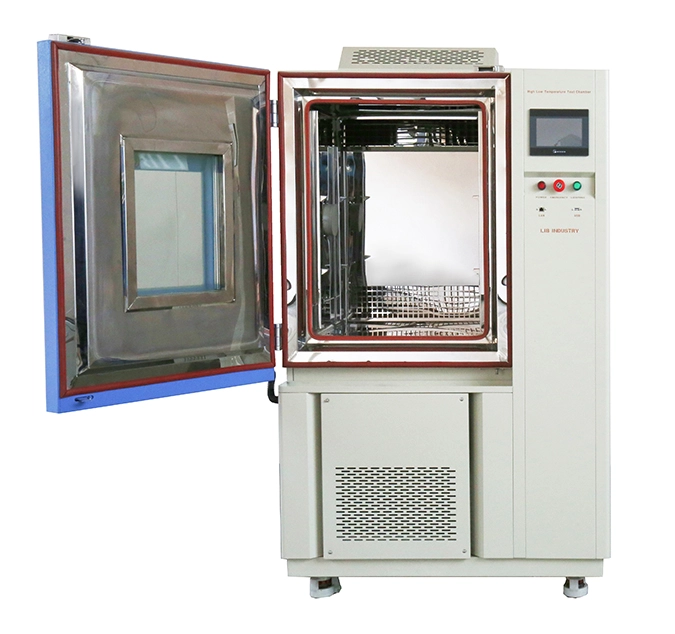
| benchtop environmental chamber mini temperature humidity chambers Mini Temperature Humidity Environmental Control Chambers | |||||
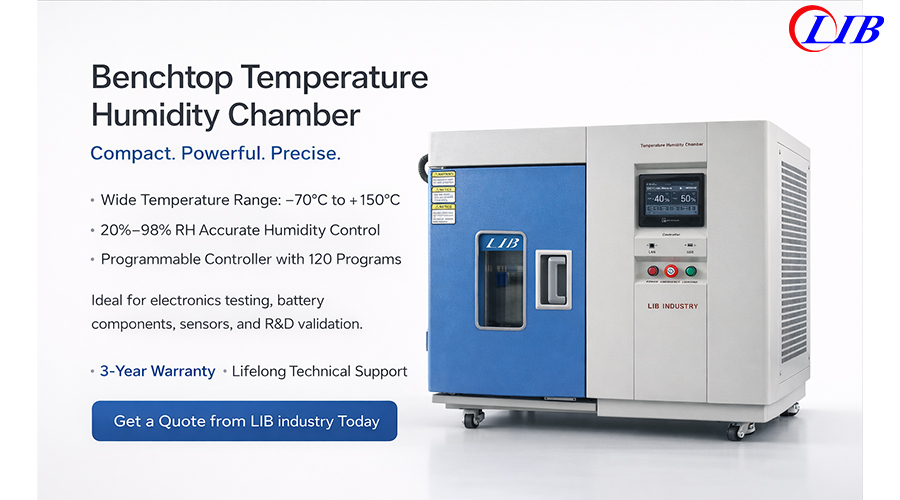
Yes, based on specs. The LIB Mini Temperature Humidity Chamber handles temperatures up to +150°C. It covers humidity from 20% to 98% RH. This includes all ICH Q1A(R2) room and fast setpoints. Data shows temperature fluctuation of ±0.5°C. Temperature deviation is ±2.0°C. Humidity deviation is ±2.5% RH. It has programmable touchscreen control and Ethernet links. These features make it fit for small-batch runs at 25°C/60%RH, 30°C/65%RH, and 40°C/75%RH.
Its compact design is key too. The small inside space fits limited samples. This suits drug research. Teams often deal with few trial bottles, blister packs, or samples per check. A small unit sits easily near workbenches. It avoids extra energy use from running a big chamber for tiny studies.
A solid stability study begins well before samples go in. Setup shapes if data solves real issues or adds confusion.
Begin with the goal the study supports. Common aims include early formula checks, package comparisons, long-term data for approval, or quick risk looks after changes. Once set, picking the right ICH Q1A(R2) setup, check schedule, and sample numbers gets simple. Use the market package or a good stand-in.
Set the chamber to the precise target. Keep the plan straightforward.
Common study goal | Typical chamber condition |
Long-term room-temperature study | 25°C/60%RH |
Intermediate follow-up | 30°C/65%RH |
Fast risk screening or accelerated study | 40°C/75%RH |
For long shelf-life plans, checks often hit zero, three, six, nine, and 12 months in year one for long-term. Accelerated uses zero, three, and six months. Stay consistent. A steady program eases later trend checks.
Avoid filling a small chamber too full. Keep air paths clear. Place samples so bottles, packs, bags, or trays do not block each other. In small tests, crowding causes extra differences. Separate samples by check time upfront. This cuts door-open time when removing items. Label each to link batch, pack type, setup, and pull date.
Track environment logs like test results. Note chamber targets, real temperature and RH over time, alerts, pull dates, and test notes. Review as patterns, not single points. A small strength fall at three months alone may mean little. But with rising moisture, slower dissolving, and pack variations, it signals more. This shows why drug stability testing aids development, not just rules.
Teams often misuse setups and lose time. This guide clarifies choices.
Condition | Best use | What it tells you |
Long-term | Shelf-life support and normal storage profile | Real-time product behavior |
Intermediate | Follow-up when accelerated shows significant change after 25°C/60%RH long-term | Whether the product still trends acceptably under a milder elevated condition |
Accelerated | Early screening, comparative work, moisture/heat risk checks | Faster signal on likely stability weaknesses |
Skip separate intermediate if long-term runs at 30°C/65%RH. Add it at 30°C/65%RH if long-term is 25°C/60%RH and major changes show in 40°C/75%RH. In lab practice, this sorts real formula flaws from stress effects.
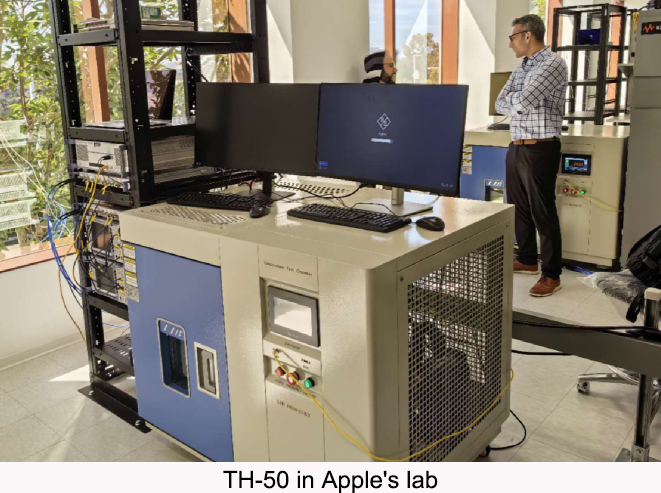
For small groups, a mini temperature humidity chamber makes sense. It fits how development works:
· Trial batches stay small, so chamber size can be modest.
· Package tests usually compare just two or three types.
· Formula updates come quickly, so easy access helps.
· Tabletop or small units fit near research and quality spots.
· Smaller chambers save space and power use.
This setup aids pre-formula screens, short fast studies, method help, package picks, and early stability before big GMP storage.
Picking a supplier involves more than range specs. Consider build quality, custom options, service speed, and post-setup aid.
Xi’an LIB Environmental Simulation Industry has built environmental test chambers since 2009. It offers many types like temperature and climate units, rust chambers, dust and water IP units, weather chambers, and custom ones. Equipment gets long run tests and calibration before shipping. This includes a 72-hour check at finish. For labs wanting steady gear from a focused maker, this helps.
Service stands out. Xi’an LIB Environmental Simulation Industry provides full help from design to training. Its solutions focus on custom lab plans based on samples, lab setup, and power needs. Not just standard boxes. It covers over 56 countries. Offers 3-year warranty and lifetime support. For long studies, this counts more than ads.
In drug stability testing, focus on a chamber that fits ICH Q1A(R2) needs for your study. Not the largest one. For small-batch research, reliable work at 25°C/60%RH, 30°C/65%RH, and 40°C/75%RH matters. Add easy sample handling and clear data checks. A mini temperature humidity chamber often works best for quick choices, low costs, and solid early proof.
Yes. If it holds ICH Q1A(R2) setups like 25°C/60%RH, 30°C/65%RH, and 40°C/75%RH steadily, use it for small-batch drug tests. Compact models shine in formula labs, package trials, and pilot work with few samples.
The 25°C/60%RH is standard long-term for many drugs. The 30°C/65%RH acts as long-term or intermediate based on plan. The 40°C/75%RH speeds up spotting breakdown risks with higher heat and moisture.
No. Skip separate intermediate if long-term is at 30°C/65%RH. Add it if long-term is 25°C/60%RH and big changes occur in 40°C/75%RH accelerated tests.
Choose one that matches sample needs without extra space. For early research, a small chamber fits best. It manages few batches, uses less room, and suits short or comparison studies. LIB offers compact mini options for small items and lab spots.
 English
 русский
 français
 العربية
 Deutsch
 Español
 한국어
한국어 italiano
 tiếng việt
 ไทย
ไทย Indonesia
.webp "Xenon Arc Lightfastness Weathering Testing Instrument")