Electric vehicle battery modules work in a rougher thermal world than many buyers expect. A pack may face a frozen morning start, rapid charging heat, summer road temperatures, cooling plate variation, storage in a container, and long service life inside a sealed vehicle platform. These changes do not only affect cell performance. They also stress welds, busbars, seals, adhesives, insulation parts, module housings, sensors, and connectors.
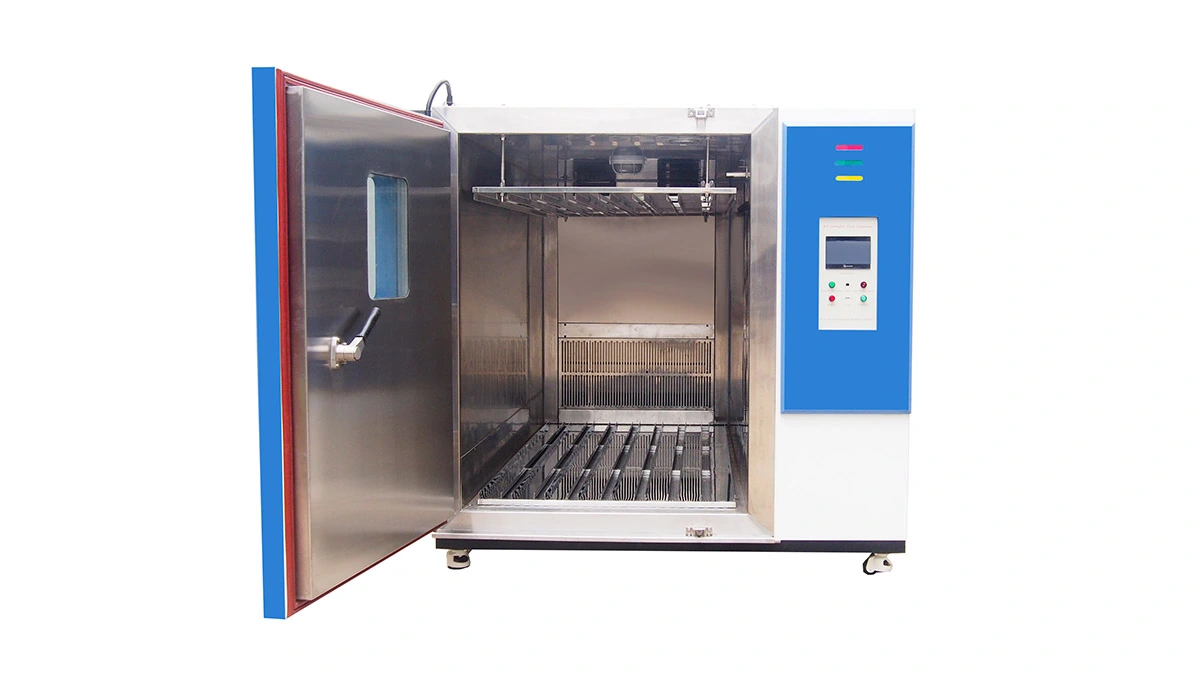
A Temperature Cycle Chamber gives battery engineers a controlled way to repeat these hot and cold conditions before a module reaches the road. For EV battery thermal testing, it helps expose early failure signs that may not appear during a single high temperature or low temperature hold. A well-selected thermal chamber can support design validation, incoming material checks, production sampling, and thermal stress screening for battery modules used in passenger cars, commercial vehicles, energy storage systems, and power electronics platforms.
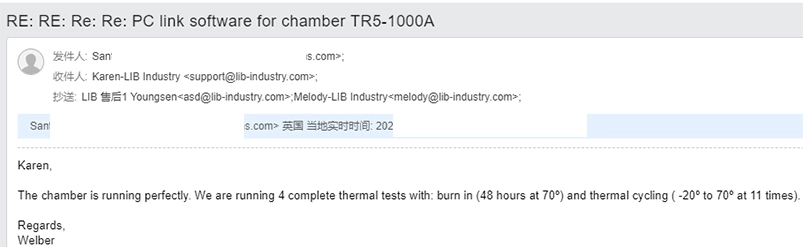
Feedback from our customer
Battery modules are built from many materials with different expansion rates. Aluminum housings, copper busbars, nickel tabs, plastic holders, potting compounds, sealants, insulating sheets, PCB parts, and temperature sensors all respond differently when temperature moves from below freezing to high heat. Over one cycle, the change may look small. Over hundreds of cycles, small movement becomes mechanical fatigue.
Thermal stress screening is useful because it makes weak points appear earlier. A weld that passes an initial electrical test may show higher resistance after repeated battery module temperature cycling. A seal that looks stable at room temperature may shrink at low temperature and soften at high temperature. A connector may pass vibration testing but fail when heat expansion and contraction are added.
For EV battery manufacturers, this type of test is not only about passing a lab requirement. It is about reducing warranty risk and finding small assembly problems before they become field failures.
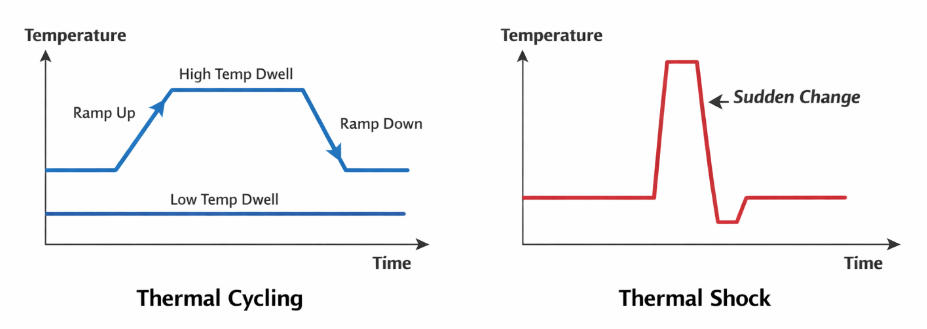
A Temperature Cycle Chamber changes the air temperature around the sample according to a programmed profile. The test normally includes a low temperature point, a dwell period, a controlled rise to a high temperature point, another dwell period, and then a return to low temperature. This sequence is repeated for the required number of cycles.
For battery module temperature cycling, the chamber must do more than become hot or cold. It must keep stable control while the sample itself absorbs and releases heat. A heavy module, especially one with metal cooling plates or dense cell groups, has a larger thermal mass than small electronics. That means the chamber needs enough heating and cooling capacity to follow the required ramp rate without large overshoot.
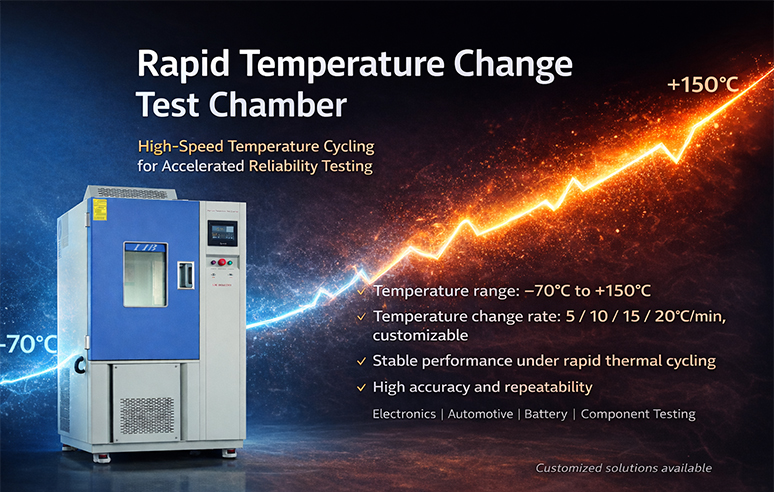
LIB Temperature Cycle Chamber configurations support temperature ranges from -20℃, -40℃, or -70℃ up to +150℃. This makes the equipment suitable for cold storage tests, high temperature aging, rapid thermal cycling, and environmental stress screening. Heating and cooling rates can reach 10℃/min, with 15℃/min available for faster profiles, depending on configuration. For EV battery thermal testing, these figures matter because slow and unstable transitions can miss stress conditions that appear during rapid real-world temperature changes.
A good test profile starts with a clear purpose. R&D teams may want to compare two module layouts. A quality team may want to screen production samples. A test lab may need to follow customer-specified conditions. The same battery test chamber can support each case, but the cycle profile, measurement points, and acceptance criteria should be different.
Before loading a battery module into the chamber, the test team should define what the test must reveal. Common goals include checking weld stability, busbar connection resistance, insulation reliability, sensor drift, seal behavior, or module function after thermal cycling.
For a new module design, the test may be run with more sensors and a longer cycle count. For production sampling, the focus is often repeatability, fast handling, and clear pass-fail criteria.
Temperature range should reflect the application, shipping route, and customer requirement. A common EV battery module test may use low points such as -40℃ and high points between +85℃ and +105℃, depending on the module location and test purpose. For harsher screening, a wider chamber capability up to +150℃ gives room for special material, adhesive, and component checks.
When transport safety requirements are involved, the UN 38.3 T.2 thermal test is often discussed for lithium cells and batteries. Its thermal cycle uses 72 ± 2℃ for at least 6 hours, followed by -40 ± 2℃ for at least 6 hours, with a maximum transfer interval of 30 minutes between temperature extremes. The sequence is repeated for 10 cycles, then the sample is stored for 24 hours at 20 ± 5℃. Large batteries may require longer dwell time, commonly 12 hours, depending on the applicable test interpretation and sample size. This is different from a general engineering thermal cycling test, but it shows why chamber stability and dwell control are important.
Ramp rate changes the stress level. A 1℃/min profile is closer to slow environmental change. A 5℃/min, 10℃/min, or 15℃/min profile is more suitable for rapid thermal cycling or accelerated screening. Dwell time must be long enough for the battery module core temperature to approach the target, not just the chamber air.
Cycle count depends on the goal. Early design comparison may use 20 to 50 cycles. Reliability validation may require more cycles, especially when the test is combined with electrical checks before, during, and after cycling.
The best battery module temperature cycling tests collect more than chamber temperature. Useful measurements include module voltage, cell group voltage, surface temperature, BMS sensor readings, insulation resistance, connector resistance, and visible deformation.
A cable port helps engineers route external wires without opening the door. LIB Temperature Cycle Chamber includes a standard Φ50mm test hole for external cable or power supply connections, allowing real-time sample performance monitoring while the chamber remains controlled.
A thermal chamber is often most valuable when the sample still “works” but shows early warning signs. These signs help teams repair a design or process before the problem becomes expensive.
Welded joints and busbars carry high current in a compact space. Repeated heating and cooling can create tiny movement at the connection interface. After cycling, a weak weld may show higher resistance, local heating, or visible cracking. In a high-current module, this is not a small issue. A poor connection can become a heat source and reduce long-term pack reliability.
Seals and insulating materials face repeated expansion and contraction. Low temperature can harden some polymers, while high temperature may soften them or speed aging. Module housings may also show warpage if material thickness, fastening points, or internal stress are not well balanced.
A battery test chamber helps reveal whether the module maintains insulation performance, sealing quality, and mechanical alignment after repeated exposure to high and low temperature cycles.
BMS readings must stay dependable under changing temperature. A temperature sensor that drifts after repeated cycling can affect thermal management logic. Connectors may also loosen or show intermittent contact when plastics, terminals, and wires expand at different rates.
For EV battery thermal testing, these failures are often more important than visible damage. A module may look unchanged from the outside but still show unstable electrical behavior.
Recommended Products |
|
|
Temperature cycling and thermal shock are related, but they are not the same test. A Temperature Cycle Chamber changes temperature at a controlled rate inside one workroom. It is suitable for battery module temperature cycling, long cycle programs, material fatigue checks, and thermal stress screening.
A thermal shock chamber usually moves the sample between two extreme zones very quickly. It is used when the test requires sudden temperature transfer. That can be helpful for specific abuse or material shock studies, but it may not match every battery module validation plan.
For large EV modules, controlled ramp rate is often more practical. It allows engineers to match a customer profile, monitor electrical data during the transition, and avoid unrealistic handling effects. A thermal chamber with stable ramp control is usually easier to integrate into daily R&D and quality workflows.
Selecting a battery test chamber should begin with the sample, not the catalog. The module size, weight, heat load, sensor wiring, safety requirement, and test profile all affect the chamber choice.
Selection Point | What to Check |
Chamber volume | Enough space for module size, airflow gap, fixture, and cables |
Temperature range | Low and high limits required by the test profile |
Ramp rate | 5℃/min, 10℃/min, 15℃/min, or higher based on screening severity |
Control accuracy | Stable temperature fluctuation and low deviation |
Monitoring access | Cable port for voltage, temperature, current, or sensor signals |
Safety configuration | Exhaust, pressure relief, fire protection, or custom battery safety options if needed |
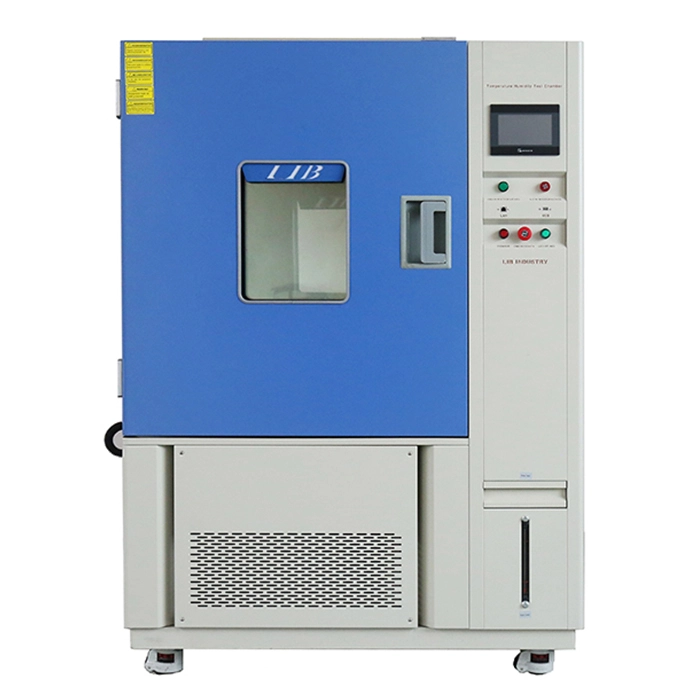
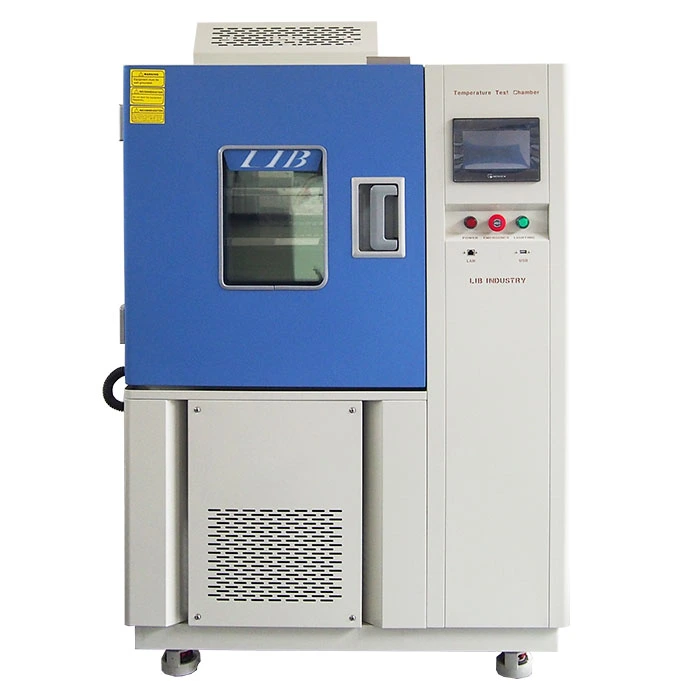
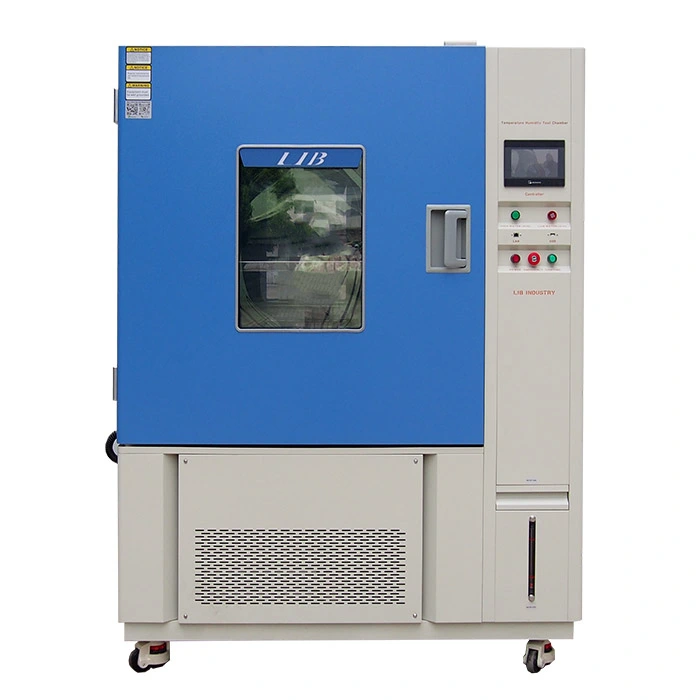
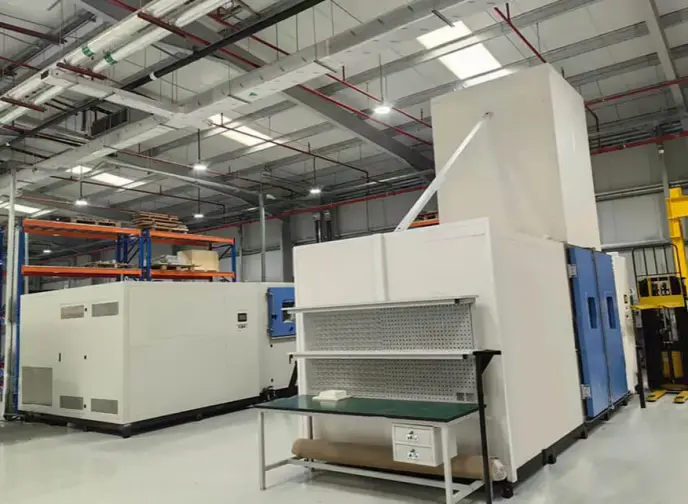
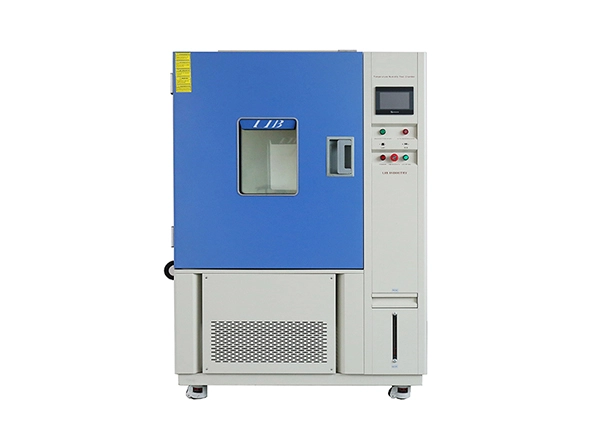
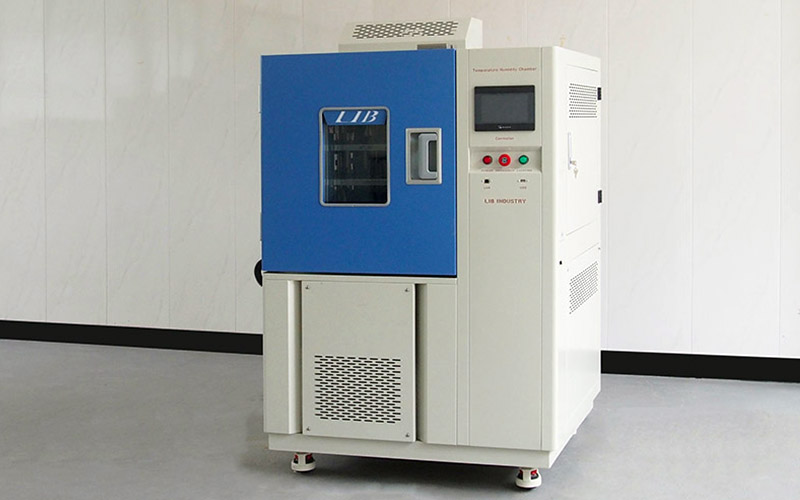
LIB Temperature Cycle Chamber is available in multiple inner volumes, including 100L, 225L, 500L, 800L, and 1000L. Small R&D samples may only need a compact workroom. Larger EV battery modules need enough room for airflow around all sides. Crowding the sample against the wall can lead to poor heat exchange and misleading test data.
A chamber range of -40℃ to +150℃ is commonly useful for EV battery work. For stricter low temperature testing, -70℃ capability gives more flexibility. Ramp rate should be selected according to the sample mass. A heavy battery module may need stronger cooling power to reach the same air temperature profile under load.
Stable control improves confidence in the result. LIB Temperature Cycle Chamber provides temperature fluctuation of ±0.5℃ and temperature deviation of ±2.0℃. The air circulation design uses top air supply and bottom return to support uniform heat exchange across the workroom. For battery modules with multiple sensing points, this helps reduce location-based test variation.
EV battery testing may need more than a standard thermal chamber. Depending on sample condition and state of charge, labs may request smoke exhaust, gas detection, pressure relief, fire suppression, reinforced chamber structure, or remote monitoring. These requirements should be discussed during chamber selection, especially for charged modules or abuse-related profiles.
Model | TR5-100 | TR5-225 | TR5-500 | TR5-800 | TR5-1000 |
Interior Volume | 100L | 225L | 500L | 800L | 1000L |
Heat load | 1000W | ||||
Temperature Range | A : -20℃ ~ +150 ℃ B : -40℃ ~ +150 ℃ C: -70℃ ~ +150 ℃ | ||||
Temperature Fluctuation | ± 0.5 ℃ | ||||
Temperature Deviation | ± 2.0 ℃ | ||||
Cooling Rate | 5 ℃ /10 ℃/ 15℃/ 20℃(customized)/ min | ||||
Heating Rate | 5 ℃ /10 ℃/ 15℃/ 20℃(customized)/ min | ||||
Controller | Programmable color LCD touch screen controller, Multi-language interface, Ethernet , USB | ||||
Cooling System | Mechanical compression refrigeration system,environmentally friendly refrigerant | ||||
 | |||||
|
|
|
| Robust Workroom | Cable Hole | Temperature and Humidity Senso |
LIB thermal chamber equipment is designed for rapid temperature cycling, high and low temperature exposure, and controlled environmental stress screening. For battery module testing, several features directly support better test repeatability and easier lab operation.
The available temperature range extends from -20℃, -40℃, or -70℃ up to +150℃. This range covers common cold start, storage, transport, and high temperature validation needs for EV battery modules, related electronics, sealing parts, and structural materials.
Heating and cooling rates of 10℃/min or 15℃/min help shorten test time and increase thermal stress compared with slow temperature exposure. Fast cycling is useful when engineers need to reveal solder cracks, weld weakness, seal fatigue, or insulation issues within a practical lab schedule.
Temperature fluctuation of ±0.5℃ and deviation of ±2.0℃ help maintain repeatable test conditions. The 304 stainless steel workroom resists corrosion and high-low temperature impact, while high-density insulation helps reduce energy loss during long cycling programs.
The 100L to 1000L volume range gives laboratories room to match the chamber to the sample. A smaller chamber may fit cell blocks, small modules, PCB assemblies, and BMS units. Larger chambers can support module-level validation and fixtures with more wiring.
The standard Φ50mm test hole allows external measurement cables or power leads to enter the chamber. This is important for battery module temperature cycling because electrical data often reveals issues earlier than visual inspection.
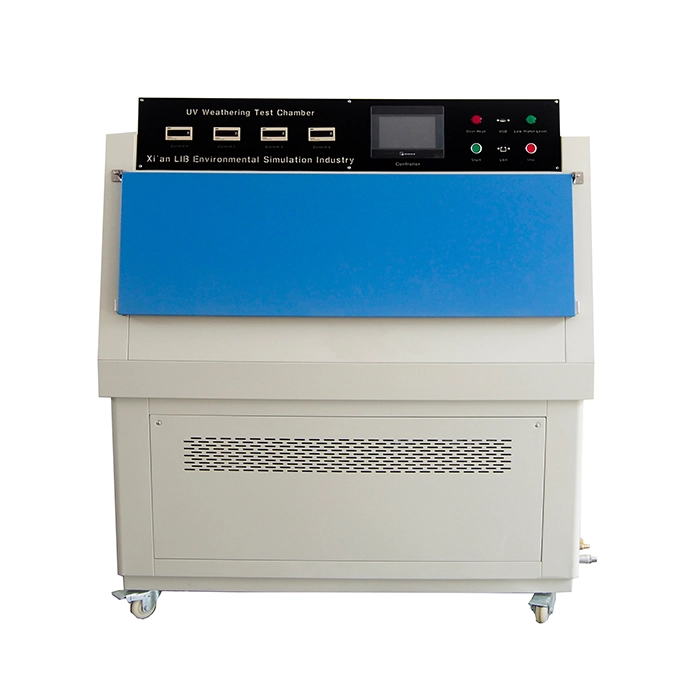
Xi’an LIB Environmental Simulation Industry manufactures environmental test chambers for temperature, humidity, corrosion, dust, rain, thermal shock, and other simulation needs. Its product range serves automotive, aerospace, electronics, battery technology, materials, and related industries.
For companies building or testing EV battery modules, supplier capability matters. A reliable test chamber supplier should provide stable equipment, suitable chamber sizing, technical guidance, documentation, and after-sales support. LIB offers environmental testing solutions, service support, and chamber configurations that can be matched to R&D labs, production quality teams, and third-party testing facilities.
The advantage is not only the chamber itself. Battery testing often requires discussion around sample size, temperature profile, cable access, safety details, and future expansion. A supplier with experience in environmental simulation can help buyers select a thermal chamber that fits both current testing and future validation work.
EV battery modules need controlled thermal testing because real vehicle use creates repeated hot and cold stress across cells, welds, busbars, seals, insulation, sensors, and housing structures. A Temperature Cycle Chamber gives engineers a repeatable way to run EV battery thermal testing, battery module temperature cycling, and thermal stress screening before products move into mass production or field service.
For laboratories and manufacturers, the right battery test chamber should provide a suitable temperature range, stable control, proper ramp rate, enough workroom space, cable access, and safety options where needed. LIB Temperature Cycle Chamber supports these needs with wide temperature capability, fast heating and cooling, stable uniformity, multiple chamber volumes, and practical monitoring support for battery module reliability work.
A Temperature Cycle Chamber is used to expose EV battery modules to repeated high and low temperature cycles. It helps check weld joints, seals, insulation materials, BMS sensors, connectors, and overall module reliability under thermal stress.
Thermal stress screening helps reveal early defects before modules enter long-term service. Repeated expansion and contraction can expose weak welds, loose busbars, cracked insulation, seal aging, sensor drift, or unstable electrical connections.
The required range depends on the test plan. Many EV battery module tests use low temperatures around -40℃ and high temperatures from +85℃ to +105℃. A thermal chamber with wider capability, such as -70℃ to +150℃, gives more flexibility for harsh screening and material validation.
Yes. A battery test chamber with a cable port can route voltage, temperature, current, and sensor wires to external data systems. This allows engineers to monitor module behavior during battery module temperature cycling without opening the chamber door.
Start with the module size, weight, temperature range, ramp rate, dwell time, cycle count, monitoring needs, and safety requirements. The best battery test chamber should provide enough workroom space, stable control, suitable heating and cooling speed, cable access, and optional battery safety features when required.
 English
 русский
 français
 العربية
 Deutsch
 Español
 한국어
한국어 italiano
 tiếng việt
 ไทย
ไทย Indonesia