As semiconductor devices continue to power industries such as automotive electronics, 5G communication, aerospace systems, and industrial automation, reliability has become a critical requirement rather than a competitive advantage.
Temperature variation is one of the most significant factors affecting semiconductor performance and lifespan. From extreme heat during operation to freezing startup environments, thermal stress can lead to parameter drift, structural damage, and unexpected failure.
This is where temperature test chambers play a vital role. By simulating controlled high and low temperature environments, manufacturers can identify potential issues early and ensure long-term product stability and reliability.
Semiconductors are inherently sensitive to temperature fluctuations. Even minor changes can impact:
Electrical performance and signal stability
Switching speed and efficiency
Material expansion and internal stress
Long-term aging and degradation
In real-world applications, devices are exposed to:
High temperatures in power electronics and EV systems
Low temperatures in aerospace and outdoor telecom equipment
Rapid thermal cycling in industrial environments
Without proper environmental testing, these conditions can result in costly failures, warranty risks, and safety concerns.
During operation, semiconductor devices generate heat. If this heat is not properly managed, excessive temperatures can degrade performance and reduce lifespan.
Temperature test chambers simulate elevated environments such as +125°C or higher to evaluate:
Stability of current and voltage
Frequency consistency
Thermal drift behavior
Stable operation under high temperatures indicates strong thermal design and reliable performance.
In industries such as aerospace, defense, and outdoor communications, semiconductor devices must function reliably in extremely low temperatures, often down to -40°C or below.
Cold start testing verifies:
Whether the device can power on successfully
Startup time under low-temperature conditions
Electrical parameter stability after activation
Following startup, functional and performance testing ensures the device meets operational requirements in harsh environments.
Temperature shock testing exposes semiconductor devices to rapid transitions between extreme hot and cold environments, simulating sudden environmental changes.
This type of testing helps identify:
Package cracking
Solder joint fatigue or failure
Internal structural stress
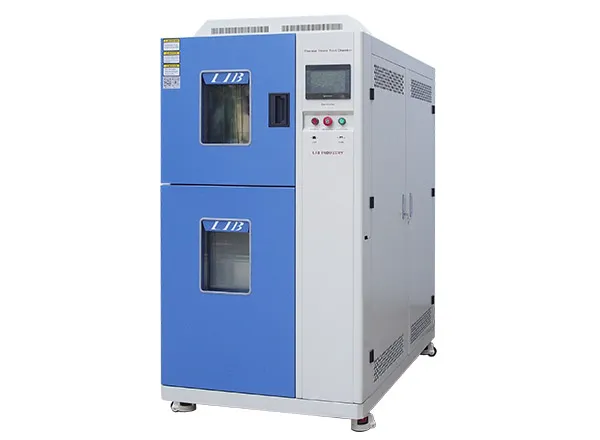
Thermal shock test chambers are specifically designed with dual-zone systems to enable fast transfer between temperature extremes, ensuring accurate and repeatable results.
In addition to thermal shock testing, many semiconductor manufacturers require fast temperature change testing to simulate rapid but controlled environmental transitions.
Unlike thermal shock, this method focuses on controlled ramp rates, typically ranging from 5°C/min to 20°C/min or higher.
Fast temperature change testing is widely used for:
Accelerated life testing (ALT)
Environmental stress screening (ESS)
Reliability growth validation
Failure mechanism analysis
Fast temperature change chambers provide precise control over heating and cooling rates, making them essential for modern semiconductor reliability testing.
In semiconductor reliability validation, testing is not just about reaching a temperature—it is about precision, repeatability, and the ability to simulate real-world failure conditions.
LIB industry delivers a comprehensive portfolio of temperature testing solutions, engineered to meet the demanding requirements of semiconductor design verification, qualification, and mass production screening.
LIB industry provides a full range of systems covering all critical testing scenarios:
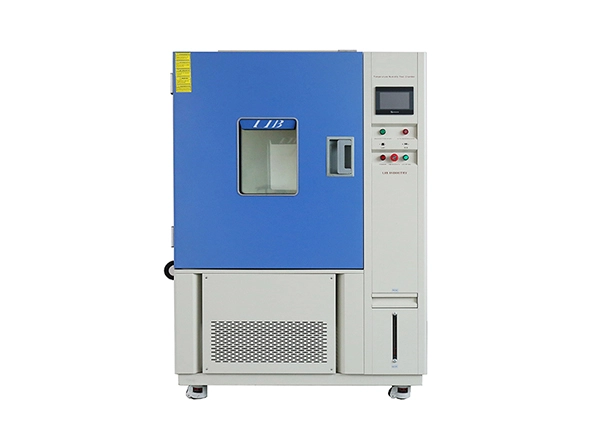
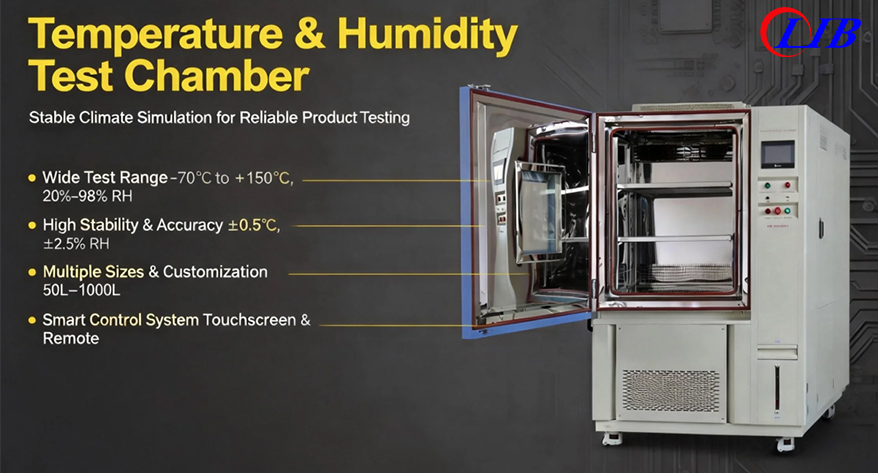
Temperature & Humidity Test Chambers
Fast Temperature Change (ESS) Chambers
Thermal Shock Test Chambers(dual-zone or three-zone)
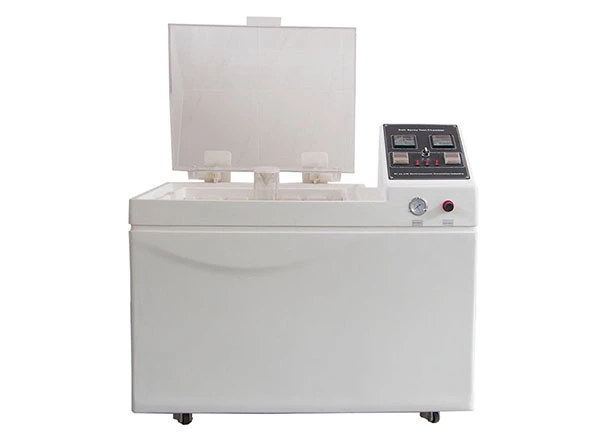
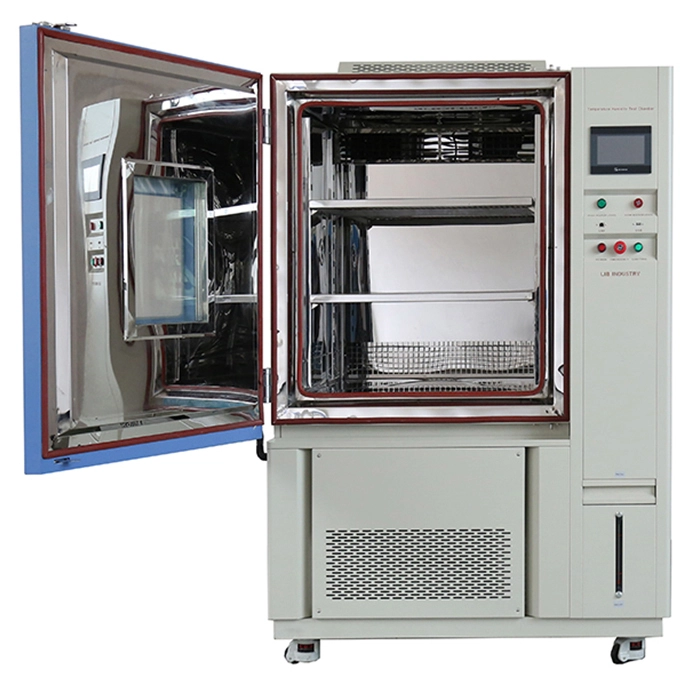 Temperature humidity chamber | 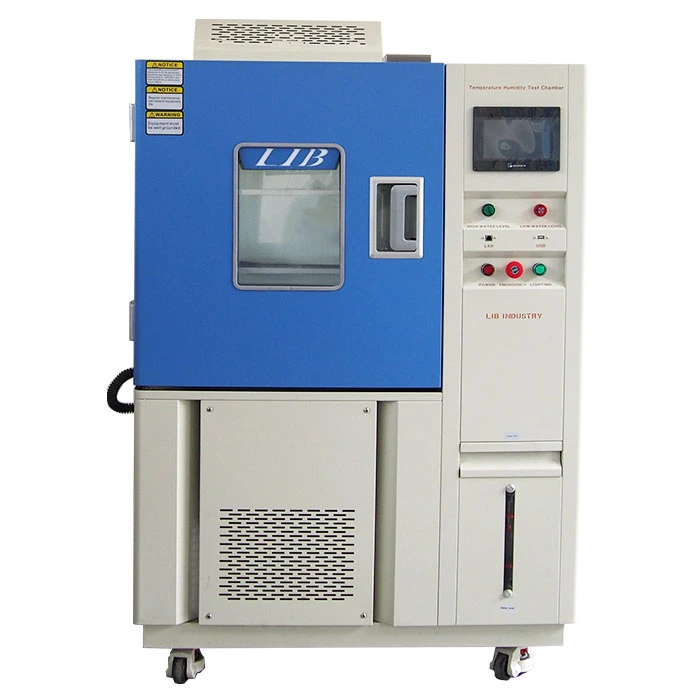 Thermal cycling chamber | 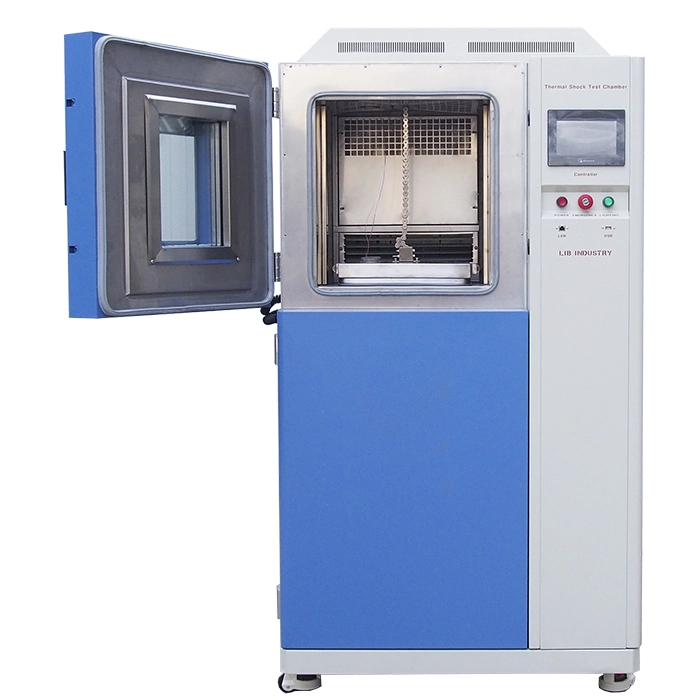 thermal shock chamber |
Semiconductor testing requires tighter control and higher repeatability than most industries. LIB industry systems are designed to meet these exacting standards:
Wide Temperature Range
Typically from -70°C to +150°C/220℃, covering all semiconductor application environments
Excellent Temperature Uniformity
Ensures consistent exposure across all DUTs, critical for reliable data comparison
High Ramp Rate Performance
Optimized airflow and thermal systems enable fast heating and cooling without overshoot
Accurate Control & Stability
Advanced PID control algorithms maintain precise temperature conditions throughout testing cycles
Reliability testing often involves continuous operation over extended periods. LIB industry chambers are built for durability and stability:
Robust refrigeration and heating systems
Stable operation under long test cycles
Consistent performance under high workload conditions
This ensures repeatable results across multiple test batches, reducing variability and improving confidence in your data.
Beyond equipment, LIB industry provides complete support to ensure successful implementation:
Installation and commissioning services
User training and technical guidance
Ongoing maintenance and support
3-year warranty and lifetime service
From initial consultation to long-term operation, LIB industry acts as a reliable partner in your testing process.
Validate reliability before failure happens.
Contact LIB industry today to get a customized temperature testing solution for your semiconductor applications.
 English
 русский
 français
 العربية
 Deutsch
 Español
 한국어
한국어 italiano
 tiếng việt
 ไทย
ไทย Indonesia