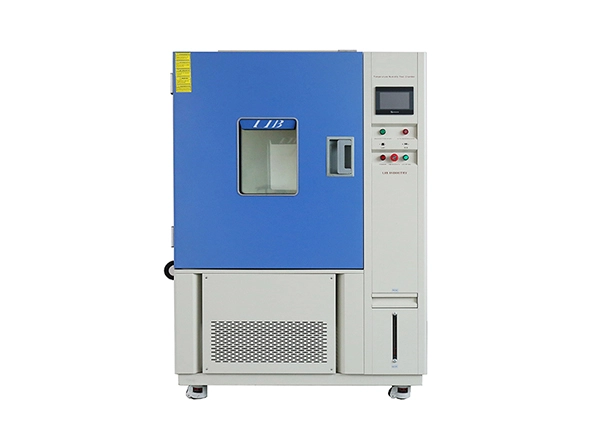
In corrosion testing, one of the most repeated assumptions is:
“1000 hours of salt spray testing equals 10 years of outdoor durability.”
While this statement sounds convenient, it is scientifically inaccurate.
Real-world corrosion is not a continuous salt fog exposure. Instead, it is driven by cyclic environmental stresses, including:
Wet and dry transitions
Temperature fluctuations
Humidity condensation
Salt deposition and evaporation
Thermal expansion and contraction
Because of this complexity, traditional Salt Spray Testing (SST) cannot reliably predict long-term durability. This is why industries are shifting toward the Cyclic Corrosion Test Chamber (CCT) for more realistic failure simulation.
Salt Spray Testing (ASTM B117) has been widely used for decades due to its simplicity and speed. However, its limitations are increasingly evident in modern product development.
Only one environmental factor: continuous salt fog
No drying, heating, or condensation cycles
No simulation of temperature variation
Failure modes often differ from real field conditions
As a result, materials that pass 1000 hours of SST may still fail in:
Automotive winter road environments
Marine salt fog exposure
Outdoor industrial installations
High humidity coastal regions
SST is useful for comparative screening, but not for real durability prediction.
A Cyclic Corrosion Test Chamber is designed to replicate natural corrosion mechanisms, not just accelerate exposure.
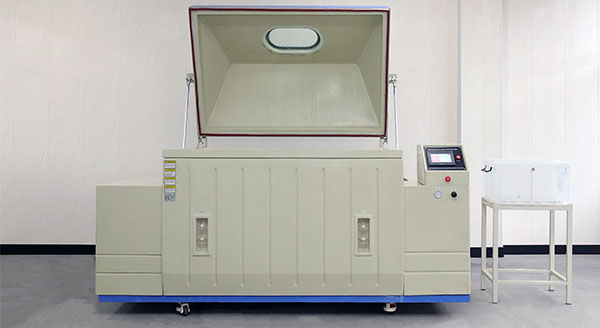 | salt spray corrosion test chamber ASTM B117 salt spray environmental test chamber |
It integrates multiple environmental phases into one automated system:
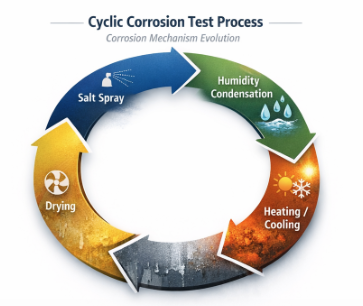 Core test phases:
Salt fog exposure (marine / de-icing simulation)
High humidity condensation (dew / rain simulation)
Controlled drying (oxygen exposure & coating stress)
Heating cycles (thermal expansion stress)
Cooling transitions (night/day environmental shift)
Instead of measuring “time to failure”, CCT reveals:
Corrosion initiation points
Coating breakdown behavior
Edge creep propagation
Substrate rust evolution
This makes CCT results significantly closer to real field performance.
CCT is widely recognized and standardized in global industries:
SAE J2334 – Automotive corrosion cycling (North America OEM standard)
ISO 16701 – Natural-like corrosion simulation
VDA 233-102 – German automotive corrosion validation standard
These standards ensure:
Reproducible test conditions
Cross-lab result consistency
OEM-level validation reliability
Test Method | Environment Type | Realism Level | Field Correlation |
Salt Spray Test (SST) | Constant exposure | Low | Weak |
Cyclic Corrosion Test (CCT) | Multi-phase cycling | High | Strong |
In practical validation programs:
SST = material screening tool
CCT = durability prediction tool
For example, automotive studies using SAE J2334 cycles show that:CCT exposure patterns often replicate 2–3 years of road salt corrosion behavior within weeks.
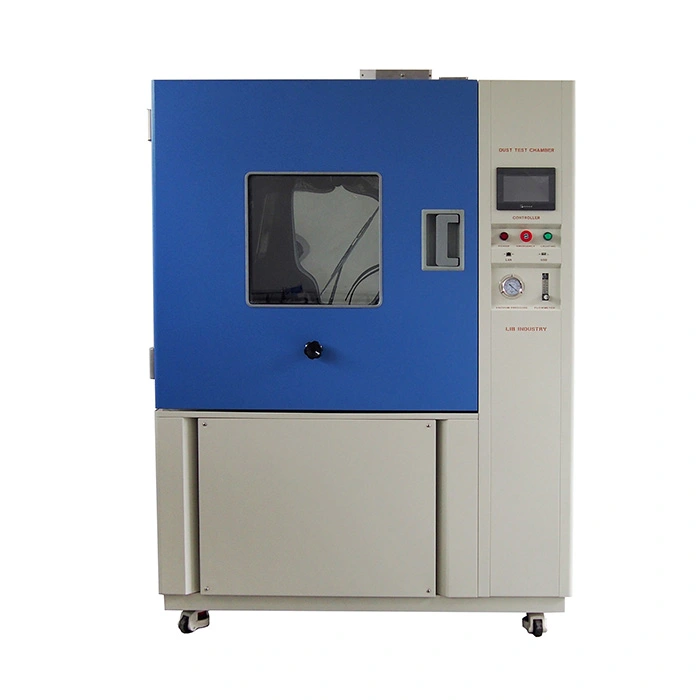
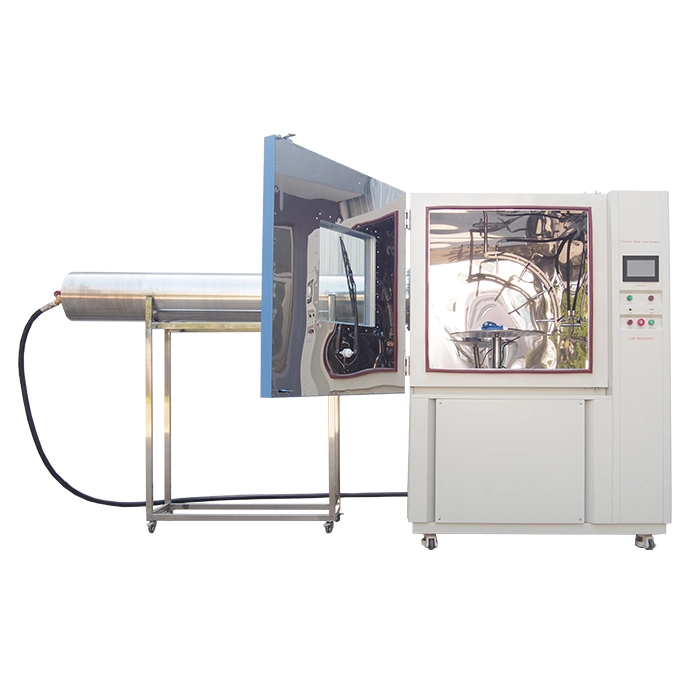
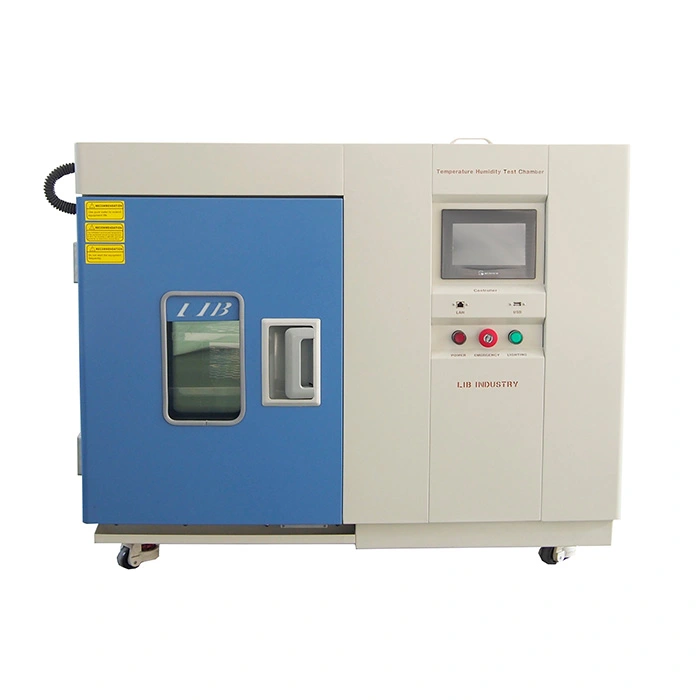
The LIB industry Cyclic Corrosion Test Chamber is designed for industrial-grade reliability validation, combining multi-phase environmental simulation with precision control and long-term operational stability.
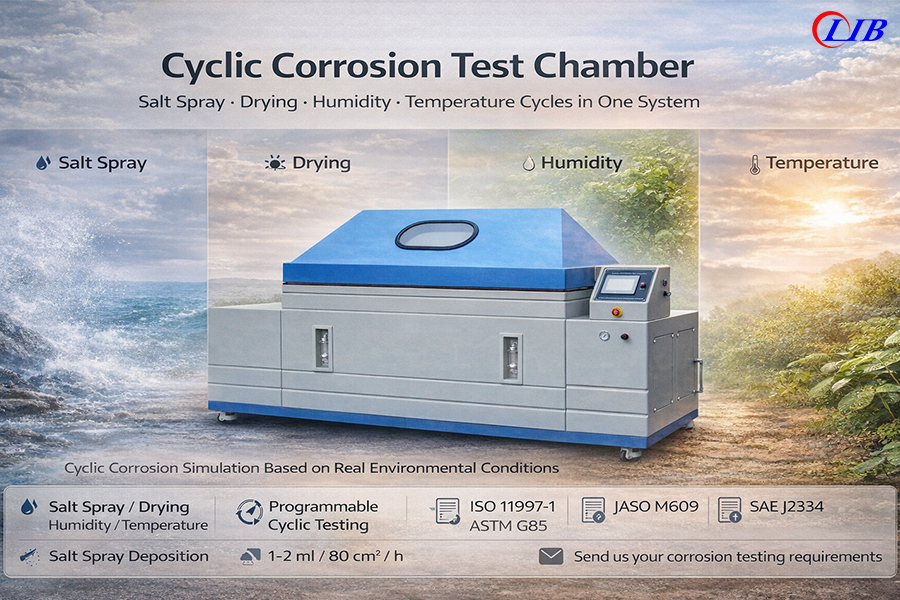
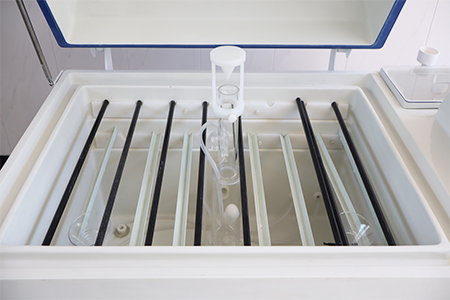
Durable, Leak-Resistant Workspace |
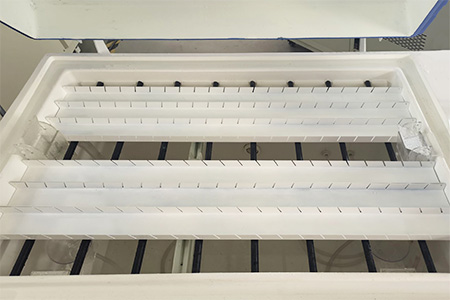
Flexible Sample Rack System |
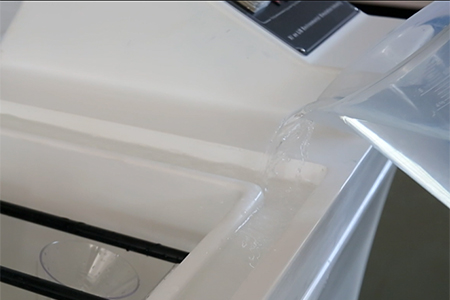
Water-Sealed Lid Design |
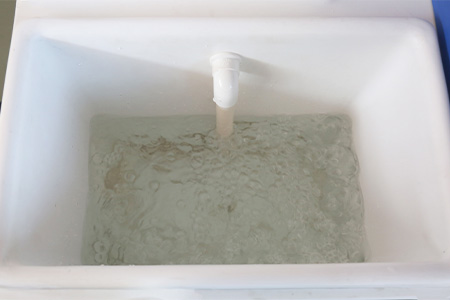
Uniform Salt Solution Agitation |
Intelligent Controller |
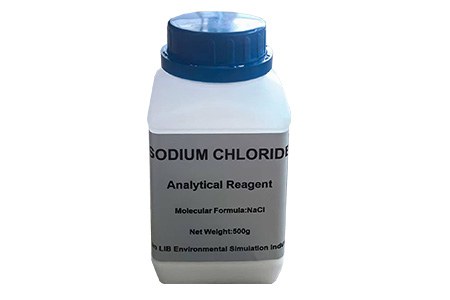
Included industrial salt |
Equipped with PT100 Class A sensors and PID control, the system ensures:
Temperature accuracy: ±0.5°C
Humidity accuracy: ±2% RH
Salt deposition rate: 1–2 mL / 80 cm²·h
Additional control features:
5±1% NaCl concentration stability
pH control between 6.5–7.2
Preheated air system (35°C ±2°C) for stable atomization
Ensures highly repeatable and standardized test conditions.
The salt fog system is engineered for durability and uniformity:
Quartz nozzles with corrosion resistance
Adjustable spray height control
Stable atomization under high-pressure delivery
Uniform distribution across chamber volume
This ensures consistent salt deposition throughout long test cycles.
A built-in collection and monitoring system enables:
Real-time salt deposition measurement
Continuous concentration tracking
Verification of ASTM B117 compliance
This provides traceable and auditable test data for quality assurance.
The touchscreen controller supports:
120 programmable test profiles
100-step multi-phase cycle programming
Multi-language interface
Ethernet remote monitoring
Scheduled operation and alarm system
Supports advanced test standards such as:
SAE J2334
ISO corrosion cycles
OEM custom protocols
Designed for long-term operation in harsh environments:
FRP inner chamber resistant to acid and salt corrosion
Electrostatic-coated steel outer structure
Pneumatic automatic lid system
Safety interlock protection
Heavy-duty mobile caster system
Ensures stability, safety, and low maintenance cost.
Supports various test configurations:
Adjustable multi-bar and V-groove holders
Custom fixtures for irregular components
Flexible angle positioning
The idea that “1000 hours equals 10 years” is no longer valid in modern reliability engineering.
True corrosion evaluation is not about time—it is about reproducing failure mechanisms under realistic environmental cycles.
A Cyclic Corrosion Test Chamber bridges the gap between laboratory testing and real-world performance by replicating how materials actually degrade in service.
Customizable chamber and test cycles
Long-term industrial reliability design
Global installation and technical support
3-year warranty with lifetime service support
Fast engineering response for custom solutions
Upgrade your reliability validation with LIB industry Cyclic Corrosion Test Chambers.
 English
 русский
 français
 العربية
 Deutsch
 Español
 한국어
한국어 italiano
 tiếng việt
 ไทย
ไทย Indonesia