In today’s industries—ranging from automotive to construction—products are increasingly required to endure prolonged exposure to outdoor environments. Ultraviolet (UV) radiation is a leading factor in material degradation, contributing to fading, cracking, and loss of mechanical properties.

To address this challenge, UV test chambers have become an essential tool for accelerated weathering evaluation. But how closely can these chambers replicate real outdoor conditions?
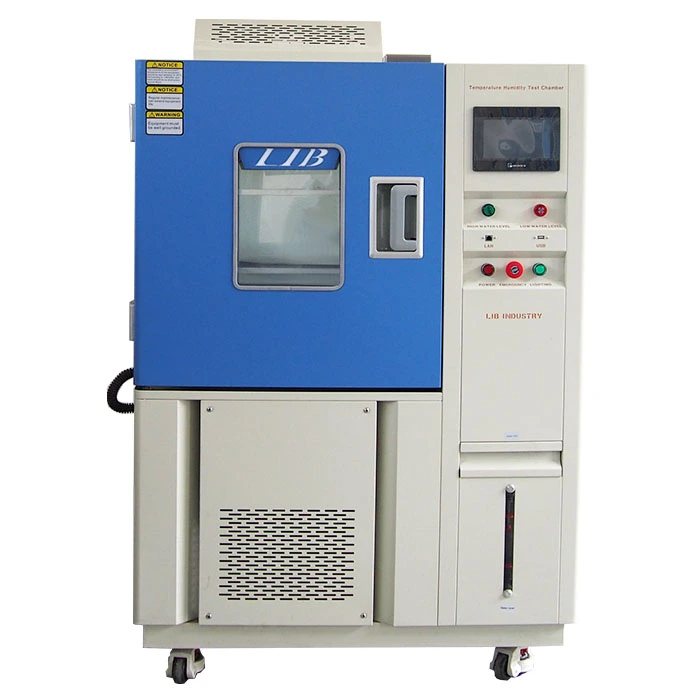
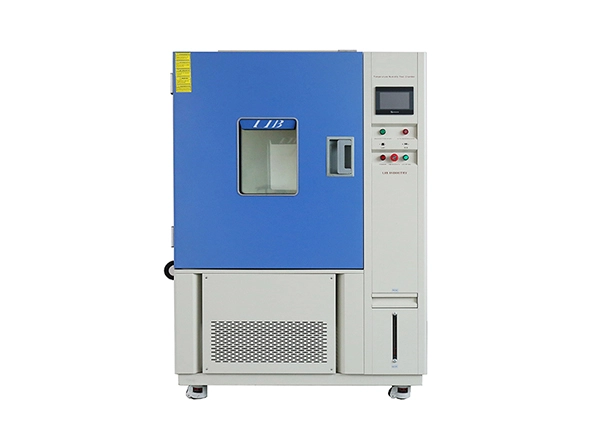
As a leading manufacturer of environmental test equipment, LIB offers advanced UV test chambers designed to simulate UV exposure, humidity, water spray and temperature fluctuations. In this article, we explore whether UV test chambers can truly mimic the complexity of outdoor weathering.
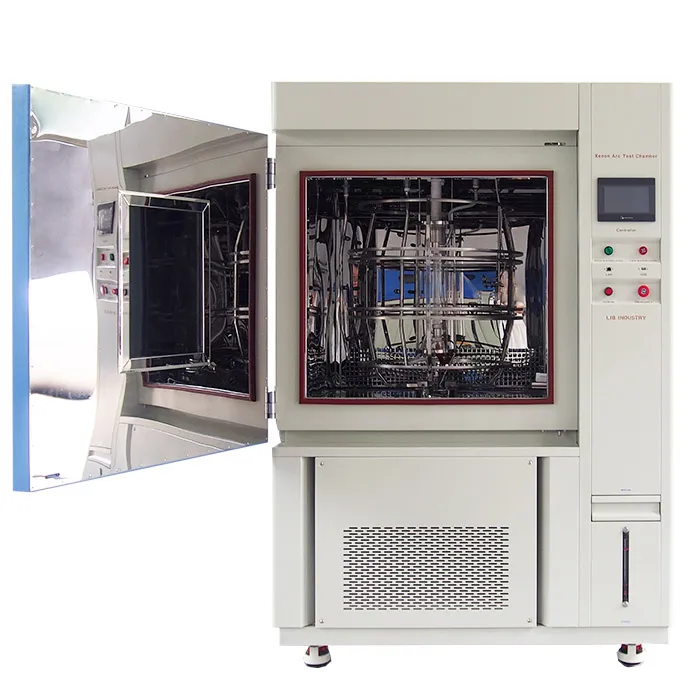
A UV test chamber, such as those developed by LIB, uses fluorescent UV lamps to expose materials to controlled cycles of ultraviolet light and moisture. These chambers are engineered to comply with key international standards including ASTM G154 and ISO 4892-3, ensuring consistency and reliability in test results.

LIB’s UV chambers allow precise control over:
UV irradiance levels
Temperature of the test area
Humidification and condensation cycles
These parameters help simulate months or even years of outdoor exposure in a matter of days or weeks.
LIB UV chambers typically use UVA-340 or UVB-313 lamps to simulate solar radiation. There are eight UV lamp tubes in total. Customers can freely choose to install all UVA, all UVB or a combination of both types of lamp tubes.
UVA-340 lamps closely replicate the UV portion of sunlight from 295 to 365 nm, which is the most relevant for material degradation. However, they do not cover the full visible or infrared range of natural sunlight.

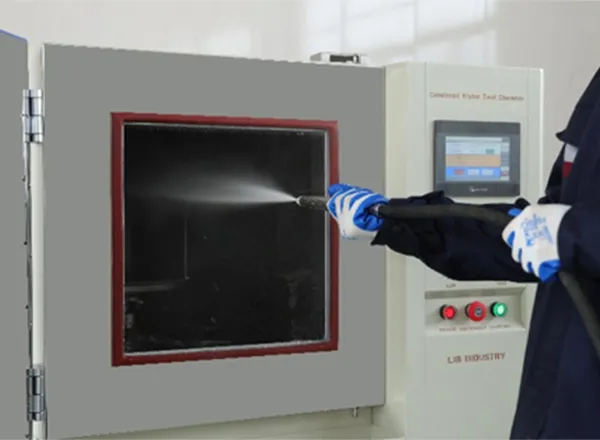
Outdoor conditions often expose materials to dew, rainfall, and varying humidity. LIB chambers simulate this by introducing controlled condensation cycles, simulating water vapor to condense on the specimen surface—mimicking nighttime dew accumulation.And the LIB UV test chamber humidity range ≥95%RH.

While outdoor temperatures fluctuate throughout the day and across seasons, UV test chambers maintain consistent elevated temperatures to accelerate chemical reactions. LIB chambers feature precise digital control to simulate thermal aging, though without the randomness of natural conditions.LIB UV light fastness test chamber temperature range control is Ambient ~ 90 ℃ ±2℃ and the BPT is 35 ~ 80 ℃.
One of the greatest advantages of UV chambers is speed. A 1000-hour test in an LIB UV chamber may represent 1 year or more of real-world exposure. However, acceleration requires assumptions, and performance in the chamber may not always mirror outdoor behavior precisely.
Despite their effectiveness, UV test chambers have some limitations:
They do not simulate pollutants, such as acid rain or salt spray.
No mechanical forces (wind, abrasion, thermal shock) are applied.
Variability in cloud cover, seasonal shifts, and geographic location is not reproduced.
For these reasons, LIB encourages users to treat UV chamber testing as one component of a broader durability strategy.
LIB UV test chambers are widely adopted in:
Automotive parts: dashboards, bumpers, and interior trim
Coatings and paints: gloss retention, colorfastness
Plastics and polymers: checking cracking, yellowing
Construction materials: siding, roofing, insulation
They are ideal for quality assurance, formulation screening, and R&D material comparison under repeatable, accelerated conditions.
For comprehensive evaluation, LIB recommends combining UV chamber testing with:
Natural exposure testing in outdoor sites (e.g., Florida or Arizona)
Combined tests: UV + salt spray or UV + thermal cycling
Field validation after lab screening
LIB also offers customized multi-environmental chambers for clients needing simultaneous exposure to multiple stressors.
Can UV test chambers truly simulate outdoor conditions? The answer is: partially, but effectively. While they cannot replicate every outdoor variable, LIB UV test chambers offer a powerful, controlled, and accelerated way to assess UV durability.
By understanding both their capabilities and limitations, manufacturers can make informed decisions—reducing product failure risks, accelerating development, and improving long-term performance.
For reliable, standards-compliant UV testing, LIB’s advanced UV test chambers provide the ideal solution trusted by professionals worldwide.If you have similar UV testing requirements, please leave your testing needs and a professional LIB engineer will respond within 24 hours. 3-year warranty and lifetime service to ensure your testing is well protected.
 English
 русский
 français
 العربية
 Deutsch
 Español
 한국어
한국어 italiano
 tiếng việt
 ไทย
ไทย Indonesia
.webp "ISO 7326 Static Dynamic Ozone Chamber for Hose")