In harsh outdoor or industrial environments, airborne dust and sand can pose serious threats to electronic, electrical, and mechanical equipment. Fine particles can infiltrate enclosures, block filters, and degrade heat dissipation, while larger sand particles can abrade surfaces, compromise seals, and stress connectors. Equipment exposed to these conditions without proper testing often suffers from premature failure, reduced reliability, and increased maintenance costs.
Manufacturers need to anticipate these environmental challenges before products are deployed. MIL-STD-810H Method 510 Dust and Sand Test Equipment provides the precise and repeatable testing required to simulate dust and sand conditions accurately. By reproducing realistic exposure, engineers can evaluate product durability, improve design, and ensure compliance with stringent standards.
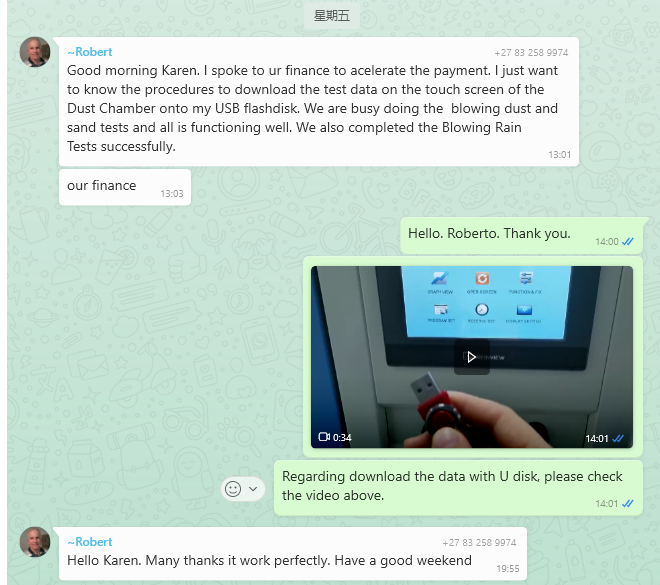
Clients worldwide rely on LIB industry’s MIL-STD-810H dust and sand test solutions for accurate and efficient testing. A recent user from the UAE shared their experience while conducting extensive blowing dust, sand, and rain tests. They noted that all functions were running smoothly and that downloading test data from the touchscreen to a USB drive was straightforward and reliable. The client expressed satisfaction with the system’s performance and ease of use, emphasizing that the equipment supported their testing workflow perfectly.
This feedback highlights how LIB industry’s solutions combine robust testing capabilities with user-friendly interfaces, ensuring consistent results even under demanding environmental simulations.
Typical Application Environments:
Desert and arid regions
Military and defense operations
Industrial sites with airborne particles
Outdoor communication and monitoring systems
MIL-STD-810H is the latest revision of the U.S. Department of Defense environmental engineering standard. Within this standard, Method 510 specifically evaluates how equipment performs when exposed to airborne dust and sand. The method defines three distinct procedures, each designed to address different environmental risks.
| Procedure | Particle Size (μm) | Air Velocity (m/s) | Concentration (g/m³) | Notes |
|---|---|---|---|---|
| I – Blowing Dust | <150 | 1.5–8.9 | 10.7 ± 7 | Fine desert dust exposure, affects electronics, filters, and enclosures |
| II – Blowing Sand | 150–850 | 18–29 | 0.18–2.2 | Abrasive impact, tests coatings, seals, connectors, and surfaces |
| III – Dust Settling | <105 | Minimal airflow | 6 g/m²/day | Simulates long-term accumulation in low-airflow environments |
Procedure I – Blowing Dust: Focuses on fine particles smaller than 150 μm. The chamber generates airflow between 1.5 and 8.9 m/s, carrying dust at a concentration of 10.7 ± 7 g/m³. This simulates powder-like desert dust that can infiltrate enclosures, block filters, and degrade heat dissipation. It is commonly used for electronics, sensors, communication equipment, and sealed enclosures.
Procedure II – Blowing Sand: Evaluates mechanical damage caused by larger particles ranging from 150 μm to 850 μm. Air velocity must reach 18–29 m/s, with sand concentrations between 0.18 and 2.2 g/m³. Sand particles strike test specimens with significant kinetic energy, stressing coatings, seals, connectors, and exposed surfaces.
Procedure III – Dust Settling: Simulates low-airflow environments, such as storage rooms, shelters, or office-type applications. Fine dust particles (<105 μm) gradually accumulate on surfaces at approximately 6 g/m²/day, evaluating long-term contamination, filter efficiency, and thermal performance under passive dust exposure.
These three procedures together provide a comprehensive assessment of dust- and sand-related risks, ensuring products meet the rigorous demands of military and industrial applications.
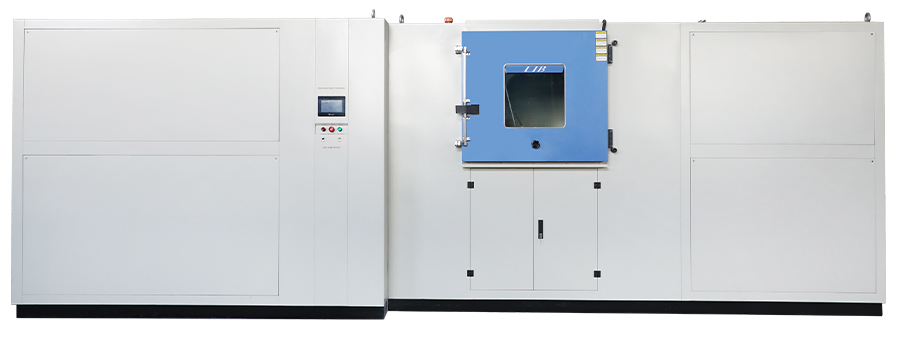
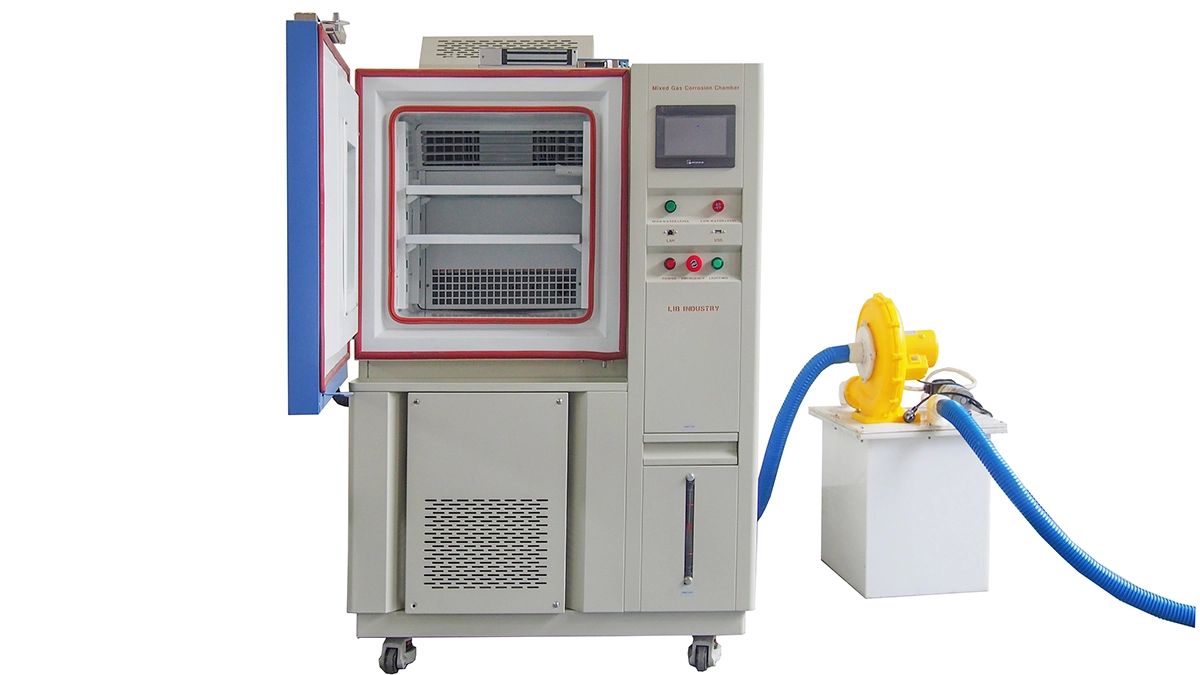
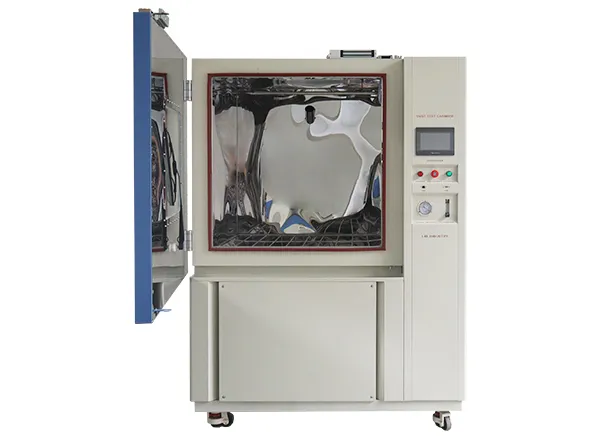
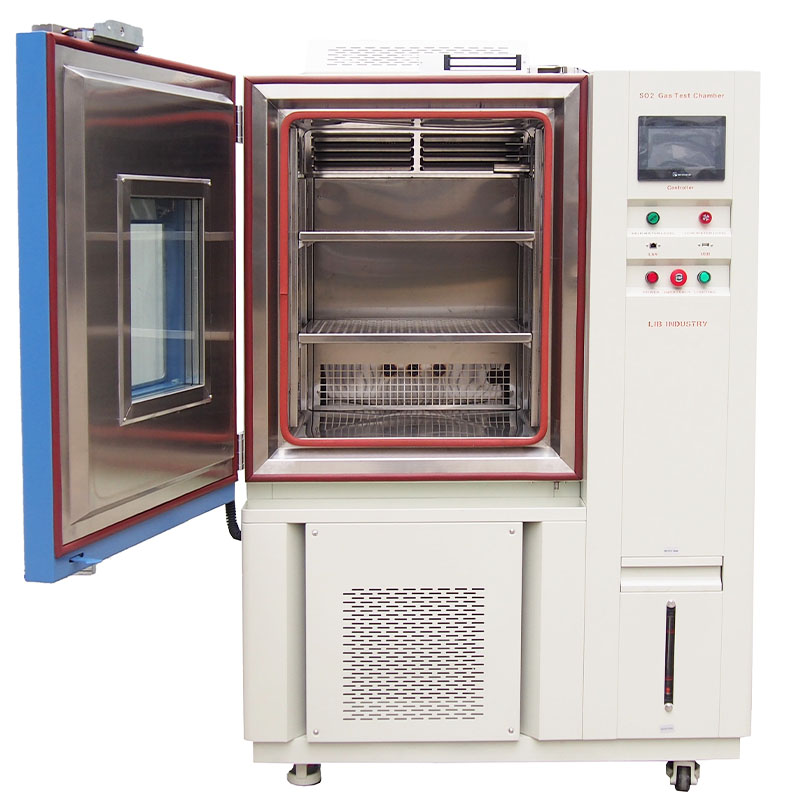
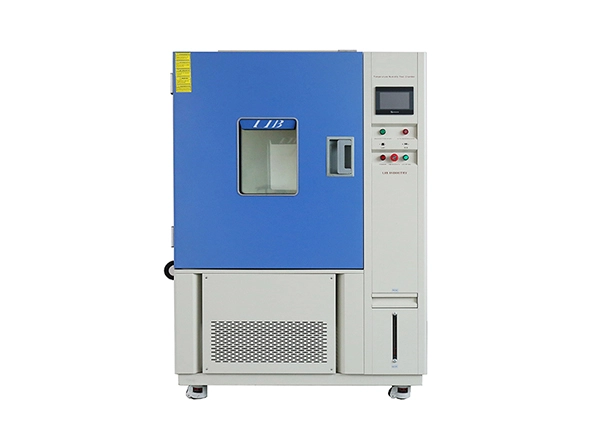
MIL-STD-810H Method 510 Dust and Sand Test Equipment is a specialized environmental testing system designed to simulate the effects of airborne dust and sand on products in controlled laboratory conditions. It enables manufacturers to evaluate how electronics, mechanical assemblies, and other sensitive equipment perform under conditions defined by the latest U.S. Department of Defense standards, ensuring both compliance and real-world reliability.
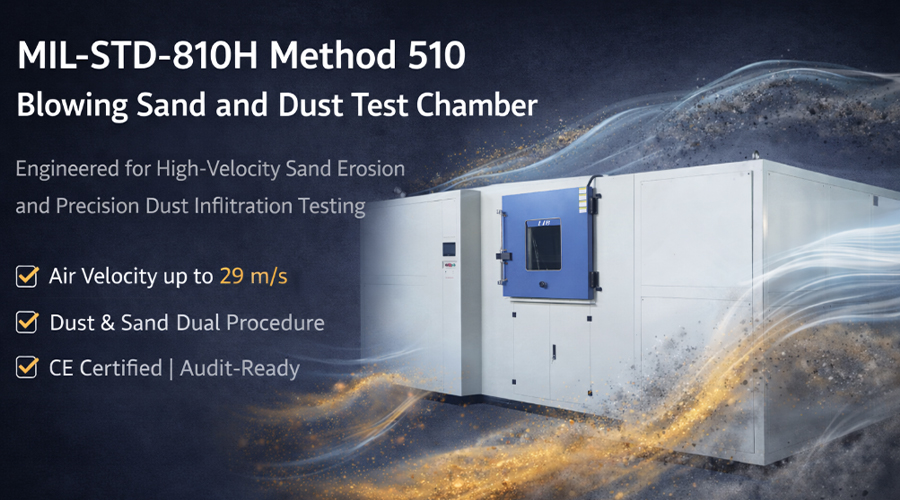
Model | DIM-1000 |
Overall Dimension | 2800*3500*2000mm D*W*H |
Interior Volume | 1000L |
Blowing Dust | |
Air velocity | 1.5 -8.9m/s |
Concentration of dust | 10.7±7g/ m³ |
Dust particles | < 150μm |
Blowing sand | |
Air velocity | 18.0 -29.0m/s |
Concentration of sand | 0.18+0.2g/m³; 1.1+0.3g/m³; 2.2+0.5g/m³ |
Sand particles | 149μm - 600μm, 600μm - 850μm |
Controller | Programmable color LCD touch screen controller |
Door Lock | Electromagnetic lock |
Testing Platform Diameter | 600mm |
Testing Platform Speed | 1-7 r.p.m |
Dust Detector | Integrated dust detector |
Exterior Material | A3 Steel Plate with protective coating |
Interior Material | SUS304 stainless steel |
Maximum Noise | 65 dBA |
 |  |
| Workroom | Large Centrifugal Fan |
| |
Testing under Method 510 is only effective if the equipment can faithfully reproduce these challenging environmental conditions. Inconsistent airflow, uneven particle distribution, or unstable test parameters can lead to misleading results, giving a false impression of product durability and increasing the risk of field failures or costly recalls.
Professional MIL-STD-810H Method 510 Dust and Sand Test Equipment addresses these challenges through a combination of precision, flexibility, and automation:
Stable Airflow Control: Maintains consistent wind speeds across all test procedures, ensuring uniform particle exposure and eliminating blind spots on the test specimen.
Advanced Particle Management: Automated feeding and circulation systems keep dust and sand concentrations accurate and evenly distributed, preventing clumping and ensuring reliability over long-duration tests.
Flexible Sample Accommodation: Designed to handle a wide range of sample sizes and weights, from small electronic components to large assemblies, allowing actual products to be tested under realistic conditions.
Continuous Operation: Supports extended testing cycles with stable environmental parameters, preventing drift and ensuring reproducible results across multiple tests.
Intelligent Control System: Programmable and automated interfaces simplify setup, monitor real-time conditions, and allow customization for unique products or non-standard testing requirements.
By combining these capabilities, the equipment ensures that manufacturers can trust their test results, identify design weaknesses, and improve product reliability. Its automation and flexibility also streamline laboratory operations, reduce manual workload, and save valuable testing time—making it an essential tool for product development, quality assurance, and certification.
1. What is the difference between Blowing Dust and Blowing Sand procedures?
Blowing Dust focuses on fine particles (<150 μm) at moderate air velocities of 1.5–8.9 m/s, simulating powder-like desert dust penetration. Dust concentration is typically 10.7 ± 7 g/m³, challenging enclosures, filters, and heat dissipation.
Blowing Sand uses larger, abrasive particles (150–850 μm) at higher air velocities of 18–29 m/s, with sand concentrations between 0.18 and 2.2 g/m³. This procedure tests mechanical abrasion, coating durability, and seal integrity, simulating harsh outdoor conditions with high-energy particle impact.
2. How does the equipment ensure uniform particle distribution?
Automated circulation and controlled airflow ensure that all surfaces of the test specimen are evenly exposed, preventing dead zones and ensuring repeatable results.
3. Can the system handle large or heavy samples?
Yes. Modern equipment supports a wide range of sample sizes and weights, from small electronics modules to large assemblies, allowing real products to be tested under realistic conditions.
4. How long can a test run continuously without intervention?
Professional systems are designed for long-duration tests. Parameters such as airflow, particle concentration, and temperature are monitored and maintained automatically, ensuring stability throughout extended test cycles.
5. Is customization available for non-standard product sizes or special test conditions?
Yes. Advanced equipment allows customization of chamber size, airflow, particle concentration, and control programs to accommodate unique products or specific test requirements.
We provide professional technical consultation, customized configurations, on-site installation and training, a 3-year warranty, lifetime technical support, and fast English-speaking after-sales service—ensuring reliable performance and peace of mind throughout the entire lifecycle of your MIL-STD-810H Method 510 Dust and Sand Test Equipment. Contact us today inquiry@libtestchamber.com to discuss how our solutions can help you achieve accurate, repeatable testing and maximize product reliability.
 English
 русский
 français
 العربية
 Deutsch
 Español
 한국어
한국어 italiano
 tiếng việt
 ไทย
ไทย Indonesia