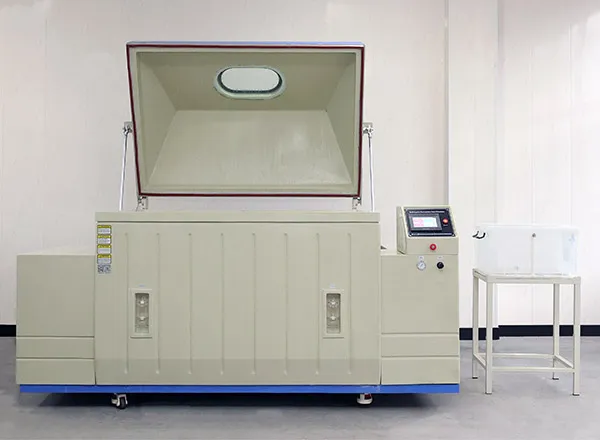
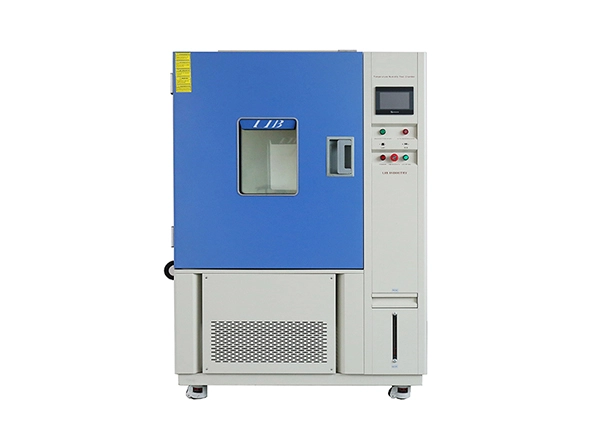
Electronic products used outdoors, in vehicles, near machines, or in portable field devices often face two main risks: fine dust and short-term water contact. A sealed box may look solid from the outside. Yet small gaps around screws, ports, cable glands, gaskets, and vent membranes can still let dust or water reach inside. This can affect the circuit board, battery, sensor, or connector. IP67 Test Equipment gives electronics makers a reliable way to check if an enclosure meets dust-tight and temporary immersion needs before full production starts.
IP67 is defined under IEC 60529 ingress protection standards, which classify how well an enclosure resists solid particles and liquids.
It consists of two protection levels:
IP6X (Dust Tight Protection)
IPX7 (Temporary Water Immersion Protection)
Together, IP67 represents one of the most widely required protection levels for outdoor and industrial electronics.

IP6X means the enclosure is completely dust-tight under standardized test conditions.
Unlike lower ratings, IP6X ensures that no fine dust particles can enter the internal structure, even after prolonged exposure.
Fine dust can cause:
PCB surface contamination
Connector contact degradation
Sensor optical interference
Cooling channel blockage
Long-term corrosion acceleration
Even invisible dust accumulation can lead to long-term performance degradation, making IP6X testing essential before production release.
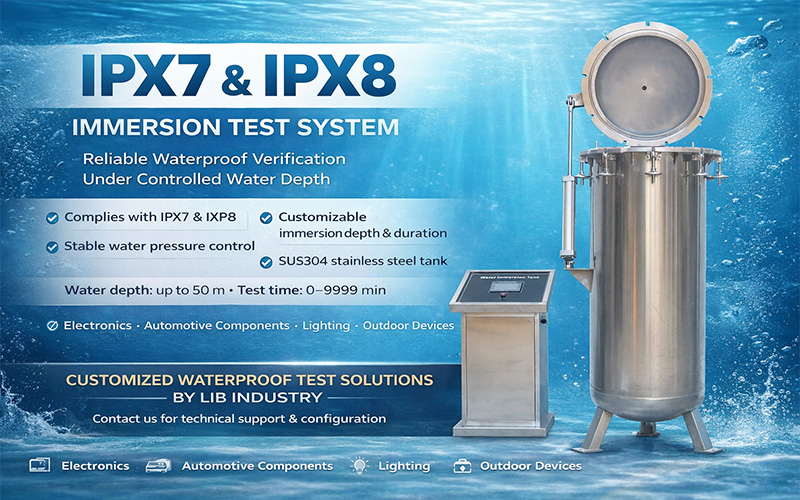
IPX7 evaluates whether an enclosure can withstand temporary water immersion for 30 minutes without harmful ingress.
Duration: 30 minutes
Depth:
Small devices: lowest point 1,000 mm below water surface
Large devices: highest point 150 mm below water surface
IPX7 does NOT mean waterproof for continuous underwater operation.
It only verifies resistance to:
Rain exposure
Temporary flooding
Accidental immersion
Cleaning water exposure
IP67 electronics testing is important for products exposed to dust, water splashes, or temporary immersion, especially where sealing failure can cause costly field damage.
Used in outdoor environments such as streets, rooftops, farms, and industrial sites. These devices must resist dust, rain, and water accumulation. Typical examples include streetlight controllers, security camera junction boxes, environmental sensors, and communication modules.
Smartphones, wearables, and portable devices are frequently exposed to sweat, rain, and dust. Weak sealing points like buttons, ports, and covers can easily allow ingress, making IP67 testing essential for durability verification.
Includes sensor housings, control modules, connectors, and battery-related components. These parts may face road dust, splashing water, and cleaning processes, where water ingress can impact safety and performance.
Used in factories, warehouses, agriculture, and outdoor installations. These devices are exposed to heavy dust and occasional water cleaning, requiring reliable enclosure protection.
A test is only useful when the setup is repeatable. For IP67 electronics testing, manufacturers should pay close attention to dust type, dust amount, sample pressure condition, water depth, immersion time, and post-test inspection.
Test Part | Main Requirement | Practical Checkpoint |
IP6X dustproof test | Dust-tight protection | No visible dust inside the enclosure after the defined test |
Test dust | Talcum powder filtered through a sieve | 50 μm wire diameter and 75 μm nominal gap |
Dust amount | 2 kg per m³ of chamber volume | Talc should not be reused beyond the allowed cycle limit |
IPX7 immersion test | Temporary water immersion | 30 minutes under the required water depth |
IPX7 depth | 1,000 mm below water surface for small enclosures, or 150 mm above highest point for larger enclosures | Product placed in normal service position when required |
For dustproof test equipment, IEC 60529-related test practice commonly uses talcum powder that can pass through a square-mesh sieve with 50 μm wire diameter and 75 μm gap, with 2 kg of talc per cubic meter of chamber volume.
Before running IP67 testing, the sample should match the real production configuration. Missing screws, temporary glue, loose connectors, or non-final gaskets can make the result misleading. A lab sample that passes with hand-applied sealant may still fail after automated assembly.
Preparation should include a record of:
· Product drawing version
· Seal material and hardness
· Screw torque value
· Cable gland type
· Connector cap condition
· Test orientation
· Power-on or power-off state
· Initial appearance and function
Dustproof electronics testing uses controlled talc circulation to challenge the enclosure. The aim is to reveal sealing weakness around mating surfaces, cable entries, vents, and movable parts.

The device under test is placed inside the dust chamber. If the enclosure has pressure changes during normal operation, a vacuum connection may be used to create a pressure difference. This is common for products where internal air pressure may drop during cooling or thermal cycling.
The sample should be positioned as it would be used in the field. For a wall-mounted controller, the cable entry direction should not be ignored. For a handheld device, button and port positions need to face realistic dust exposure.
During the test, fine talcum powder is kept suspended inside the chamber. Stable airflow matters because dead zones in the chamber may cause uneven exposure. A well-designed dustproof test equipment setup keeps dust moving around the sample while controlling leakage to protect the lab space.
After the exposure cycle, the sample is removed and opened carefully. Inspection focuses on dust marks around seals, internal PCB areas, connector cavities, display edges, and pressure balance membranes. For IP6X, visible dust inside the protected area is a serious warning sign.
IPX7 waterproof electronics testing is based on temporary immersion. The test is simple in appearance, but small handling details can change the result.

 |  |
Test Area | Footstand |
 |  |
Control Panel | Safe Lock |
The immersion tank must provide enough depth for the required test condition. The product should be placed in its service position unless the test plan defines another orientation. Accessories such as caps, plugs, and cable glands should be installed as they would be in actual use.
The standard IPX7 exposure time is 30 minutes. During this period, the enclosure faces water pressure from all immersed surfaces. A weak gasket may not leak during the first few minutes, but capillary paths around screws or connectors can open gradually.
After immersion, the outer surface should be dried before opening. The inspection should separate harmless external water from actual internal ingress. Functional checks may include power-on testing, display response, insulation checks, communication signal, charging function, and sensor reading stability.
Reliable test equipment helps reduce uncertainty in product qualification. LIB IP67 Test Equipment combines dustproof and waterproof testing needs for manufacturers working with electronic enclosures, outdoor devices, automotive parts, lighting products, and industrial equipment. The IP67 solution covers IP6X dust ingress verification and IPX7 temporary water immersion in line with IEC 60529-related testing needs.
LIB’s IP67 testing setup includes IP6X dust test equipment and IPX7 water immersion equipment. This structure allows manufacturers to run dust-tight and water immersion checks as separate, controlled tests instead of treating IP67 as a single rough exposure.
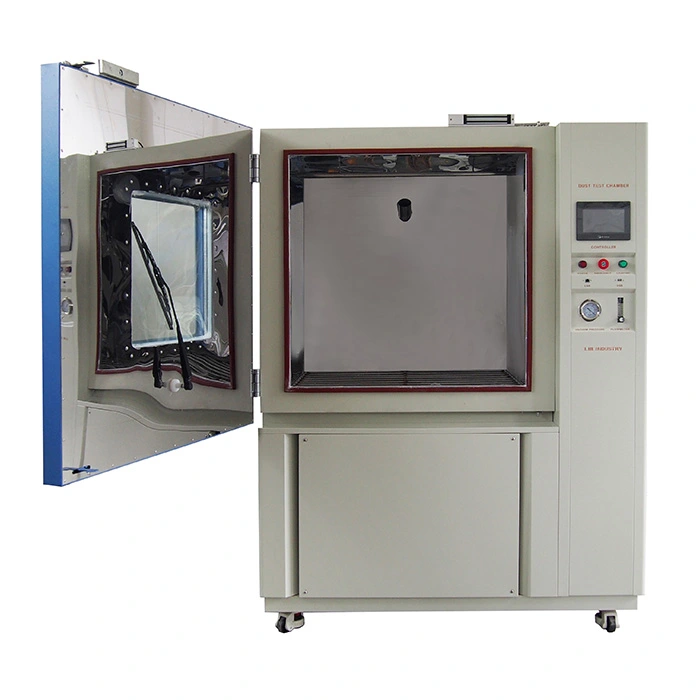
The dust test equipment supports controlled dust circulation, sealed chamber structure, programmable operation, and chamber volumes suitable for different electronic enclosure sizes. Its listed dust-related parameters include 50 μm wire diameter, 75 μm nominal gap, low-humidity test conditions, and adjustable test time settings.
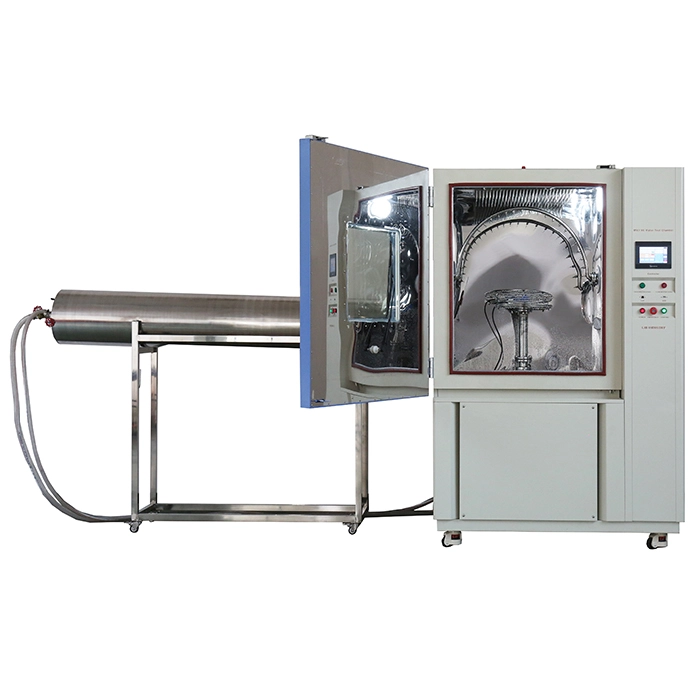
The water immersion equipment is built for controlled water depth and pressure simulation. LIB’s listed immersion system includes a cylindrical tank structure, pneumatic lid, automatic water supply, and a pressure capability equivalent to 50 m water depth, supporting IPX7 and extended validation work where required.
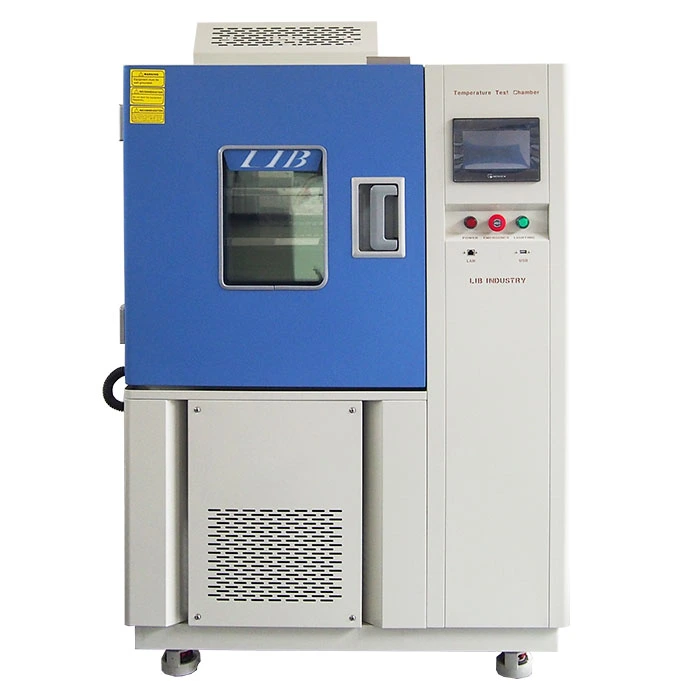
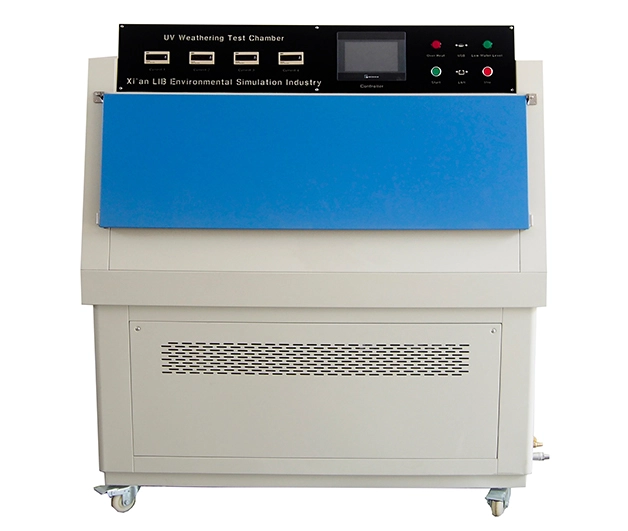
Xi’an LIB Environmental Simulation Industry has worked in environmental test chambers since 2009, with products covering temperature and climate chambers, corrosion chambers, dust and water IP chambers, weathering chambers, and special test chambers. The company also provides design, manufacturing, sales, service, installation, training, and after-sales support for global customers.
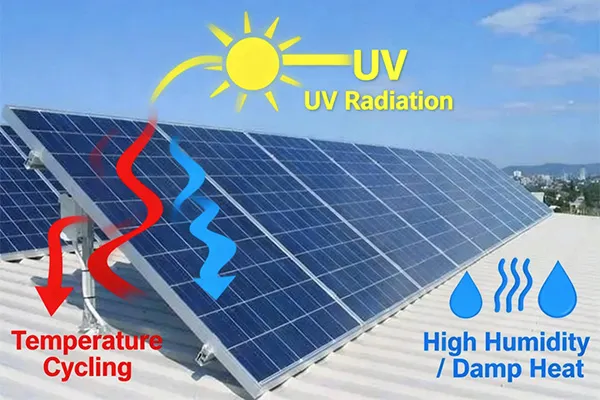
Electronics makers benefit because enclosure testing rarely stands alone. A device that passes IP67 may still need thermal cycling, humidity, salt fog, UV, or vibration tests. LIB’s full range helps teams create complete reliability plans around IP67 enclosure testing.
In real-world validation, IP67 is only one part of product reliability. Most electronic devices require testing across multiple environmental conditions beyond dust and water resistance.
To meet these needs, LIB industry provides customized full IP testing laboratory solutions, including:
IP5X / IP6X dust testing systems
IPX1–IPX9K water ingress testing systems
Integrated IP test lab layouts for R&D and production
Combined temperature, humidity, dust, and water test systems
Customized chamber designs for non-standard products
This integrated approach helps manufacturers build a complete ingress protection validation system, improving test efficiency and reducing gaps between different environmental test stages.

 English
 русский
 français
 العربية
 Deutsch
 Español
 한국어
한국어 italiano
 tiếng việt
 ไทย
ไทย Indonesia