Sunlight is quietly the toughest test any sealant or adhesive will ever face. UV radiation breaks down polymer chains, heat accelerates the damage, and repeated wetting pushes moisture straight to the bond line. The result? Yellowing, chalking, cracking, embrittlement, softening — and joints that lose shear or peel strength long before anyone expected.
If you're evaluating a UV aging test chamber for sealants and adhesives, you already know the stakes: one bad batch, one failed field bond, and the cost isn't just material — it's your reputation. This guide walks through how to test correctly, what standards actually apply, and how to pick equipment that won't let you down after the sale.

Simply parking samples under a UV lamp doesn't produce data anyone can trust. A test that actually means something connects four things: the real service environment, the right light source, a realistic moisture cycle, and consistent specimen preparation. Skip any one of these and your comparison data is noise, not evidence.
One detail engineers often miss: a dark sealant bead runs hotter than the surrounding chamber air. That's why black-panel temperature (BPT), not chamber air temperature, is the control value that actually matters.
Start with your product spec, not the chamber. General weathering practices (like ASTM G154) describe how the equipment runs — they don't tell you what to test or how long. Material-specific standards do that job.
ASTM C1442 — artificial weathering for sealants
ASTM C793 — typically 250 hours of exposure, followed by low-temperature bending and visual inspection
ASTM C1519 — adds cyclic joint movement, so extension and compression actually drive the failure
ASTM D904 — bonded joints under fluorescent UV or xenon-arc light
ISO 9142 — laboratory aging conditions, followed by lap shear, peel, cleavage, or tensile testing
Reference Route | Cycle Parameters | Typical Use |
ISO 9142 + ISO 4892-3 | UVA-340; 8h UV at 0.76 W/m²/nm @ 340nm, 60°C BPT; 4h condensation @ 50°C | Exterior adhesive joints |
ASTM D904 + ASTM G154 | UVA-340; 4h UV at 0.83 W/m²/nm @ 340nm, 60°C BPT; 4h condensation @ 50°C; 168h+ | Comparative adhesive aging |
ASTM G154 Cycle 1 | UVA-340; 8h UV at 0.89 W/m²/nm @ 340nm, 60°C BPT; 4h condensation @ 50°C | General outdoor screening |
ISO 9142 + ISO 4892-2 | Xenon; 102 min dry + 18 min spray; 0.51 W/m²/nm @ 340nm; 63°C BPT, 38°C chamber, 50% RH | Full-spectrum exposure |
Quick decision guide:
Need realistic outdoor comparison? → UVA-340
Need fast, severe screening (and don't mind it being less realistic)? → UVB-313
Testing for color change or need full-spectrum sunlight simulation? → Xenon arc

Step 1 — Lock in your standard and cycle. Record lamp type, irradiance, control wavelength, BPT, chamber temperature, wetting duration, and total hours. Any deviation from the standard cycle gets documented — no exceptions.
Step 2 — Prepare specimens like production parts. Use representative substrates, surface treatment, bond-line thickness, and mixing ratio. Minimum: three exposed replicates, three controls. Keep clamping pressure and overlap length consistent across the batch.
Step 3 — Program the chamber precisely. Enter the full sequence and confirm irradiance calibration, lamp age, BPT sensor position, and water quality. A common exterior screen: 8 hours UVA-340 at 60°C BPT, 4 hours condensation at 50°C.
Step 4 — Mount specimens correctly. Face the test surface toward the lamps at the specified distance. Seal unused openings so airflow and condensation stay stable. Irregular parts need proper holders — sagging or shadowing will ruin your data.
Step 5 — Run the full UV / condensation / spray cycle. Condensation simulates long dew periods; spray adds rain-washing and thermal shock. Use deionized water and check nozzle flow to avoid mineral contamination.
Step 6 — Inspect at set intervals. Check at 168, 250, 500, and 1,000 hours. Photograph consistently. Track color, gloss, blistering, chalking, cracking, edge lift, tackiness, and bond-line condition.
Step 7 — Post-condition, then test immediately. Bring exposed and control samples to the specified temperature and humidity before mechanical testing — moisture loss can temporarily mask real strength loss, so don't wait.
Appearance alone won't tell you the full story — a clean-looking surface can hide a badly weakened bond, and visible chalking sometimes barely touches joint strength.
Appearance evaluation: Use consistent scales for discoloration, gloss loss, cracking, crazing, chalking, blistering, and erosion. Calibrated photos matter — and always note whether damage reaches the bond edge.
Sealant mechanical performance: Tensile adhesion, elongation, modulus, hardness, elastic recovery, and survival through extension-compression cycling. Report crack depth and the percentage of adhesive vs. cohesive loss.
Adhesive bond strength retention: Retention (%) = aged strength ÷ unaged control strength × 100. Report the average, standard deviation, and individual values — "72% retention" tells your customer far more than "it passed."
Failure mode classification: Adhesive (at the substrate), cohesive (within the material), substrate failure, or mixed. A shift toward interfacial failure is often the first sign of a primer or surface-prep problem.
What a complete report needs:
Standard and cycle designation
Lamp, irradiance, wavelength, BPT, chamber temperature
Condensation, spray, humidity, and water-quality settings
Specimen dimensions, substrates, prep, cure, and mounting
Exposure hours, interruptions, inspection points, and results
Treating ASTM G154 as one fixed test. "Tested to ASTM G154" means nothing on its own — state the lamp, cycle, irradiance, temperatures, wetting mode, and duration.
Comparing results across different lamps or chambers. UVA-340, UVB-313, and xenon each drive different degradation chemistry. Chamber geometry, sensor control, and lamp age all shift severity too.
Skipping controls and replicates. One specimen can't show you normal scatter. Controls establish the baseline; replicates confirm repeatability; a reference material catches chamber drift before it wrecks your data.
Overlooking substrate prep and cure conditions. Oil residue, sanding pattern, primer thickness, open time, humidity, and cure temperature can dominate your result more than irradiance or BPT ever will.
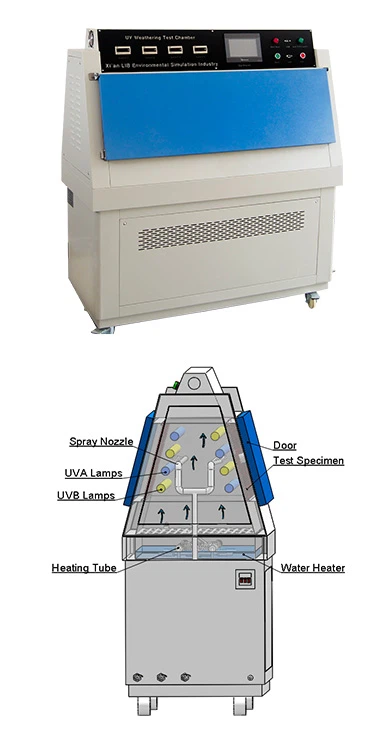
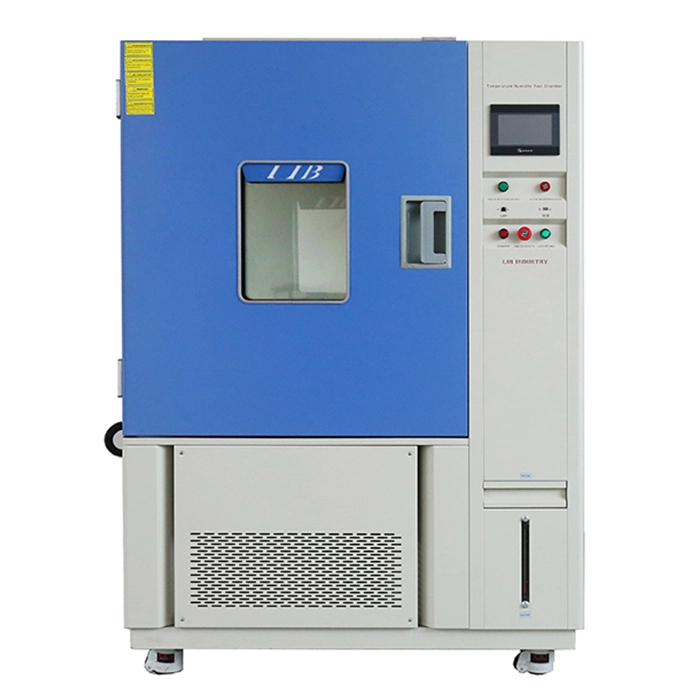
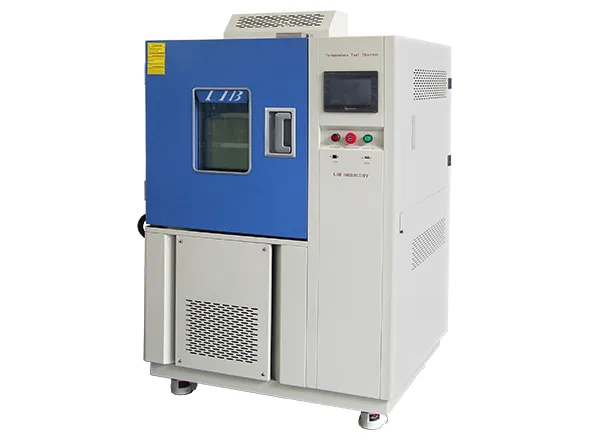
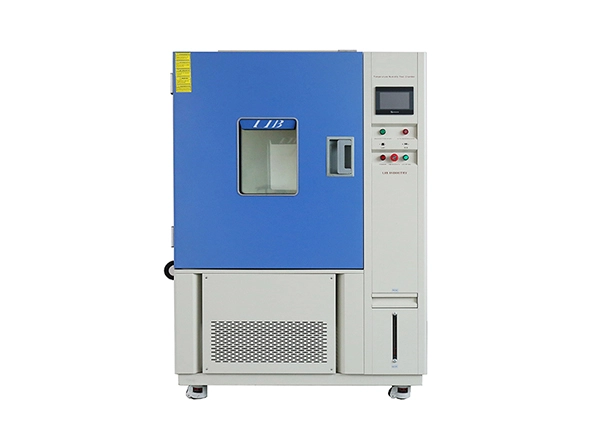
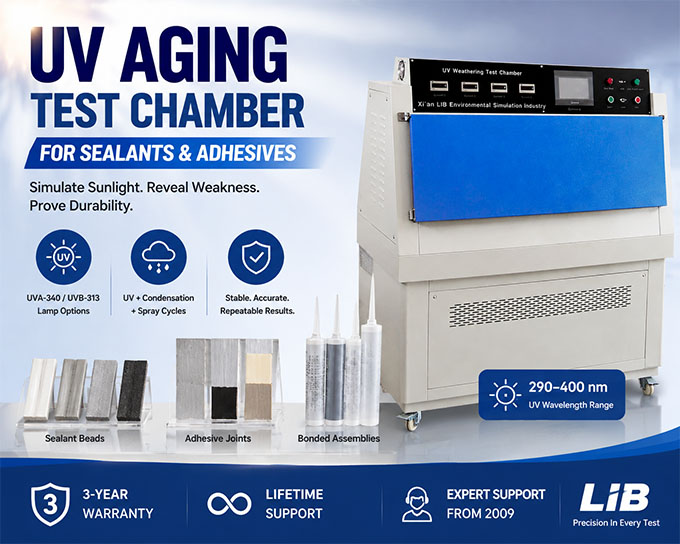
A UV environmental test chamber for sealants and adhesives has one job: hold stable optical, thermal, and moisture conditions — while still accommodating beads, bonded coupons, and irregular assemblies that don't fit a standard flat panel.
Model | UV-SI-260 |
|
Internal Dimension (mm) | 450*1170*500 | |
Overall Dimension (mm) | 680*1300*1500 | |
Irradiation Source | Fluorescent UV lamps (8) - 40 W | |
Temperature Range | Ambient ~ 90 ℃ ±2℃ | |
Black Panel Temperature (BPT) | 35 ~ 80 ℃ | |
Humidity Range | ≥95% RH | |
Bandwidth | 290 ~ 400 nm | |
Irradiance Control | 0.3~20 W/㎡ | |
Distance of Specimen and lamp | 50 mm | |
Heating Element | Nichrome heater | |
Controller | Programmable color LCD touch screen controller | |
Ethernet connection, PC Link,USB | ||
Water Supply System | Automatic water supply, Water purification system | |
Interior Material | SUS304 stainless steel | |
| Standards | ASTM G154, ASTM G15, ISO 4892, ASTM D4329, ISO 16474-3, IEC 61215, IEC 61730 | |
What sets it apart:
UVA-340 and UVB-313 lamp options for exterior simulation or severe screening, with lamp-current monitoring to catch output decline before it skews your data
Programmable UV, dark, condensation, and spray stages via touch-screen controller, plus Ethernet connectivity for remote status checks
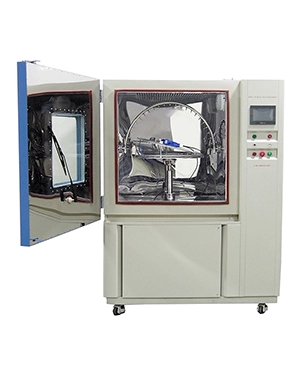
Integrated water spray simulation — ten nozzles for rain-washing and thermal shock, with automatic water supply and purification to prevent mineral deposits on specimens
Flexible specimen holders for bonded joints, thicker beads, and non-flat parts, with stainless-steel interiors built for extended, heavy-use operation
Support doesn't stop at delivery. When the Department of Materials Chemistry at Xi'an Jiaotong University brought a UV aging test chamber into their lab, LIB's team went on-site to handle full installation and hands-on operator training — from chamber commissioning and calibration checks to walking the research team through cycle programming and specimen mounting.
 |  |
For a university research lab running varied, non-standard test programs, that kind of direct, in-person support matters as much as the equipment itself. It's the same 3-year warranty and lifetime technical support every LIB customer gets — just delivered in person when the situation calls for it.
Test equipment is a long-term relationship, not a one-time purchase. That's why every LIB UV aging test chamber comes with:
A full 3-year warranty covering the chamber's core components — no hidden exclusions, no surprise fees for standard defects
Lifetime technical support, so when a lamp needs replacing or a cycle needs recalibrating five years from now, you're not on your own
Calibration, installation, and commissioning support from a team that has done this since 2009
Operator training included, so your team runs the chamber correctly from day one — not after a few costly mistakes
This is the difference between buying a chamber and buying a testing capability that keeps working for as long as you need it.
Have a spec sheet or a specific failure mode you're trying to replicate? Talk to a LIB engineer before you buy — we'll help you match the cycle to your product, not just sell you a box.
LIB has manufactured environmental test chambers since 2009, with a product range spanning weathering, climatic, corrosion, dust, water-ingress, and custom-designed chambers. We handle design, production, calibration, delivery, installation, commissioning, and operator training end-to-end — backed by a 3-year warranty and lifetime technical support for customers in more than 56 countries.
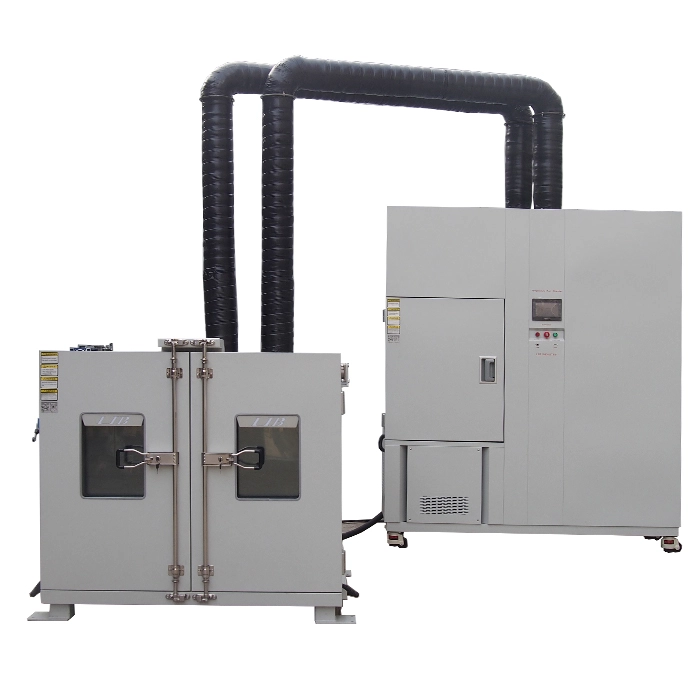
UV aging rarely tells the whole story on its own. Depending on your product's service environment, these often round out a complete test program:
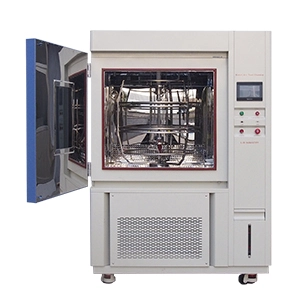
— if color stability or full-spectrum sunlight exposure matters as much as UV degradation, xenon arc testing (ISO 4892-2) fills the gap that fluorescent UV can't cover. |
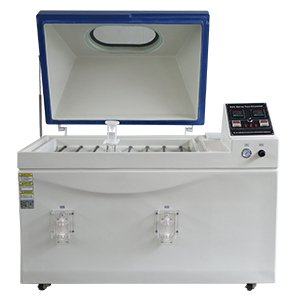
Salt Spray / Humidity Test Chamber — sealants and adhesives used outdoors or in coastal, automotive, or marine applications often need corrosion resistance data alongside UV aging results. |
A reliable accelerated weathering test for sealants and adhesives comes down to three things: representative specimens, controlled chamber conditions, and honest measurement of retained performance. Match your light source and moisture cycle to the product's real service environment — and remember that lab hours are not a direct stand-in for outdoor years. Properly documented data is what actually reveals formulation weaknesses and guides better product decisions.
Ready to spec out a UV aging test chamber for your sealant or adhesive line? Contact LIB for a free consultation — including cycle recommendations, a custom quote, and details on our 3-year warranty and lifetime support.
Is UVA-340 or UVB-313 better for adhesive testing?
UVA-340 is better for realistic outdoor comparison. UVB-313 is faster and suited to severe screening, but its short-wave output can create damage patterns unlike natural sunlight.
Should adhesives be tested with fluorescent UV or xenon arc?
Use fluorescent UV when short-wave UV and condensation are the dominant stresses. Use xenon arc when color change, visible light, infrared heating, or full-spectrum sunlight exposure matters.
What is the best UV environmental test chamber for sealants and adhesives?
Look for closed-loop irradiance control, accurate BPT measurement, programmable condensation and spray cycles, water treatment, flexible holders for bonded joints, and enough capacity for both controls and replicates.
Does LIB provide long-term support after purchase?
Yes — every LIB UV aging test chamber includes a 3-year warranty and lifetime technical support, plus calibration and operator training, so your equipment stays accurate and reliable for the long run.
 English
 русский
 français
 العربية
 Deutsch
 Español
 한국어
한국어 italiano
 tiếng việt
 ไทย
ไทย Indonesia