Electrical insulation terminals and connector components can be exposed to temperature variations, humidity, corrosive environments, and solar radiation throughout their service life. Evaluating their reliability under these combined environmental stresses often requires more than a conventional single-function test chamber.
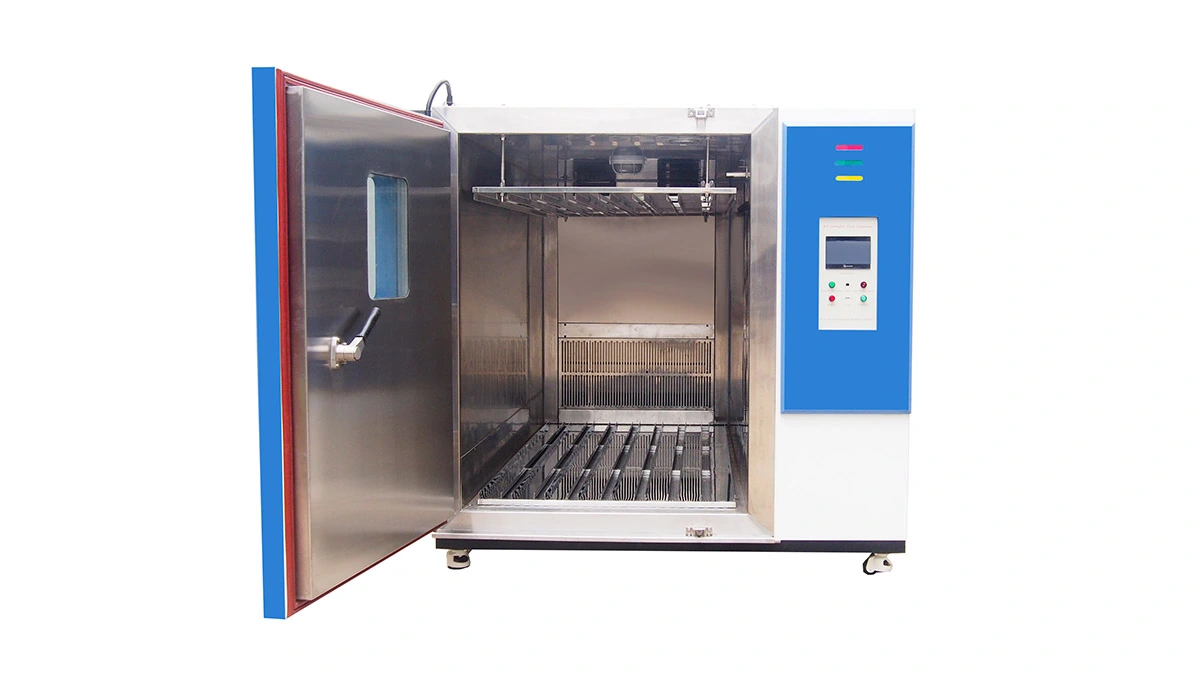
To meet a customer's specific testing requirements, LIB Industry recently completed a customized walk-in environmental test chamber integrating temperature and humidity, salt spray, and xenon arc light exposure into one system.
The chamber was specifically designed for 6 insulation terminal specimens. It features 6 dedicated test ports arranged on one side, 6 water-cooled xenon arc lamp tubes installed on the top, 6 salt spray systems, an external large-capacity salt solution tank, and front and rear access doors.
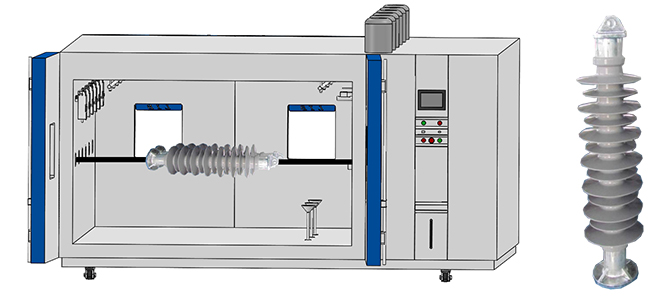
The project demonstrates LIB Industry's capability to develop environmental testing equipment around the customer's actual specimens, test conditions, and laboratory workflow rather than simply modifying a standard chamber.
The customer's testing application required a fixed set of insulation terminals to undergo controlled environmental exposure within the same chamber.
Based on these requirements, LIB Industry developed a walk-in chamber with a customized internal layout.
The main design features include:
Dedicated test ports, one per specimen, arranged on one side
Temperature and humidity environmental control
Water-cooled xenon arc lamp tubes mounted on the chamber top
Approximately 1,500-hour service life for each xenon lamp tube
Independent salt spray systems, one per test port
External large-capacity salt solution tank
Front and rear chamber doors
Walk-in testing space for specimen installation, inspection, and maintenance
Rather than treating the specimens as a general load inside a standard chamber, the internal arrangement was developed around their actual installation positions.
This approach allows the temperature and humidity system, xenon light source, and salt spray system to work together within the same controlled testing environment.
Insulation terminals and connector-related components can be exposed to a combination of environmental stresses during transportation, installation, and service.
Temperature changes can affect material properties and dimensional stability. Humidity can influence insulation and sealing performance. Salt-containing environments can accelerate corrosion of exposed metallic components, while solar radiation can contribute to long-term material aging.
For connector applications, the IEC 60512 series provides a range of environmental and performance test methods for electrical connectors and their components.
Relevant methods include climatic sequence testing and salt mist corrosion testing. For automotive electrical and electronic components, ISO 16750-4 addresses climatic environmental loads and includes various environmental stresses applicable to vehicle electrical and electronic equipment.
The exact test temperature, humidity, salt concentration, exposure duration, irradiance, cycling sequence, and acceptance criteria depend on the applicable product standard and customer test specification.
Therefore, the role of this customized chamber is to provide a controllable environmental test platform that can be configured around the required test procedure.
The core engineering feature of this project is the integration of three environmental simulation functions into one walk-in system.
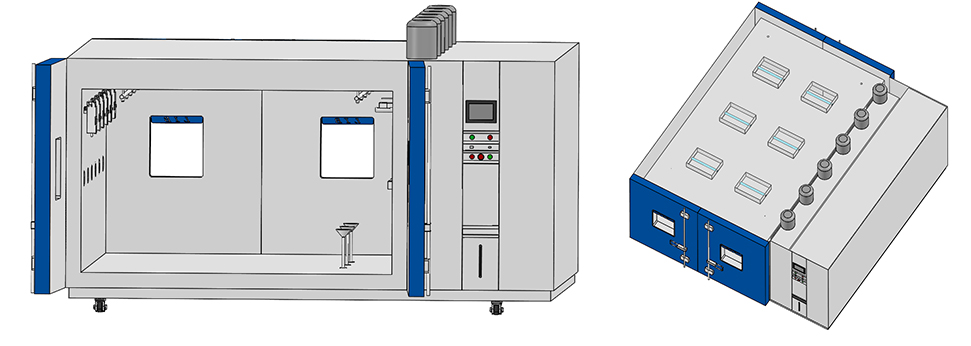
The chamber provides controlled temperature and humidity conditions for environmental reliability testing.
For insulation terminals and related electrical components, temperature and humidity exposure can be used to evaluate material stability, insulation performance, sealing characteristics, and resistance to climatic conditions.
The temperature and humidity system can be configured according to the customer's required test range and environmental cycling procedure.
Instead of requiring separate equipment for different environmental conditioning stages, the integrated configuration provides a larger testing space in which multiple specimens can be exposed under controlled climatic conditions.
Parameter | Typical Reference Range |
Temperature Range | -40°C to +150°C |
Temperature Uniformity / Fluctuation | ±2.0°C uniformity, ±0.5°C fluctuation |
Humidity Range | 20% to 98% RH |
Humidity Fluctuation | ±2.5% RH |
To provide controlled salt mist exposure within the test space, the customized chamber incorporates six independent salt spray systems, one per test port.
Salt spray testing is commonly used to evaluate the corrosion resistance of metallic materials, coatings, terminals, connectors, and other components.
The system includes:
Independent salt spray systems for each test port
External large-capacity salt solution tank
Controlled salt mist generation
Internal spray distribution designed around the specimen arrangement
External access for salt solution management and maintenance
Parameter | Typical Reference Range |
Salt Solution Concentration | 5% NaCl solution |
Spray Volume / Settlement Rate | 1 to 2 ml per 80 cm² per hour |
Salt Solution Tank Capacity | large-capacity external tank, 100 L |
For connector-related applications, salt mist corrosion testing can be referenced to IEC 60512-11-6. Depending on the application, automotive components may also be evaluated according to relevant environmental requirements in ISO 16750-4.
The actual salt concentration, spray rate, collection rate, test duration, and other conditions should be established according to the applicable testing standard or customer specification.
Another key feature of this customized chamber is the water-cooled xenon arc lamp tubes installed on the top of the chamber.
Xenon arc lamps are used to reproduce controlled artificial sunlight exposure for accelerated weathering and light-aging tests. Compared with a conventional air-cooled configuration, water cooling is particularly suitable for applications requiring stable lamp operation and effective heat management.
For this project, the chamber is equipped with:
Xenon System Parameter | Customized Configuration |
Light Source | Water-cooled xenon arc lamp |
Quantity | One lamp tube per test port |
Installation | Mounted on the top of the chamber |
| Irradiance Range | 0.55 W/m² at 340 nm, or controlled across 300–400 nm |
| Wavelength Range | 300 nm to 800 nm, simulating full-spectrum solar radiation |
Lamp Service Life | Approximately 1,500 hours |
Specimen Layout | Optimized according to each insulation terminal position |
The approximately 1,500-hour lamp service life supports extended testing programs and reduces the frequency of xenon lamp replacement during the equipment's operating life. (Full irradiance and wavelength specifications are detailed in the "Reference Technical Performance Parameters" section below.)
The xenon lamps are arranged on the top of the chamber according to the overall position of the test specimens below.
The purpose of this customized layout is to help provide consistent light exposure across the testing area.
The lamps are therefore not simply an added function — their arrangement was considered together with the specimen positions, chamber structure, and other environmental systems.
This is particularly important when multiple specimens need to be tested simultaneously under comparable light exposure conditions.
The specific irradiance level, monitoring wavelength, exposure cycle, and other xenon test conditions can be configured according to the applicable test method and customer requirements.
A distinctive structural feature of this project is that all test ports are positioned on the same side of the chamber.
The insulation terminals can therefore be installed and accessed from a consistent working side.
This arrangement provides a clear and organized specimen installation area while allowing the remaining chamber space to accommodate the xenon and salt spray systems.
The one-side test-port configuration also demonstrates the level of customization possible when a chamber is designed around actual test specimens rather than a generic internal layout.
Importantly, the test ports are not simply openings added to a standard chamber. Their location was considered together with:
The insulation terminal positions
The top-mounted xenon lamps
The salt spray systems
Internal environmental circulation
Operator access requirements
This integrated approach helps create a more practical testing environment for simultaneous multi-specimen testing.
The walk-in chamber is equipped with both front and rear doors.
The dual-door configuration provides greater flexibility during specimen installation, inspection, cleaning, and maintenance.
Operators can use the chamber from different access directions when handling the insulation terminals or performing maintenance on internal components.
For a large customized environmental chamber, accessibility is an important engineering consideration because environmental systems such as lamps, spray nozzles, specimen fixtures, sensors, and internal circulation components all require periodic inspection.
The front-and-rear access design therefore complements the test-port layout and contributes to easier daily operation.
The environmental testing of insulation terminals and connector-related products may involve different standards depending on the application.
The IEC 60512 series covers test methods for electrical connectors and connector components.
Different sections address electrical, mechanical, climatic, and environmental performance. For this type of application, climatic and salt mist test methods may be relevant depending on the customer's test specification.
IEC 60512-11-6 addresses corrosion, salt mist testing for connectors.
This provides a relevant reference when evaluating the resistance of connector and terminal components to corrosive salt environments.
For automotive electrical and electronic equipment, ISO 16750-4 addresses climatic loads.
Depending on the component and application, environmental conditions may include temperature, humidity, temperature cycling, and other climatic stresses.
LIB Industry configures the temperature range, humidity range, salt solution concentration, spray settlement rate, xenon irradiance, exposure duration, test cycle, specimen positioning, and acceptance criteria for each order according to the applicable standard and the customer's testing procedure.
This insulation terminal project demonstrates that environmental testing equipment can be designed around the actual test specimen and testing procedure, rather than being limited to a fixed standard configuration.
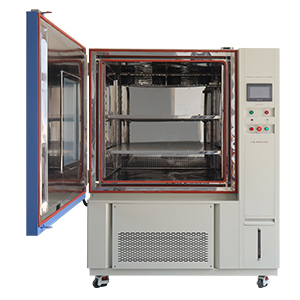
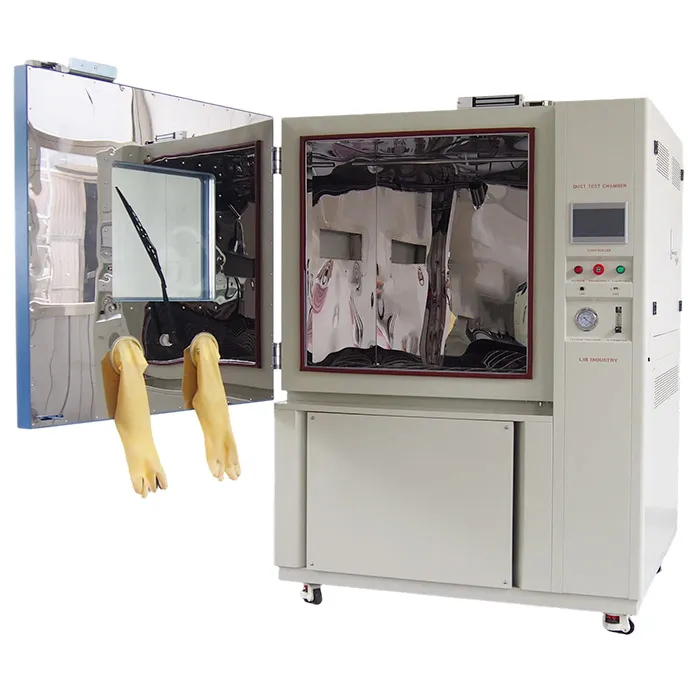
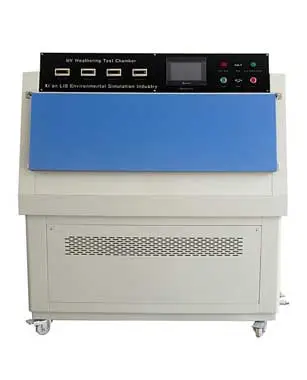
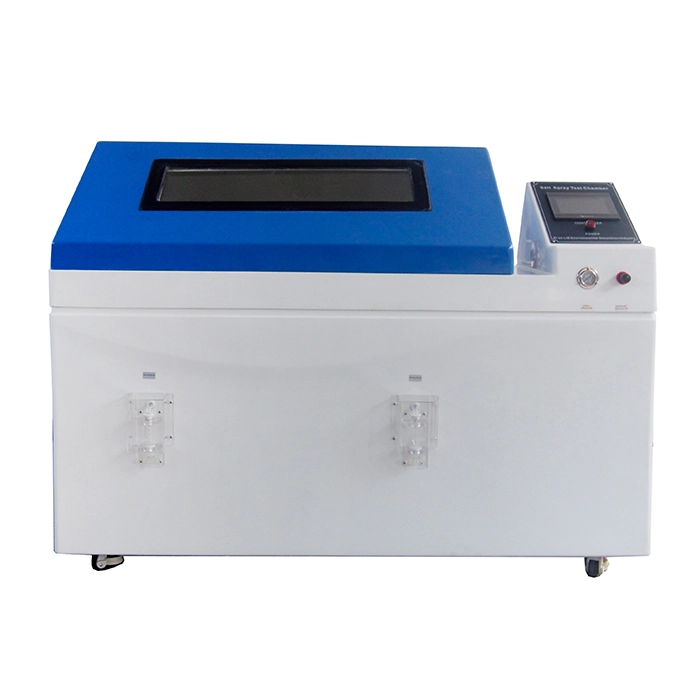
From a standalone Temperature & Humidity Test Chamber to a Salt Spray Test Chamber, Xenon Arc Weathering Test Chamber, or a fully customized Walk-In Environmental Test Chamber, LIB Industry can provide equipment configured for specific environmental testing requirements.
| 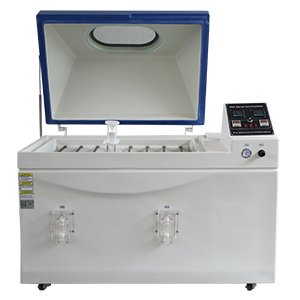 | 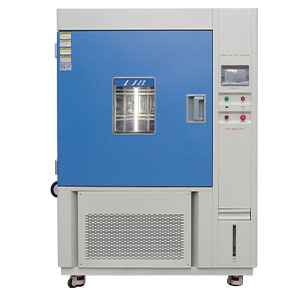 |
| Temperature & Humidity Test Chamber | Salt Spray Test Chamber | Xenon Arc Weathering Test Chamber |
Need a chamber designed around your test specimens?
Contact LIB Industry to discuss your temperature, humidity, salt spray, xenon weathering, or customized environmental testing requirements.
Three-Year Warranty · Lifetime Service · Customized Engineering Support
 English
 русский
 français
 العربية
 Deutsch
 Español
 한국어
한국어 italiano
 tiếng việt
 ไทย
ไทย Indonesia