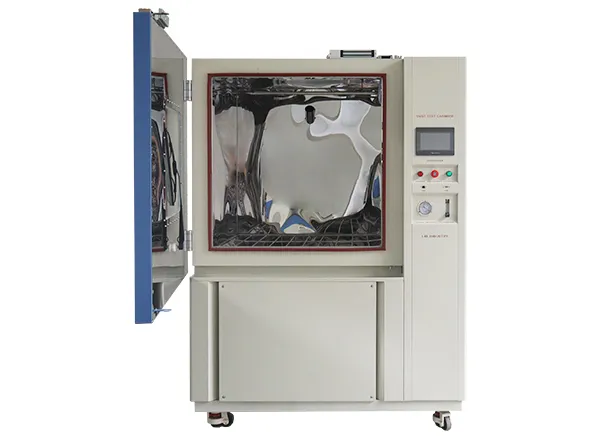
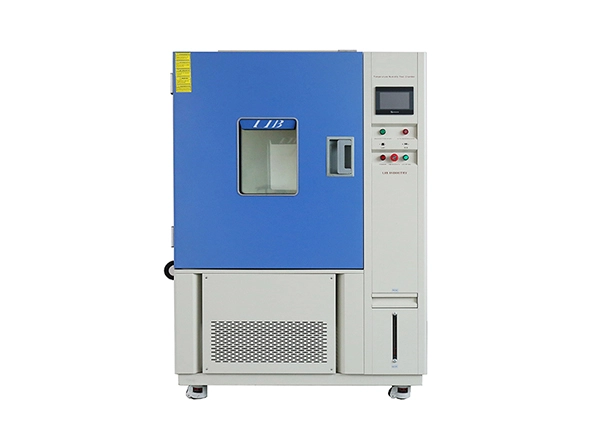
Choosing an environmental test chamber should be based on total cost of ownership (TCO) rather than purchase price alone. A benchtop chamber can reduce initial investment and space requirements, while a reach-in or walk-in chamber may provide better value when testing larger samples or higher quantities. The applicable test method determines temperature, humidity, cycling, corrosion, or ingress requirements. Energy use, calibration, maintenance, spare parts, installation, and downtime all contribute to long-term test chamber operating cost. The most important purchasing factors are therefore required performance, usable capacity, utilization rate, energy efficiency, serviceability, and lifetime technical support.
Environmental chambers are used to expose products and materials to controlled environmental stresses and observe changes in performance, appearance, structure, or reliability.
Typical applications include:
Temperature and humidity testing
Thermal cycling and aging
Thermal shock
Battery reliability testing
Electronics qualification
Automotive component evaluation
Material durability testing
Corrosion testing
IP protection testing
Typical failure modes include cracking, corrosion, coating deterioration, electrical malfunction, seal failure, dimensional change, moisture penetration, and material fatigue.
The equipment itself also affects the economics of testing. A chamber that is inexpensive to purchase but consumes excessive energy or requires frequent repairs may have a higher lifetime cost than a more efficient system.
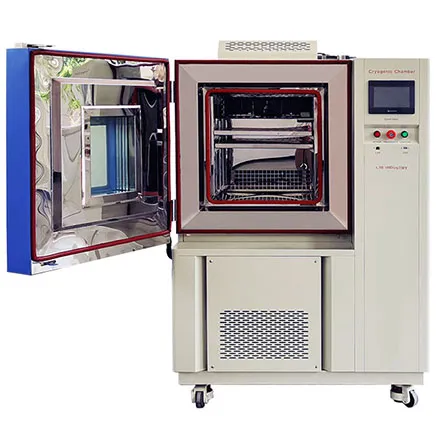
LIB's Products portfolio includes temperature and humidity chambers, benchtop chambers, thermal chambers, salt spray chambers, UV weathering testers, walk-in chambers, IP test equipment, and specialized environmental test systems.
Test Type | Typical Temperature | Humidity | Test Pattern | Main Application |
Low-temperature test | Below 0°C | Usually uncontrolled | Defined exposure | Cold resistance |
High-temperature test | Up to about +150°C* | Usually uncontrolled | Defined exposure | Heat resistance |
Temperature & humidity | Model-dependent | About 20–98% RH | Long-term exposure | Aging and reliability |
Temperature cycling | Low to high temperature | Optional | Repeated cycles | Thermal stress |
Thermal shock | Rapid temperature transition | Secondary | Repeated transitions | Severe thermal stress |
Salt spray | Around 35°C for common tests | High | Continuous/cyclic | Corrosion |
IP testing | Method-dependent | Not primary | Dust/water exposure | Ingress protection |
*Actual limits depend on chamber configuration.
LIB temperature and humidity chambers are available with different temperature ranges and humidity-control capabilities, allowing buyers to match equipment performance to the actual test requirements rather than paying for unnecessary capacity.
Parameter | Benchtop | Reach-In | Walk-In |
Temperature range | Application-specific | Broad options | Customized |
Humidity range | Available on TH models | Suitable for extended tests | Suitable for large-scale testing |
Chamber volume | Small | Medium/large | Very large |
Ramp rate | Moderate | Moderate to fast | Application-dependent |
Airflow | Compact circulation | Higher circulation capacity | Engineered for large workspace |
Sample heat load | Limited | Higher | High/customizable |
Safety configuration | Standard protection | Expanded protection | Project-specific |
Applicable standards | Laboratory tests | Qualification/production tests | Large-product/system testing |
The initial quotation normally covers the chamber, refrigeration and heating systems, controller, sensors, and standard accessories. However, the lowest purchase price does not always produce the lowest TCO.
An undersized chamber may require multiple test runs. This increases labor, test time, and equipment utilization. An oversized chamber creates the opposite problem: higher capital cost and potentially unnecessary energy consumption.
The most economical solution is usually the chamber that provides enough space for samples, fixtures, airflow, and safe operation without excessive unused volume.
Energy consumption depends on:
Temperature setpoint
Chamber volume
Insulation
Compressor efficiency
Heating demand
Humidity operation
Sample heat load
Test duration
Door-opening frequency
Ambient conditions
A chamber used continuously at extreme temperatures will have a different energy profile from one used for short ambient-condition tests.
Therefore, procurement teams should estimate annual operating hours, rather than comparing equipment only by rated power.
Environmental chambers contain refrigeration systems, heaters, fans, sensors, humidification components, seals, electrical components, and controllers. Each can influence chamber maintenance cost and uptime.
Routine maintenance may include:
Cleaning filters and water systems
Checking door seals
Inspecting heating elements
Checking refrigeration performance
Inspecting electrical connections
Verifying sensors
Cleaning internal surfaces
LIB provides Services covering installation, commissioning, maintenance, calibration-related support, training, transportation, and repair.
Calibration should also be included in the purchasing budget. Temperature and humidity sensors can drift over time, so buyers should confirm calibration intervals, documentation, sensor replacement, and expected calibration downtime.
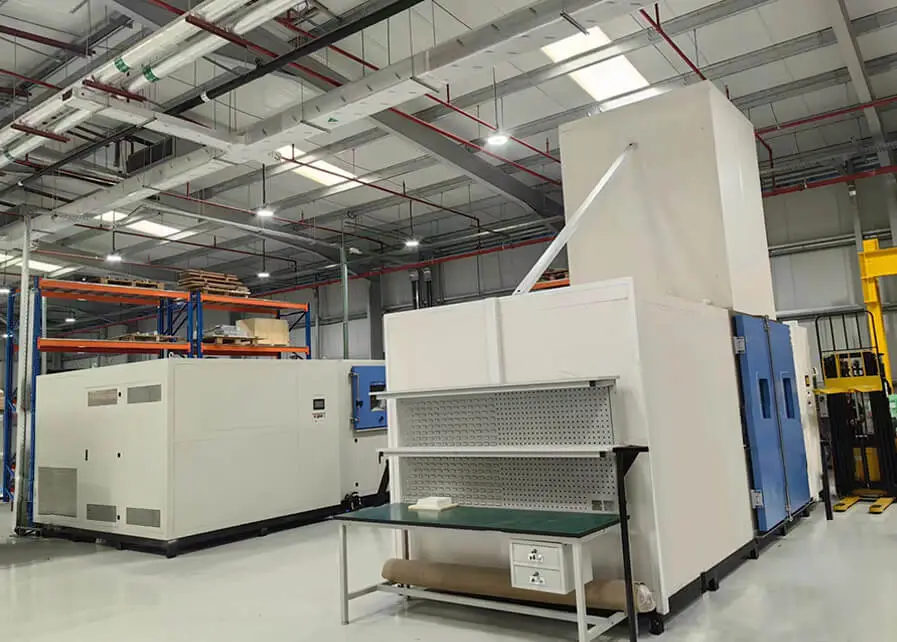
A low-cost chamber may have higher energy use, more frequent maintenance, or limited capacity.
Buying a much larger chamber than necessary increases initial investment and may increase operating costs.
Powered electronics and batteries can release significant heat. If this is excluded from the RFQ, the chamber may not maintain the required conditions.
Frequent loading and unloading increases recovery time and energy consumption.
Stable chamber operation does not guarantee accurate sensors. Calibration should be included in the equipment lifecycle plan.
Power supply, ventilation, drainage, water quality, ambient temperature, and maintenance clearance can all affect installation cost.
A chamber failure can delay qualification programs and force tests to be repeated. Spare-parts availability, technical response time, and service capability should therefore be considered before purchase.
Benchtop chambers are suitable for small samples, laboratory R&D, and applications where floor space is limited. LIB's Benchtop Environmental Test Chambers provide compact configurations for applications including electronics, materials, automotive, and quality control.
A reach-in chamber is more suitable when sample quantity or size exceeds benchtop capacity. It can increase testing throughput without requiring a walk-in installation.
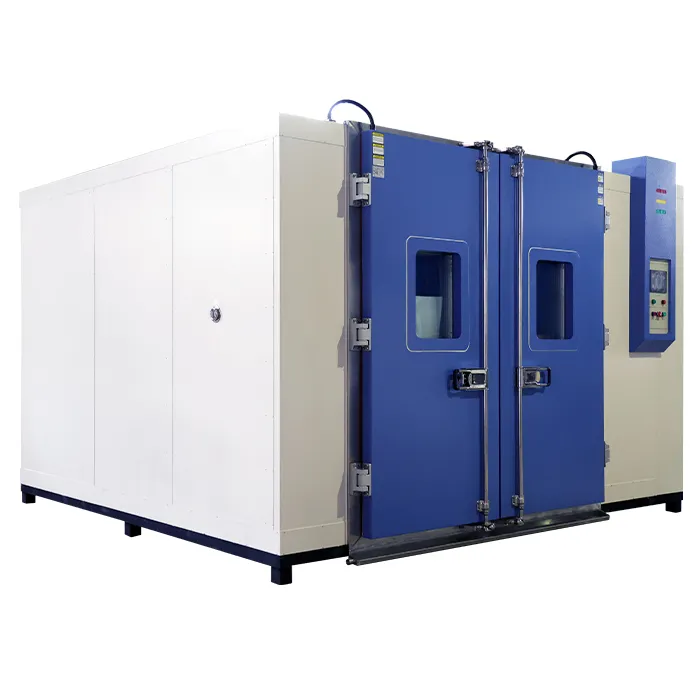
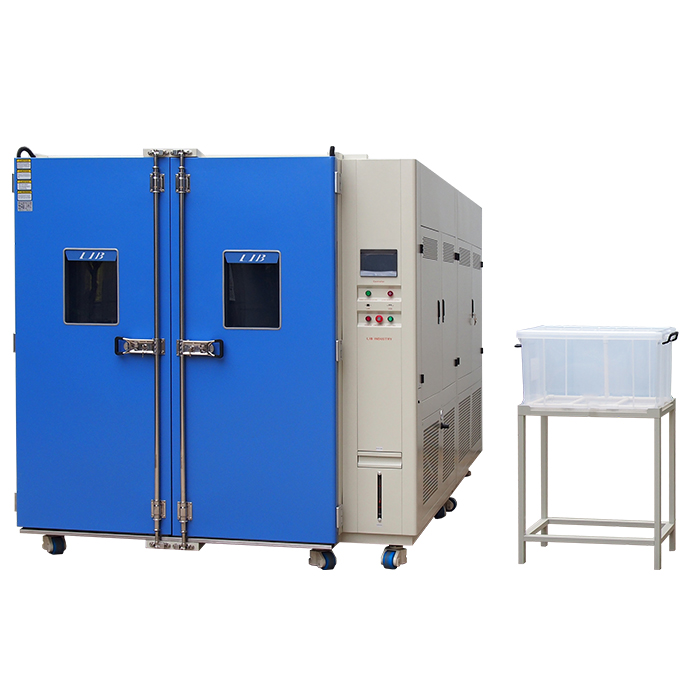
Large assemblies, production equipment, and multiple full-size components require a different capacity strategy. A walk-in chamber provides sufficient internal space for products that cannot be loaded through a conventional chamber door.
The LIB Walk-In Environmental Test Chamber can be customized according to chamber dimensions, temperature range, humidity requirements, sample heat load, and testing application.
For low-frequency testing, a walk-in chamber may represent unnecessary capital expenditure. However, when large products are tested continuously, avoiding multiple smaller chambers or repeated test batches can make a large chamber more economical over its service life.
Thermal shock chambers should be considered when rapid transitions between extreme temperatures are the primary requirement. They are useful for detecting failures caused by repeated thermal expansion and contraction.
Salt spray chambers are appropriate for corrosion evaluation. Spray uniformity, solution management, chamber construction, and maintenance requirements should all be included when calculating TCO.
IP equipment is designed primarily for dust and water-ingress testing. It should be selected according to the required ingress test rather than substituted for a climate chamber.
Custom chambers are useful when one test requires several environmental stresses. LIB offers specialized environmental systems that can combine temperature and humidity with other environmental functions depending on project requirements.
For electronics applications, the Environmental Test Chamber for Electronics covers environmental testing requirements including temperature, humidity, thermal shock, salt spray, and IP-related applications.
A useful related LIB article is Practices for Operating and Maintaining Thermal Cycling Chambers, which provides practical guidance on operation, sample placement, maintenance, and performance management.
TCO includes purchase price, installation, energy, consumables, calibration, maintenance, spare parts, repairs, training, and downtime-related costs.
No. The financial benefit depends on energy efficiency, utilization, maintenance requirements, capacity, and expected service life.
Choose a chamber large enough for the samples, fixtures, airflow, and required safety clearance, but avoid excessive unused volume.
Use the correct chamber size, minimize unnecessary door opening, maintain seals and filters, inspect refrigeration and humidification systems, and follow preventive maintenance schedules.
It depends on chamber type, operating hours, refrigeration configuration, humidity use, environment, and replacement-part requirements. These factors should be discussed with the supplier before purchase.
Downtime can delay product qualification, consume additional labor, and require repeat testing. Service response, spare-parts availability, and technical support should therefore be included in supplier evaluation.
Specify temperature and humidity range, chamber volume, sample dimensions, sample heat load, ramp rate, test duration, applicable test methods, power and water requirements, communication functions, installation conditions, calibration requirements, warranty, and service expectations.

 English
 русский
 français
 العربية
 Deutsch
 Español
 한국어
한국어 italiano
 tiếng việt
 ไทย
ไทย Indonesia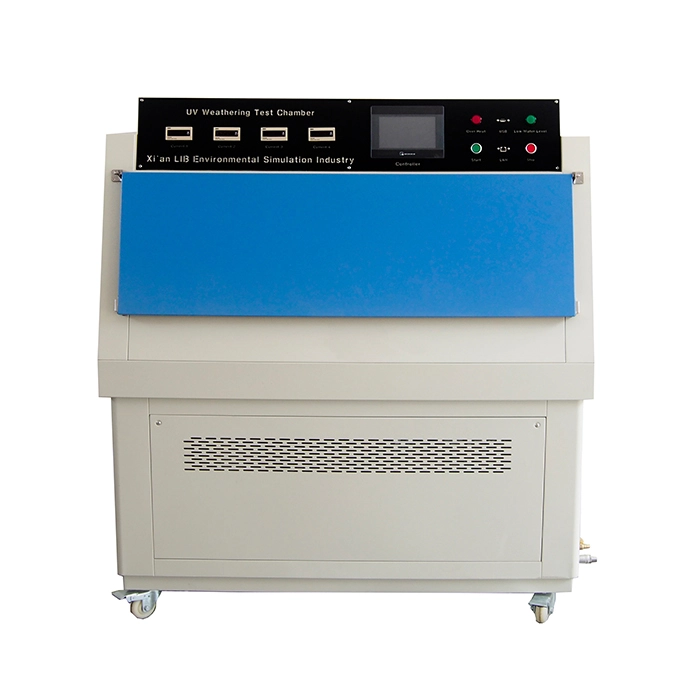

.webp "Accelerated Weathering Test Chamber for Polymer Durability Testing")