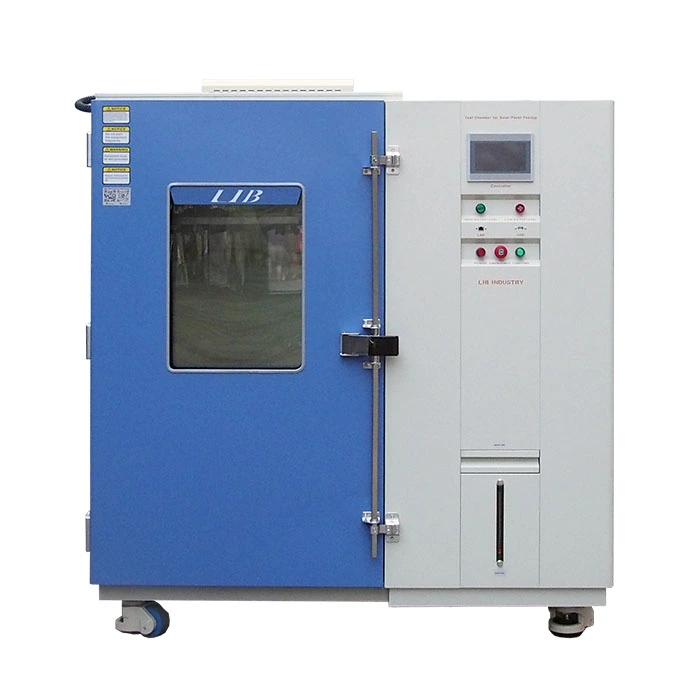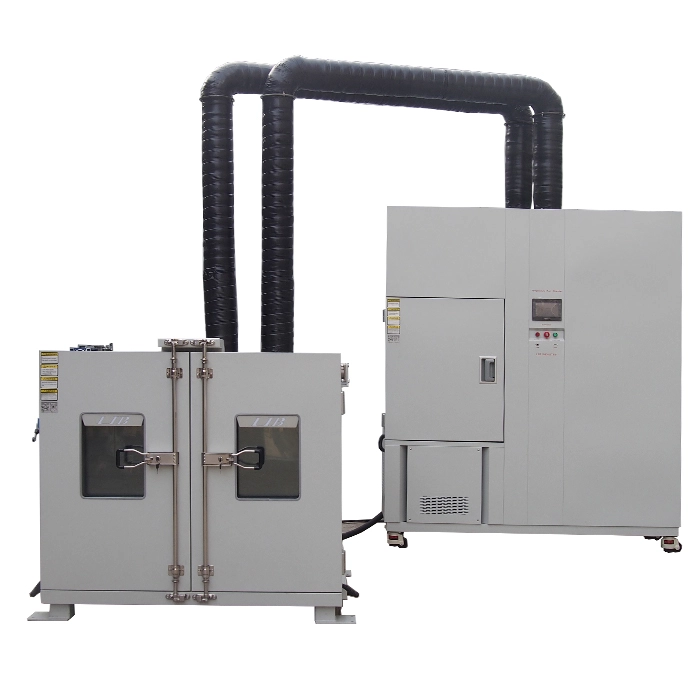
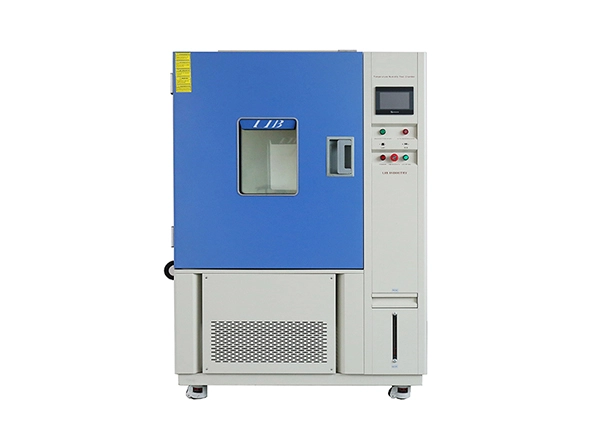
For an electronic temperature cycling standard, chamber selection should be based on the required temperature profile, transition rate, specimen size, and cycle conditions. IEC 60068-2-14 provides a broader framework for temperature-change testing across electronic equipment, components, and other products, while JESD22-A104 is more specifically focused on semiconductor and electronic-device temperature cycling. Both may use high- and low-temperature exposure, but the test profiles and application focus differ. A thermal cycle chamber is suitable for controlled repeated temperature changes, while a thermal shock chamber is better when very rapid transitions are required. The key selection factor is the actual test profile under load—not simply the chamber's maximum and minimum temperatures.
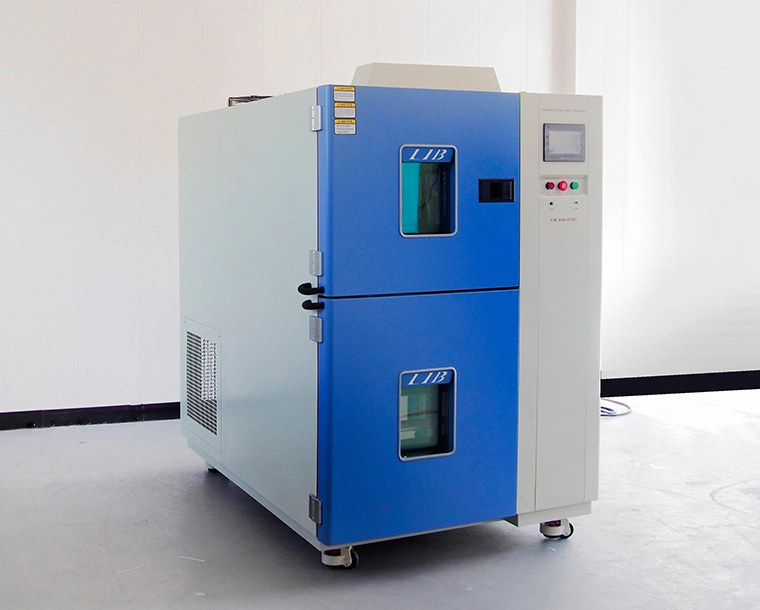
Temperature cycling exposes a product to repeated changes between defined temperature extremes to identify failures caused by thermal expansion and contraction.
Typical test items include:
Semiconductor packages
Integrated circuits
PCB assemblies
Sensors and connectors
Automotive electronics
Batteries and electronic modules
Industrial control equipment
Materials and bonded assemblies
Repeated temperature changes can produce mechanical stress between materials with different coefficients of thermal expansion. Typical failure modes include solder fatigue, package cracking, delamination, electrical intermittency, seal failure, coating separation, and mechanical deformation.
The main difference between IEC 60068-2-14 vs JESD22-A104 is application focus.
IEC 60068-2-14 is intended for temperature-change testing across a broad range of products. JESD22-A104 focuses on temperature cycling for semiconductor devices and electronic components, where repeated thermal stress can reveal weaknesses in packages, interconnections, and interfaces.
Therefore, the correct method should be selected according to the product and its expected failure mechanisms rather than assuming that all temperature cycling tests are equivalent.
The actual temperature range, dwell period, transition rate, and cycle count depend on the selected procedure and product qualification requirements.
Test Method | Temperature | Humidity | Cycle / Duration | Main Purpose |
IEC 60068-2-14 | Defined high/low temperatures | Usually secondary | Procedure-dependent | General temperature-change testing |
JESD22-A104 | Defined high/low temperatures | Usually secondary | Condition-dependent | Semiconductor temperature cycling |
General thermal cycling | Product-specific | Usually controlled separately | Product-specific | Thermal reliability evaluation |
Rapid temperature cycling | Wide temperature range | Usually secondary | Repeated rapid transitions | Accelerated thermal stress |
JESD22-A104 includes different temperature conditions for semiconductor reliability testing. For example, commonly used profiles can include low temperatures around −55°C combined with high temperatures of +85°C, +125°C, or higher, depending on the selected condition.
The test should not be defined by temperature range alone. Ramp rate, dwell time, cycle count, sample load, and temperature uniformity all influence the resulting thermal stress.
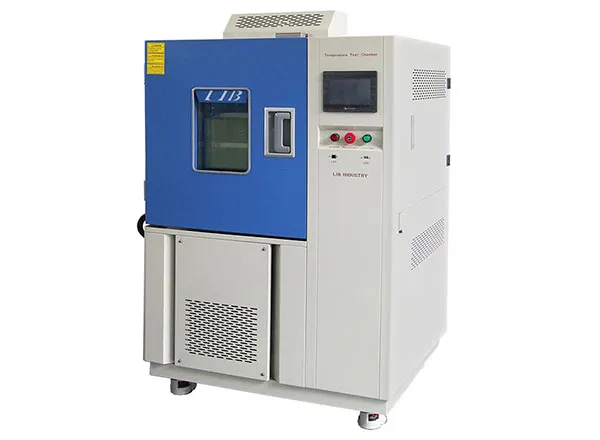
LIB's JESD22-A104 Temperature Cycling Chamber is specifically designed for temperature cycling and lists temperature ranges extending from −70°C to +150°C, with programmable temperature profiles and high temperature-change rates depending on configuration.
Parameter | IEC 60068-2-14 | JESD22-A104 |
Temperature range | Procedure-dependent | Condition-dependent |
Humidity range | Usually secondary | Usually secondary |
Chamber volume | Based on sample size | Often optimized for electronic devices |
Ramp rate | Depends on procedure | Critical for specified cycling profiles |
Airflow | Maintains temperature uniformity | Important for rapid thermal response |
Sample heat load | Important for large/powered samples | Important for electronic assemblies |
Safety configuration | Temperature and electrical protection | Temperature, refrigeration and electrical protection |
Applicable standards | IEC 60068-2-14 | JESD22-A104 and related device methods |
IEC 60068-2-14 is useful when temperature change is the primary environmental stress and the test applies to a broad product category.
Applications can include electronic equipment, mechanical components, sensors, industrial products, and materials.
The required chamber depends on how the temperature transition is performed. A conventional thermal chamber may be sufficient for controlled temperature changes, while rapid temperature-change equipment may be necessary for more demanding profiles.
LIB's Thermal Chambers category includes thermal cycle chambers, rapid temperature-change systems, thermal shock chambers, and other temperature-testing configurations.
JESD22-A104 focuses on semiconductor and electronic-device reliability.
A semiconductor package may contain silicon, molding compound, metal connections, solder, and substrate materials. Because these materials expand and contract differently, repeated temperature cycling can create stress at interfaces.
The method is therefore commonly associated with:
Semiconductor packages
IC devices
BGA and QFN packages
Automotive electronics
Power electronics
PCB assemblies
Communication equipment
LIB's dedicated JESD22-A104 Temperature Cycling Chamber offers models from 100 L to 1000 L and programmable temperature cycling profiles.
.png "JESD22-A104_Temperature_Cycling_Chamber_(2).png")
A chamber that reaches −70°C and +150°C is not necessarily suitable for every cycling program.
For example, two chambers may have identical temperature limits but very different transition rates. The faster chamber may complete the required profile more efficiently and provide a different thermal stress pattern.
Ramp-rate specifications should be evaluated using the actual sample mass, fixture configuration, and heat load, rather than empty-chamber performance alone.
Minimum and maximum temperatures are important, but they do not indicate whether the chamber can achieve the required transition rate.
Powered electronic products can generate internal heat, while large samples and fixtures can increase thermal lag. Actual sample conditions should be included when evaluating chamber performance.
Thermal cycling uses repeated controlled temperature changes. Thermal shock emphasizes much faster transitions between hot and cold environments. The two should not automatically be treated as interchangeable.
Too many specimens can restrict airflow and increase temperature recovery time. Adequate spacing should be maintained around samples.
The chamber reaching a target temperature does not necessarily mean the specimen has reached the same temperature. Dwell time should allow the sample to experience the intended thermal condition.
Ramp rates can change significantly when heavy fixtures, batteries, electronics, or other high-mass samples are installed.
Fans, sensors, refrigeration components, heating systems, and door seals all affect temperature performance. Regular inspection helps maintain repeatable cycling conditions.
The equipment should be selected according to temperature range, ramp rate, working volume, sample load, and test objective.
Benchtop: Suitable for small semiconductor devices, sensors, components, and laboratory development.
Reach-In: Appropriate for larger electronic assemblies and higher sample quantities.
Walk-In: Useful for large assemblies, materials, or products requiring substantial working space.
Thermal Shock: Recommended when extremely rapid hot-to-cold or cold-to-hot transitions are required.
·Salt Spray: Better suited to corrosion and coating evaluation.
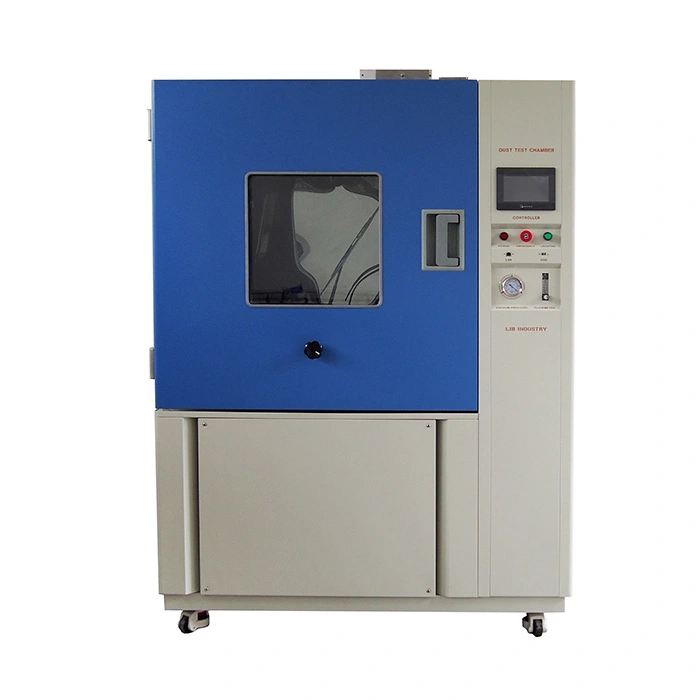
IP: Appropriate for dust and water-ingress testing.
Special Custom Chamber: Suitable when temperature cycling must be combined with vibration, humidity, pressure, battery testing, or other special conditions.
LIB's Thermal Chambers range covers different chamber configurations for controlled temperature cycling and rapid temperature changes, making it suitable for general environmental temperature testing.
When semiconductor qualification is the focus, the JESD22-A104 Temperature Cycling Chamber provides a more specialized configuration. Available models range from 100 L to 1000 L and support programmable thermal cycling profiles.
Temperature cycling can also form part of a broader material durability program. The LIB Environmental Test Chamber for Materials Industry covers environmental testing applications where repeated temperature exposure may be evaluated together with other material performance factors.
After installation, proper operation and maintenance are equally important for maintaining stable test conditions. LIB's Practices for Operating and Maintaining Thermal Cycling Chambers discusses chamber operation, sample placement, routine maintenance, and performance management.
IEC 60068-2-14 provides a broader approach to temperature-change testing, while JESD22-A104 focuses specifically on temperature cycling of semiconductor devices and electronic components.
JESD22-A104 is generally the more directly relevant choice for semiconductor package temperature cycling. The specific condition should be selected according to the device qualification requirements.
Yes. A chamber can support both methods if its temperature range, ramp rate, uniformity, working volume, and programmable cycle profile meet the requirements of both test programs.
Ramp rate determines how quickly the specimen moves between temperature extremes. A faster rate can shorten the test and change the thermal stress applied to the sample.
There is no universal cycle count. The required number depends on the selected method, product type, temperature range, qualification objective, and expected failure mechanism.
Consider specimen dimensions, quantity, fixtures, spacing, and heat load. LIB's JESD22-A104 chamber range includes 100 L to 1000 L models for different sample capacities.
No. Thermal cycling focuses on repeated controlled temperature changes, while thermal shock emphasizes very rapid transitions between hot and cold environments.
Specify the test method, minimum and maximum temperatures, ramp rate, dwell time, cycle count, specimen dimensions, sample mass, quantity, heat load, fixtures, powered operation, uniformity requirements, and data-recording needs.
 English
 русский
 français
 العربية
 Deutsch
 Español
 한국어
한국어 italiano
 tiếng việt
 ไทย
ไทย Indonesia