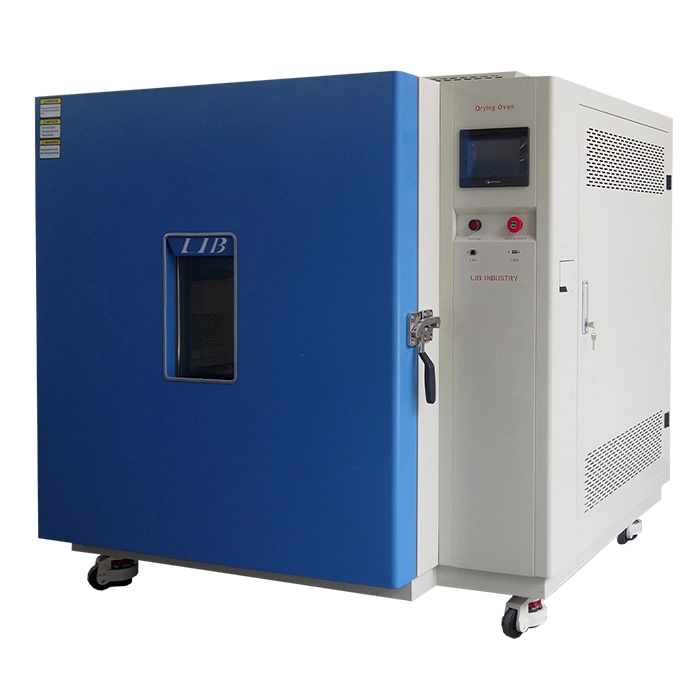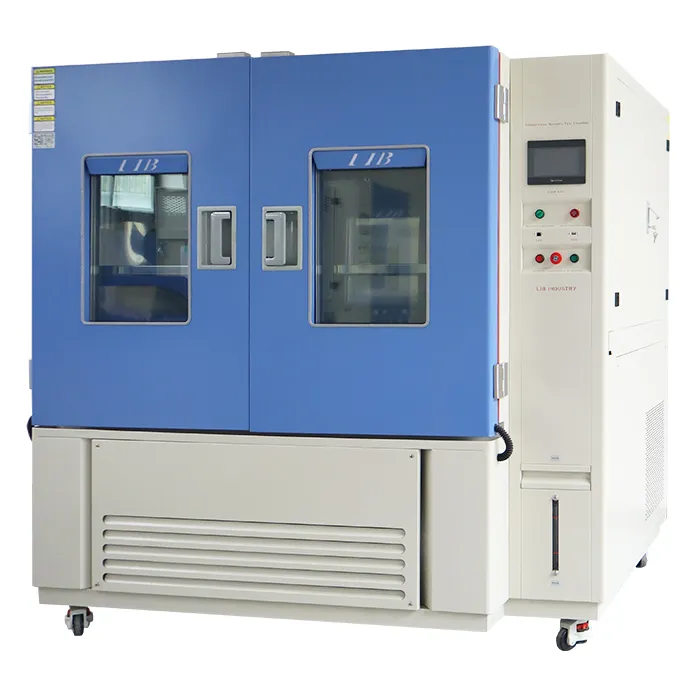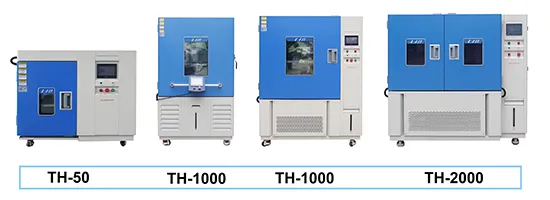
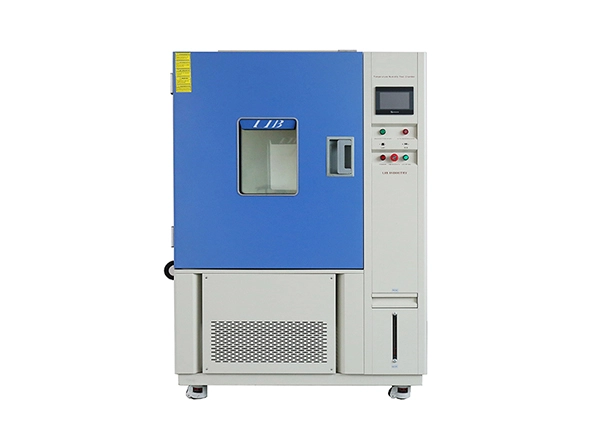
Environmental chamber predictive maintenance is shifting environmental testing from scheduled servicing toward condition-based maintenance. A standard Temperature & Humidity Chamber is suitable for routine climatic testing, while larger or specialized chambers require broader monitoring because they contain more complex refrigeration, airflow, safety, or environmental-control systems. Common testing frameworks include IEC 60068, ISO 16750, and MIL-STD-810, depending on the application. The most important selection factors are chamber monitoring sensors, diagnostic capabilities, alarm history, calibration support, component accessibility, and maintenance services. When equipment trends are monitored continuously, developing faults can be identified before they cause unexpected chamber downtime.
An environmental chamber does more than expose a product to temperature or humidity. It is a complex system containing refrigeration, heating, humidification, airflow, sensors, electrical controls, and safety devices.
During long-term testing, these components can gradually deteriorate. A refrigeration system may take longer to reach a low-temperature setpoint, a humidity system may become less responsive, or a sensor may begin to drift. Such changes may not immediately trigger a fault but can indicate developing equipment problems.
This is the basis of predictive maintenance. Instead of replacing components only according to a fixed schedule, engineers evaluate actual equipment behavior.
Useful monitoring parameters include:
Temperature and humidity trends
Temperature recovery time
Refrigeration performance
Heating and humidification behavior
Airflow condition
Alarm frequency
Sensor calibration results
Water and electrical system status
Door-opening frequency
LIB's service resources cover installation, commissioning, maintenance guidance, repair, calibration assistance, and operator training. These activities help maintain equipment reliability and reduce unexpected interruptions.
The emerging trend is to combine routine maintenance with continuous equipment-health information, creating a more proactive approach to chamber reliability.
Maintenance must support the environmental conditions required by the applicable test standard. Monitoring chamber performance helps verify that those conditions remain stable throughout the test.
Standard / Test Method | Temperature | Humidity | Typical Cycle / Duration | Spray / Pressure |
IEC 60068-2-1 | Low-temperature conditions vary by severity | N/A | Defined exposure period | N/A |
IEC 60068-2-2 | High-temperature conditions vary by severity | N/A | Defined dry-heat exposure | N/A |
IEC 60068-2-14 | Temperature cycling | N/A | Repeated temperature transitions | N/A |
IEC 60068-2-78 | Damp heat | High RH | Long-duration exposure | N/A |
ISO 16750-4 | Automotive climatic conditions | Application dependent | Cycling/endurance profiles | Application dependent |
MIL-STD-810 | Temperature, humidity and other environmental stresses | Method dependent | Procedure dependent | Some methods include pressure/rain |
ASTM B117 | Corrosion exposure | Controlled environment | Specified salt-fog duration | Salt spray |
LIB's environmental testing solutions cover temperature, humidity, salt mist, dust, rain, water spray, pressure, and combined environmental conditions, with IEC 60068, ISO, and MIL-STD methods among the relevant standards.
The test profile itself can also provide a useful maintenance baseline. For example, if a chamber consistently reaches -40°C within a certain period and gradually requires more time, the change may indicate refrigeration, airflow, heat-load, or control issues.
Parameter | Special / Large Environmental Chamber | |
Temperature range | Typically -20/-40/-70°C to +150°C, model dependent | Application-specific |
Humidity range | Approximately 20%–98% RH | Depends on configuration |
Chamber volume | Standard laboratory sizes, including 100–1,000 L | Large or customized |
Ramp rate | Model dependent | Application dependent |
Airflow | Forced circulation | Designed for chamber size and load |
Sample heat load | Model-specific | Engineered according to application |
Safety configuration | Over-temperature, over-current, water and refrigeration protection | May include gas, pressure, fire, leakage and emergency protection |
Applicable standards | IEC 60068, ISO 16750, JESD and related methods | IEC, ISO, ASTM, MIL and application-specific standards |
The complexity of the chamber determines the scope of its predictive maintenance strategy. Standard Temperature & Humidity Chambers generally require monitoring of temperature, humidity, refrigeration, airflow, sensors, and electrical systems.
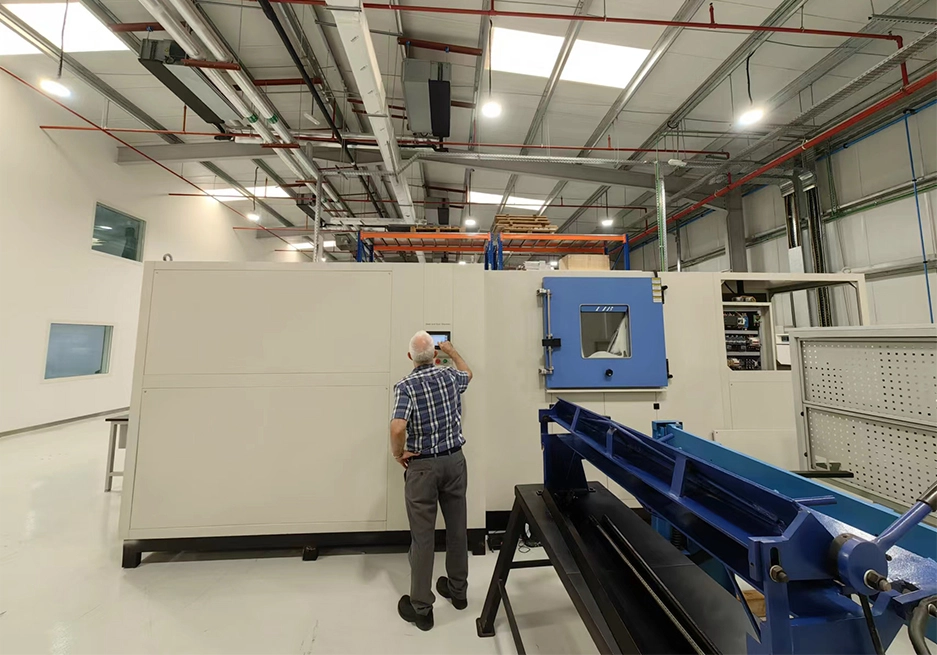
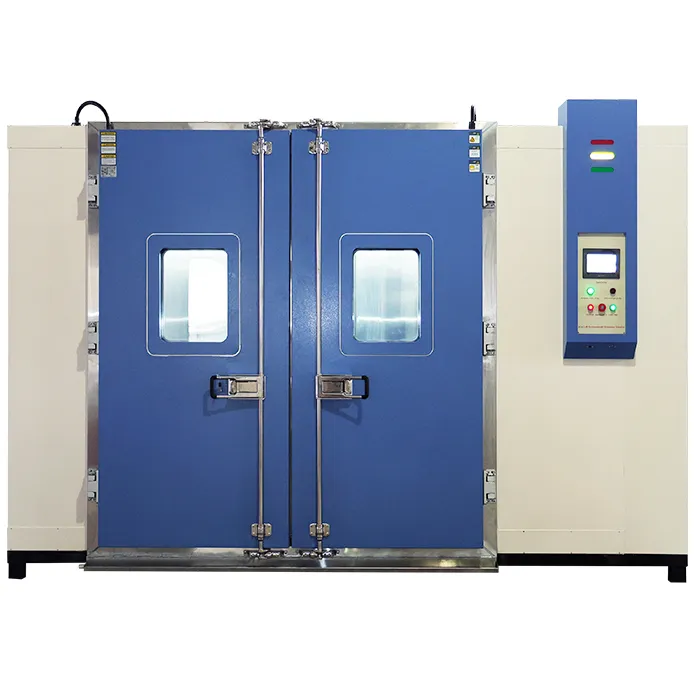
Large or specialized chambers require broader diagnostics. LIB's Walk-In Environmental Chamber, for example, uses temperature and humidity sensors, forced air circulation, mechanical refrigeration, Ethernet communication, and Modbus TCP/IP integration.
This creates a progression from basic chamber monitoring sensors to more comprehensive test chamber diagnostics.
A chamber showing -40°C on the controller does not indicate how efficiently or consistently it reaches that condition. Actual temperature, recovery time, and historical trends should also be evaluated.
An alarm usually indicates that a predefined limit has already been exceeded. Predictive maintenance looks for gradual changes before a critical alarm occurs.
Temperature and humidity sensors influence chamber control directly. Regular calibration and verification are therefore essential for reliable testing.
Slow recovery may result from sample heat load, frequent door opening, ambient conditions, airflow restrictions, or refrigeration problems. Diagnostics should consider the complete operating environment.
A single warning may have limited significance. Repeated alarms involving the same subsystem can indicate developing degradation and should be investigated.
Condenser contamination, abnormal refrigerant pressure, and restricted heat dissipation can affect cooling performance. Routine inspection and cleaning are important parts of chamber maintenance.
Predictive maintenance requires a definition of normal performance. Recording stabilization time, sensor readings, alarm frequency, and recovery behavior during commissioning creates a useful reference for future diagnostics.
The maintenance approach should match the chamber type and test workload.
Benchtop: Suitable for small laboratory samples and routine testing. Basic sensor checks, calibration, cleaning, and refrigeration inspection can establish a practical maintenance baseline.
Reach-In: Appropriate for medium-sized specimens and regular reliability testing. Monitoring temperature recovery and refrigeration performance can help identify developing problems.
Walk-In: Recommended for large assemblies, heavy samples, and batch testing. Larger systems require closer attention to airflow, refrigeration, sensors, safety functions, and communication interfaces.
Thermal Shock: Rapid temperature transitions place additional demands on refrigeration, heating, and transfer mechanisms. Cycle performance should be monitored for abnormal changes.
Salt Spray: Maintenance should cover spray nozzles, solution circulation, temperature, drainage, and corrosion inside the chamber.
IP: Water and dust ingress systems require attention to pumps, nozzles, seals, drainage, pressure, and water flow.
Special Custom Chamber: Gas, pressure, battery, corrosion, or combined environmental systems require customized monitoring based on their critical components.
LIB's Environmental Test Chamber Services provide installation, commissioning, maintenance guidance, repair, training, and technical support. LIB's service approach is designed to help reduce equipment failure and extend chamber service life.
The LIB Maintenance Resources provide user manuals and maintenance documentation covering equipment operation, troubleshooting, and routine care. These resources support technicians in establishing inspection and maintenance procedures.
Predictive maintenance is particularly valuable in industries where environmental testing is frequent or highly reliability-sensitive. LIB's Electronics Environmental Testing resources cover temperature and humidity, thermal shock, salt spray corrosion, and IP testing for electronic products. For electronics laboratories, identifying changes in sensor behavior, temperature recovery, airflow, or alarm frequency can help prevent equipment problems from interrupting qualification programs.
For a practical maintenance reference, LIB's Benchtop Temperature Humidity Chamber Maintenance Guide: Calibration, Water Quality & Stability Control Best Practices explains how water quality, wet-wick condition, airflow balance, sensor calibration, alarm logs, and stabilization time can affect long-term chamber reliability. The article provides a useful connection between routine chamber maintenance and the broader development of environmental chamber predictive maintenance.
It is a maintenance approach that uses equipment-condition information to identify developing problems before they result in major failures or unexpected downtime.
Temperature and humidity sensors are fundamental. Depending on the chamber, refrigeration pressure, airflow, water level, gas concentration, leakage, and electrical status may also be monitored.
By identifying abnormal trends early, maintenance can often be scheduled before a component fails during an important test program.
Preventive maintenance follows a predefined schedule. Predictive maintenance uses actual equipment behavior and condition data to determine when maintenance is needed.
The interval depends on the manufacturer, test standard, laboratory quality system, sensor stability, and application requirements. Calibration should be performed according to the applicable maintenance and quality procedures.
Useful records include actual temperature and humidity, stabilization time, ramp performance, alarm history, refrigeration status, sample heat load, calibration results, and previous maintenance activities.
Professional service is appropriate when repeated alarms occur, temperature or humidity cannot stabilize, refrigeration performance changes, sensors show abnormal drift, or routine maintenance cannot resolve the problem. LIB provides technical support and repair services through its service network.
A practical plan should define inspection intervals, sensor calibration, refrigeration checks, cleaning, alarm verification, maintenance records, spare parts, troubleshooting procedures, and escalation requirements for abnormal conditions.
 English
 русский
 français
 العربية
 Deutsch
 Español
 한국어
한국어 italiano
 tiếng việt
 ไทย
ไทย Indonesia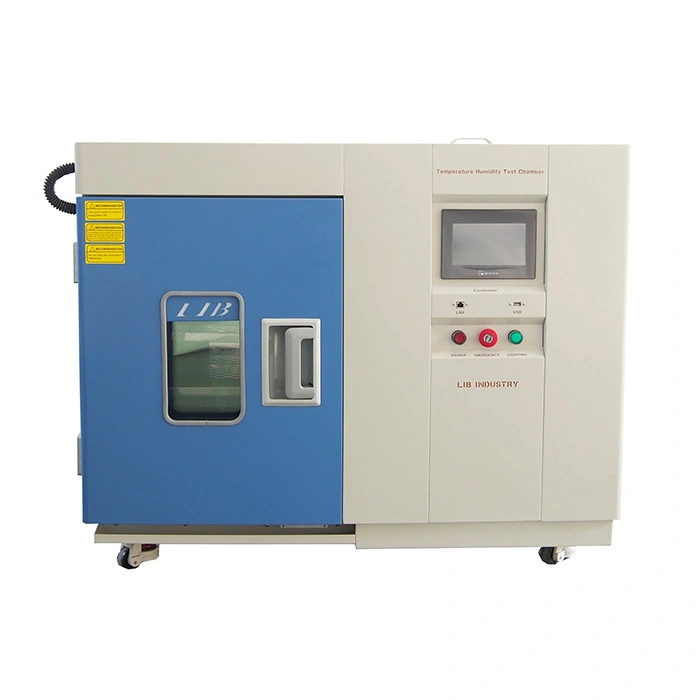
.webp "340nm UV Light Aging Accelerated Machine For Glass Test")