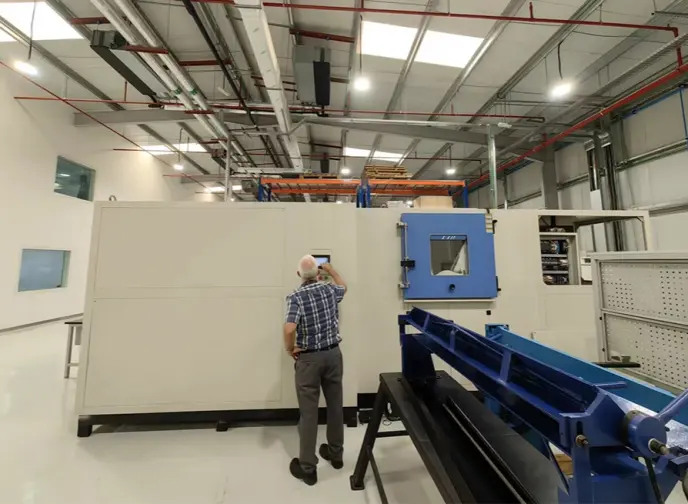
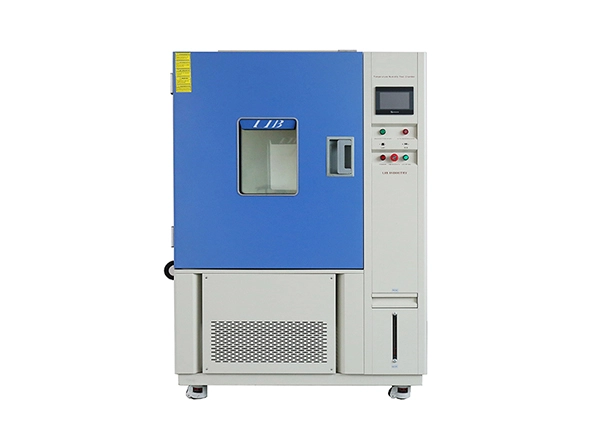
Choosing to buy a test chamber vs test lab depends mainly on testing frequency, sample volume, turnaround time and long-term equipment utilization. A third-party laboratory is often suitable for occasional qualification projects, specialized standards or tests that require equipment only a few times per year. In-house environmental testing becomes more attractive when manufacturers perform regular R&D, reliability or quality testing and need immediate access to equipment. The most important factors are not purchase price alone, but annual test demand, chamber capacity, required standards, operating costs, maintenance and the value of faster engineering feedback.
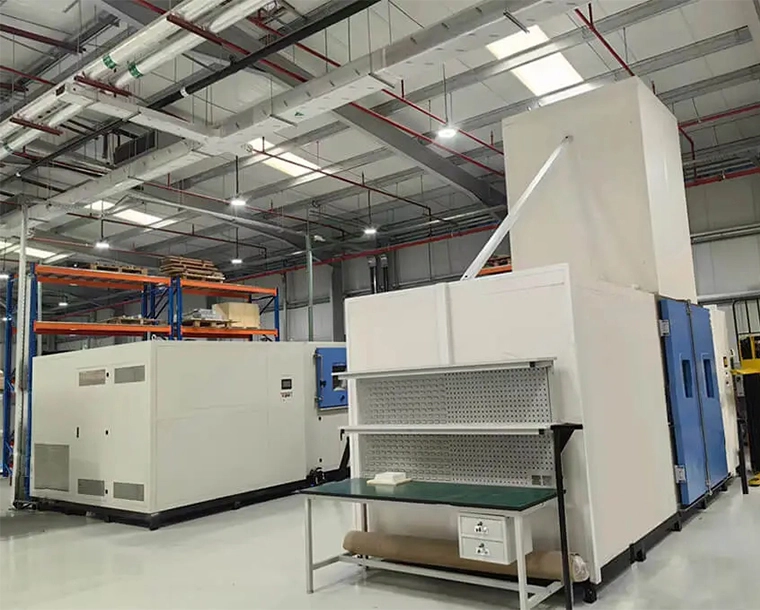
Environmental testing is used to evaluate how products perform when exposed to controlled temperature, humidity, thermal cycling, water, dust, corrosion or other environmental stresses.
Common test samples include:
Automotive electronic components
Batteries and energy-storage products
Consumer electronics
Industrial equipment
Aerospace components
Electrical enclosures
Materials and mechanical assemblies
The test objective can vary from early-stage R&D to formal qualification. Engineers may use environmental chambers to identify design weaknesses, compare materials, verify reliability or reproduce field failures.
This creates an important difference between in-house environmental testing and third-party laboratory services.
A test laboratory provides access to professional equipment without requiring the manufacturer to purchase, install and maintain it. This is particularly useful for companies with low testing frequency or highly specialized requirements.
An in-house chamber, however, gives engineers direct access to testing equipment. Samples can be tested immediately after a design change, and engineers can inspect or modify the product without waiting for another laboratory appointment.
For companies performing environmental testing every week or every month, this difference can have a significant effect on development time.
The decision to purchase equipment should begin with the standards and environmental conditions that will actually be tested. One chamber may cover several temperature and humidity requirements, while other tests require dedicated systems.
Test requirement | Example standard | Typical condition | Equipment required |
Cold testing | IEC 60068-2-1 | Low-temperature exposure | Temperature chamber |
Dry heat | IEC 60068-2-2 | Elevated-temperature exposure | Temperature chamber |
Damp heat | IEC 60068-2-30 | High humidity and temperature cycling | Climatic chamber |
Automotive climatic testing | ISO 16750-4 | Application-dependent temperature and humidity | Automotive climatic chamber |
Temperature shock | IEC 60068-2-14 | Rapid hot/cold transitions | Thermal shock chamber |
Salt spray | ASTM B117 / ISO 9227 | Salt fog corrosion exposure | Salt spray chamber |
Ingress protection | IEC 60529 | Water and dust exposure | IP test equipment |
The actual temperature, humidity, cycle duration and exposure conditions depend on the applicable standard and product specification.
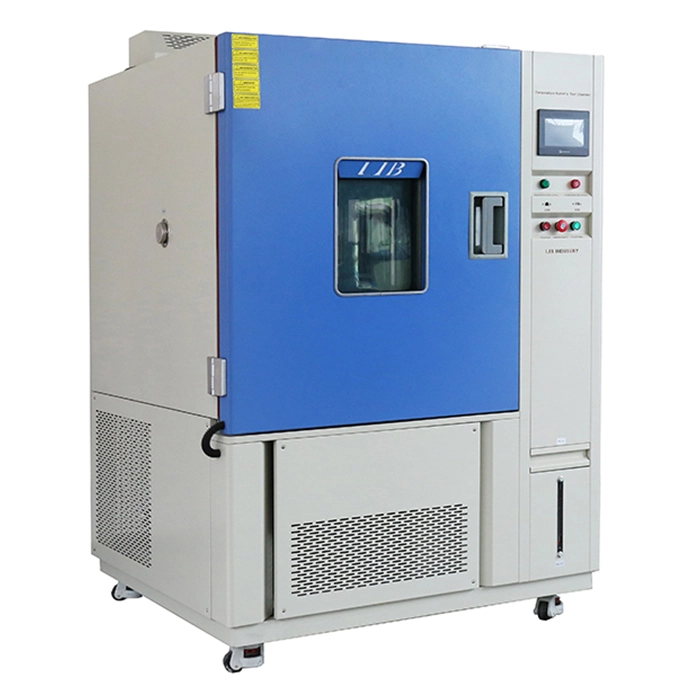
For example, LIB's temperature chambers are available with temperature ranges such as –20°C to +150°C, –40°C to +150°C and –70°C to +150°C, depending on configuration. Chamber volumes range from compact systems to larger models, with customized solutions available for specific testing requirements.
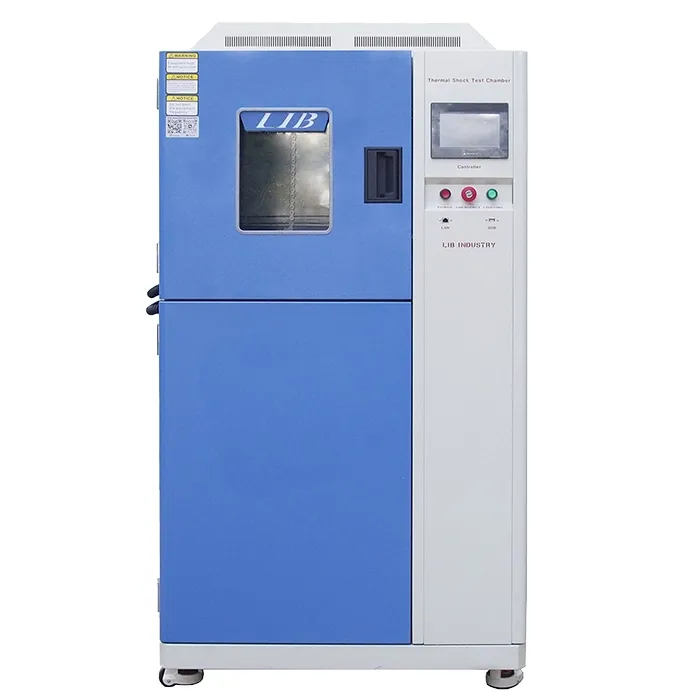
For more demanding rapid temperature transitions, LIB's thermal shock systems use separate temperature zones and rapid specimen transfer. This type of equipment is fundamentally different from a conventional temperature chamber and should be selected only when the test procedure requires rapid thermal shock.
Therefore, a purchasing decision should start with the question:
How many environmental tests will the company perform over the next three to five years?
Selection Factor | In-House Chamber | Third-Party Test Lab |
Temperature range | Selected according to internal test portfolio | Depends on laboratory equipment |
Humidity range | Directly specified during purchase | Depends on available chambers |
Chamber volume | Fixed investment capacity | Flexible according to sample size |
Ramp rate | Can be selected or customized | Depends on available equipment |
Airflow | Controlled by equipment owner | Controlled by laboratory |
Sample heat load | Must be considered during purchase | Evaluated by laboratory |
Safety configuration | Company must provide suitable facility and procedures | Normally managed by laboratory |
Applicable standards | Supports repeated internal testing | Testing performed against requested standards |
Scheduling | Available whenever required | Depends on laboratory availability |
Confidentiality | Samples remain in-house | Samples are transferred externally |
Initial investment | High | Low |
Cost per test | Can decrease with high utilization | Usually service-based |
Capacity expansion | Requires additional equipment | Can be changed by selecting another lab |
The economic difference becomes clearer when testing frequency increases.
Suppose a company performs only a few qualification tests each year. Purchasing a large chamber may leave the equipment unused for long periods. In this case, laboratory testing can be more economical.
The situation changes for a manufacturer performing daily reliability tests, repeated design verification or routine quality checks. Waiting for laboratory availability can delay development, while transportation and external testing fees accumulate.
The chamber investment ROI should therefore include more than the equipment quotation.
A practical calculation is:
Outsourcing cost + transportation + laboratory waiting time + engineering downtime
versus:
Equipment investment + installation + electricity + calibration + maintenance + operator cost.
The value of faster product development should also be considered. An internal chamber can allow engineers to identify a failure immediately and repeat a test after modifying the design.
The total ownership cost includes installation, utilities, calibration, maintenance and labor. Conversely, outsourcing involves more than the laboratory's testing fee.
A sophisticated chamber may not provide a good return if it is used only a few times per year. Expected utilization should be estimated before purchasing.
Powered batteries, ECUs, motors and electronic assemblies can generate heat during operation. The chamber must be capable of maintaining the required environmental condition under the actual sample load.
Two chambers may both reach +150°C but have different ramp rates, recovery performance, airflow and heat-load capabilities.
A chamber that is much larger than necessary can increase the initial investment and facility requirements. However, choosing a chamber that is too small can limit future testing capacity.
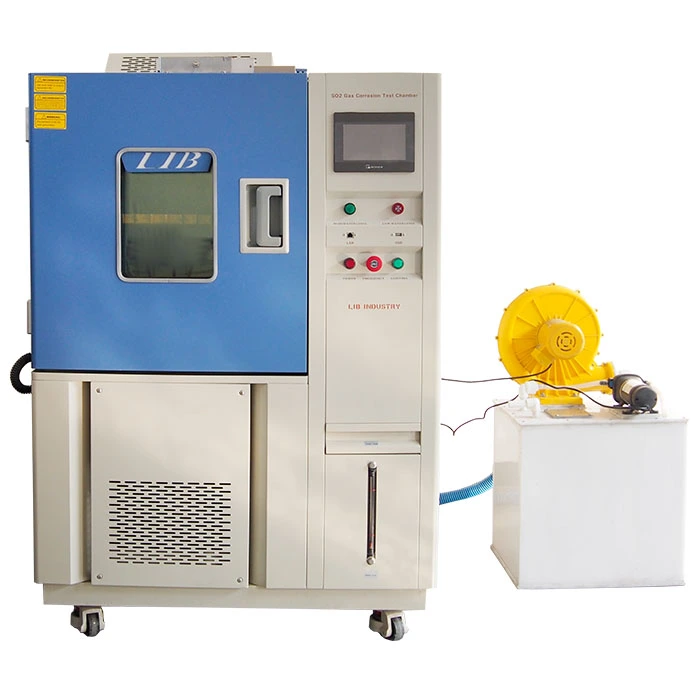
A temperature chamber does not automatically replace a thermal shock chamber, salt spray chamber, dust chamber or IP testing system. Equipment should be selected according to the actual test mechanisms.
Before purchasing, confirm electrical supply, installation space, ventilation, drainage, cooling requirements, access dimensions and floor-loading conditions.
A chamber should not be selected only for today's prototype. New product sizes, higher sample volumes and additional standards may significantly increase future capacity requirements.
The best choice depends on the size, frequency and complexity of the company's testing program.
Benchtop: Suitable for small samples, components and R&D work where testing frequency is high but sample volume is limited.
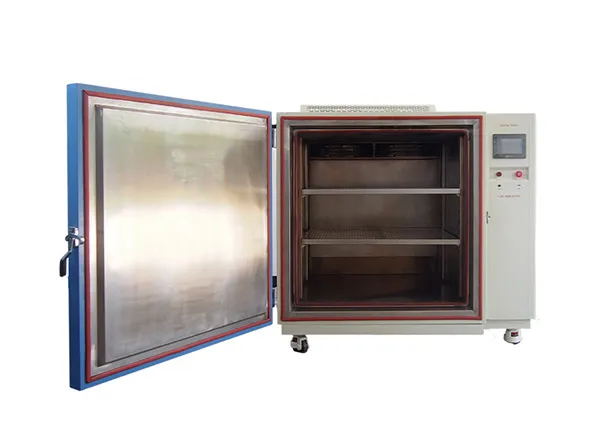
Reach-In: A practical choice for medium-sized products and routine reliability or quality testing.
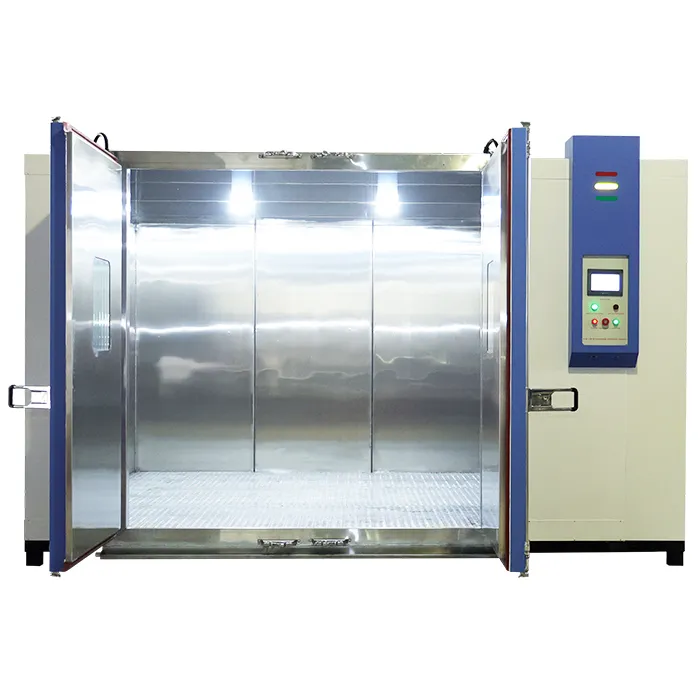
Walk-In: Appropriate for large assemblies, vehicle components or laboratories that need to test multiple specimens at once.
Thermal Shock: Best when rapid hot-to-cold or cold-to-hot transitions are required instead of conventional temperature cycling. For readers moving from the outsourcing decision to understanding how thermal shock equipment actually works, LIB's real article Thermal Shock Test Chamber: The Three Major Working Principles provides a useful technical reference. This creates a direct content path from equipment selection → product → testing principle.
Salt Spray: Recommended for recurring corrosion and coating tests.
IP: Suitable for manufacturers that regularly perform water or dust ingress testing.
Special Custom Chamber: Appropriate when standard equipment cannot reproduce the required combination of environmental conditions, sample dimensions or operating loads.
For companies starting in-house environmental testing, LIB's Thermal Chambers category is a more appropriate product-category entry point than the general Products page. It covers different thermal chamber configurations for temperature and environmental testing.
For routine high- and low-temperature testing, the Temperature Chamber range provides a more targeted solution. Models can be selected according to temperature range, chamber volume and test requirements.
When rapid temperature transitions are a core requirement, a dedicated Thermal Shock Chamber should be considered instead of purchasing a conventional chamber and expecting it to perform the same function.
For automotive manufacturers, LIB's Environmental Test Chamber for Automotive Industry provides a relevant industry-specific reference covering environmental testing requirements for automotive components.
Buying is generally more attractive when environmental testing is frequent, development schedules are tight, sample confidentiality is important or engineers need immediate access to test results.
Outsourcing is often more practical when tests are occasional, highly specialized or require equipment that would otherwise remain underutilized.
Compare the expected annual cost of external testing with the total annualized ownership cost of the chamber. Include installation, utilities, calibration, maintenance and labor, as well as the potential value of shorter development cycles.
Consider current and future sample dimensions, fixtures, cable connections, airflow clearance and the number of samples that may need to be tested simultaneously.
Yes, a programmable chamber may support multiple temperature and humidity standards. However, dedicated equipment may still be required for thermal shock, salt spray, IP, dust or other specialized tests.
Powered samples can generate additional heat inside the chamber. The equipment should be evaluated under the expected operating load rather than relying only on empty-chamber temperature specifications.
An RFQ should include applicable standards, temperature and humidity ranges, ramp rate, sample dimensions and weight, heat load, chamber volume, cycle profile, powered or unpowered operation, cable ports, safety requirements and facility conditions.
No. The economic advantage depends on utilization. Low-frequency users may obtain better value from external laboratories, while companies with continuous testing requirements can achieve better long-term economics and faster development with in-house equipment.
 English
 русский
 français
 العربية
 Deutsch
 Español
 한국어
한국어 italiano
 tiếng việt
 ไทย
ไทย Indonesia