For automotive electronics, the choice between ISO 16750-4 and LV124 should be based on the customer's qualification specification, vehicle mounting location and required environmental stresses. ISO 16750-4:2023 is an international standard covering climatic loads for electrical and electronic vehicle components, while LV124 is an automotive OEM-oriented specification containing a broader set of environmental and mechanical tests. A standard temperature chamber is suitable for basic high/low-temperature and climatic testing, while a thermal chamber with programmable humidity and rapid temperature control is better for complex automotive profiles. If water exposure is combined with thermal shock, dedicated water spray or LV124 K-12 equipment may be required. The most important selection factors are test profile, ramp rate, sample heat load, water exposure method and OEM-specific requirements.
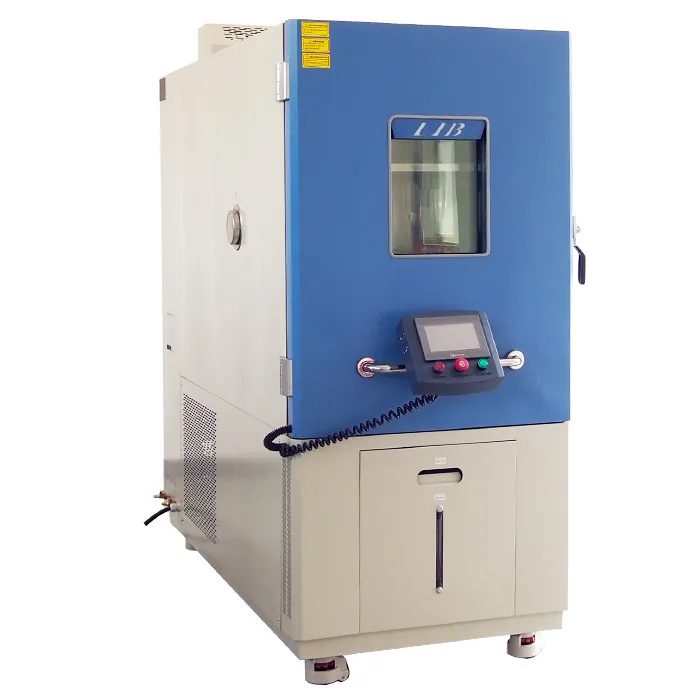
Both ISO 16750-4 and LV124 are used to evaluate whether automotive electrical and electronic components can maintain their function when exposed to environmental conditions encountered during vehicle operation, storage and transportation.
ISO 16750-4:2023 specifically covers climatic loads for electrical and electronic systems and components in road vehicles, including components associated with electric propulsion systems. It recommends environmental stresses and tests according to the component's mounting location in the vehicle.
LV124 has a broader automotive qualification structure. Its environmental section includes high and low temperature storage, incremental temperature testing, low-temperature operation, thermal shock, damp heat, salt spray, water protection and other environmental stresses. It can therefore require several different types of equipment rather than one climate chamber.
Typical samples include:
ECUs and control modules
Sensors and actuators
Connectors and wiring assemblies
Lighting and display components
Power electronics
Automotive communication modules
Exterior and underbody electronic components
The failure mechanisms being investigated can include seal degradation, condensation, corrosion, material cracking, electrical malfunction, solder or connection fatigue, insulation deterioration and loss of functionality after repeated thermal exposure.
For automotive electronics, the test is increasingly moving from simple temperature exposure toward application-specific environmental simulation. The component's location, whether it is powered during testing and whether it encounters water, humidity or thermal shock can all influence equipment selection.
A major difference between the two approaches is that ISO 16750-4 is an international climatic-load standard, whereas LV124 is an automotive specification that organizes a wider collection of component qualification tests. LV124 test conditions should therefore be taken from the applicable OEM/specification revision rather than treated as one universal profile.
Test area | ISO 16750-4 | LV124 |
Main scope | Climatic loads for road-vehicle electrical/electronic components | Automotive electrical/electronic component qualification |
High/low temperature | Specified according to component/application | K-01/K-02/K-03 and related procedures |
Temperature cycling | Included within climatic testing | Incremental temperature and temperature-cycle requirements |
Humidity | Damp-heat testing according to applicable profile | K-08, K-09, K-14 and condensation-related tests |
Thermal shock | Covered where applicable | K-05 and additional water-related thermal shock tests |
Water exposure | Splash, immersion and water-related climatic tests depending on requirement | K-10 water protection, K-11 high-pressure cleaning, K-12 splash-water thermal shock |
Salt exposure | Climatic-load requirements may include relevant environmental testing | K-06/K-07 salt spray with component operation |
Mounting location | Important for environmental severity | Strongly considered in OEM qualification |
OEM tailoring | May be combined with customer requirements | Often directly linked to OEM specifications |
LV124 K-12 is particularly relevant when an automotive component is hot and then exposed to cold splash water. LIB's dedicated LV124 K-12 Temperature Shock and Splash Water Test Equipment simulates rapid temperature changes from ambient to +150°C with controlled splash water at 0–4°C. Its published system uses 3–4 L/min water flow, a 3-second adjustable splash period and a nozzle-to-DUT distance of 300–350 mm.
These parameters should be treated as the LIB equipment configuration, not as a replacement for checking the exact customer or OEM test specification.
Selection Factor | ISO 16750-4 Testing | LV124 Testing |
Temperature range | Based on specified climatic load | Depends on individual K test |
Humidity range | Depends on damp-heat profile | Cyclic, frost and constant damp-heat profiles may apply |
Chamber volume | Benchtop to walk-in | Benchtop to customized automotive systems |
Ramp rate | Profile-dependent | Profile-dependent; rapid changes may require thermal shock equipment |
Airflow | Important for temperature uniformity | Important for temperature uniformity and powered samples |
Sample heat load | Important for operating components | Especially important for live automotive electronics |
Water system | Depends on splash/immersion requirement | Dedicated systems may be needed for K-10/K-11/K-12 |
Safety configuration | Over-temperature, electrical and refrigeration protection | Additional water, electrical and thermal-shock safeguards |
Applicable standards | ISO 16750-4 and customer requirements | LV124 plus relevant IEC/ISO/OEM procedures |
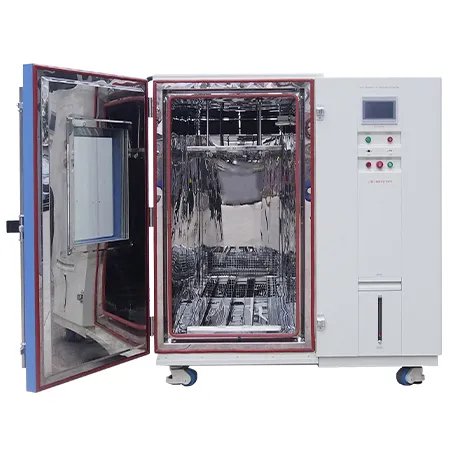
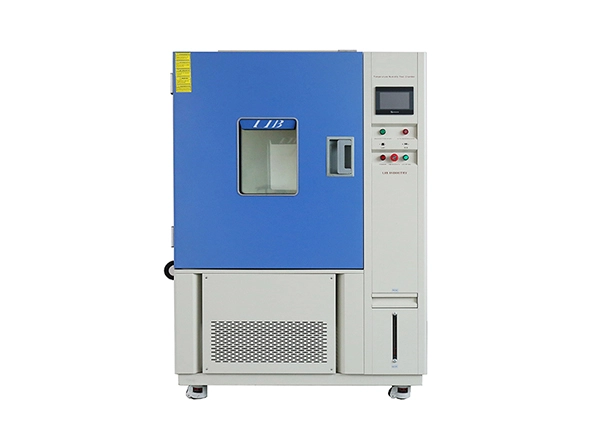
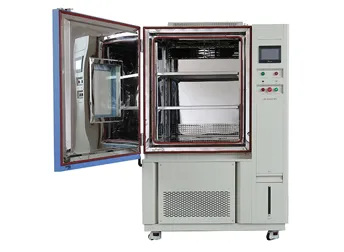
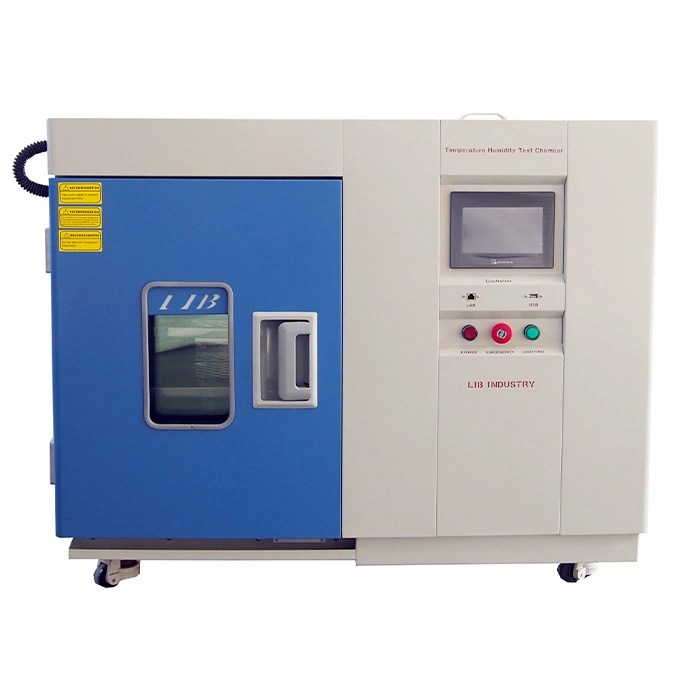
LIB's standard Temperature Chamber covers –20°C, –40°C or –70°C to +150°C, with standard heating and cooling rates depending on configuration and customized ramp rates available for special profiles. The published models range from 100 L to 1,000 L, with larger systems available.
For humidity-controlled automotive climate testing, LIB's climate and temperature chambers can provide 20–98% RH together with temperatures from –70°C/–40°C/–20°C to +150°C.
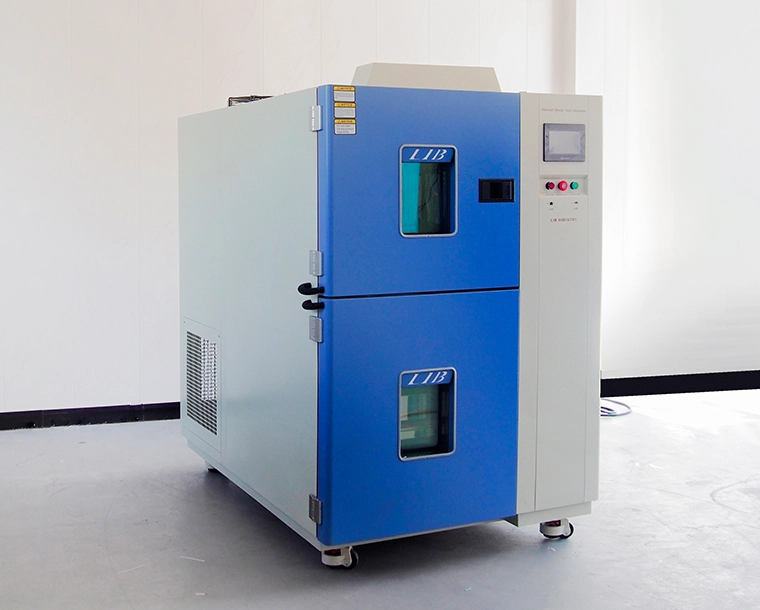
For rapid thermal cycling, LIB's high-ramp-rate thermal chamber can reach up to 30°C/min in its specified configuration, making it more appropriate when the test plan requires aggressive temperature transitions rather than conventional conditioning.
They overlap in several environmental areas, but they are not identical qualification systems. LV124 contains its own test organization and OEM-specific requirements.
Two chambers may both reach +150°C, but their ramp rate, heat-load capability, airflow and temperature recovery can be very different.
Powered ECUs, inverters and other electronics can generate substantial heat. The chamber must be evaluated with the actual operating load rather than an empty-chamber specification.
If the test requires rapid hot-to-cold transitions, a high-ramp or dedicated thermal shock system may be more appropriate than a standard temperature chamber.
LV124 K-12 combines thermal stress and cold splash water. A conventional rain chamber cannot automatically reproduce this combined condition.
ISO 16750-4 explicitly links environmental stresses to the component's mounting location in the vehicle.
Automotive components may need to operate during environmental exposure. LIB's LV124 K-12 system supports powered testing, allowing functional behavior to be monitored during the test.
LV124 is closely associated with automotive OEM qualification. The laboratory should confirm the applicable revision, customer specification and test severity before purchasing equipment.
The most suitable LIB system depends on the environmental stress being reproduced.
Benchtop: Suitable for small automotive sensors, connectors, electronic modules and development samples. LIB's tabletop environmental chamber provides –20°C/–40°C/–70°C to +150°C and 20–98% RH and lists both ISO 16750 and LV124 among its supported standards.
Reach-In: A practical option for medium-sized automotive electronics and component qualification programs requiring temperature or temperature-humidity cycling.
Walk-In: Better for large assemblies, multiple specimens or larger automotive components when chamber volume becomes a limiting factor.
Thermal Shock: Recommended when the qualification focuses on rapid temperature transitions or temperature shock. LIB's thermal shock systems are positioned for automotive electronics and LV124 testing.
Salt Spray: Select when the LV124 program requires corrosion exposure with or without component operation.
IP: Appropriate for water-ingress requirements rather than general climatic conditioning. LIB's IP portfolio covers water protection methods including IPX1–IPX9K.
Special Custom Chamber: Recommended when temperature, humidity, powered operation, vibration or water exposure must be combined in one test configuration.
For standard climate qualification, LIB's Temperature Chamber provides a practical starting point for high/low-temperature testing and programmable temperature profiles.
For more complex temperature cycling, the Thermal Chambers category provides configurations that can be customized for temperature range and change rate.
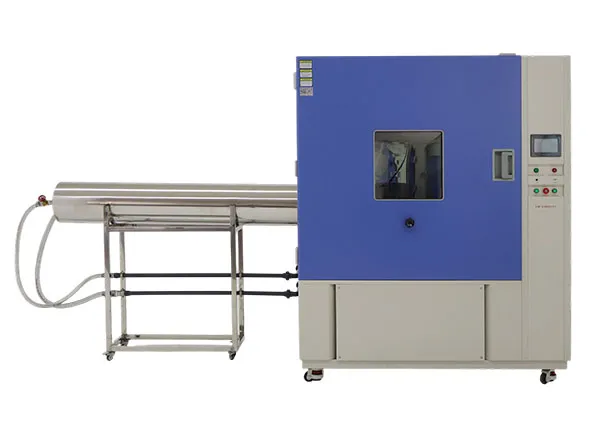
When the requirement involves water exposure, LIB's Water Spray Test Chamber supports IPX1–IPX4 testing and uses an oscillating tube for IPX3/IPX4 splash and rain simulation.
For the automotive industry layer, LIB's Environmental Test Chamber for Automotive Industry covers temperature-humidity-vibration, thermal shock, corrosion and IP testing for automotive components.
A particularly relevant internal article is LIB Cold Water Impact Test Chamber – In Compliance with ISO 16750-4 Standard. It provides a natural next step from this standards comparison into the specific splash-water and thermal-shock testing requirements of automotive components.
ISO 16750-4:2023 is an international standard focused on climatic loads for electrical and electronic equipment in road vehicles. LV124 is an automotive qualification specification covering a broader combination of climatic, mechanical and other environmental tests.
For temperature and humidity testing, a programmable climatic or temperature-humidity chamber is normally appropriate. The exact chamber depends on the required temperature, humidity, cycle and operating conditions.
K-12 requires a system capable of combining controlled temperature conditions with cold splash water. LIB's K-12 equipment uses 0–4°C splash water and supports programmable thermal and splash sequences.
A programmable climatic chamber can support overlapping temperature and humidity tests, but it cannot necessarily perform every LV124 test. Water protection, salt spray, thermal shock and high-pressure cleaning may require dedicated systems or additional modules.
There is no single ramp rate that applies to every ISO 16750-4 or LV124 test. The required profile must be taken from the applicable test procedure and customer specification. If rapid transitions are required, a high-ramp-rate or thermal shock chamber should be considered.
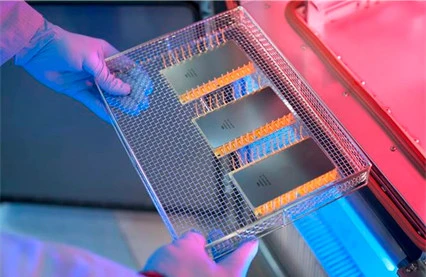
Select the chamber according to the specimen dimensions, fixtures, cable routing, operating equipment and airflow requirements. Do not size the chamber only according to the external dimensions of the component.
Yes, but the equipment must be designed for the specific combined test. LV124 K-12 is a good example: the component experiences thermal stress and cold splash water as part of one controlled procedure.
Specify the applicable standard and revision, exact test item or K-number, temperature range, humidity, ramp rate, cycle sequence, sample dimensions and heat load, powered or unpowered operation, water temperature and flow where applicable, chamber volume, cable ports, safety requirements and OEM-specific acceptance criteria.
 English
 русский
 français
 العربية
 Deutsch
 Español
 한국어
한국어 italiano
 tiếng việt
 ไทย
ไทย Indonesia

.webp "Mini Environmental Test Laboratory Kit")