ASTM C510, C793 and C661 Testing for Building Sealants: Test Requirements and LIB Industry Solutions
Building sealants and joint materials are widely used in curtain walls, windows and doors, concrete joints, facades, and other construction applications. During service, these materials can be exposed to sunlight, heat, moisture, temperature changes, and contact with different building substrates.
For manufacturers and laboratories, testing therefore needs to address specific performance questions: Will the sealant stain the substrate? Will its color change after weathering? How does it respond to accelerated weathering? Does its cured hardness remain consistent?
Three ASTM test methods are particularly relevant to these questions. ASTM C510 evaluates staining and color change, ASTM C793 evaluates the effects of accelerated weathering on elastomeric joint sealants, and ASTM C661 determines indentation hardness using a durometer.
The test method determines the environmental conditions and evaluation method required. LIB industry provides xenon arc weathering chambers, UV accelerated weathering chambers, temperature and humidity chambers, and low-temperature environmental equipment to support different stages of a sealant testing program.
ASTM Standard | What It Evaluates | Key Test Points | LIB Industry Solution | |
ASTM C510 | Staining and color change | Substrate staining and sealant color change after artificial weathering | XL-S-750 Xenon Arc Weathering Chamber |  |
ASTM C793 | Accelerated weathering | Radiation, moisture, heat, weathering deterioration and cold-temperature bending | XL-S-750 / UV-SI-260 + Low-Temperature Chamber | 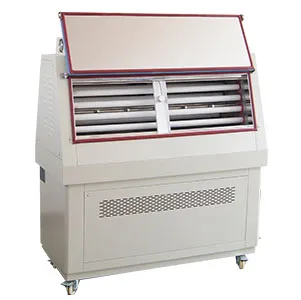 |
ASTM C661 | Indentation hardness | Hardness of cured joint sealants | TH Series + suitable durometer | 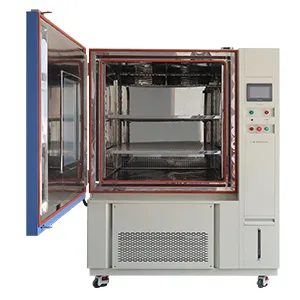 |
The important point is that these standards address different properties and test stages. Environmental chambers provide controlled exposure or conditioning; the final property evaluation is performed according to the applicable ASTM procedure.
ASTM C510-16(2022) is the active version of Standard Test Method for Staining and Color Change of Single- or Multicomponent Joint Sealants. It provides an accelerated laboratory procedure for evaluating whether a joint sealant stains a substrate and whether the sealant itself changes color after weather exposure.
ASTM C510 addresses two main evaluation points.
The test evaluates the potential for a sealant to cause early staining of porous building substrates due to certain chemical exudations from the sealant.
The scope includes contact with:
Masonry
Concrete
Marble
Limestone
Sandstone
Granite
This is particularly relevant for architectural sealants where visible discoloration around a joint can affect the appearance of the finished building. ASTM also notes that the method does not necessarily predict staining caused by other mechanisms, such as residue run-down or dirt pickup.
ASTM C510 also evaluates potential color changes in the sealant after artificial weathering.
The testing therefore involves two related but distinct observations:
Sealant + Porous Substrate → Artificial Weathering → Substrate Staining
and
Sealant → Artificial Weathering → Sealant Color Change
This distinction is important when interpreting the results.
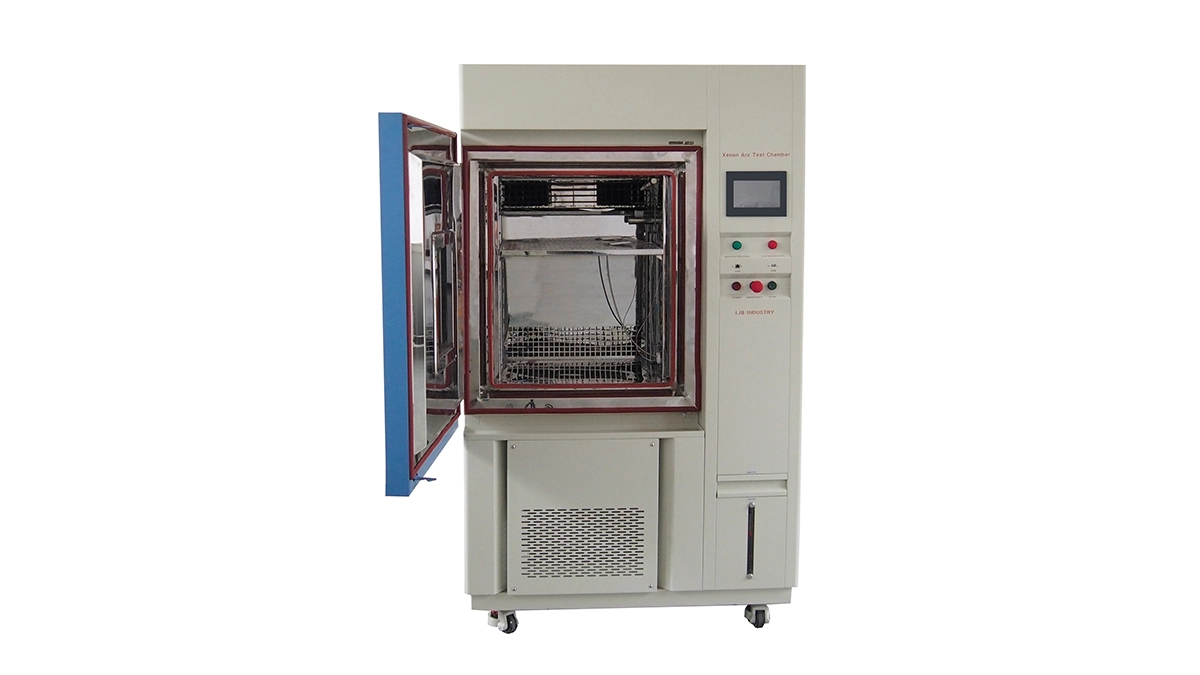
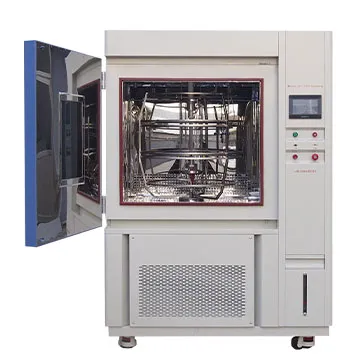
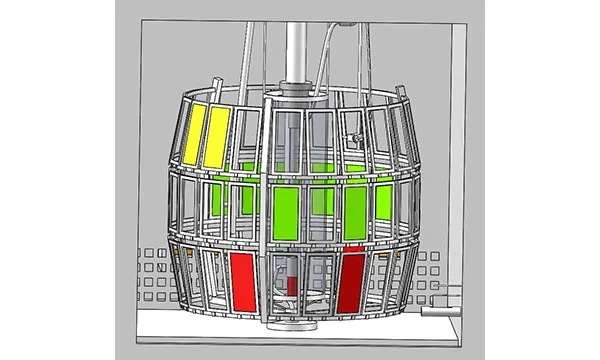
The XL-S-750 Xenon Arc Weathering Chamber provides a controlled artificial-weathering environment for sealants and other polymeric materials.
 |  |
Its key specifications include:
4500 W water-cooled xenon arc lamp
35–150 W/m² irradiance
300–400 nm bandwidth measurement
35–85°C black panel temperature
50–98% RH
Adjustable water-spray cycle
42 specimen capacity
Rotating specimen holder
Programmable touch-screen controller
These functions allow laboratories to control the radiation, temperature, humidity, and moisture exposure used in accelerated weathering studies.
For ASTM C510-related testing, the chamber provides the controlled exposure environment; staining and color change are evaluated according to the applicable test procedure.
LIB XL-S-750 Xenon Arc Weathering Chamber
ASTM C793-23 is the active version of Standard Test Method for Effects of Accelerated Weathering on Elastomeric Joint Sealants. It covers a laboratory procedure for determining the effects of accelerated weathering on cured-in-place elastomeric joint sealants used in building construction.
For sealant manufacturers, this standard is particularly important because it connects material durability with controlled environmental exposure.
The accelerated-weathering procedure involves environmental stresses associated with outdoor exposure, including:
Controlled radiation is used to accelerate effects associated with light exposure.
Moisture is an important environmental factor in outdoor sealant degradation and is incorporated into the accelerated-weathering procedure.
Elevated temperature contributes to accelerated environmental aging and is controlled as part of the exposure process.
ASTM C793 also incorporates bending of specimens at cold temperature to increase the sensitivity of the procedure to weathering-related degradation.
The test should therefore not simply be described as a “UV resistance test.” It evaluates the effects of a controlled accelerated-weathering environment on cured elastomeric joint sealants.
Depending on the applicable procedure and project requirements, laboratories may focus on visible signs of deterioration such as:
Surface cracking
Weathering-related deterioration
Changes in appearance
Changes in material integrity
Damage revealed after cold-temperature deformation
The purpose is to determine how the cured sealant responds after controlled environmental exposure rather than relying only on its initial appearance or properties.
The XL-S-750 combines controlled xenon radiation with temperature, humidity, and water-spray functions.
Its 4500 W water-cooled xenon lamp, adjustable irradiance, black panel temperature control, humidity control, and programmable water spray make it suitable for controlled accelerated-weathering studies of polymeric materials.
For sealant testing, the key advantage is not simply the lamp itself. The chamber allows several environmental factors to be controlled within one test system, helping laboratories establish repeatable exposure conditions.
When the primary research objective is UV accelerated aging rather than a broader xenon-arc weathering program, a LIB UV accelerated weathering chamber can be considered.
This provides an alternative for laboratories studying the effects of UV exposure on sealants, polymers, coatings, and other materials.
The choice between xenon and UV equipment should be based on the applicable ASTM procedure, required radiation spectrum, exposure conditions, specimen configuration, and laboratory testing objectives.
The weathering stage and the cold-temperature deformation stage should be considered separately.
A LIB low-temperature environmental chamber can provide a stable controlled cold environment for post-weathering specimen conditioning and bending procedures when required by the applicable ASTM procedure.
This creates a practical testing sequence:
Accelerated Weathering
→ Cold-Temperature Conditioning
→ Bending / Deformation
→ Visual Evaluation for Cracking or Deterioration
The exact temperature, duration, specimen dimensions, and bending procedure should always follow the applicable ASTM standard and project specification rather than being inferred from the chamber specification alone.
ASTM C661-15(2022) is the active version of Standard Test Method for Indentation Hardness of Elastomeric-Type Sealants by Means of a Durometer. It describes a laboratory procedure for determining the indentation hardness of single- and multicomponent joint sealing compounds intended for building construction.
The central measurement is:
Indentation Hardness
A durometer is used to determine the indentation of the sealant material under load.
The test therefore answers a different question from C510 and C793:
How resistant is the cured sealant to indentation under the specified test conditions?
ASTM specifically notes that the result is a measure of indentation into the sealant under load and is not generally considered a measure of abrasion or wear resistance.
For sealant manufacturers and laboratories, indentation hardness can be used for:
Cured material characterization
Product comparison
Batch-to-batch comparison
Quality control
Studying hardness changes after specified conditioning
The actual hardness measurement is performed using the appropriate durometer. An environmental chamber does not replace this measuring instrument.
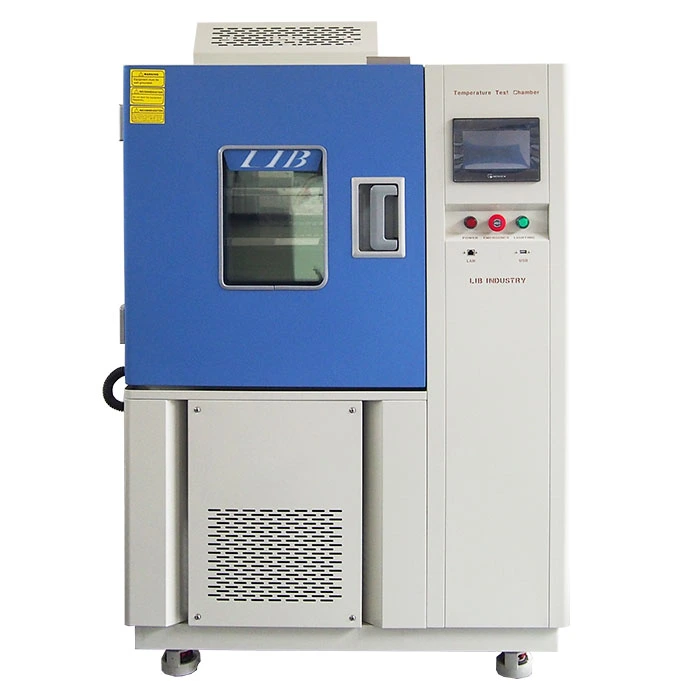
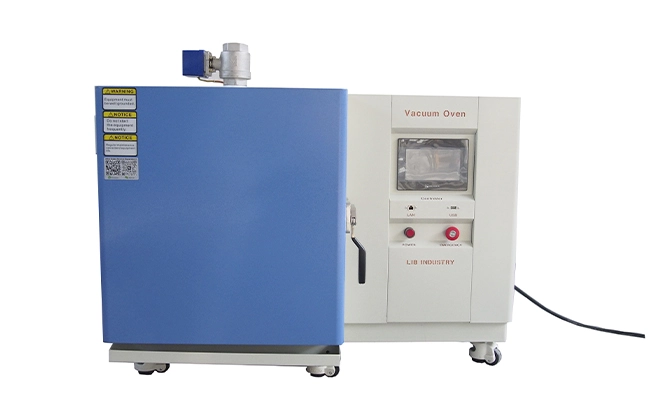
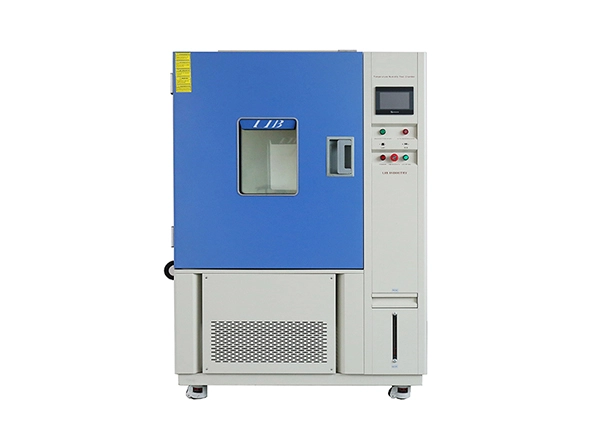
When a testing program requires controlled environmental conditioning or curing, the LIB TH Series Temperature & Humidity Chamber can provide a stable temperature and relative-humidity environment before the hardness measurement.
Depending on the model and configuration, LIB TH chambers provide:
Temperature ranges from -70°C / -40°C / -20°C to +150°C
20–98% RH
Temperature fluctuation of ±0.5°C
Temperature deviation of ±2.0°C
Humidity deviation of ±2.5% RH
Multiple chamber volumes from 100 L to 1000 L
This makes the TH Series useful when a sealant testing program includes controlled temperature and humidity conditioning.
The practical relationship is:
Sealant Specimen
↓
Controlled Temperature / Humidity Conditioning
↓
Durometer Measurement
↓
ASTM C661 Hardness Evaluation
The specific curing or conditioning temperature, humidity, duration, and hardness measurement procedure should be established from the applicable ASTM procedure and project requirements.
LIB Temperature & Humidity Test Chamber
A sealant testing program can combine environmental exposure, conditioning, and physical-property evaluation according to the required standards.
Prepare the sealant and substrate specimens according to the applicable ASTM procedure.
For C510, the relationship between the sealant and porous substrate is important.
For C793, cured elastomeric joint sealant specimens are subjected to accelerated weathering.
For C661, cured sealant specimens are prepared for indentation hardness measurement.
Depending on the test objective, the specimen may require controlled:
Light exposure
Temperature
Humidity
Moisture
Cold-temperature conditioning
LIB equipment can provide these controlled environmental conditions.
The evaluation method depends on the standard:
ASTM C510
→ Evaluate substrate staining and sealant color change.
ASTM C793
→ Evaluate weathering-related deterioration and cracking after the specified exposure and deformation procedure.
ASTM C661
→ Measure indentation hardness with a suitable durometer.
ASTM C510 evaluates whether a joint sealant can stain porous substrates such as masonry, concrete, and stone, and whether the sealant itself changes color after artificial weathering.
ASTM C793 addresses the effects of accelerated weathering on cured elastomeric joint sealants. The procedure involves environmental exposure associated with radiation, moisture, and heat, together with cold-temperature bending intended to increase sensitivity to weathering-related deterioration.
No. ASTM C793 concerns the effects of laboratory accelerated weathering on elastomeric joint sealants. Radiation is only one part of the environmental exposure; moisture, heat, and the specified cold-temperature deformation stage are also relevant to the procedure.
ASTM C661 measures the indentation hardness of joint sealing compounds used in building construction by means of a durometer. The result represents indentation under load and is not generally considered a measure of abrasion or wear resistance.
The appropriate equipment depends on the test objective. The XL-S-750 Xenon Arc Weathering Chamber is suitable for controlled artificial-weathering studies involving xenon radiation, temperature, humidity, and water exposure. The UV-SI-260 can be considered for UV-focused accelerated aging, while the TH Series provides controlled temperature and humidity conditioning. A low-temperature chamber can be added when the testing program includes a controlled cold-temperature deformation stage.
LIB industry is an experienced building sealant testing equipment manufacturer and supplier, providing environmental simulation equipment for building sealant and joint material testing, including xenon arc weathering, UV aging, temperature & humidity conditioning, and low-temperature testing.
From the XL-S-750 Xenon Arc Weathering Chamber to the TH Series Temperature & Humidity Chamber, LIB equipment provides controlled temperature, humidity, irradiance, and water exposure according to different testing requirements. Chamber capacity and configuration can also be customized based on specimen size and test conditions.
With a 3-Year Manufacturer Warranty / 36 Months and lifetime technical service, LIB supports customers from equipment installation and training to long-term technical assistance and spare-parts support.
Looking for building sealant testing equipment and price? Contact LIB industry with your sealant type, specimen dimensions, required exposure conditions, and testing standards. Our engineers can help you select the appropriate equipment and provide a quotation
 English
 русский
 français
 العربية
 Deutsch
 Español
 한국어
한국어 italiano
 tiếng việt
 ไทย
ไทย Indonesia